became known as the Man in the Red Bandana after stories spread about his heroism on September 11, 2001. Now, an AI-generated image purporting to show Crowther rescuing people from the World Trade Center is going viral—the latest example of how fabricated images could distort our collective memory of 9/11 for generations.
The 24-year-old Crowther was working on the 104th floor of the South Tower of the World Trade Center when a plane struck on that fateful day. Crowther, an equities trader, was also a volunteer firefighter and is credited with helping save the lives of at least a dozen people. He reportedly helped guide people to the lone functioning stairwell and even carried some people down the stairs himself. He died when the South Tower collapsed.
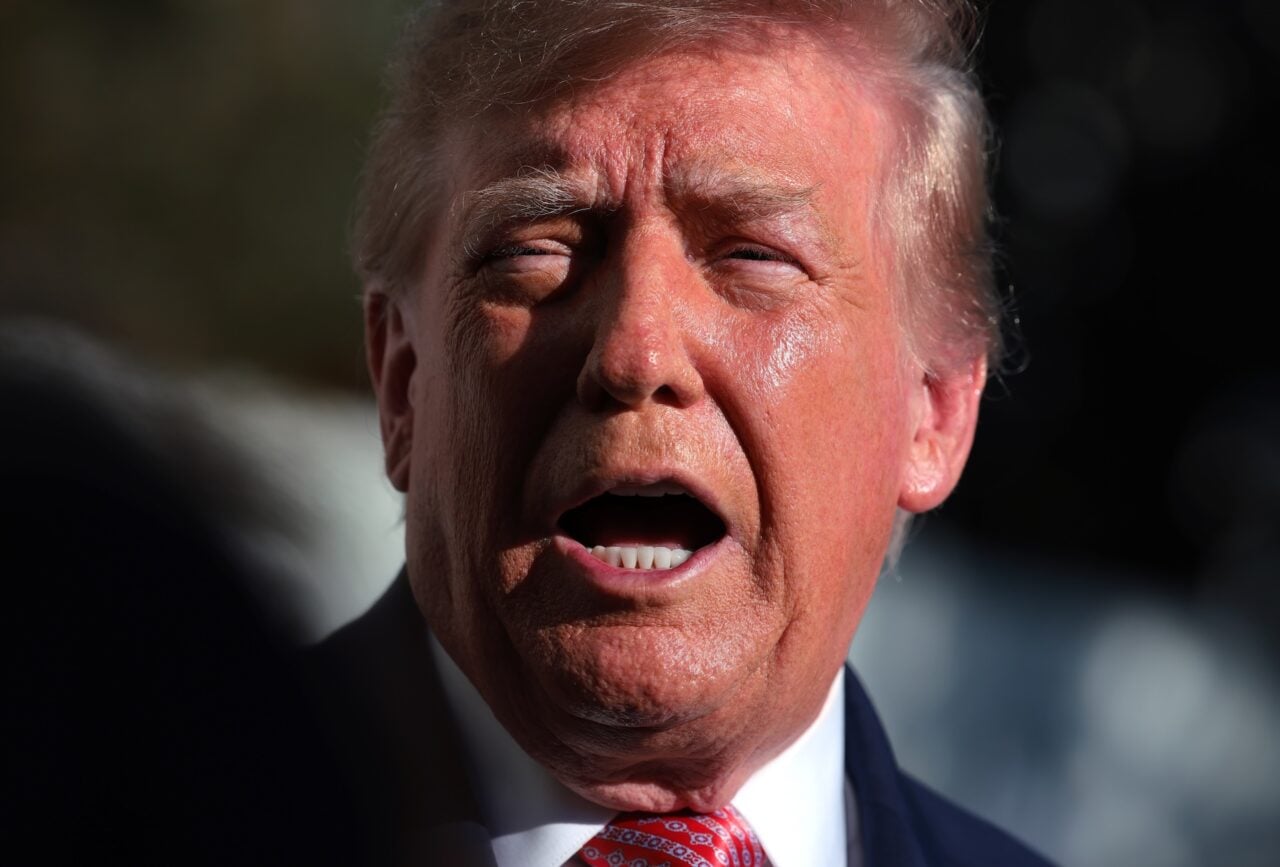
President Donald Trump awarded Crowther the Presidential Medal of Freedom on Tuesday and, as always, the president had to make it about himself, insisting he doesn’t like that the man in the red bandana had become much more famous than him.
Trump on a deceased 9/11 rescuer:
“The Man in the Red Bandana. Have you heard of him? He’s become more famous than me. I don’t like it. Very unhappy. But he’s become much more famous than me.”
— FactPost (@factpostnews.bsky.social) September 8, 2026 at 8:25 AM
Crowther’s story of heroism is very real according to multiple witnesses, but the image that’s going viral of Crowther isn’t. There are no known photos of Crowther in action on September 11th.
One major problem with the proliferation of AI images is that AI image detectors can be unreliable. Gizmodo ran the image above through ChatGPT and asked if it was created with AI. The response from ChatGPT: “It very likely is not AI-generated. It appears to be a genuine historical photograph rather than an AI-created image.”
The explanation from ChatGPT went on to insist that the image has features “you’d expect from a real news photograph” and that it’s “consistent with photographs taken during the evacuation of the World Trade Center after the September 11 attacks.”
When Gizmodo uploaded the image to Grok, the chatbot claimed that it was “a well-known photograph from the September 11, 2001, terrorist attacks,” but when pressed on whether it was authentic, Grok finally admitted it might be fake.
Claude said the image was a photo but likely a dramatization and not created with AI. When I asked Claude to do a reverse image search, the chatbot said it “confirmed” the image was from a documentary or similar that depicted the events and wasn’t made with AI: “So to directly answer your question: no, this doesn’t look AI-generated — it’s a reenactment/dramatization photo…”
The definitive documentary on Crowther, Man In Red Bandana (2017), does feature an actor very briefly recreating some of his actions while saving people, but it doesn’t match up with the AI image that’s currently going viral. The actor playing Crowther in that documentary is wearing a white t-shirt, not a button-up shirt and tie.

When we tried Gemini and asked if the image had the SynthID watermark, which is added to all images created with Google’s AI tools, the chatbot said that it couldn’t check that. Google opened up SynthID detection to all Gemini users last year, so that was a weird claim. After being pressed, the chatbot said we were right that this feature had been added and Gemini hadn’t found it to have SynthID. The hallucination and initial refusal to check should definitely give us pause when relying on the safeguards AI companies have supposedly created for us to fact-check our own reality.
In a somewhat odd twist, Google’s AI overview insists the image is a “dramatic scene from the 1999 disaster television miniseries Aftershock: Earthquake in New York,” something that’s both untrue and would date the image to before the terror attacks of 2001.
The image is not genuine and was definitely made with AI. Anyone can tell that just by looking at it, to say nothing of the fact that reverse image searches reveal it was likely never published before this week. Other AI images of Crowther have also popped up this year, like the one below from Facebook.

Roughly 25% of Americans alive in 2026 weren’t born yet on September 11, 2001. The images that live on and spread online shape how we understand that day. And there are plenty of other AI images circulating online that purport to show what happened that day. Even when the underlying events are grounded in reality, fake images distort how we understand history.
In some ways, this isn’t exactly a new problem. Here at Gizmodo, we spent much of the 2010s debunking fake historical images that were created with Photoshop-style tools. But there was a built-in friction with old-school Photoshop. Users were required to have some degree of talent and spend a bit of time creating fakes. These days, anyone can prompt a fake image using nothing but words and output a photo-realistic result in seconds.
That low barrier to entry has created an environment where we often refuse to believe things that are real because they could be AI. People like Donald Trump even exploit this, insisting that authentic photos and videos must be AI because they’re inconvenient to his narrative. There have been a lot of those instances, believe it or not. And we’re all much dumber for it.
READ MORE: