Human beings have long been at war with mosquitos, and it’s not at all clear we’ve been winning.
Malaria alone—just one of many deadly mosquito-borne illnesses—kills over 600,000 people every year, most of them very young children. Until now, all we’ve had were short-term solutions, like public inoculations, insecticides, traps, and (usually futile) hand-swatting. But a French tech startup called Tornyol is saying enough is enough: Let’s turn this never-ending war of attrition into a full-blown, mechanized campaign to eradicate our winged foes from the face of the Earth.
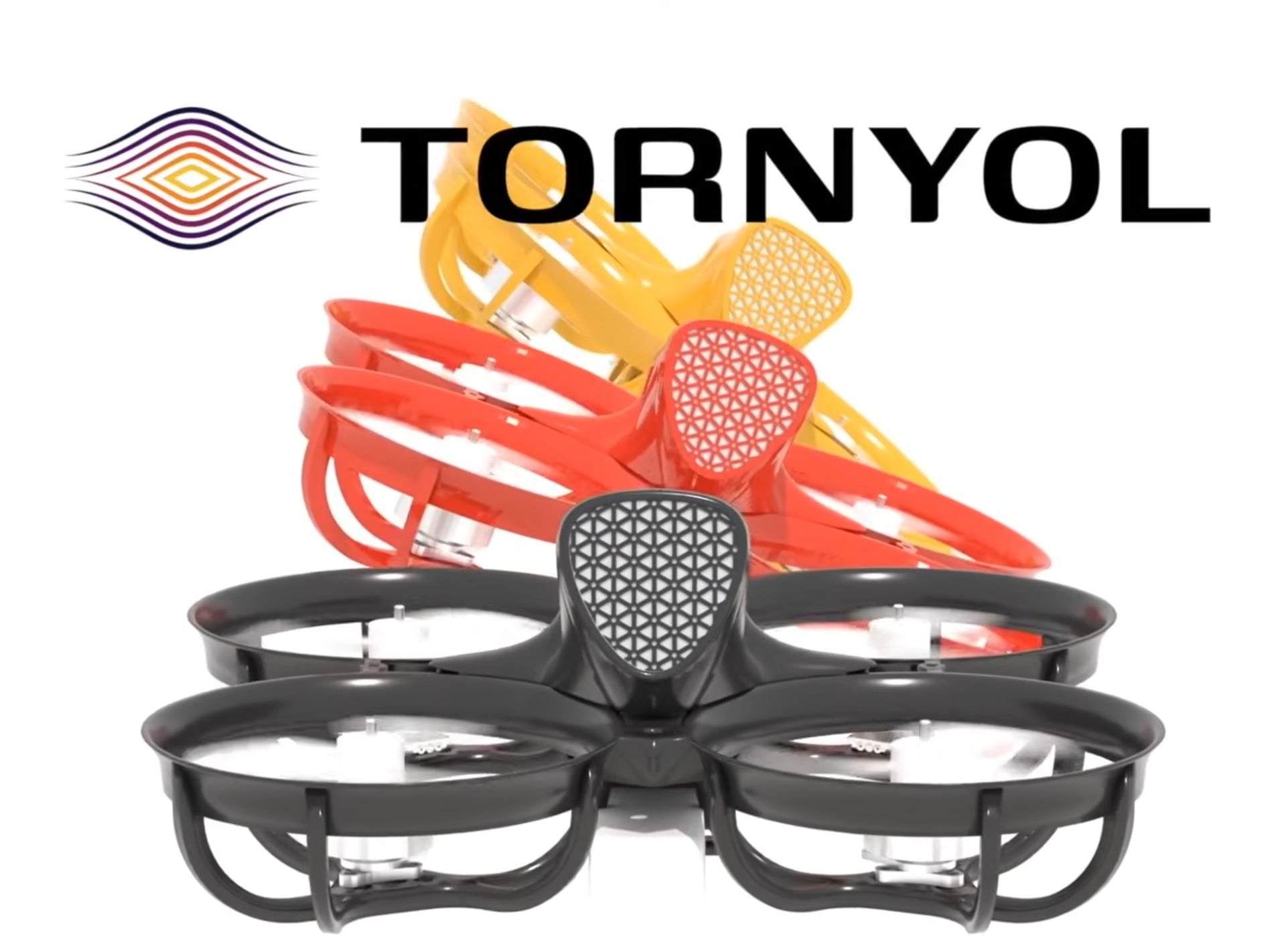
Founded last year and backed by Y Combinator, the company has built a tiny—weighing in at just forty grams—drone that uses ultrasonic sonar to autonomously locate and track mosquitoes’ unique wingbeat frequency. They’re able to do this in such a way that they can distinguish mosquitoes from non-harmful insects, such as bees, according to the company’s website. Once they’ve locked onto the target like a heat-seeking missile, they swoop in and obliterate the mosquito in one of their four tiny propellers. The micro-drones can patrol an area of up to five acres, Tornyol claims, and fly for up to three minutes at a time before automatically returning to a charging station.
First we zip ping pong balls, then butterflies and we'll end with mosquitoes pic.twitter.com/Oi4H40z7Uv
— Alex Toussaint (@alextoussss) June 17, 2026
The company’s online “manifesto” reads like a slide from a VC pitch deck assembled by the Angel of Insectoid Death.
“Because these drones are so small, inexpensive and yet very fast, we’ll be capable of killing mosquitoes at an unprecedented scale and cost,” the company writes, adding that the ultimate goal is to go after the unborn children of full-grown mosquitoes. “In the end, we’ll have a very high-definition map of the mosquito breeding cycle. We’ll know where mosquitoes get blood, where they go to hatch eggs, and where they take nectar. That data will let us be even more effective, focusing our action where it’s needed most. Factoring that in, we believe we’ll be able to completely eradicate mosquitoes from areas where humans live.”
On Tuesday, the company’s CEO, Alex Toussaint, posted a video on X showing what he describes as the company’s first successful “air-to-air kill.” A drone is shown hovering in the corner of an enclosed space, while Toussaint releases a moth nearby, then runs for cover. The drone immediately zips over to the hapless moth and chases it down in a fun-sized dogfight. Then the moth simply… explodes, reduced to a cloud of powdered wing material, amid triumphant shouts from the humans offscreen.
For most people, this is a use of AI they could actually support. It’s worth remembering, however, that humanity also has an abysmal track record when it comes to imposing our will over nature; when we try to eliminate some kind of pest, ecosystems tend to bite us back in ways that are difficult, if not impossible to predict.
Dichloro-diphenyl-trichloroethane, otherwise known as DDT, is an infamous example. The synthetic insecticide was widely used throughout the 1940s, with tremendous efficacy; it was widely believed at the time to be a huge boon for agriculture. In the ensuing decades, it was revealed that it also had some devastating side effects, including poisoning bird populations that fed on the targeted insects. It was banned in the U.S. by the Environmental Protection Agency in 1972.
Similarly, the eradication of mosquitoes—even if it’s carried out without the use of toxic chemicals—could result in some harmful downstream ecological impacts. They’re an important part of the diet of other species, such as mosquitofish and some lizards, which means those animals would need to search elsewhere to balance out their food supply, or starve.

Tornyol’s approach for the time being seems to be: Kill mosquitoes now, worry about any possible ecological disequilibrium later.
READ MORE: Study Finds Lakes Are Still Filled With DDT 50 Years After It Was Banned