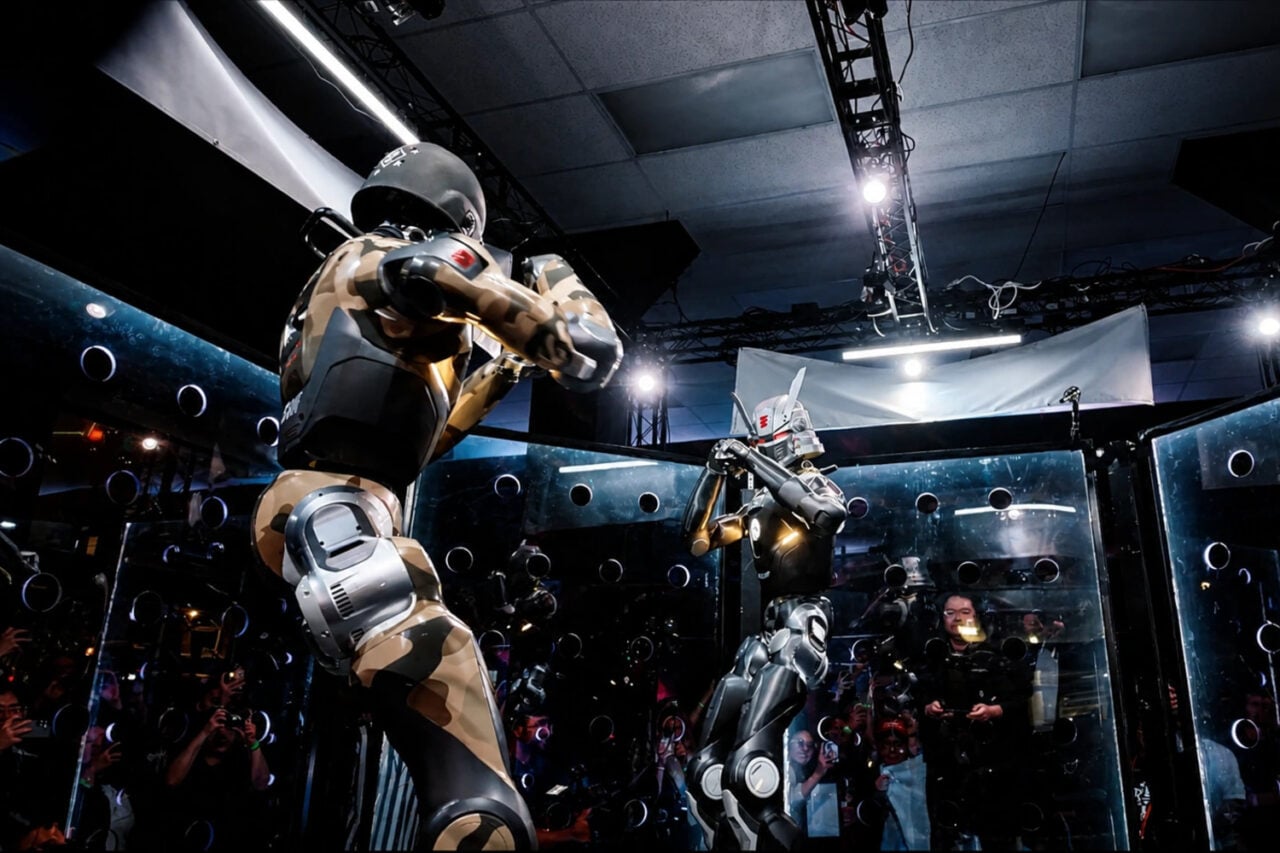
The DARPA Robotics Challenge, or DRC, kicked off today at the Homestead-Miami
Speedway about 30 miles south of Miami. A
total of sixteen teams from around the world are here to challenge each other
today and tomorrow in timed trials, and to compete for funding from DARPA, the
Pentagon’s mad science arm. A seventeenth team, from China, hit travel snags
and hasn’t made it here yet.
The Robotics Challenge represents the first
time the bots have gathered to compete in physical challenges. They cut their
teeth on a Virtual Robotics Challenge earlier this year in computer
simulations, which led to DARPA down-selecting from over a hundred teams to just
seventeen.
DARPA’s
goal with the competition is to develop robots capable of semi-autonomous
operation in disaster zones. The program manager in charge of the competition,
Gill Pratt, developed the program in response to the Fukushima nuclear power
plant meltdown in Japan in 2011.
“One
of the things that happened was that human beings,” said Pratt in a press
conference last night, speaking of Fukushima, “were sent in to manually
open some valves to vent the reactors because hydrogen gas was building
up.” The area was too radioactive, however, and the workers faced certain
death unless they turned back. “Had they been able to open those vents, we
believe,” Pratt explained, “then the explosions that blew up three of the
reactor buildings would not have occurred.”
Pratt
emphasized the non-lethal nature of the bots themselves. “This is a
non-military defense mission,” he said.
Robots from teams TROOPER, KAIST, and Intelligent Pioneer
The
tasks the robots are being called on to perform are basic for us humans, but
extremely challenging for robots, especially since they will have to perform
with minimal human supervision.
The
bots have to perform eight tasks in separate areas of the speedway. They have
to open doors; remove rubble; cut through a wall with a power tool; turn a
valve; connect a fire hose; climb a ladder; walk on uneven terrain; and, most
challenging of all, drive a vehicle.
https://gizmodo.com/handicapping-the-2013-darpa-robotics-challenge-1487191090
Photo courtesy of DARPA
The
DARPA officials here at the speedway don’t even know how many, or even if any
of the teams will attempt that last feat. Brett Kennedy, the team leader for
the NASA JPL team, Robosimian, said that his team, for one, didn’t even intend to try that one. Instead, they will focus on collecting as many points as
they can in the other tasks.
Each
task is worth up to four points. Bonus points will be given as tie-breakers for
robots completing tasks in the shortest time.
The
second-most difficult challenge for the bots is the ladder-climbing task. The
Atlas robot of Team Trooper (which has Lockheed Martin as a backer) made a
valiant effort this morning to climb the ladder—really more of a steep
staircase—and slipped off one of the bottom steps. After being caught by the
rope “fall arrester,” the machine was carted off by team members for
adjustments before round two.
Despite
some appearances to the contrary, these machines are nowhere near Terminator
status, at least not yet. They can barely walk. The robots that are bipedal are
kept from falling down by ropes attached to their heads. Other bots get around
on four legs and/or tractor treads for maximum stability.
These
are babies, with coordination equivalent, said Pratt, to human one-year-olds. One-year-olds
with enough strength to do some serious damage. Robosimian team leader Kennedy
advised me to stand out of reach of his bot’s arms when I visited the team
garage turning final testing and checkouts last night.
“Robots
right now are very inefficient,” said Pratt. “If I were to compare
the efficiency of a human being clambering around on rough terrain with the
efficiency of a robot, the robots are around 100 times worse than an animal
like a human being.”
Pratt
hopes that by the next DRC event a year from now, the bots will be much more
capable, but for this time out, they are being given up to 30 minutes to
complete each task.
Team
members operating the robots have to do so out of view of their machines,
looking instead just at monitors being fed video from onboard cameras and data
that is sent over a degraded communications link. The idea is to simulate the
conditions under which the bots might have to operate during a real-world
disaster.
The
comms link alternates once a minute between a very good mobile phone connection
and a very bad one, said Pratt. This means that the drivers of the robots must
send quick, macro-level commands and leave the specifics of executing those
commands up to the robots themselves.
Photo courtesy of DARPA
Six
of the teams, the so-called Track A teams, had to build their own robots and
also program them within the last 15 months. The 7 total Track B and C teams
got a head start with identical Atlas robots built by Boston Dynamics, which
they then had to program on their own. Four Track D teams, unlike the others,
have gotten no funding from DARPA and are on their own building and coding
their own bots. These are the true underdogs of the competition.
https://gizmodo.com/human-ish-atlas-robot-can-almost-traverse-a-teenager-1469763697
One
of the Track D teams, team Chiron, whose members hail from Salt Lake City,
suffered a failure in the motors that drive its bot’s limbs and was out of the
running before it could even get started. The team got to work tearing down the
motors, putting the pieces back together, and, if all went well, testing the
fixes in time to be ready to get back in action in time for tomorrow’s trials.
The
Chinese team still en route—team Intelligent Pioneer—is also a Track D team.
That leaves only two Track D teams currently on the course: a team from Korea
called KAIST, and Team Mojavaton, a group of volunteers out of Grand Junction,
Colorado.
Up
to 8 bots will live to fight another day. The survivors will stay in the
running to compete for a $2 million prize at the next DRC a year from now.
Stay
tuned for more DRC coverage right here on Gizmodo—and here’s a live feed to keep you watching:
Michael Belfiore is the author of The Department of Mad Scientists: How DARPA Is Remaking Our World, from the Internet to Artificial Limbs.