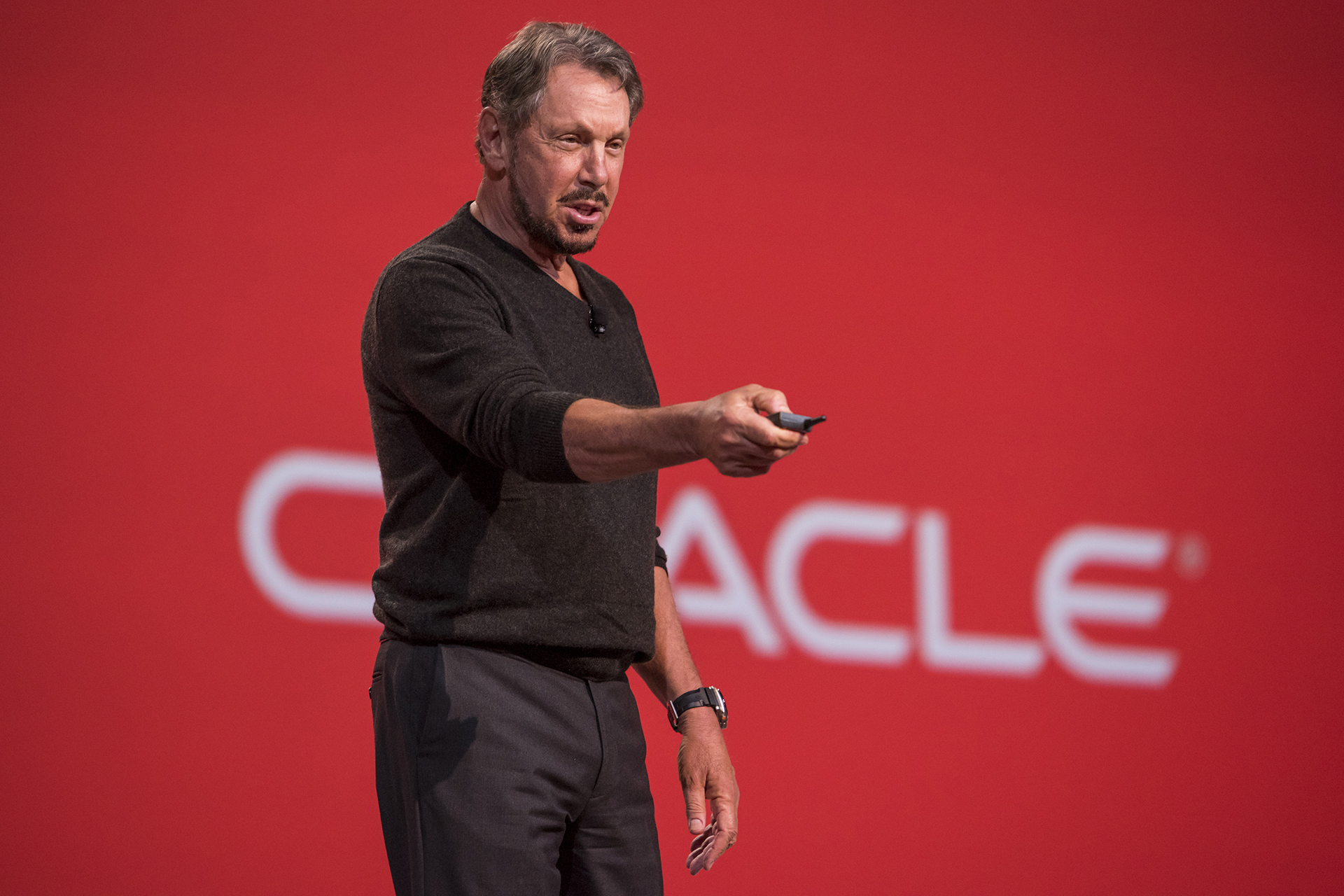
Oracle was founded all the way back in 1977 as an enterprise software company. Since then, it has transformed into a cloud services giant. These days, it is trying to become one of the most important players in AI data centers. Now, Oracle itself is warning investors that this next act comes with some huge risks.
The tech giant filed its annual report late in June, and it includes a long list of ways its massive AI infrastructure bet could fail to pay off.
These risks include data centers taking longer to build than expected, supply chain problems, and potential increases in energy costs. Additionally, it said regulations around data security and the environment could also slow down the AI boom.
Still, Oracle is willing to take on those risks.
“To grow our OCI business, which requires increased computing capacity, we must incur significant capital and operating expenditures,” Oracle wrote in the filing.
The company’s spending on power-hungry data centers needed to train and run advanced AI models has been soaring in recent years. It has major deals with companies like OpenAI and Meta, and it is racing to build enough capacity to keep up with anticipated demand.
In fiscal year 2026, which ended in May, Oracle’s capital expenditures rose to $55.7 billion, up from $21.2 billion the previous year. The company is already eyeing even more spending in fiscal 2027, with plans for $90 billion to $95 billion in capital expenditures.
In the long run, Oracle has committed itself to spending hundreds of billions of dollars. Last year, Oracle founder Larry Ellison joined OpenAI CEO Sam Altman and SoftBank CEO Masayoshi Son at the White House to announce Stargate, a massive AI infrastructure project that could invest up to $500 billion in data centers over the coming years.
At the event, Altman and Ellison both said Stargate’s work could help lead to cures for diseases like cancer. Altman even declared that Stargate would be “the most important project of this era.”
But in its annual filing, Oracle warned investors that none of this is guaranteed. Here is just a selection of the potential pitfalls Oracle says it faces: overbuilding, customer defaults, excess leases, stranded capacity, credit risk, power shortages, GPU shortages, site shortages, permitting delays, construction delays, contractor failures, zoning fights, environmental rules, water limits, grid strain, fixed-price contracts, volatile power costs, supplier delays, shipping disruptions, tariff shocks, export controls, geopolitical instability, obsolete hardware, service outages, security flaws, AI errors, biased outputs, copyright exposure, privacy risks, patchwork regulation, compute restrictions, cross-border limits, weak adoption, competitor advances, legal liability, and reputational damage.
“We operate in rapidly changing economic and technological environments that present numerous risks, many of which are driven by factors that we cannot control or predict,” the company wrote in the filing.
One of the risks the company highlighted was that its customers may not be able to pay their bills.
“In addition, some of our customers may be highly leveraged and subject to their own operating and regulatory risks and, even if our credit review and analysis mechanisms work properly, we may experience risks of non-payment and non-performance in our dealings with such parties,” the company wrote.
That risk is especially important because companies like OpenAI and Anthropic are still spending far more money than they bring in. At the same time, federal and local governments are beginning to scrutinize the industry more closely, especially over their energy use and potential cybersecurity risks.
While all companies disclose business risks, Oracle’s warnings stand out because of how thorough they are. SpaceX, for example, warned in its own filing that Grok’s controversial features could pose a reputational risk. But Oracle’s filing goes way further into how its massive AI infrastructure buildout could run into problems.
This makes sense considering Oracle is trying to become one of the foundations of the AI boom. If anything goes wrong, it could have a significant impact on the company’s bottom line. So Oracle’s filing also works as a helpful cheat sheet for the potential problems that the AI industry as a whole is facing.
Investors already appear to be growing more cautious about the cost of the buildout. Oracle shares have fallen 40% over the past month. Other AI stocks like Nvidia also tumbled this month. And even SpaceX, after its historic IPO, has not seen its shares climb far above their $150 opening price.
Oracle did not immediately respond to a request for comment.