As humanity pumps the atmosphere full of carbon emissions, rising global temperatures are fueling rampant wildfires, permafrost melt, wetland warming, and other phenomena that produce even more emissions. Scientists know that these feedback loops are exacerbating climate change, but most models fail to account for them. A new study reveals just how dangerous that gap may be.
The findings, published today in the journal Environmental Research Letters, show that warming-induced emissions could lead to an additional 0.4 to 0.7 degrees Fahrenheit (0.2 to 0.4 degrees Celsius) of warming by 2100, amplifying post-2020 anthropogenic warming by 20% to 30%.
“This research makes clear that the Earth and climate system doesn’t stand still while we debate policy,” coauthor Brian Buma, senior climate scientist at the Environmental Defense Fund, said in a statement. “Emissions from permafrost, wetlands, and wildfire could meaningfully erode our remaining time to warming thresholds—and they are unaccounted for in most scenarios.”
Factoring in feedbacks
Climate feedbacks are processes that strengthen or weaken the climate system’s response to radiative forcing, which occurs when the amount of energy entering Earth’s atmosphere is different from the amount radiated back into space. Because humanity’s carbon emissions are heating the atmosphere too quickly for radiative cooling to keep up, global temperatures are rising.
Some climate feedbacks, such as the rising amount of water vapor in the atmosphere or the ocean’s diminishing ability to absorb carbon, are relatively well-represented in climate models, according to the new study. However, warming-induced emissions are not.
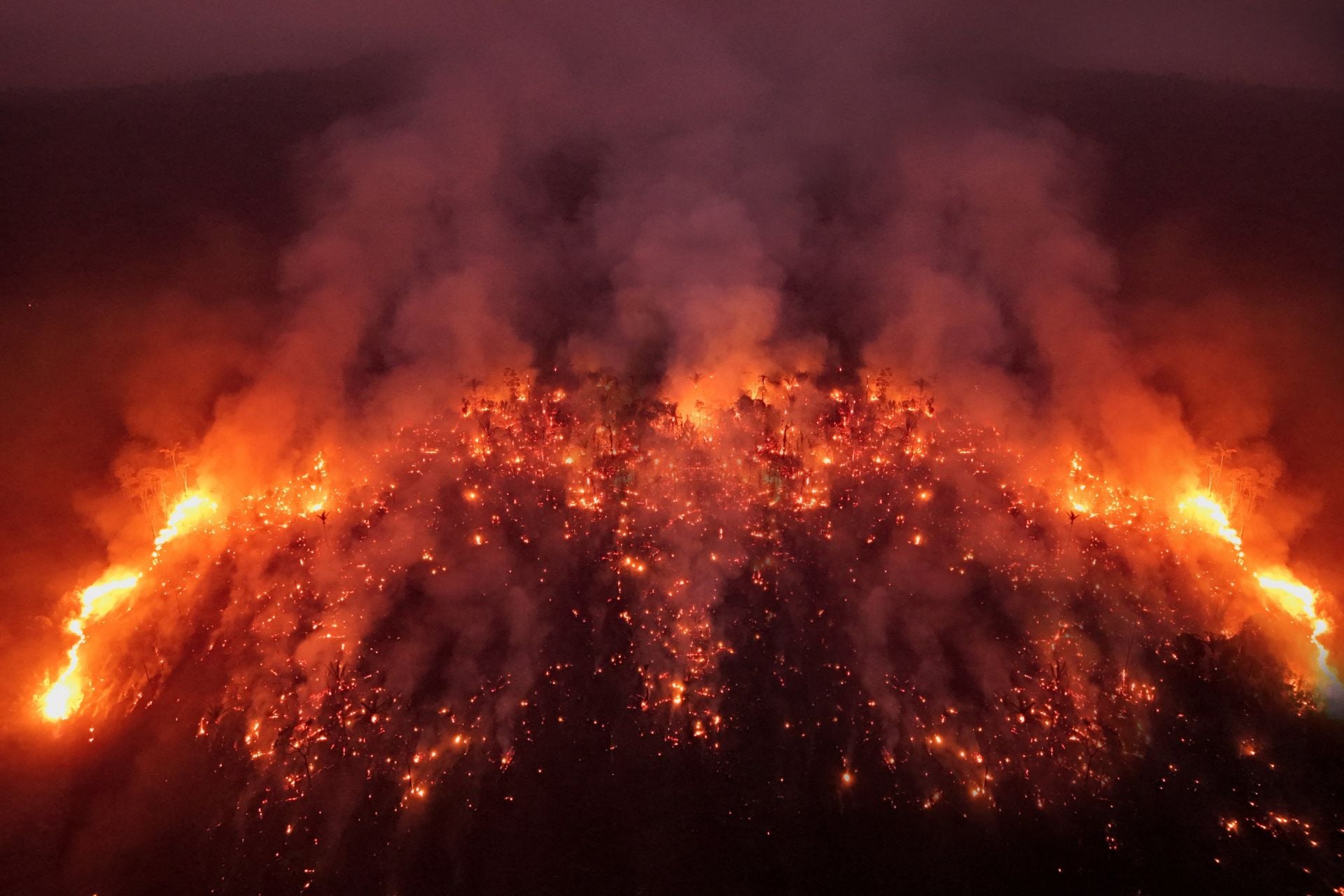
These emissions stem from the impacts of human-driven warming. Thawing permafrost and warming wetlands release CO2 and methane, while wildfires burn through the carbon stored in forests. These processes, therefore, amplify global warming, and yet they have been largely overlooked.
To determine whether this gap has led scientists to underestimate warming projections and overestimate remaining carbon budgets, researchers used a reduced-complexity climate model to quantify the combined impact of four major feedbacks for both CO2 and methane emissions: permafrost thaw, wildfires, wetlands, and inland waters. Previous research has shown that rising global temperatures increase emissions from each of these sources, but this study appears to be the first major effort to understand how much they amplify global warming.
The findings are staggering. Even if humanity achieved net-zero emissions, greenhouse gas feedbacks could still lead to an additional 0.4 degrees F (0.2 degrees C) of warming by the end of the century. Global emissions are nowhere near net-zero, and if they continue at their current rate, these feedbacks could lead to an additional 0.5 degrees F (0.3 degrees C) of warming by 2100.
‘A wake-up call’
These potential increases may not sound significant, but we certainly want to avoid them. The study comes on the heels of a damning report from the United Nations’ Environmental Programme showing that global temperature rise is set to overshoot 2.7 degrees F (1.5 degrees C) within the next few years. This threshold, established by the Paris Agreement in 2015, was created to help humanity avoid the worst outcomes of climate change.
“Every fraction of a degree of warming above 1.5 leads to increasing and increasingly severe climate impacts,” Chris Bowen, Australian Minister for Climate Change and Energy and President of Negotiations for COP31, said in a statement.
This new study suggests the climate is careening toward overshoot even faster than we thought.
“The results are a wake-up call, and it’s imperative that they be included in the next generation of climate policies,” said coauthor Robert Jackson, a provostial professor at Stanford University’s Doerr School of Sustainability. “Failure to do so will make meeting the world’s climate goals less and less likely.”