It’s been over a decade since countries signed the Paris Agreement, an international treaty aimed at limiting global warming to 2.7 degrees Fahrenheit (1.5 degrees Celsius). At the time, staying below this threshold was considered an ambitious but achievable goal. Now, it’s no longer a question of if we will overshoot it, but when.
According to a report from the United Nations’ Environmental Programme (UNEP) released Wednesday, global temperature rise is set to surpass 2.7 degrees F (1.5 degrees C) within the next few years. In the new best-case scenario, Earth’s average temperature would peak at 3.2 degrees F (1.8 degrees C) above pre-industrial levels. Beyond that point, getting global temperatures back below the Paris Agreement threshold during the 21st century becomes increasingly unlikely.
“There are no good outcomes above 1.5 degrees C,” the report states. “Extreme weather, glacier melt, ecosystem loss and sea-level rise will intensify. Some Small Island Developing States and low-lying coastal cities could be partially or completely submerged. Risks of tipping points will grow. Human health, food and water security, cities and infrastructure will come under increasing strain. These impacts will not be distributed equally, and some losses will be irreversible even if global temperatures eventually decline.”
“Unavoidable” overshoot
To be clear, the warming limit set by the Paris Agreement is not a tipping point beyond which the climate will inevitably collapse. Rather, it is an internationally agreed-upon threshold informed by extensive scientific research on the risks and impacts of climate change. Studies have shown that the risks generally increase with every increment of warming, so the goal is to help humanity avoid the worst outcomes.
“Every fraction of a degree avoided reduces risks,” the report states. “Every year by which overshoot duration is shortened reduces exposure. Every investment in resilience preserves future options.”
Unfortunately, most signing nations—including all of the world’s largest economies—are not on track to meet their emissions reduction goals. President Trump withdrew the U.S. from the Paris Agreement (for the second time) upon taking office in January 2025, with the order going into effect a year later. His “drill baby drill” agenda has opened millions of acres of federal lands and waters to oil and gas development, and his administration has fought tooth and nail to halt renewable energy growth.
It will take rapid, collective global action to limit the severity and duration of overshoot. Surpassing 2.7 degrees F (1.5 degrees C) of warming is now “unavoidable,” and median global warming estimates will only peak at 3.2 degrees F (1.8 degrees C) under one of UNEP’s most optimistic scenarios, in which signing nations implement all Nationally Determined Contributions and achieve long-term net-zero targets. Under current policies, median projected global warming is expected to reach 4.7 degrees F (2.6 degrees C) by 2100, according to the report.
There’s still hope for climate recovery
Based on this new trajectory, the report states that our civilization’s best hope is to adopt an “overshoot, peak, and decline” pathway. This multi-decadal sequence involves four stages. First, global temperature rise exceeds 2.7 degrees F (1.5 degrees C), then plateaus at its maximum level.
If the global community takes sufficient action to mitigate warming, the world would then enter the “decline” stage, during which Earth’s average temperature falls. The goal then would be to reach the final “stabilization” stage, in which the average global temperature drops below 2.7 degrees F (1.5 degrees C) above preindustrial levels and stays below that threshold.
To achieve this, global carbon emissions need to reach net-zero as quickly as possible. This will require nations to rapidly curb emissions and deploy carbon dioxide removal at a large scale, with many scenarios hinging on the removal of several billion tons of CO2 per year. With emissions still rising and carbon removal technologies still nascent, net-zero is still a long way off.
Despite this, the report’s authors say recovery from overshoot is possible, though it is uncertain and complex. “Its effects remain contingent not only on Earth system responses but on governance capacity, institutional coordination and the practical conditions shaping large-scale CDR deployment,” they write.
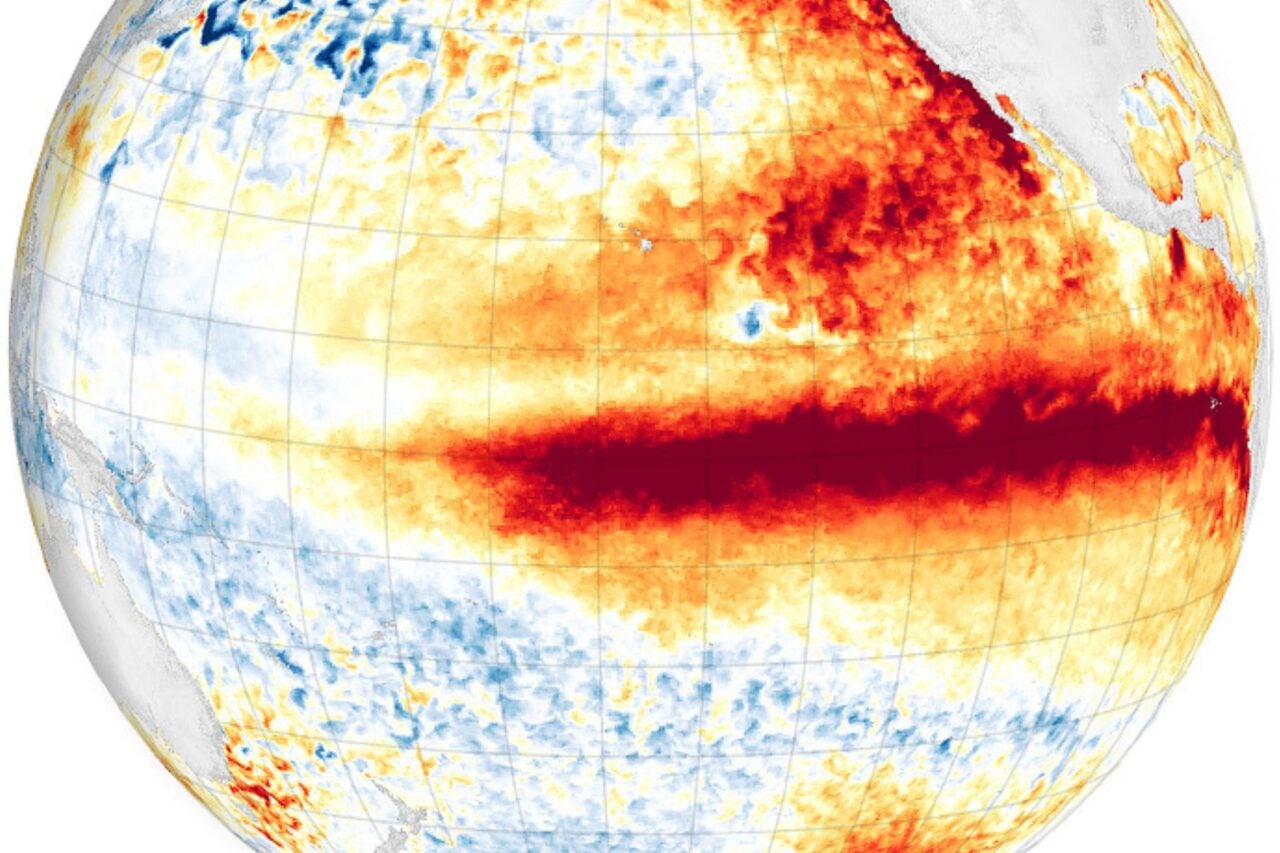
The combined impact of human-driven warming and a “super” El Niño will soon offer a taste of what a much warmer world will look like. Scientists expect 2026 to become the hottest year on record before being dethroned by 2027. One can only hope that the extreme weather, food shortages, and record-shattering global temperatures expected to unfold over the next year might spur global action on climate change.