People’s love of furry animals is having some unexpected effects on the monkeys living in Gibraltar. A study out today shows that these monkeys are regularly eating dirt—likely as a way to soothe their stomachs from all the junk food they’re getting via human tourists.
Researchers inadvertently discovered the phenomenon while tracking local populations of macaques in the area. The more these monkeys were near tourists, the more they tended to eat dirt, indicating a direct connection. The findings support existing rules on not feeding the monkeys, as well as illustrate how these animals have uniquely shaped their lives around the presence of people, the researchers say.
“It sheds light on the adaptability of these primate populations living in highly anthropogenic landscapes,” senior study author Sylvain Lemoine, a biological anthropologist at the University of Cambridge, told Gizmodo.
Monkey business
Gibraltar is a British-owned territory located at the southern tip of the Iberian Peninsula bordering Spain. While most famous for its limestone mountain, the Rock of Gibraltar, it’s also well known for housing the only wild monkeys left in Europe, a population of Barbary macaques (Macaca sylvanus). There are estimated to be around 200 to 300 macaques in the region.
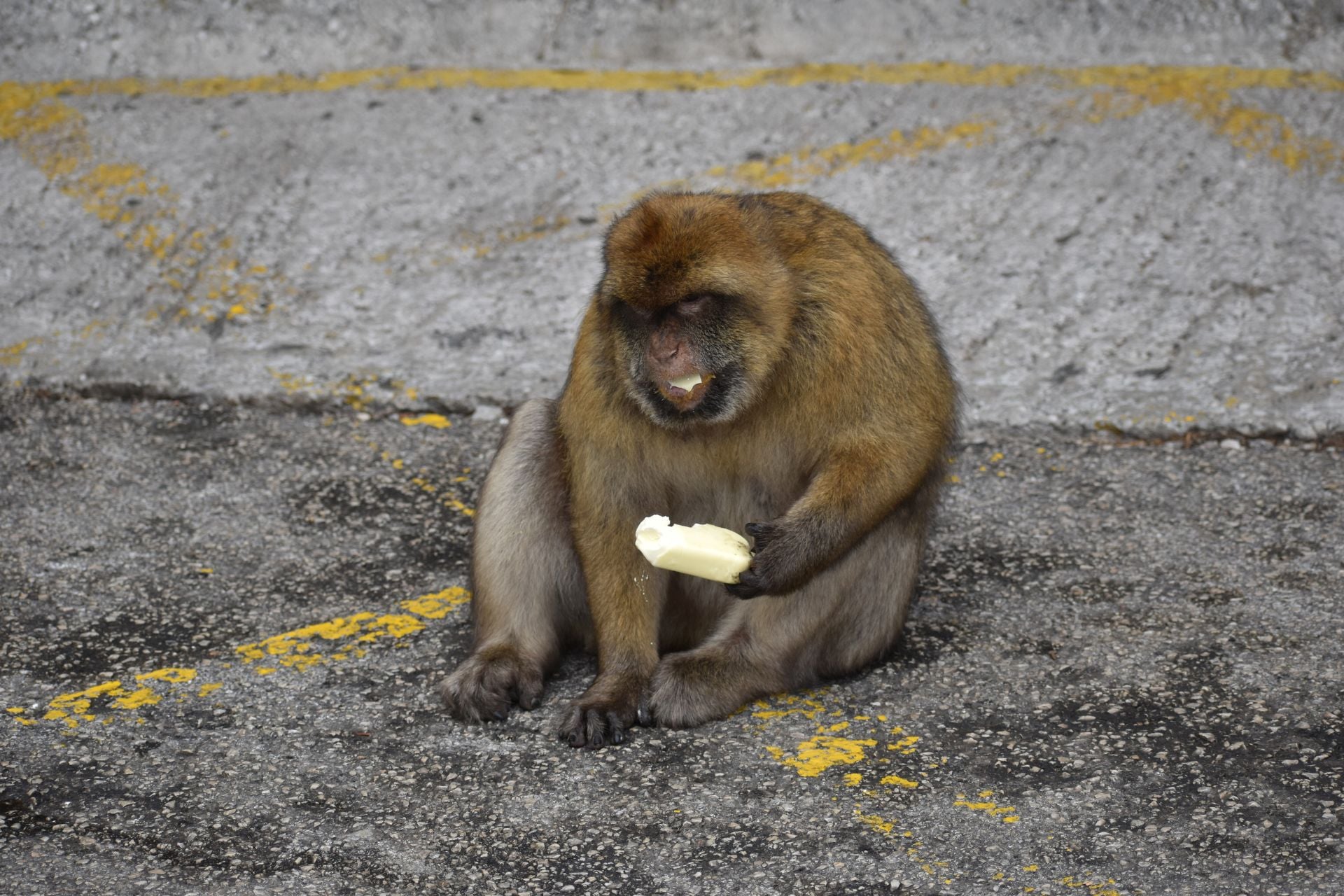
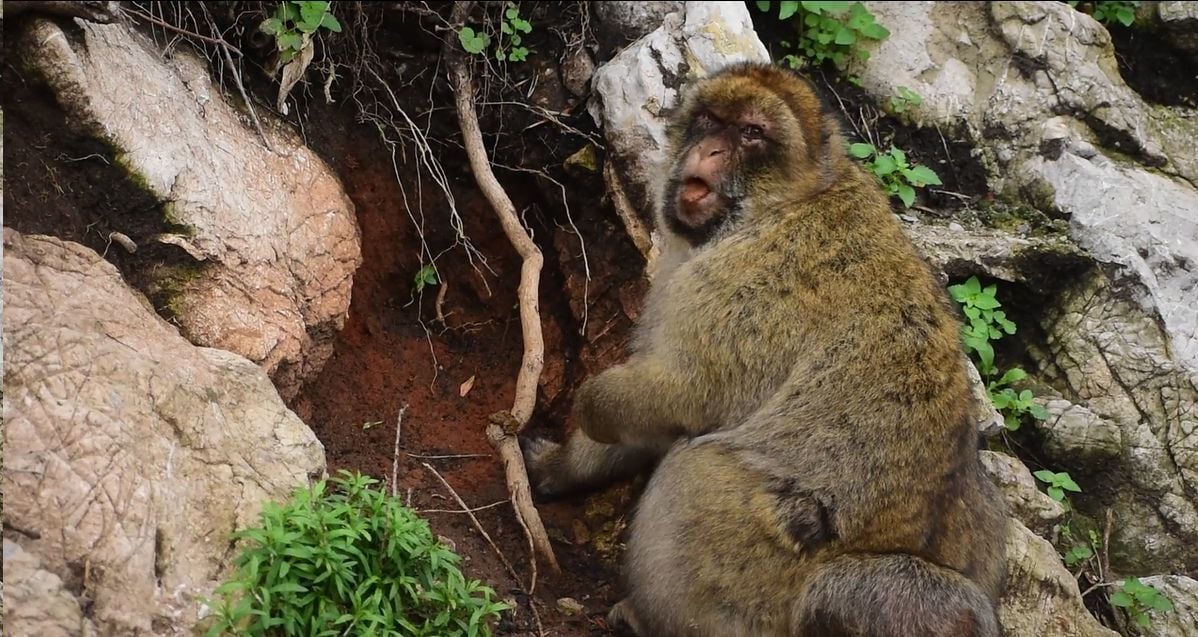
The monkeys are provided regular supplies of fruits and vegetables by the local government, but their diet is often supplemented by the food procured from tourists, either given voluntarily or stolen. In 2022, Lemoine started a long-term and still ongoing study on their behavior and ecology, the Gibraltar Macaques Project. And it wasn’t long before he and his colleagues began observing some of their subjects routinely eat the soil around them, a phenomenon formally known as geophagy.
“We realized that this was a very common behavior which had never been reported or studied before, but that there was variation between the different groups,” Lemoine said. “We then integrated reporting and recording all sightings of this behavior in our regular population censuses and individual follows.”
The team’s subsequent investigation revealed a few things. For starters, dirt-eating was most common in the macaque troops that spent the most time in tourist-friendly areas, such as near the top of the Rock. More than once, the researchers also observed monkeys eating dirt immediately after they scarfed down a tourist treat. Conversely, the monkeys that were around humans the least ate less dirt, while zero geophagy was observed in a troop with no prolonged human interaction.
Other possible explanations for the dirt eating, such as a craving for minerals during pregnancy (which might help explain similar cases in pregnant women), failed to pass muster. “There is no specific relationship between geophagy rates and female reproductive status, which would be expected if this behavior is related to a need for mineral supplementation,” Lemoine explained. The team’s findings were published Wednesday in the journal Scientific Reports.
A sign of adaptation and culture
Gibraltar’s macaque population appears to be relatively stable. That said, the team’s work does suggest it’d be wise to tighten the enforcement of rules prohibiting tourist feeding.
Junk food is high in empty calories and low in fiber, and we already know from humans that it’s not healthy to regularly consume large amounts of it. The team also speculates that these foods are disturbing the monkeys’ gut microbiomes, while the dairy found in ice cream and similar products popular to the region is likely a major cause for their gastrointestinal symptoms.
At the same time, the team’s research further highlights the ingenuity of animals that have been able to carve out a niche in human-dominated environments. Most of this work has focused on birds, but studies of other primate species have shown that some have learned how to “trade” items stolen from tourists for food.
This dirt-eating behavior also seems to be shaped by the specific culture found within the troops. While most groups ate the red clay common in Gibraltar (terra rossa), for instance, one troop preferred the tar-tinged dirt found in the potholes of asphalt roads.
Lemoine and his team plan to dig deeper into this behavior, which will include chemical and mineral analyses of the dirt they’re eating. In the meantime, they hope their research can help people more appreciate these intelligent animals, especially those visiting the area.
“It will bring light to this macaque population, increasing the attractiveness of the site, with an increased focus on the behavior of the macaques. Local tourist guides will be able to tell a new story to their clients and even be lucky to observe this behavior directly,” he said.