Roughly 252 million years ago, nearly all life on Earth vanished. In a blink of geologic time, the Permian-Triassic mass extinction—also known as the Great Dying—wiped 96% of marine species and 70% of terrestrial species off the planet. The question that has plagued researchers for decades is, why?
Well, hang on a minute. Let me be more precise. Scientists do know what triggered the Great Dying: The geological record shows that a surge of volcanic activity (likely from the Siberian Traps) filled the atmosphere with greenhouse gases, ushering in a much warmer climate that most species simply couldn’t tolerate. However, the specific kill mechanisms at play have long perplexed experts.
In a study published July 6 in the journal Proceedings of the National Academy of Sciences, a team of scientists believes they have finally pinned down why so many sea animals died as a result of this extreme global warming. The findings not only solve a longstanding scientific mystery, but present a warning about Earth’s future.
“The biggest mass extinction of all time started from a world that is very similar to today,” senior author Erik Anders Sperling, an associate professor of Earth and planetary sciences at Stanford University, said in a statement.
Swimming in deadly waters
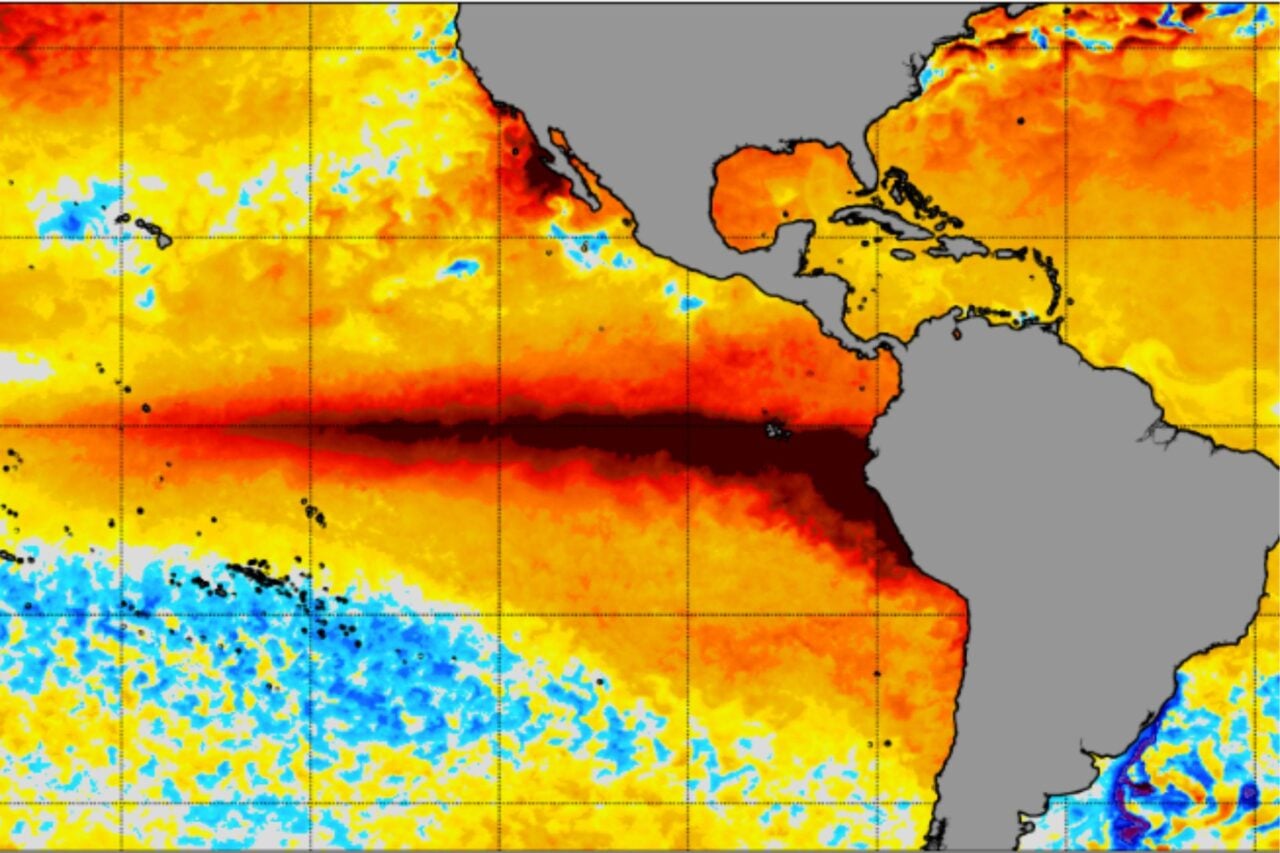
Sperling and several co-authors of the new research previously published a 2018 modeling study suggesting that warmer waters and declining dissolved oxygen levels were primarily responsible for marine die-off during the Permian-Triassic extinction. The rationale is simple: As global temperatures rapidly increased, so did ocean temperatures, and warm water holds less oxygen than cold water.
If these changes were the culprit, the handful of species that survived the mass extinction must have been particularly resilient to them. To test their hypothesis, the researchers measured how different groups of sea animals respond to warmer, oxygen-poor waters, comparing living representatives of those that dominated prior to the mass extinction with those that thrive today.
The results showed that groups that succumbed to the Great Dying had metabolisms that were far less tolerant of warm, oxygen-poor waters than those that survived.
“Our findings show that, across different organism groups, extinctions happened at much higher rates for those more vulnerable to increases in water temperature and decreases in oxygen availability,” lead author Jose Andres Marquez, who completed the research as a PhD student in Sperling’s lab, said in a statement.
A warning for Earth’s future
Hundreds of millions of years after the Permian-Triassic extinction, Earth is facing another climate crisis—this time driven by human activity. As global temperatures climb, marine species are once again stressed by warmer, oxygen-starved waters. The researchers warn that history could repeat itself.
“The bad news is, we are on track for Permian-Triassic levels of warming in worst-case scenario projections,” Sperling said. In the lead-up to the Great Dying, global temperatures rose roughly 14 to 22 degrees Fahrenheit (8 to 12 degrees Celsius) over thousands of years. Today, temperatures are projected to rise 2.7 to 7.2 degrees F (1.5 to 4 degrees Celsius) over just a century or two.
“But the good news is, we’re still at the point where we can change things and do something about it,” Sperling said. Unlike during the Permian-Triassic extinction, we have direct control over the carbon emissions driving this crisis. These findings underscore the consequences of letting global warming continue unchecked.