Last summer, after Trump shuttered climate.gov—the National Oceanic and Atmospheric Administration’s portal on climate science—the site’s former program manager called it a “deliberate, targeted attack.” Another former NOAA official, once its acting chief scientist, accused the administration of trying to keep inconvenient climate data “buried.” Thousands of NOAA staffers (north of 20%) had been either fired, laid off, or forced into early retirement by that point last June—including all ten tasked with producing climate.gov.
But it looks like America’s vaunted private sector really is still a place where entrepreneurial visionaries can identify gaps in the market and meet the public’s needs: A team of roughly 80 volunteer scientists and former NOAA staffers has resurrected climate.gov as the nonprofit climate.us.
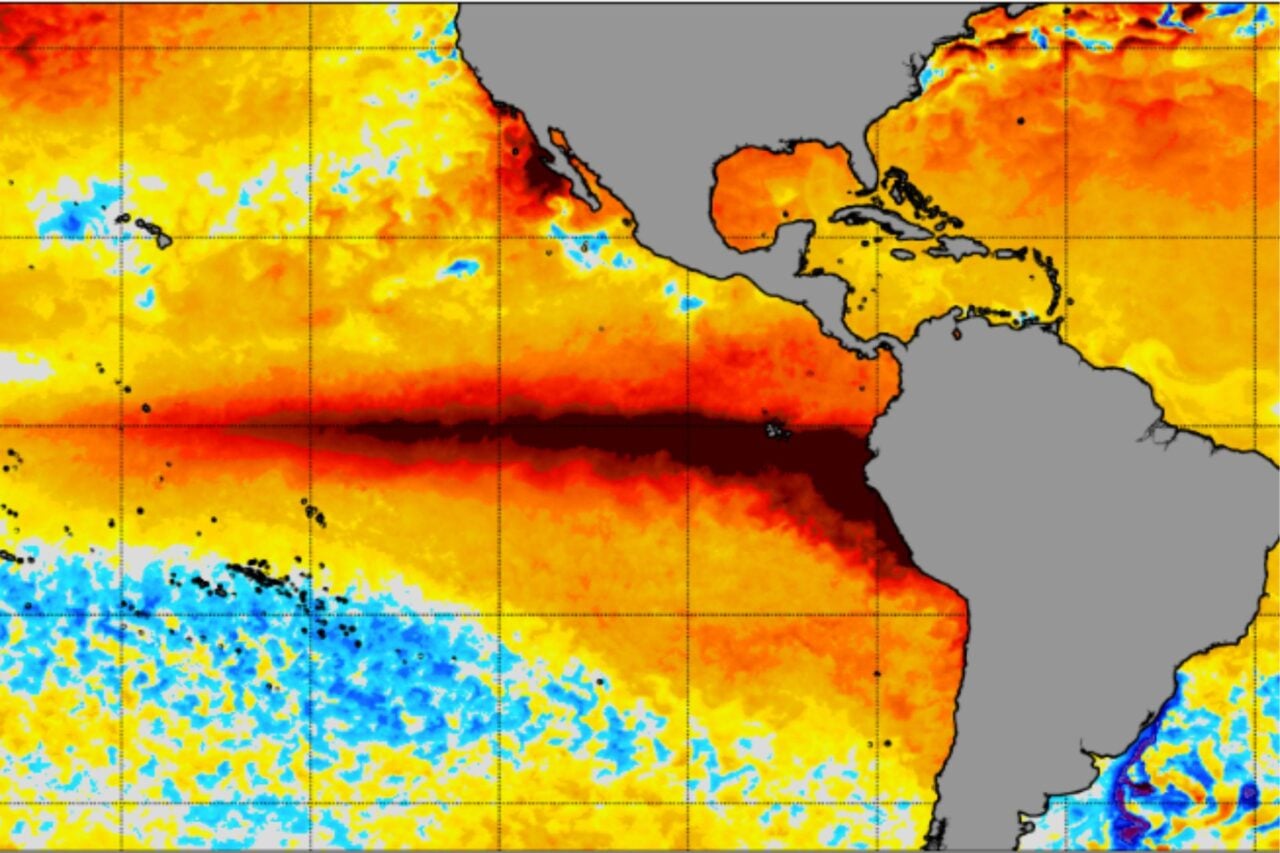
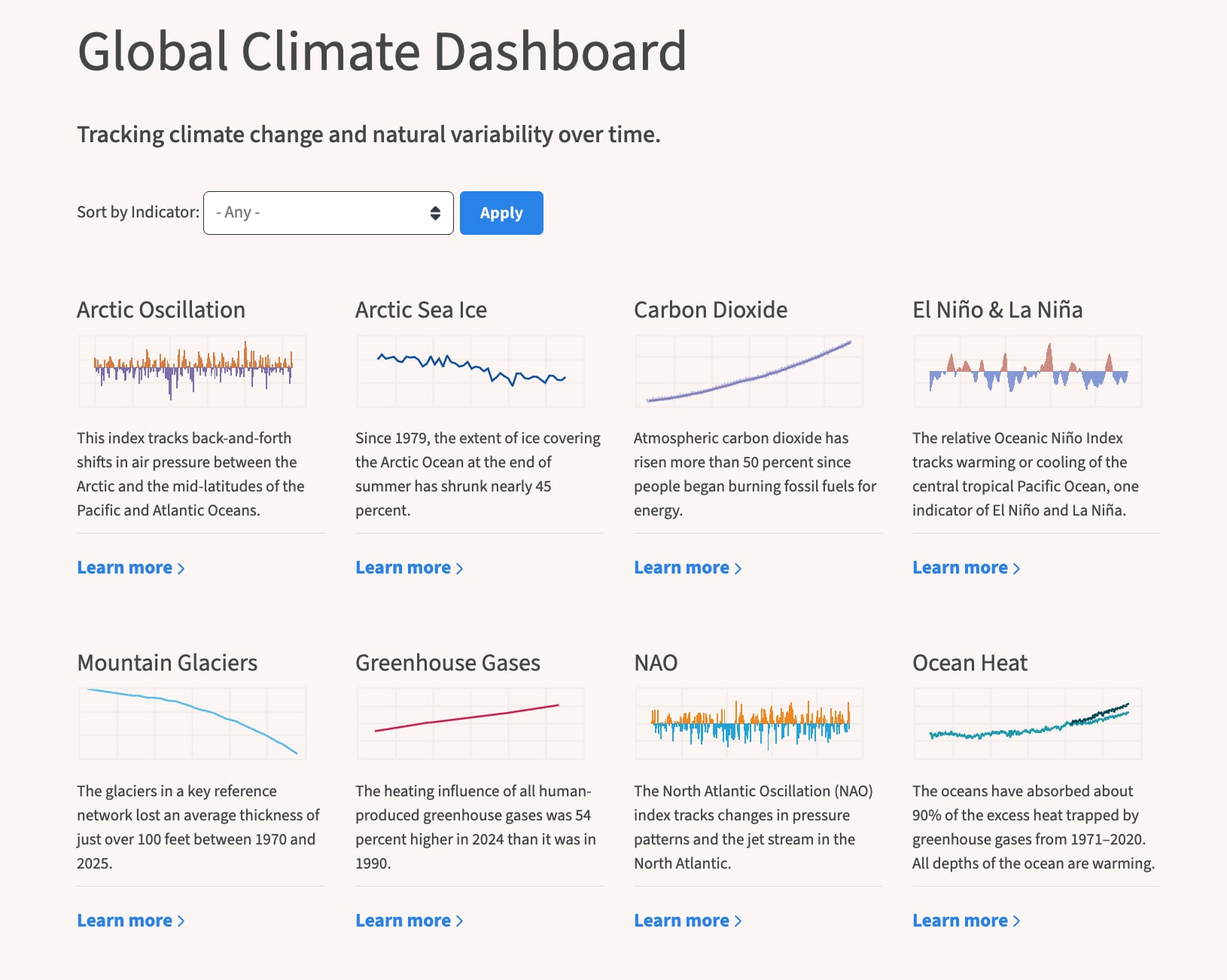
Funded with over $321,000 in crowdsourced donations (and more from one major anonymous backer), climate.us restores the site’s climate “dashboard,” which graphs everything from arctic sea ice to greenhouse gas emissions to fluctuations in radiation from the Sun. It’s also reassembled the old government resource’s entire 15-year history of climate news, as well as blogs by subject matter experts unpacking complex meteorological phenomena like El Niño, maps, status reports, and classroom materials designed to aid climate literacy.
“Trusted climate information should not disappear when politics change,” said Rebecca Lindsey, former managing director of climate.gov and current director of climate.us—in a statement.
“Climate.us is building an independent, durable platform so people can continue to find the data and information they need to understand and talk about climate, and to teach, report, plan, prepare, and make informed decisions,” she explained.
Brain drain, brain gain
Lindsey’s team found powerful allies among the pool of dedicated (and now grievously underemployed) scientists forced out of public service last year under Trump-aligned billionaire Elon Musk’s perversely wasteful government efficiency initiative, DOGE.
“[Now] we have a lot of expertise outside of the government because of so much brain drain from the government, and we can really stand up things,” geochemist Gretchen Gehrke, cofounder of the nonprofit Environmental Data & Governance Initiative, told National Public Radio last week. “[Climate.us], I think, is a success story of that.”
According to Gehrke, climate.gov had long served as a “hugely important” public resource for raw climate data, context, and analysis. As a scientist turned activist who once worked for the Environmental Protection Agency studying hydraulic fracturing’s impact on local water quality, Gehrke understood the communications challenge NOAA’s site was trying to tackle.
But Gehrke voiced skepticism on whether climate.us can match the objectives achieved by climate.gov in its heyday—given the “quiet discontinuation” of some critical climate data collection under Trump. “We are still not in a position to know what data is even being collected,” she noted.
A declaration of independence
Even without all of that previously accessible, up-to-the-minute climate data, many researchers and educators are grateful to have this version of NOAA’s site back on the web. Atmospheric scientist Katharine Hayhoe at Texas Tech noted in a testimonial posted to climate.us that a growing body of social science research has pointed to “public education as a key tipping point for climate action.”
“For years, Climate.gov was where I sent people for accurate, trustworthy answers about climate, from what El Niño means for their region to how extreme heat is changing where they live. Every article made complex science accessible and transparent,” Hayhoe said. “Climate.us doesn’t just carry that forward—it raises the bar.”
According to the fledgling nonprofit, about one third of its funding has come from over 2,500 small donations, offering a freedom from influence that it might not have enjoyed under any presidential administration in the past.
Lindsey said the new site will uphold climate.gov’s original commitment to unbiased dissemination of scientific information without advocating for any specific actions on climate change. As Lindsey told the New York Times, “The best solutions to our climate challenges are going to come from a climate literate public.”