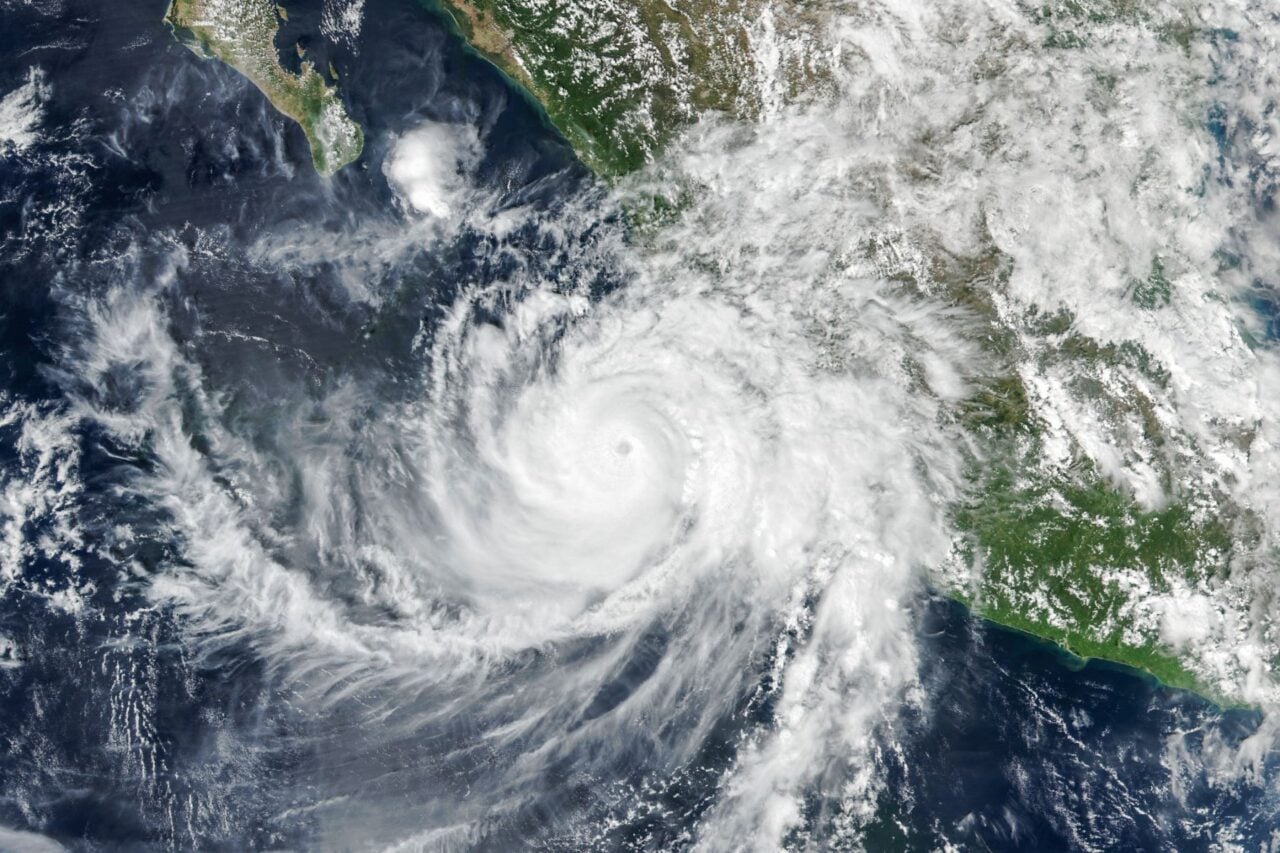
For months, scientists have been sounding the alarm over the rapid development of El Niño, which could reach record-breaking strength when it peaks later this year. This is cause for concern because El Niño has global consequences that can be dangerous and incredibly costly, from ramping up extreme weather to destabilizing food systems.
El Niño is a natural and vital phase of the El Niño-Southern Oscillation (ENSO), a cycle that plays a major role in shaping year-to-year climate variability. However, research has shown that the long-term impacts of a single El Niño event can cost the global economy trillions of dollars. As human-driven climate change amplifies their effects and potentially makes stronger El Niños more likely, some researchers are considering ways to mitigate them.
A study published today in the journal Science Advances suggests that targeted use of a geoengineering technique called marine cloud brightening could weaken an emerging El Niño. In a computer modeling experiment, “we were able to turn what was an extreme or super El Niño into a neutral event, so it wasn’t even an El Niño anymore at that point,” Jessica Wan, a postdoctoral researcher at the University of Chicago who led the study during graduate school at the Scripps Institution of Oceanography, told Gizmodo.
Squelching super El Niño?
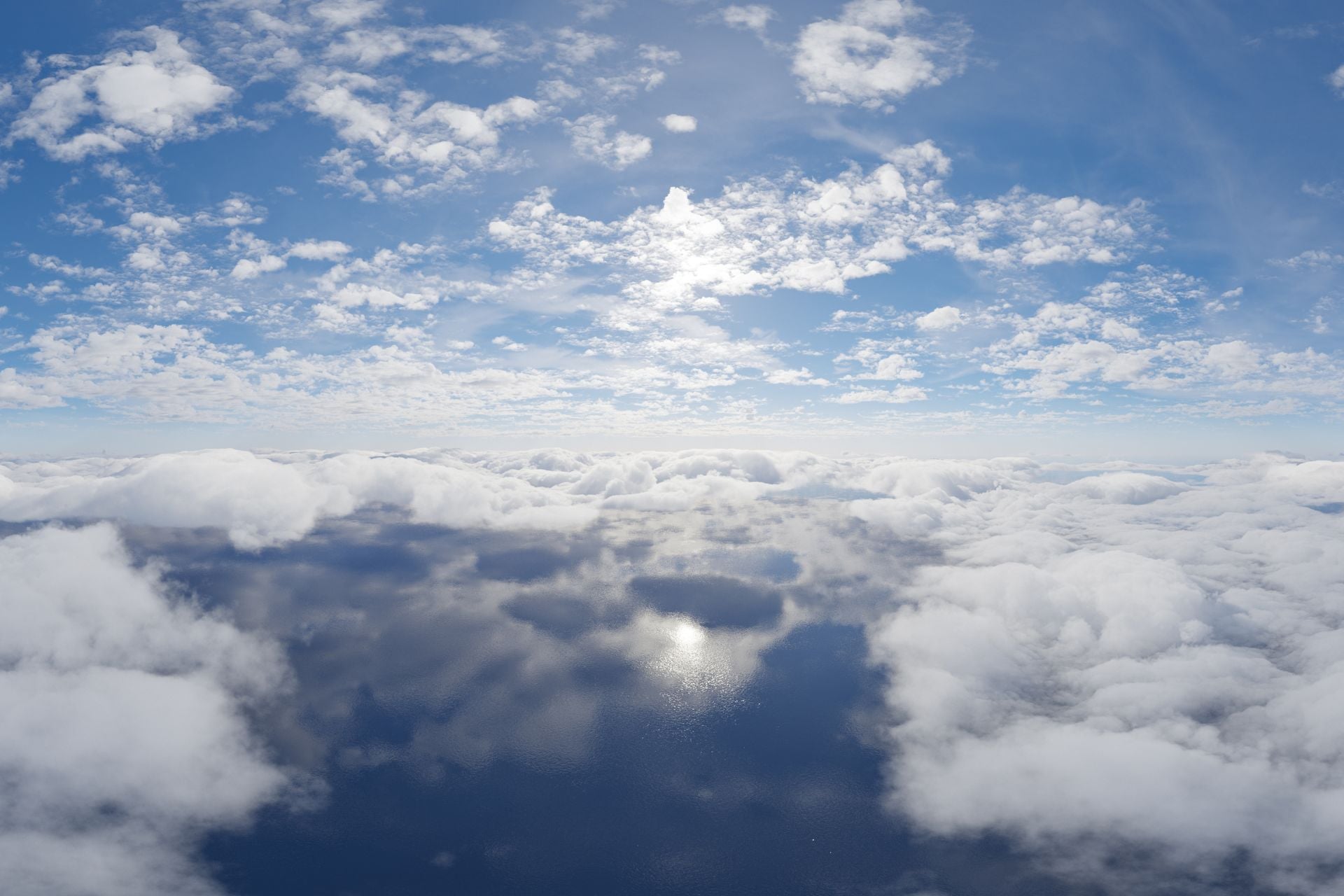
Marine cloud brightening injects aerosols into the lower atmosphere over the ocean, producing brighter marine clouds that reflect more sunlight back into space. British cloud physicist John Latham first proposed the idea in 1990 as a means of slowing global warming, and since then, there have been numerous theoretical studies and some small-scale field trials to validate its effects.
In Wan’s study, the end goal was different. Rather than attempting to cool the entire planet, she and her colleagues wanted to see whether targeted marine cloud brightening over the southeast tropical Pacific could weaken a developing El Niño.
Researchers have never actually attempted to alter the strength of El Niño using marine cloud brightening, but the devastating Australian wildfires of 2019 and 2020 functioned as a natural experiment. Previous studies have shown that smoke from the bushfires blew across the sea and brightened the vast layer of low-lying clouds that hangs over the southeastern subtropical Pacific Ocean, contributing to the unusually long La Niña event that lasted from 2020 to 2023.
Using a previously established, widely used climate model, Wan and her colleagues first validated that the smoke particles were, indeed, the primary cause of that La Niña event. With that confirmed, they then modeled the effects of artificially induced marine cloud brightening on the 1997 to 1998 and 2015 to 2016 El Niño events, varying the extent and timing of the intervention over the southeastern Pacific.
Both these El Niños were historically strong, but the results suggest that marine cloud brightening could have remarkably weakened them. Under the most aggressive scenario, in which marine cloud brightening was applied from June through February, it reverted these super El Niños back to an ENSO-neutral state.
“I would say we were pretty surprised,” Wan said.
Big questions remain unanswered
While the results are promising, there are important questions that need to be answered before researchers can begin real-world experiments. “This was obviously a really exciting finding, but but we really could consider it more of a proof-of-concept rather than a ‘let’s go’ endorsement,” co-author Katharine Ricke, an associate professor at Scripps, told Gizmodo.
The findings point to several big questions that need to be answered before researchers can even consider field experiments. One issue that requires further investigation is that weakening El Niño with marine cloud brightening quickened the onset of a subsequent La Niña.
“The implications of bringing on La Niña more quickly, or more La Niñas, or potentially larger La Niñas, are something we’d want to investigate closely,” Ricke said. Deliberately weakening El Niño could have additional unintended consequences as well, potentially triggering other modes of climate variability or, if used repeatedly over many events, changing how heat and carbon are exchanged between the atmosphere and ocean over time.
Clearly, there is much follow-up work to do. But as another super El Niño takes shape, the study offers a glimpse of a future in which scientists could prevent its most severe impacts.