Ancient Egypt is a gold mine of humanity’s best artwork from antiquity. Remarkably, many artifacts from this era retain their vibrant colors to this day—and scientists now understand how this was possible.
An international team of conservators, historians, and archaeologists conducted a detailed analysis of paint binders and adhesives in painted artifacts from between 1425 BCE and 40 CE. In a Science Advances paper published today, the researchers report not just the importance of glue in the preservation of Egyptian art, but also a previously unknown dependence on plant ingredients. For the study, the team analyzed 28 paint and adhesive samples taken from 14 different pieces of artwork held by the Egyptian collections in major museums. The discovery sheds new light on how, for Egyptian artists, their choice of materials held religious and symbolic value.
“Our finding challenges long-held assumptions about ancient painting techniques and opens new windows into workshop practices, ancient trade, and the materials’ religious and symbolic meaning,” Clara Granzotto, the study’s first author and a conservation scientist at the Art Institute of Chicago, told Gizmodo.
Ancient chemistry at work
According to the paper, researchers were already aware that ancient Egyptians used paint binders and adhesives, which were likely a byproduct of butchery. Ancient artisans obtained glue by boiling animal bones and connective tissues. That said, this was primarily based on visual observations, and it was only relatively recent that scientists began to really investigate the chemical and biological origins of artistic materials.
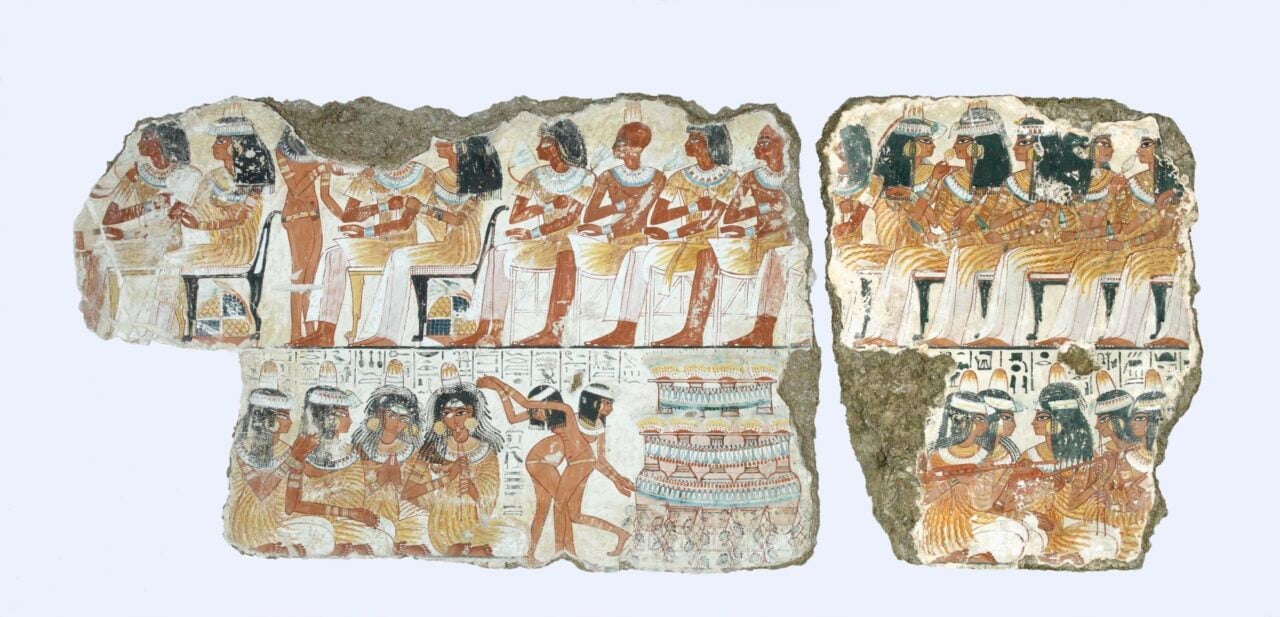
Still, it was clear that the adhesives did wonders for the artisans of ancient Egypt. For the latest study, Granzotto and colleagues studied paint layers applied onto wooden coffins, fragments of tombs, cartonnage, and architectural elements made of limestone. The adhesives were also actively used to hold things together, like the lid of a wooden coffin. Being in such close proximity to this artwork, it was evident “how accurate and detailed the paint is,” Granzotto said. “It’s simply incredible.”
Treading lightly
There’s an obvious obstacle when it comes to studying ancient artifacts, many of which are more than 2,000 years old. They are very, very fragile. That makes it even more impressive that the organic material on Egyptian artworks has survived, but in discussing the project with museums, Granzotto and colleagues had to find a technique that would minimize the harm to these precious artifacts.
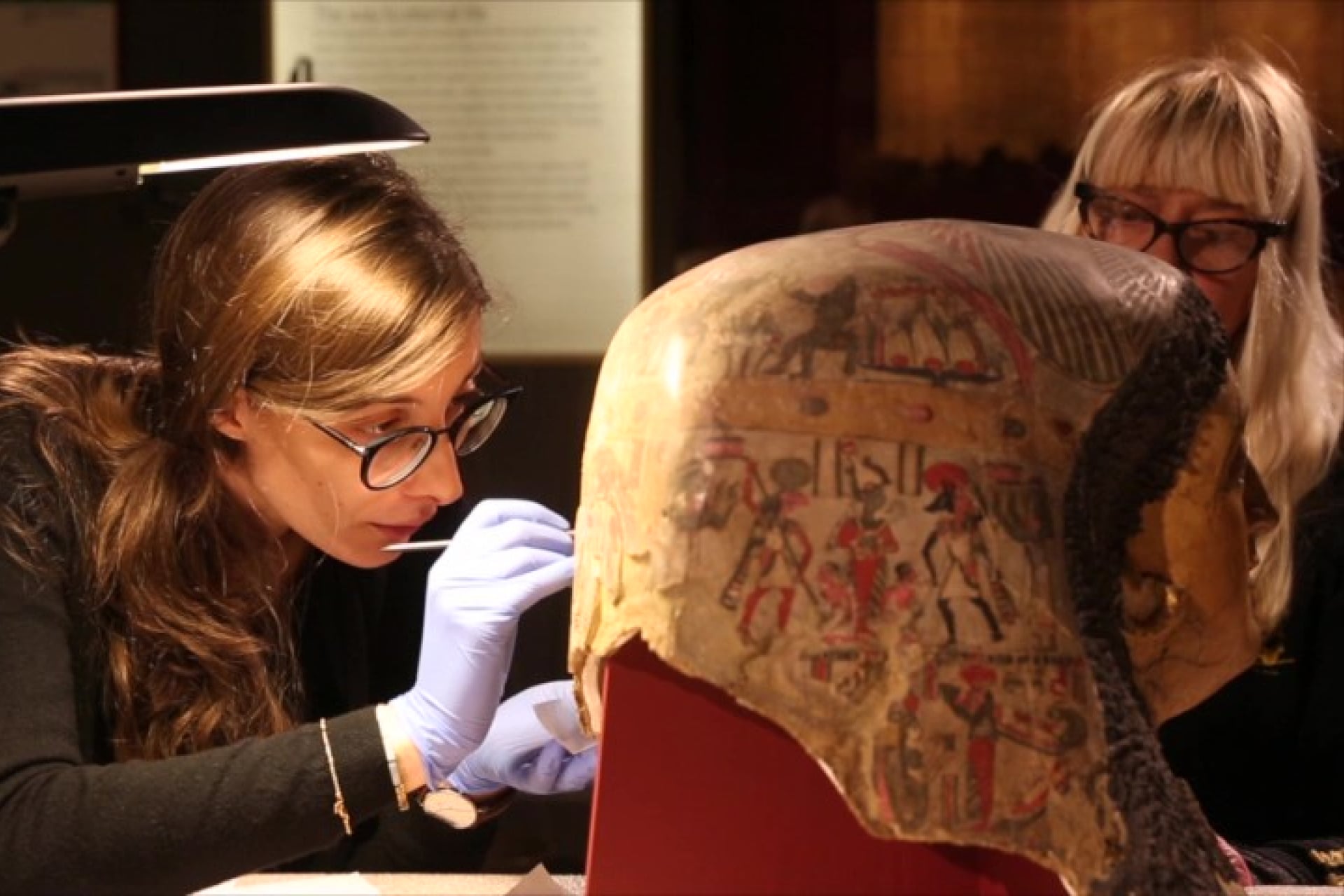
They opted for proteomics, a technique in which tiny samples of ancient proteins are used to extract a surprisingly large dataset of information. To gather these samples, the team studied the artwork under microscopes and took physical samples using surgical needles and blades. They also excluded particles that might have come from archaeological or conservation work in the past.
Creating with intention
The project’s primary focus was to provide “solid analytical evidence” for the use of organic materials in paint binders and adhesives of ancient Egypt, which the team’s findings did provide. Among the plants and plant-based products detected were cereals and pollen allergens. But there were some odd things they hadn’t expected to find, namely plant proteins from sesame and moringa.
There was text evidence to suggest moringa trees were used during Egypt’s Greco-Roman period, but this is the first direct proof of moringa proteins in Egyptian artwork, according to the study. What’s more, the samples were identified across different artifacts from two separate collections, which could mean that the plant proteins were widely used. That might not sound too impressive, but it could be evidence that Egyptian artisans chose their tools with great intention, Granzotto said.
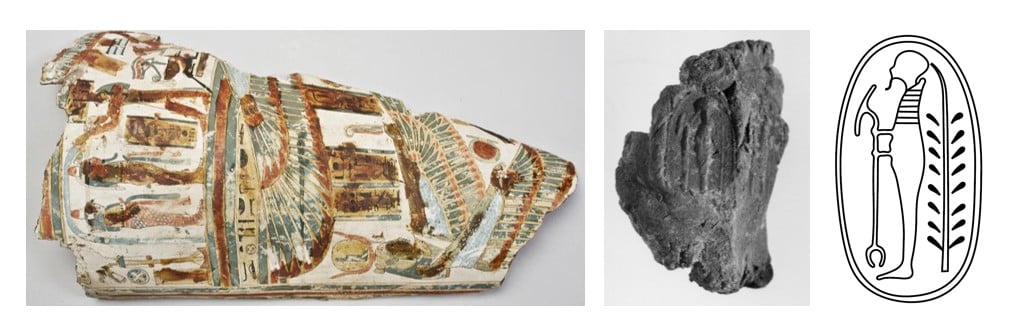
“In ancient Egypt, the moringa tree was associated with Ptah—the patron deity of craftsmen and artisans, often invoked as ‘Ptah Who is Under His Moringa Tree,’” she explained. This suggests that “using moringa products may have been an intentional choice by artisans to dedicate or protect their craft,” she added.
Looking back in time
As with all things archaeology, the team’s findings represent one possible interpretation out of many. (We cannot, after all, travel back in time to ask Egyptian artists if that’s what they were really thinking.) Still, as Granzotto told Gizmodo, the new findings “provide a starting platform for exploring patterns in terms of chronology, regionalism, different workshops, and preferences for specific materials based on pigments and substrates in ancient Egypt.”
In other words, art, from any era, reflects far more than something that’s pleasant to look at. It’s one entryway into the bigger picture of material science and cultural practices from the past. Something to keep in mind the next time you visit your local museum’s Egyptian collection, perhaps?