Scientists are continuing to push the boundaries of what’s possible in neuroscience. A study out today illustrates that it’s possible to create mice with more human brain-like tissue than ever seen before.
Researchers at Stanford University and others have developed a new technique for growing human brain organoids transplanted into mice. These organoids take up more space inside a mouse’s skull and can even mimic some aspects of complex brain functioning, including the formation of viable neural networks. The feat should allow scientists to better study neurological disorders in the lab, the authors say. They also argue that the creation of such animals is still ethically appropriate.
“We’ve taken extraordinary measures in terms of ethical oversight over the past few years,” said senior author Sergiu Pașca, director of the Stanford Brain Organogenesis Program, in a press briefing held this week.
A novel type of mouse
Organoids are three-dimensional clusters of cells that can replicate some of the properties of an organ. They’re grown from stem cells in a lab. These structures can be used to more accurately study how drugs or other things affect organs in a more realistic setting than cells in a petri dish.
Scientists have made great strides in creating organoids that increasingly approach the complexity of their mimic organ, including brains. Pașca and others have previously shown it’s possible to transplant human brain organoids into mice, which can then further mature and even integrate into their nervous systems.
These experiments have run into some stumbling blocks. For one, human brain organoids still grow at roughly the same rate as a human brain, which is substantially slower than a mouse brain (about 20 times slower). Secondly, because the mouse brain matures so quickly, it effectively crowds out the human brain organoid in short order, limiting the latter’s potential size and functionality.
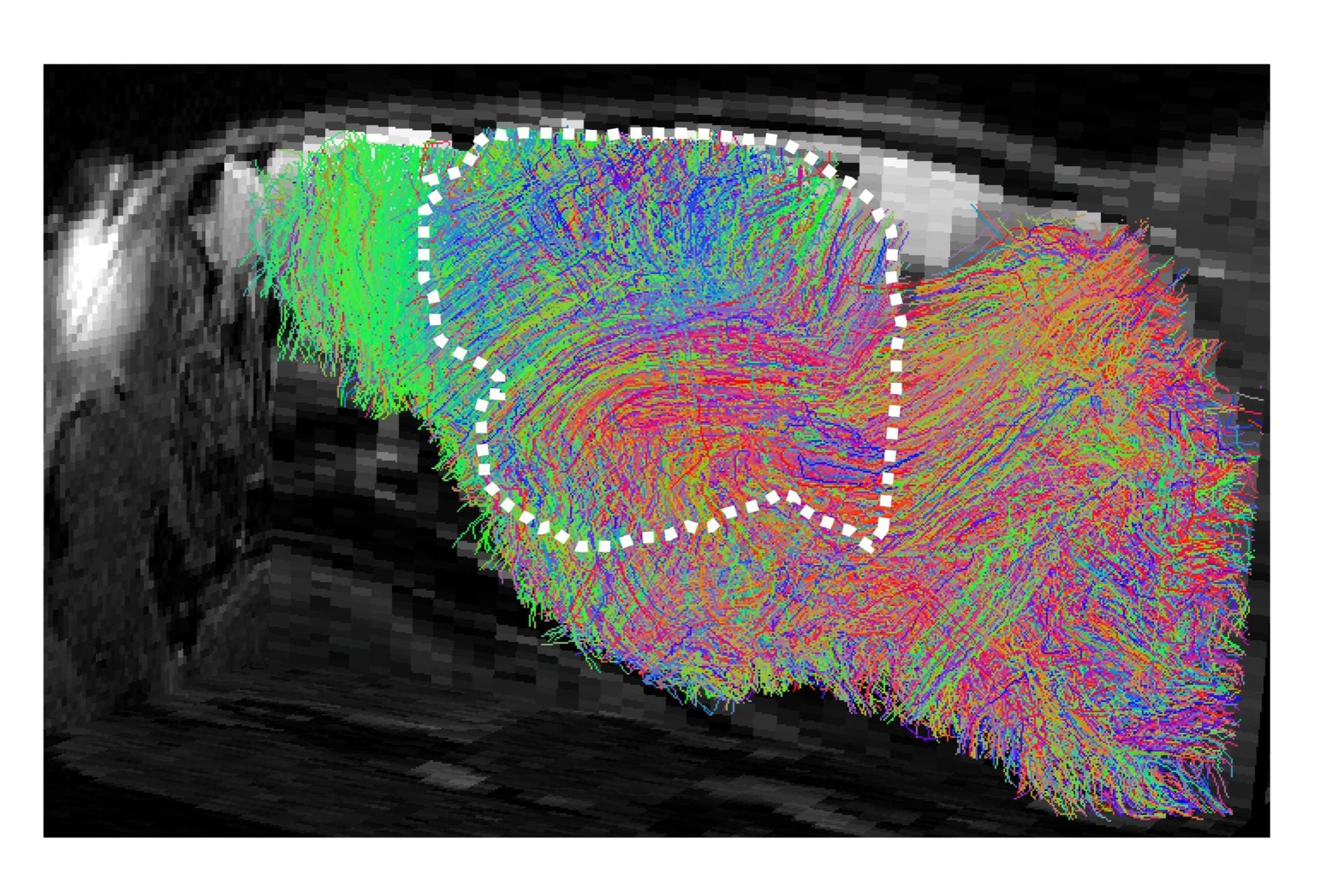
In this new study, published Wednesday in Nature, the team seems to have found a workaround to this problem. They created mice genetically designed to be missing much of their neocortex and hippocampus. And once they transplanted their human brain organoids into these mice, the organoids were now able to spread their wings and grow to a larger extent. The researchers dubbed their technique xenocortication.
Perhaps surprisingly, even mice born without a neocortex and hippocampus can still survive and be functional—a testament to the mammalian brain’s ability to compensate and make new connections early in development (even human children can thrive while missing large parts of their brain). Of course, these mice do still suffer deficits in their memory and other aspects compared to normal mice.
The researchers found that the human brain organoids inside these mice could grow larger and make more complex neural connections than before. More remarkably still, the process of xenocortication even appeared to prevent some of the known deficits seen in mice with a missing neocortex and hippocampus.
“The transplantation of neural organoids into rodent hosts offers a promising in vivo platform for investigating human neural function and developing therapeutics,” they wrote in their paper.
The ethics of human-brained mice
Helpful as it would be to have a better model of brain function in the lab, at least some scientists and outside observers have raised concerns about the ethics of this line of research. There might be a point of development where such organoids could actually be complex enough to experience basic sensations like pain, for instance, or possibly even a rudimentary form of consciousness.
It’s not clear whether such a thing is even possible, nor is it clear how scientists working on such research would be able to tell when that point of development could be reached. But even if you dismiss these fears as science fiction, there is still the worry that creating animals with human-like brain organoids could change them in a harmful or ethically dubious fashion.
The authors say they are well aware of the potential ethical implications of their work and that they have taken appropriate precautions with their latest research, which included reaching out to Stanford’s neuroscience institute.
“[We had] a group of experts who have looked at the experiments we’re planning to do and provided guidance. And then subsequently, the university has actually put together an ethics committee, external to the university, that included ethicists, legal scholars, patient advocates, and, of course, neuroscientists who have actually monitored and looked at all the experiments over the past few years. And I presented regularly in front of that committee,” said Pașca at the briefing. “So we were particularly careful about not just about the welfare of the animals…we also looked for any potential changes in behavior that would be problematic.”
Arthur Caplan, a bioethicist and professor emeritus at the NYU Grossman School of Medicine’s Department of Population Health who was not affiliated with the study, was impressed by the team’s findings but says we should be mindful about buying in too early to some of the loftier predictions that might arise from this research.
“It seemed to me a little overly optimistic. We haven’t really seen whether autism, for instance, can be better understood by [putting] organoids into a mouse brain. Mice are still some distance from us, and even with human cells in their heads, that model may or may not turn out to have useful reliable information for understanding human diseases,” he told Gizmodo. “I think we’ve got so much heavy promising, if you will, about the importance of this model for neurological and mental health disorders because there are definitely going to be criticisms, objections, and maybe even legislation to not permit this kind of work.”
Some of these objections might not necessarily be based on sound concerns, Caplan notes. He points out that a sizable number of people, including politicians and health officials, have wrongfully claimed that some vaccines are loaded with human fetal tissue as an argument against vaccination, for instance (these vaccines were made with the help of cell lines derived decades ago from a fetus, and no intact fetal tissue exists in the final product). So creating animals that could even theoretically approach human-like attributes is sure to trigger plenty of discourse from all corners.
“I think there’s always been unease about human animal chimeras,” he said.
Caplan isn’t saying that this research can’t and won’t lead to important new insights, but it’s likely that researchers like Pașca and others in this line of work will have to win over the public and assuage their fears.
“I think the model looks valuable, even though I’m saying it may be a little too optimistic about how much value there is,” he said. “I think we need more transparent public debate. It could be convened by state legislatures, it could be convened by religious groups, it could be convened by law groups, it could be convened by the field of bioethics.”
Humanimals might not be coming down the pipeline anytime soon. But who knows these days?