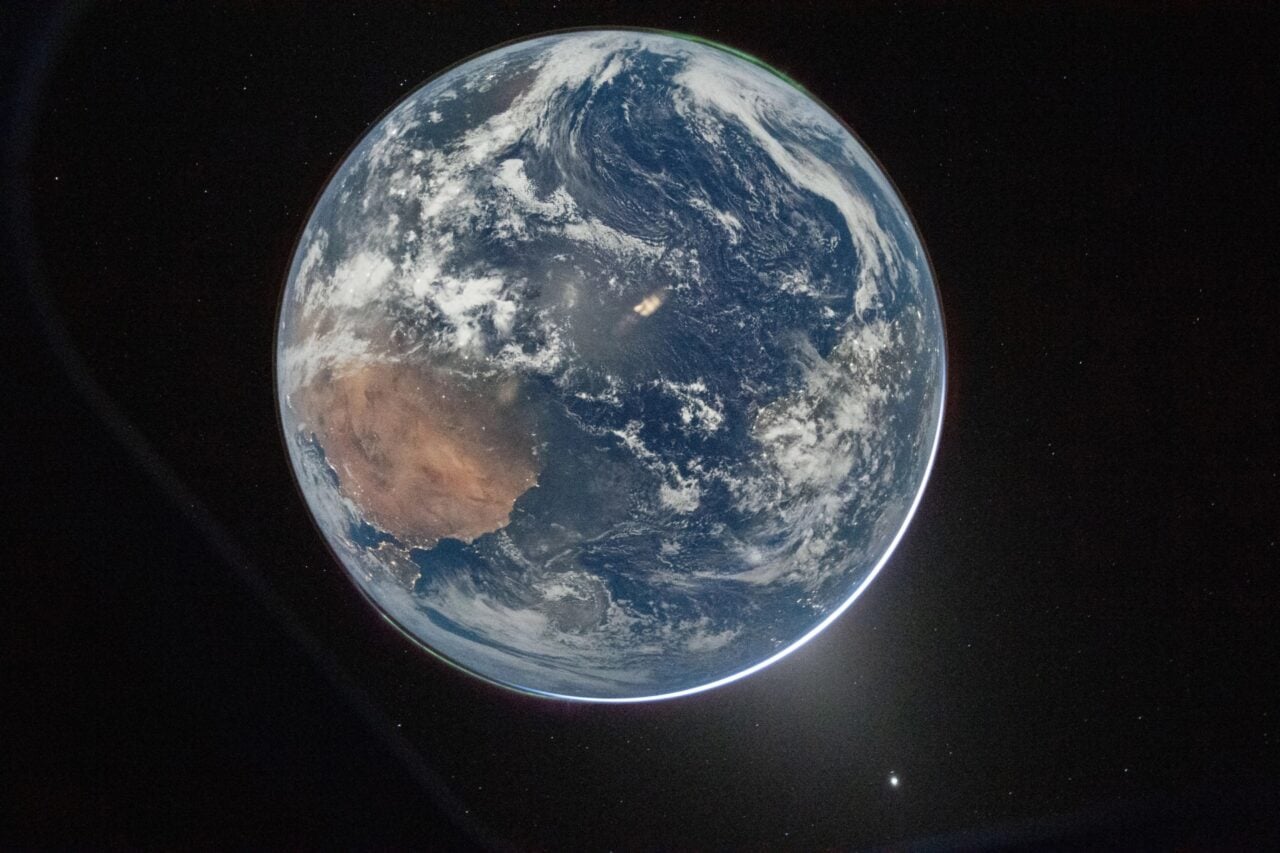
Photos of Earth taken by the Artemis 2 astronauts reveal their perspective as they zoom farther away from our home planet than any have gone before.
The hot super-Earth exoplanet has a magma ocean and orbits a very old star.
The newly spotted quasi-moon will likely remain in its orbit for several decades to come.
The two bodies appear as bright specks amidst a field of stars in the Aries constellation.
Since 2020, Earth has been rotating unusually fast on its axis, leading scientists to consider whether we should correct for the shorter days.
Mars is not safe either.
A rocky stretch in Western Australia's Pilbara, near Earth's earliest-confirmed lifeforms, was hit by a meteorite about 3.5 billion years ago.
The shot of our planet and the great cosmos beyond offers an eerie sense of scale to our quotidian situations on Earth.
Asteroid 2024 YR4 has a 2.2% chance of striking Earth in seven years, but recent updates keep pushing the odds in the wrong direction.
The asteroid, designated 2024 YR4, jumped to the top of NASA's risk chart, with a slim but measurable chance of striking Earth in just seven years.
The European Space Agency is calling the risky "braking" maneuver a "double world first."
Was this extra warming a blip, or a sign that climate change is veering off predictable tracks?
The Rocinante 's crew of reluctant sci-fi heroes may soon be heading to your toy shelf, thanks to a Kickstarter campaign launching March 1.
Some sensational things happened during the first month of 2024, some good, some bad, and some utterly unexpected.
The space agency is having to develop new tools to crack open the canister containing bits from asteroid Bennu.
Crystals formed in the Moon’s cooling magma ocean suggest the Moon is 40 million years older than previously believed.
Heavy rains after years of drought have left the Emilia-Romagna region submerged.
The spaceplane landed this week after spending 276 days in orbit.
Researchers found that the Moon's inner core is about 310 miles wide, which is about 15% the diameter of the Moon.
The space agency needs an additional $250 million this fiscal year to make sure the Martian mission stays on schedule to launch in 2028.