

Geneticists have found an interesting pattern in how early humans and Neanderthals interbred—and it wasn't balanced.
Prehistoric humans had a surprisingly sophisticated understanding of geometric rules, as this study suggests.
A set of teeth discovered in Ethiopia likely belonged to a previously unidentified species of early human-like ancestors.
The first-ever published research out of Tinshemet Cave indicates the two human species regularly interacted and shared technologies and customs.
A new study challenges the notion that anatomically modern humans began inhabiting rainforest habitats just 70,000 years ago.
The team behind a new study says the difference may be due to sexual selection.
People in the northern UK and Ireland are especially good at identifying fake accents compared to their southern compatriots.
A 700,000-year-old "hobbit" arm bone is offering new insights into the enigmatic species' evolutionary past.
Neanderthals were genetically predisposed to be early birds, and they may have passed on those genes to some humans living today, new research found.
Thousands of genomes spanning 40,000 years reveal how Neanderthals have lived on through Homo sapiens .
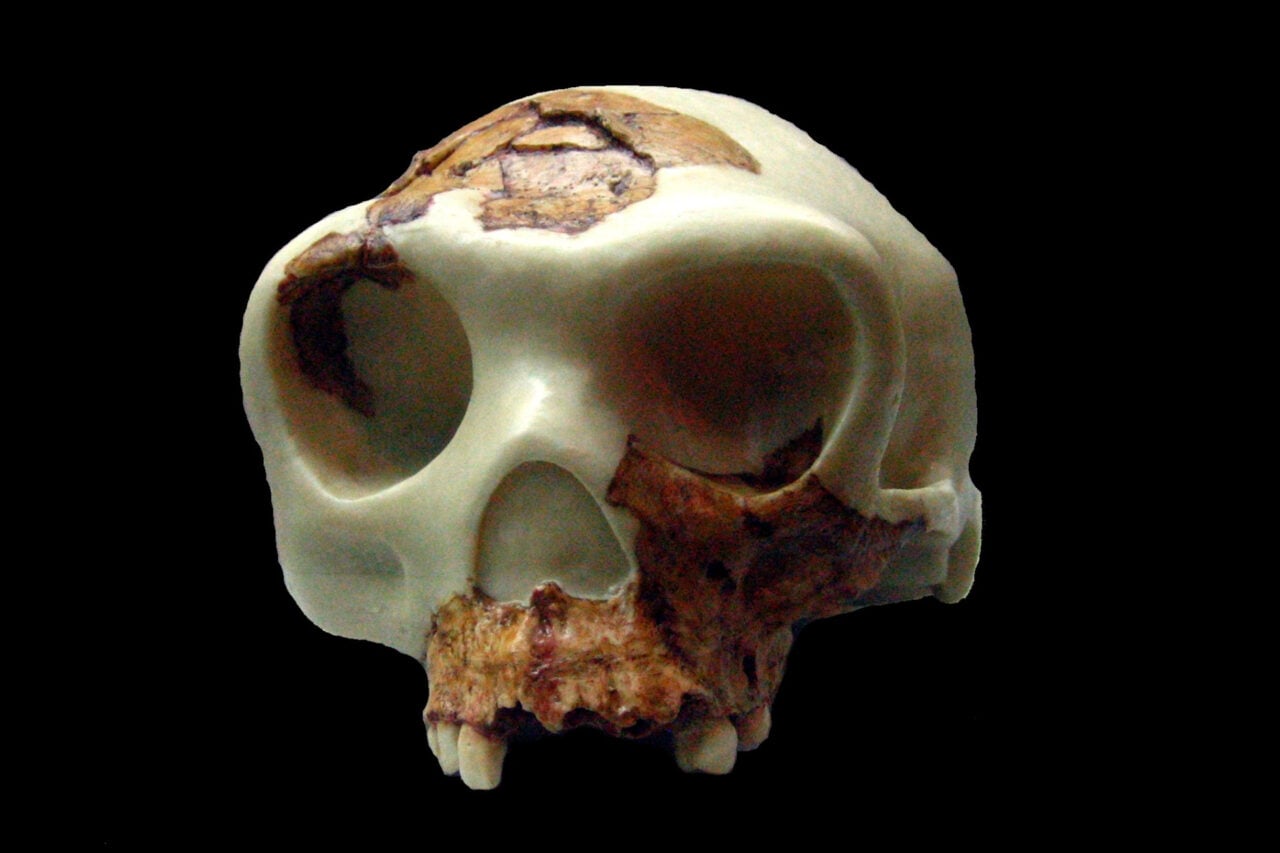
The damaged cranium of a Pierolapithecus has been put together virtually and compared with hominids past and present.
The fossilized footprints in New Mexico are at least 21,500 years old, corroborating a momentous 2021 result.
Unearthed in Zambia, the 476,000-year-old timber construction redefines our sense of early hominin ingenuity and craftsmanship.
Scientists are questioning a mission that sent fossils to the brink of space, igniting a debate on ethics, intentions, and anthropological integrity.
An ancestral human species faced a startling population bottleneck and teetered on the brink of extinction around 800,000 years ago, according to new research.
After collecting dust for half a century, a superlatively ancient whodunnit has entered into the spotlight.
La Roche-Cotard in France was sealed in the ancient past, indicating another Homo species was responsible for the figures.
New evidence from a cave in South Africa suggests Homo naledi , a distant human ancestor, was more complex than previously thought.
Humans got a gene related to nasal height from mating with Neanderthals, new research finds.
A new paper makes the case that elephants have evolved to become generally social and friendly all on their own, much like humans and bonobos.