Google I/O 2026 kicks off on Tuesday, May 19. Yours truly will be live at the Shoreline Amphitheatre in Mountain View, Calif., live blogging Google inject AI into every platform and tool that it makes.
In case it hasn’t been clear over the past few years, Google’s new goal is to make Gemini synonymous with AI. That means shoving Gemini—in its various forms and models—in as many products as possible. Expect that to be the main theme again.
What else should we expect to see at the developer conference? Let’s look into our crystal ball.
Gemini will be everywhere
At I/O 2025, Google launched several models of Gemini 2.5, including Gemini 2.5 Flash and 2.5 Pro. Gemini 3 launched in November 2025, and was followed by previews of Gemini 3.1 Pro and 3.1 Flash-Lite in February and March, respectively. Will Google announce Gemini 4 or will we get a new decimal version of Gemini 3 such as a 3.5 or 3.8?
Whatever the version number for the next Gemini is, I’m predicting that it’ll be incorporated throughout Google’s hardware, software, and services. That means more Gemini on Android, ChromeOS, Android Auto, and more. How much more powerful the parameters will be or how much faster it’ll run on certain devices will be something to pay attention to.
Android’s transformation into an “Intelligence System”
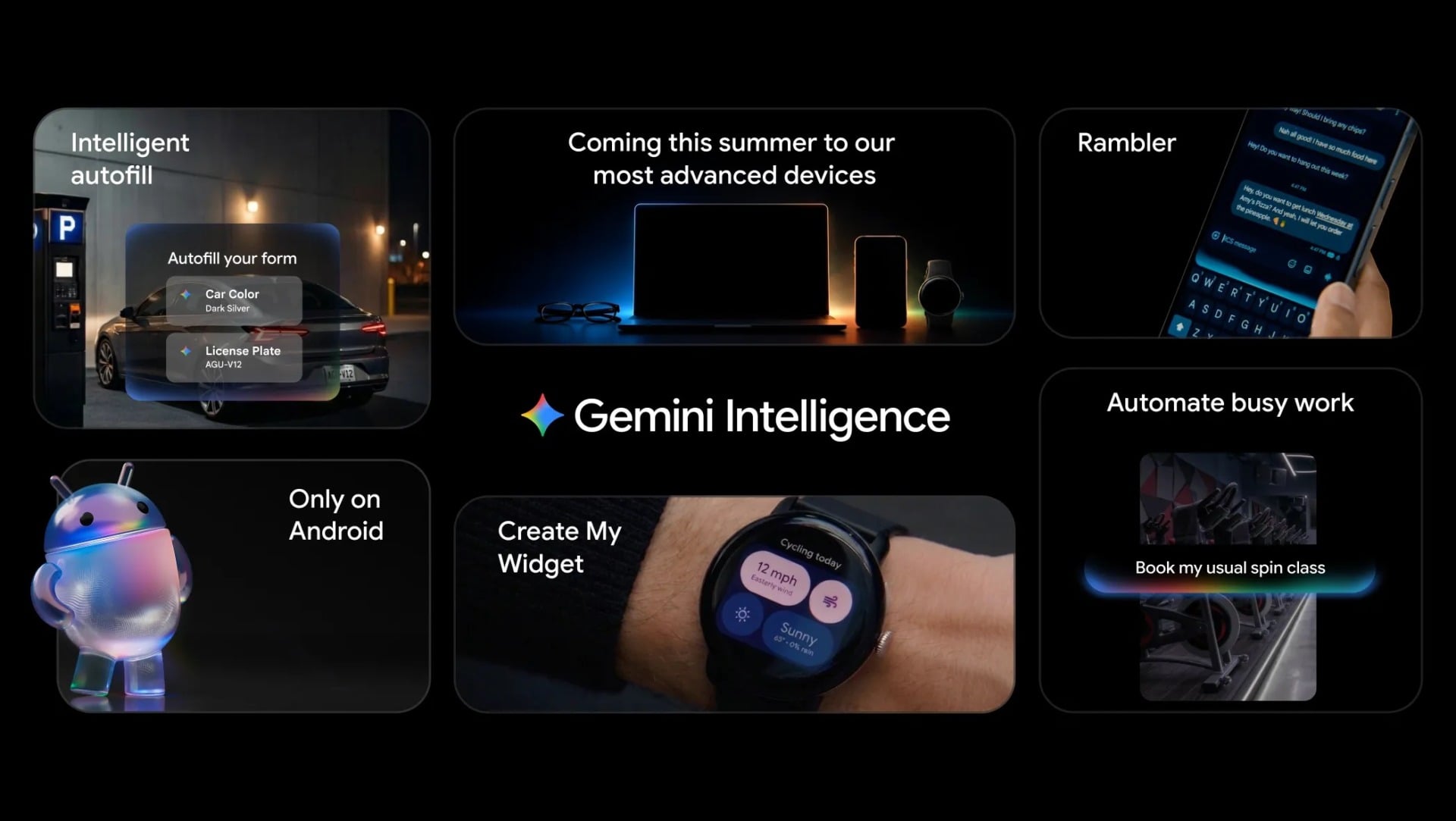
The Android Show last week gave us a preview of Android 17’s transformation from operating system to “intelligence system,” where Gemini will understand, anticipate, and take action for you. This infusion of “agentic” capabilities is supposed to completely change how we interact with Android-powered phones, tablets, and other computing devices.
I’m looking forward to trying out this new “Gemini Intelligence.” But I’m a bit concerned many consumers might not get a chance to experience it due to high Android hardware requirements. According to a footnote on Android’s official website (via 9to5Google), Gemini Intelligence requires a device with 12GB of RAM and a “qualified SOC flagship chip,” and it must receive five Android OS updates and support AI Core and Gemini Nano v3 (or higher). That means even devices as recent as the Pixel 9 series and the base Samsung Galaxy Z Fold 7 might not qualify.
Still, I’m excited to get my hands on Android 17 to check out features like Rambler (an AI feature that improves dictation by removing filler words), the new 3D emoji, Pause Point (a new screen time feature that stops you from opening distracting apps), and the new Create My Widget, which lets you create your own home screen widgets with Gemini.
More details on Android XR

Everyone seems to be betting on smart glasses being the future. Google gave us a preview of Android XR, its extended reality platform for smart glasses and headsets, last year, but we didn’t get any finer details on any devices to look forward to. We only saw a prototype.
I’m really hoping that Google and its eyewear partners pull up with some finished (or near-finished) smart glasses that can give us a better idea of what to expect. Will Android XR smart glasses—ones with one or two displays in them—make Meta’s Ray-Ban Display look like a toy?
The problem with the Ray-Ban Display is that there aren’t any third-party apps, which means functionality has been pretty limited for the $800 smart glasses. Meta announced last week that developers can now start building web apps for the screen-equipped smart glasses. While we’ve seen some cool demos like YouTube and even Doom, there’s still plenty of time for a company like Google to swoop in with a platform full of XR apps and take the lead.
An official name for the Googlebook OS?
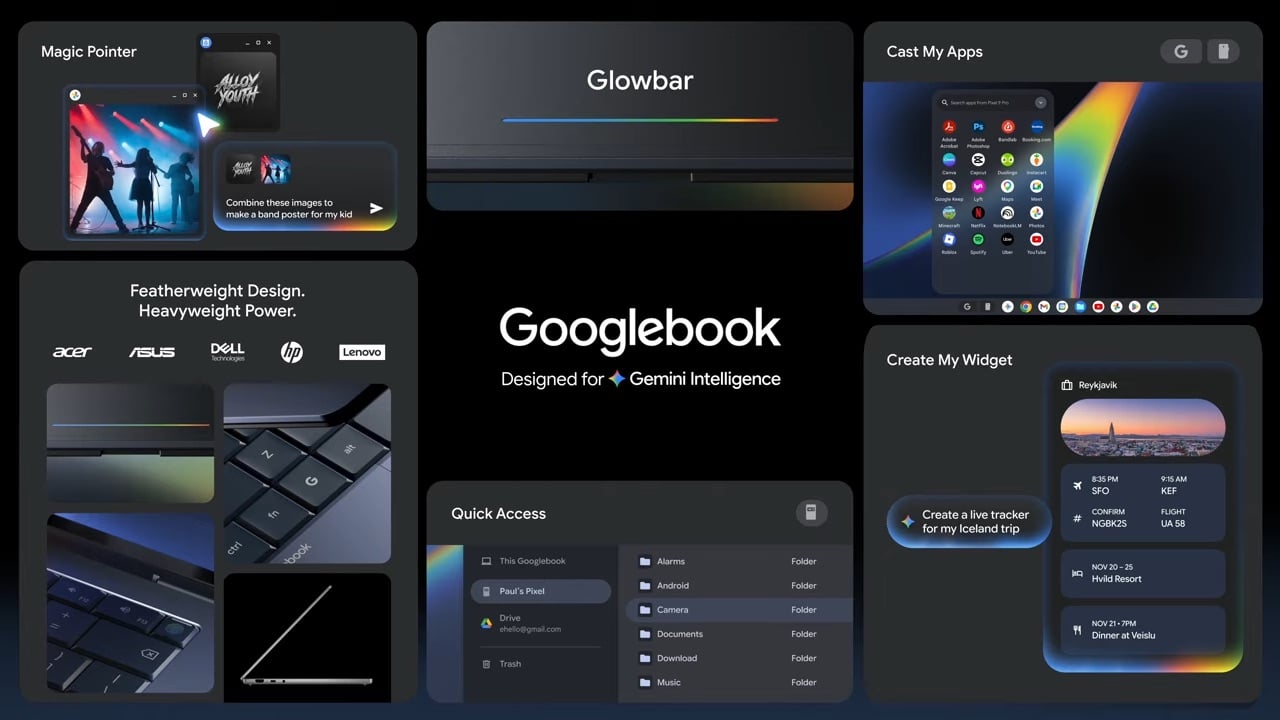
Google surprise-announced its next generation of laptops called Googlebooks during The Android Show, but stopped short of sharing a name for the “modern OS that’s designed for Intelligence.” We know the codename for the OS is Aluminium OS, but what will the official name be? My bet is on GoogleOS. Sounds obvious, but it’d match Googlebooks. Plus, what other name would befit a software mashup of Android and ChromeOS?
Sharing a first look at the Googlebooks hardware that’s coming from PC makers like Asus, Acer, Dell, HP, and Lenovo would be nice, too. Leave I/O attendees with some hardware eye candy to drool over.
More powerful AI slop generation

Google’s AI video generator, Veo, was updated to version 3 last year—and it immediately became reviled and revered for its leap in realism. Whether you think Veo 3 is useful for creative projects or hate it for destroying jobs, there’s no putting the AI video generator back into the bottle. Veo will likely only get more powerful in producing realistic video.
If there’s any conference to show off Veo 4, I/O is it. And if Google actually cares about safe AI, it’ll announce some kind of way to clearly distinguish Veo-generated content so that fewer people are fooled by AI videos.
Updates to Google’s existing platforms
Google has already shared details on how it’s refreshing Android Auto for more screen sizes and shapes and improving in-car experiences with dashboard widgets and a revamped Google Maps and navigation. But as a developer conference, Google will likely also share updates for platforms like Wear OS, Google TV, ChromeOS, and more.
Don’t expect any new Pixel hardware at I/O, though. We may get a teaser on the Tensor G6’s AI performance, but the Pixel 11 series and any potential Pixel Watch 5 aren’t expected until August the earliest.