The two massive storms were thought to be one and the same, but new research suggests the Great Red Spot formed more recently.
Several factors are contributing to what could be a record season for the ocean-borne storms.
The upcoming eclipse, occurring during the solar maximum when the Sun regularly expels material into space, could offer a unique viewing experience.
Measuring nearly 12 Earth-widths across, the stellar phenomenon could unleash powerful solar flares, threatening satellites and power grids.
Things are heating up on the Sun, with two solar flares exploding almost at the exact same time on opposite ends of the star.
The long-duration radio emissions were seen over a large sunspot on our star’s surface, revealing a previously unknown stellar phenomenon.
The storm is expected to bring rainfall, gusts of wind, and isolated flash flooding throughout the coast.
The storm system is currently hanging out between the Caribbean and Africa, and could become a category 3 storm by Tuesday.
The storm picked up juice quickly over unusually warm waters and hit Myanmar with devastating force.
The deadly storm hit Mozambique and Malawi for a second time over the weekend, weeks after it first made landfall in February.
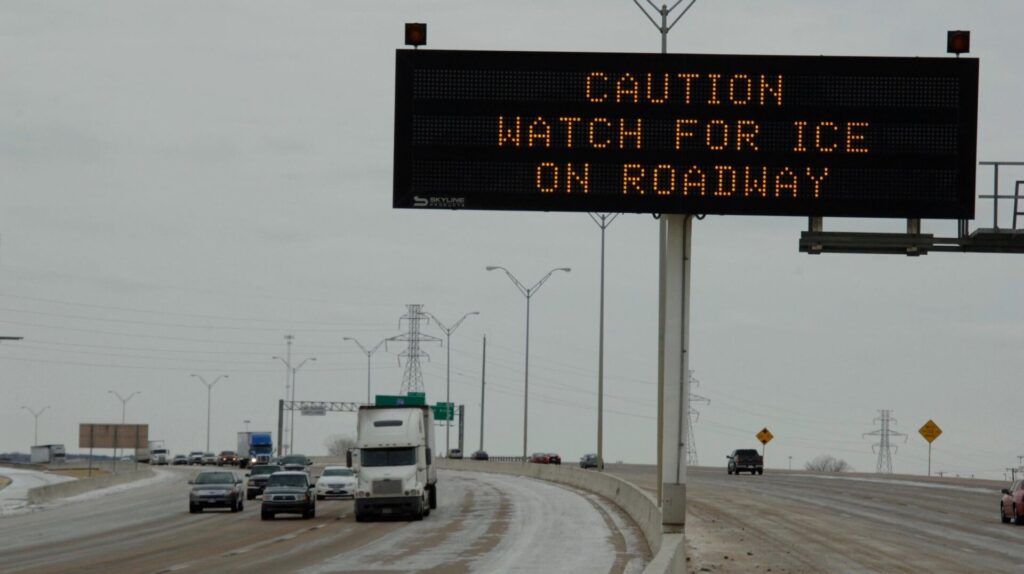
Cold temps, freezing rain, and sleet are coming a wide area including Dallas-Fort Worth, San Antonio, and Austin.
A particulate-filled whirlwind swept right over the Perseverance rover, providing some fortuitous scientific data.
Images from the Juno spacecraft revealed bizarre, organized storms on Jupiter.
All hail the icy, ominous disk that has returned to the Presumpscot River in Maine.
HD video isn't the only thing Saildrone captured. Data from the heart of the storm could help researchers, too.
"These days, hurricane modification is considered almost a kind of fringe science. But that wasn’t always the case."
The stomach-churning footage and data are a huge boon for researchers looking to improve hurricane forecasts and save lives.
The Hubble Space Telescope has recorded higher wind speeds in the famous Jovian storms in recent years.
Ida is expected to emerge over the Gulf of Mexico on Friday night where conditions are set for the storm to explode into a major hurricane.
Though named for the Roman riff on Zeus, the planet Jupiter looks every bit a happy home for Hades in an infrared image (below) captured by the Gemini North telescope of Mauna Kea’s Gemini Observatory. Meanwhile, the Hubble Space Telescope produced a lovely ultraviolet view of the planet. These contrasting images are a reminder that…