It was a moment for the spaceflight history books.
At approximately 1:57 p.m. ET, the Artemis 2 crew—NASA’s Reid Wiseman, Victor Glover, Christina Koch, and the Canadian Space Agency’s Jeremy Hansen—broke the record for the farthest distance humans have ever traveled from Earth. That record was set by the Apollo 13 crew in 1970 at 248,655 miles (400,171 kilometers) from our home planet.
NASA expects the Orion spacecraft to make its closest approach to the Moon at around 7:02 p.m. , coming within just 4,070 miles (6,550 km) of the surface. Orion will reach its farthest point from Earth just a few minutes later, achieving a maximum distance of 252,760 miles (406,778 km). That’s roughly 4,105 miles (6,606 km) farther than Apollo 13.
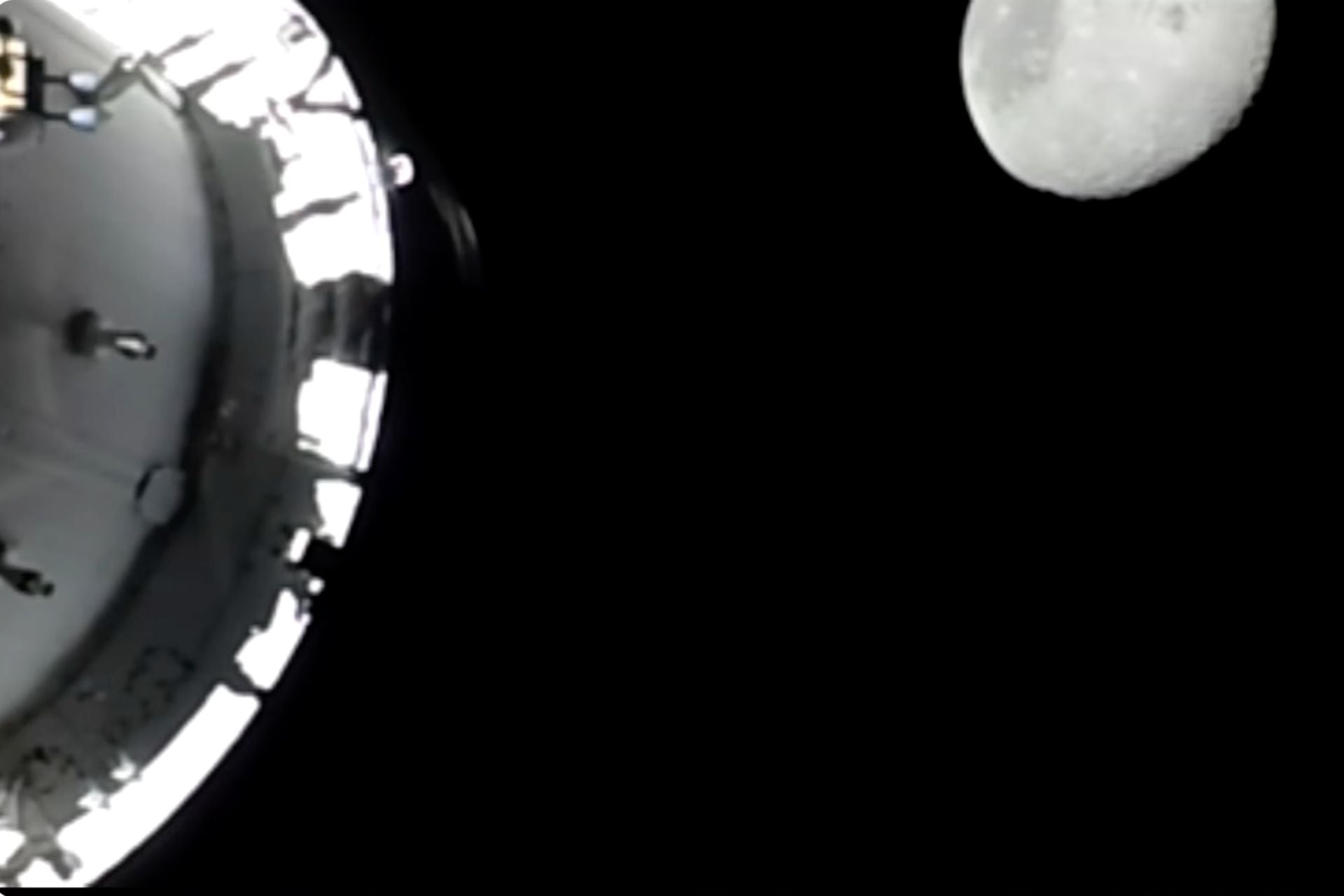
At that distance, the Moon will appear to be about the size of a basketball held at arm’s length to the crew.
It’s been more than half a century since the last time humans went to the Moon. Apollo 13’s record has stood uncontested for decades, but now NASA is writing a new chapter. The observations the Artemis 2 astronauts will gather during their lunar flyby today will not only greatly enhance scientists’ understanding of our closest celestial neighbor, but also help the agency prepare for a lunar landing in 2028.
“From the cabin of Integrity here, as we surpass the furthest distance humans have ever traveled from planet Earth, we do so in honoring the extraordinary efforts and feats of our predecessors in human space exploration,” Mission Specialist Jeremy Hansen said over the comms system.
“We will continue our journey even further into space before Mother Earth succeeds in pulling us back to everything that we hold dear,” he added. “But we most importantly choose this moment to challenge this generation and the next to make sure this record is not long lived.”
This time, it’s no accident
Setting a new distance record was part of the plan for Artemis 2. For the Apollo 13 astronauts, it was a silver lining during a life-threatening emergency.
Unlike the Artemis 2 crew, the Apollo 13 astronauts were supposed to land on the Moon when they embarked on their mission on April 11, 1970. But when one of the oxygen tanks exploded 55 hours and 55 minutes into the flight, it caused the other to fail and knocked out the command module’s normal supply of electricity, light, and water. Apollo 13 was 200,000 miles (322,000 km) from Earth.
“Houston, we’ve had a problem here,” Command Module Pilot John L. “Jack” Swigert said over the comms system (yes, that’s where the iconic quote comes from). Ultimately, Mission Control decided to forgo the lunar landing and get Apollo 13 back on a free-return trajectory. This allowed the spacecraft to swing around the Moon and come home, setting the distance record in the process.
That’s the trajectory Artemis 2 is on right now, though this was the plan all along. Over the next several hours, Orion will fly around the Moon’s far side, giving the crew ample time to observe and photograph the surface.
A full day of lunar science
The seven-hour lunar observation period should begin at roughly 2:45 p.m. today. The four astronauts will split up into pairs, with one pair observing for 55 to 85 minutes while the other exercises or works on other tasks. Then they will switch.
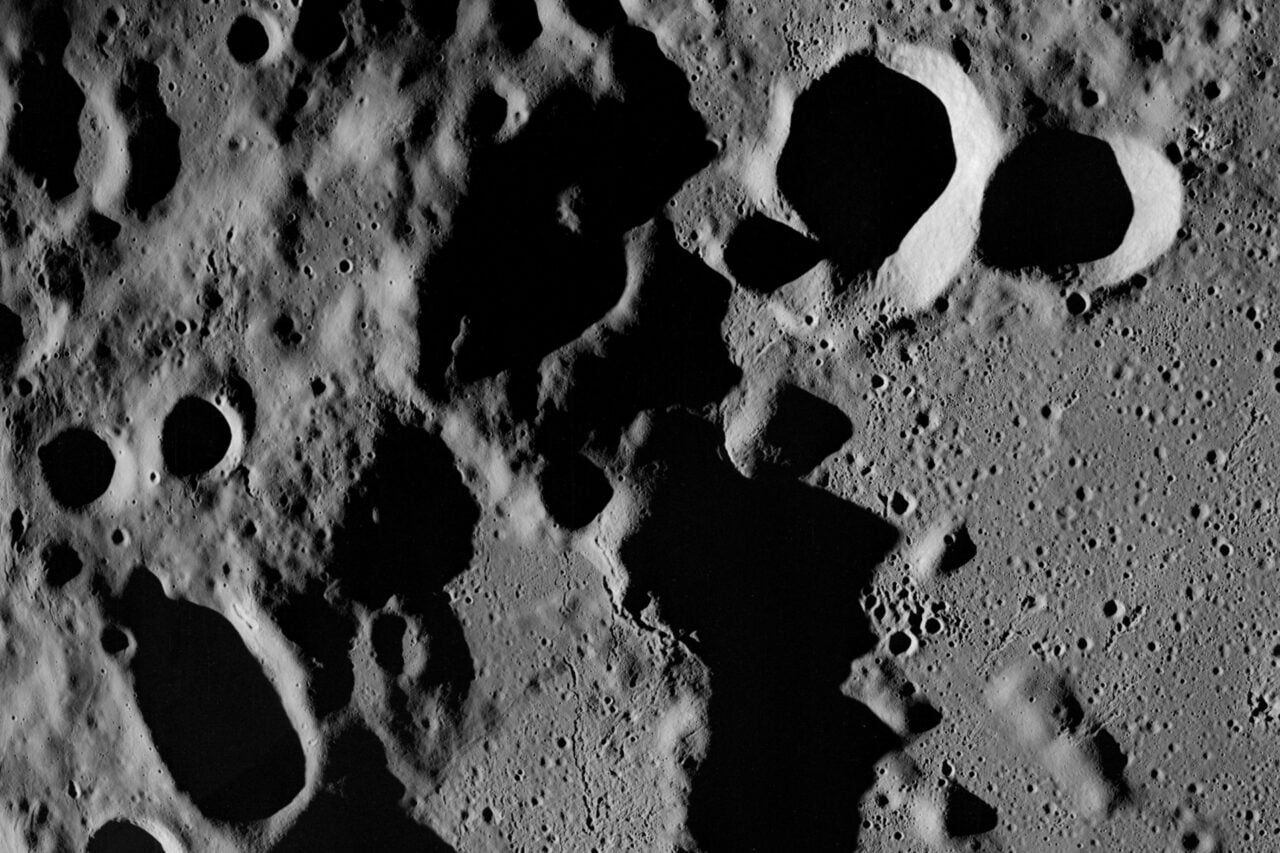
The Artemis 2 crew will be able to see parts of the far side that the Apollo astronauts couldn’t. They will observe 30 target features, including the Orientale basin, a nearly 600-mile-wide (966-kilometer) crater that straddles the Moon’s near and far sides. The 3.8-billion-year-old crater will be fully sunlit as Orion approaches the Moon.
As the youngest and best-preserved multi-ring impact basin on the lunar surface, Orientale is a natural laboratory for studying the Moon’s impact history and how ringed craters form. Humans have never directly seen the far-side portion of this mare before.
NASA is currently live-streaming the lunar flyby, and you can tune in via Gizmodo’s watch page. The agency’s broadcast will continue through 9:45 p.m. tonight. You can also head to Gizmodo’s live blog for the latest updates on the mission as it works to achieve its lunar science objectives today.