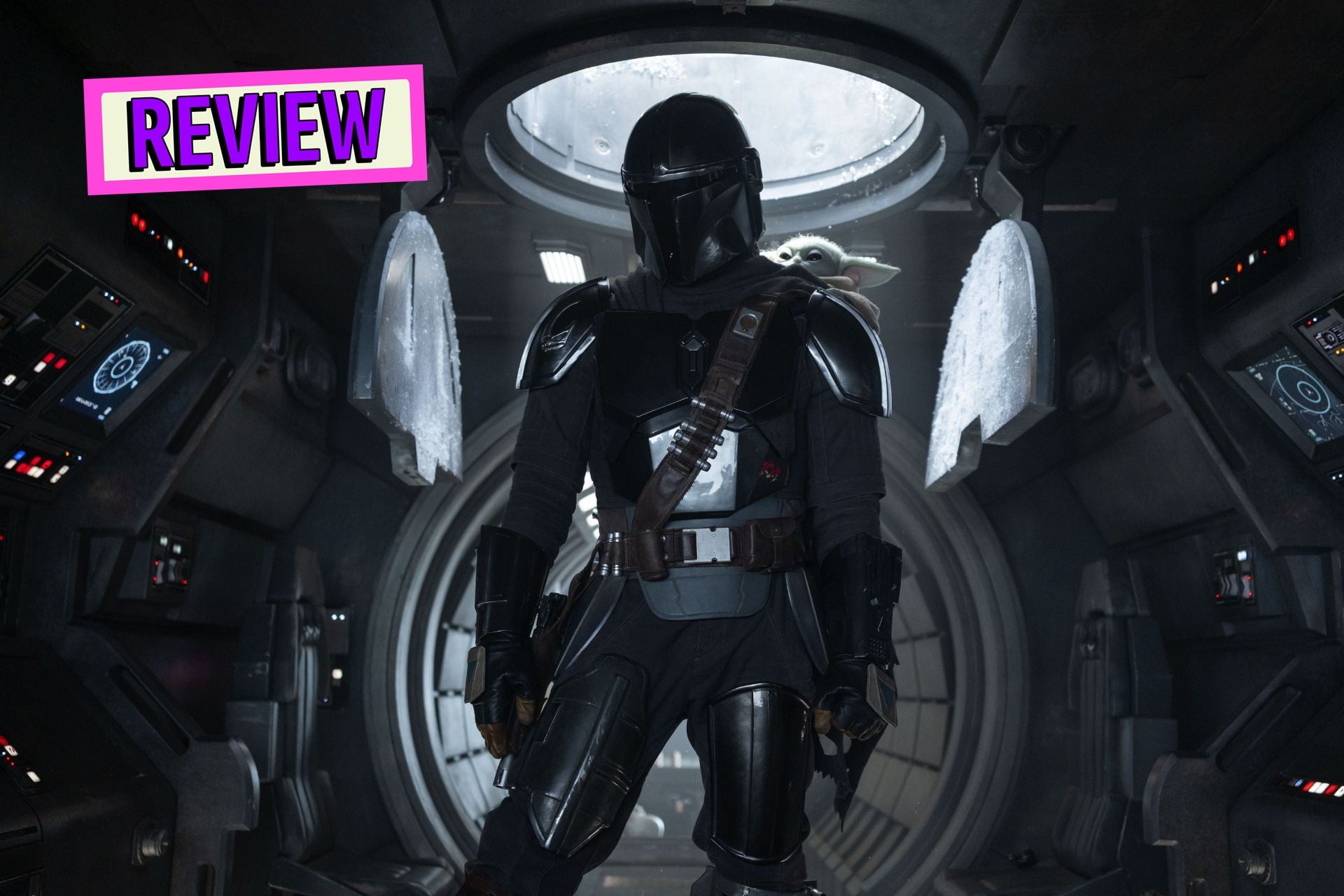
On the surface, The Mandalorian and Grogu is just a movie. It doesn’t have to justify its existence. All it has to do is entertain us, help us escape reality for a little bit, and not make us regret the cost of a ticket. That’s all it, or any movie, really has to do to be a success. And, to that end, The Mandalorian and Grogu checks all the boxes. It’s big, beautiful, has a few laughs, great action, and a story with a beginning, middle, and end. By all measures, with those stakes, it’s a success.
However, this isn’t just any movie. It’s a Star Wars movie. The first Star Wars movie in seven years, to be precise. And we’ve all seen Star Wars movies before. Star Wars movies that make us laugh, cheer, cry, and celebrate what going to the movies is all about. A Star Wars movie can be more than a movie. It can be a life-changing experience. Not every Star Wars movie is, and The Mandalorian and Grogu never had to be, but in the words of Yoda, it chooses “do not” instead of “do.” It doesn’t even try.
With The Mandalorian and Grogu, co-writer and director Jon Favreau aimed to make a Star Wars movie someone could watch cold. Something a person could enjoy without needing to watch three seasons of the TV show it’s based on before seeing the movie. It’s a good thought, one inspired by Star Wars creator George Lucas himself, who famously dropped fans into Episode IV of a larger story. What Favreau neglected to do, though, is what Lucas later did with the prequel trilogy. He neglected to make a Star Wars movie for people who had watched the show. For people who have followed the franchise.
The Mandalorian and Grogu has little winks, nods, and Easter eggs throughout, but it doesn’t tell a vital story that pushes the characters or series into new territory. Instead, the story just kind of flies by without any major consequences, hoping that you’ll smile and walk out of the theater happy. It’s just “fine,” which isn’t “fine” for Star Wars. And so, by those metrics, The Mandalorian and Grogu is far from a success. It’s not exactly a failure either, but it’s close.
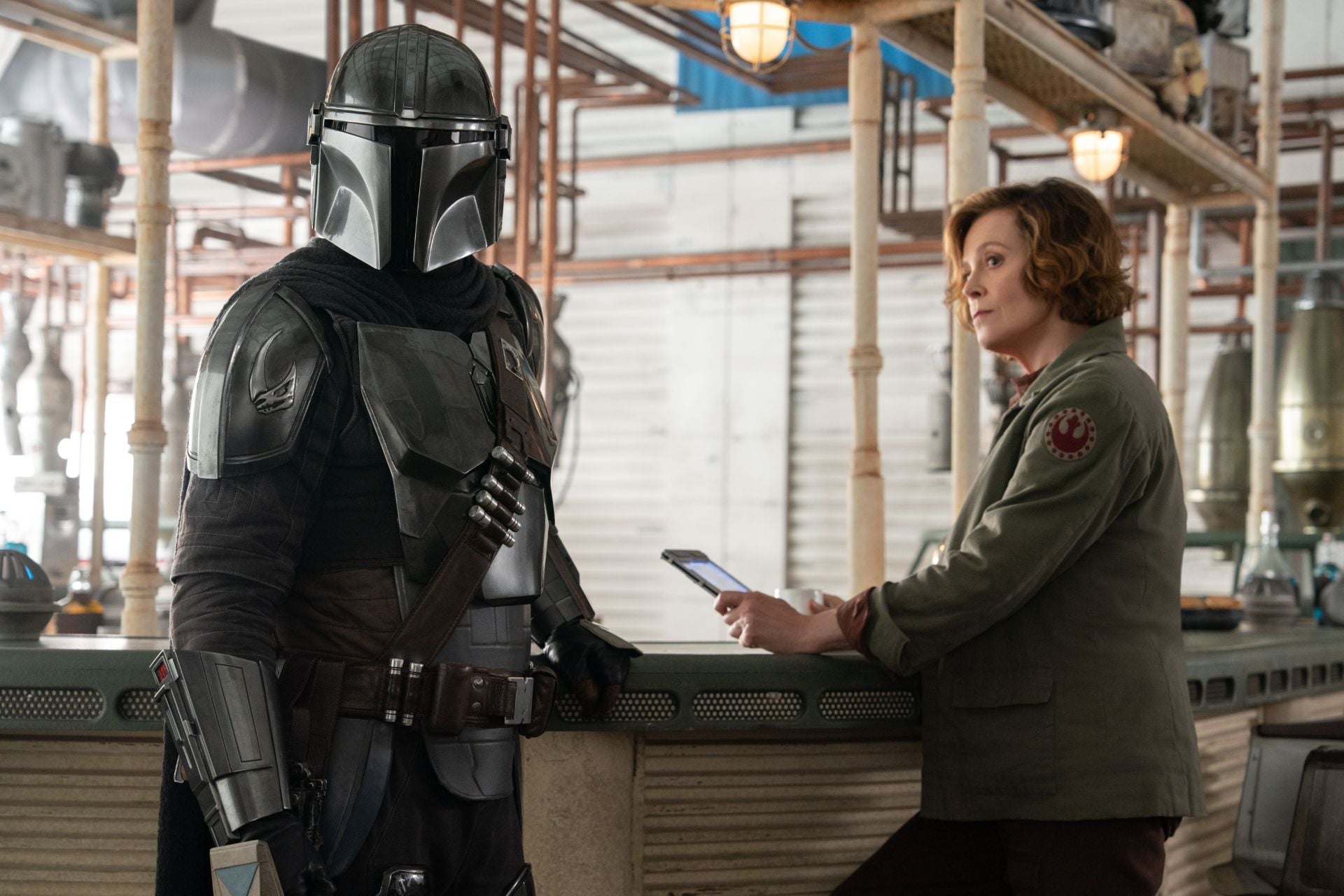
In The Mandalorian and Grogu, the titular characters are helping the New Republic bring in bounties of important military targets. Mainly, remnants of the Galactic Empire that Luke Skywalker, Princess Leia, and Han Solo helped take care of a few years prior. This is exactly what happened on the show, except that after three seasons of the show, Din Djarin, aka the Mandalorian (voiced by Pedro Pascal, but played by Pascal, Brendan Wayne, and Lateef Crowder), has become a bit more honorable about bounty hunting. He’s seen some bad things, made tough decisions, and has adopted a child. His days of working for whoever paid the most are over (all of which is character development that happened before the movie, by the way). So the Mandalorian is a little trepidatious when his New Republic handler, Colonel Ward (Sigourney Weaver), sets him up on a quest aligning with some of the most famously evil gangsters in the galaxy, the Hutts.
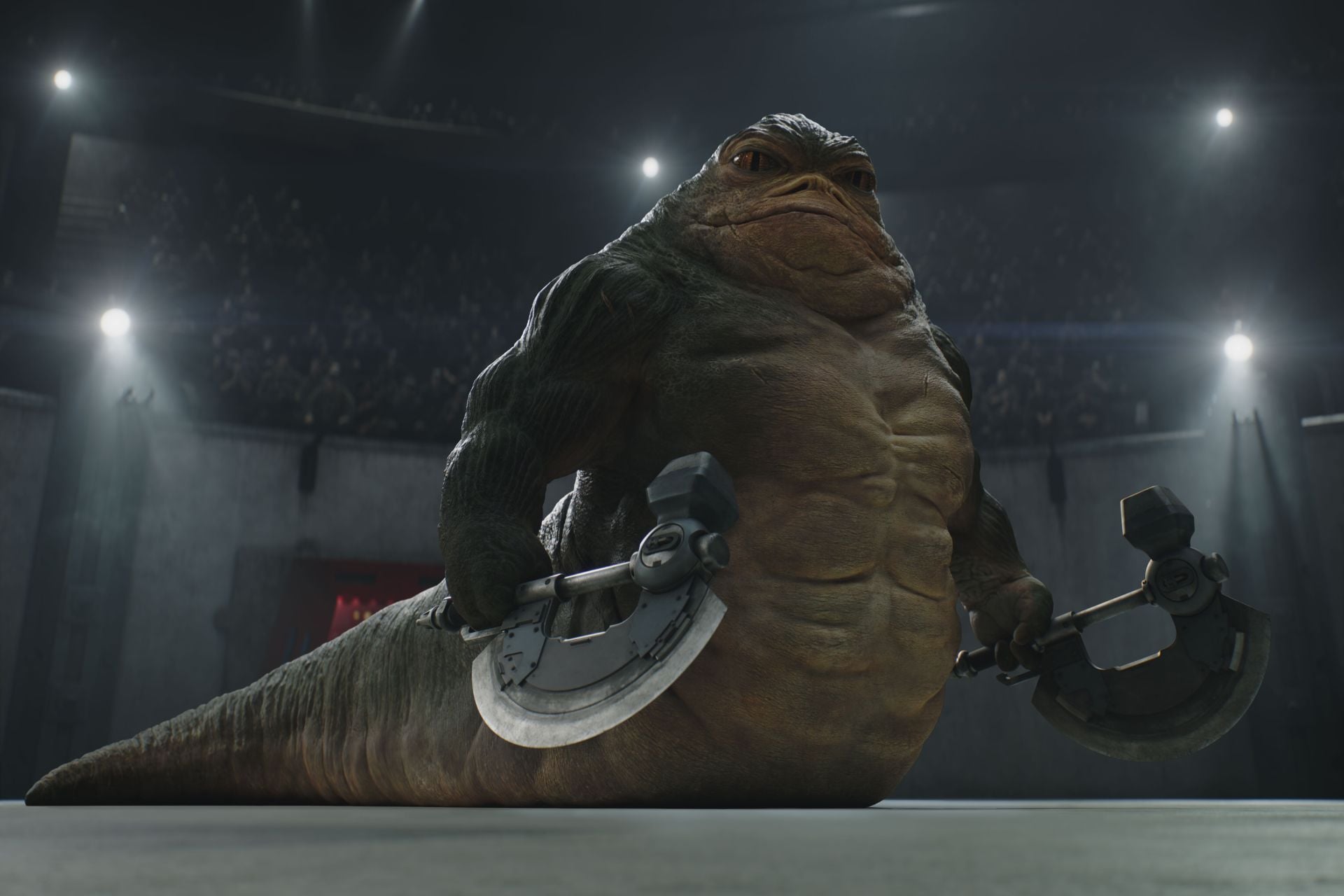
Fully aware of the Hutts’ reputation, the Mandalorian begrudgingly agrees to the mission. He’s to bring in a mysterious, villainous Imperial leader (Jonny Coyne), whose whereabouts are known only to two Hutt siblings called the Twins. The only way the Twins will part with that information, though, is if the Mandalorian goes on another quest to rescue their nephew, Rotta the Hutt (Jeremy Allen White), who is the son of the infamous Jabba the Hutt and in captivity.
Essentially, the entire movie sees the Mandalorian and Grogu get a task, accomplish that task, and then move on to a new task. They then accomplish that task, and it sends them on yet another task. Wash, rinse, repeat. The film is very repetitive in that way. And what’s even worse is that, with a few rare exceptions, these tasks are accomplished entirely too quickly. They find Rotta with the utmost ease. The Imperial leader just so happens to be someone they’ve interacted with before. A character is captured and then located instantaneously. There’s little time spent on building suspense or drama. It’s more of a checklist than a movie.
That checklist then gets crossed off so fast, the plot taking the characters to so many new worlds populated by so many new creatures, that the core of what makes a good movie—Star Wars or otherwise—gets lost. That’s the character development. Over the course of the film, the Mandalorian, Grogu, and even Rotta the Hutt all change a little bit. They have to, simply because they live through the events of the story. But that growth feels surface-level and wholly unworthy of an entire movie. Any deeper emotional impact is minimal because we’re told they’ve grown, but we rarely see it. Most of the focus is on the events in the story itself, rather than the characters living through them.
Then, almost out of nowhere, you get the sense The Mandalorian and Grogu is about to change. We won’t spoil it specifically, but there’s a section where everything slows down for a bit. The Mandalorian is in trouble, and Grogu takes it upon himself to figure things out. We watch as the story stops, and Grogu actually is forced to learn, adapt, and, potentially, grow. It’s a poignant, funny, heartwarming sequence. Everything this movie should be. And just when it seems as if the film will take that and use it to its advantage, the Mandalorian gives a quick monologue explaining the lesson for anyone who wasn’t paying attention, and it’s never mentioned or dealt with again. The story just picks back up and moves along.
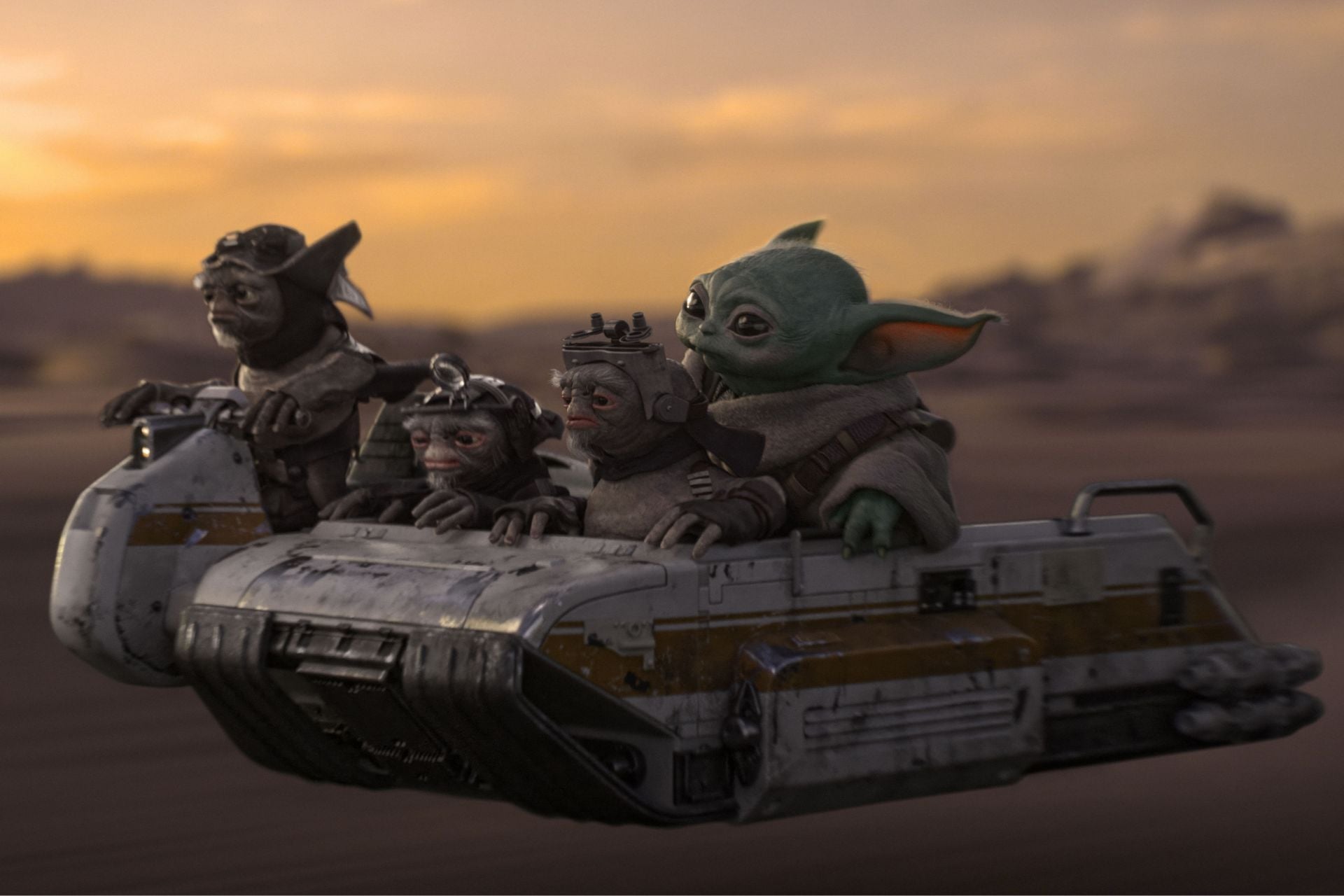
Tiny moments of potential like that are sprinkled throughout The Mandalorian and Grogu. Every action scene is incredibly fun, giving us all manner of weird, Star Wars-inspired battles and destruction. (A scene with Pascal out of the mask, in the water, versus a huge dragon is a particular standout.) Rotta the Hutt, who becomes crucial to the plot, ends up being much more relatable than any Hutt we’ve ever seen. The design of the creatures, new and old, is as good as any Star Wars movie in recent memory. And Grogu is wonderful, as always. His interactions, especially with the tiny Anzellans, are some of the best scenes in the movie.
One thing all the best scenes, and even some of the worst scenes, have in common is that they’re set to a new score by Ludwig Göransson. Göransson (who has won Oscars for Black Panther, Oppenheimer, and most recently Sinners) has been with The Mandalorian since the beginning. So it’s not a surprise to hear his music and famous themes in the film. What is a surprise is that beyond those familiar riffs, the rest of the movie has a strong electronic, techno vibe to it. Very sci-fi. Very groovy. It reminded us of Daft Punk’s score to Tron: Legacy, but dialed back a few notches. It’s wonderful, gives the movie a completely unique feel, and is by far the best thing about the entire experience.
If only the rest of the movie lived up to that originality and creativity. In the end, The Mandalorian and Grogu is a throwaway adventure in the lives of these characters. A blip. A side quest. It doesn’t add anything of true significance to Star Wars as a whole or, more importantly, to the lore of the Mandalorian and Grogu as characters. It’s just a mindless ride. A way to kill two hours and forget about the world. Which would have been acceptable if the film left you feeling anything beyond that. This is Star Wars, for crying out loud. A chance to be an entertaining, exciting spectacle, and also leave the audience in awe. That’s something which, on occasion, The Mandalorian show did. It’s a shame the movie version doesn’t. The Mandalorian and Grogu is ultimately nothing more than a longer, better-looking, mid-tier episode of the show. Some will find it passable, but Star Wars deserves better. This is not the way.
The Mandalorian and Grogu opens on May 22.
Want more io9 news? Check out the best movies and TV shows to stream this month and all the upcoming sci-fi, fantasy, and horror books that should be on your radar.