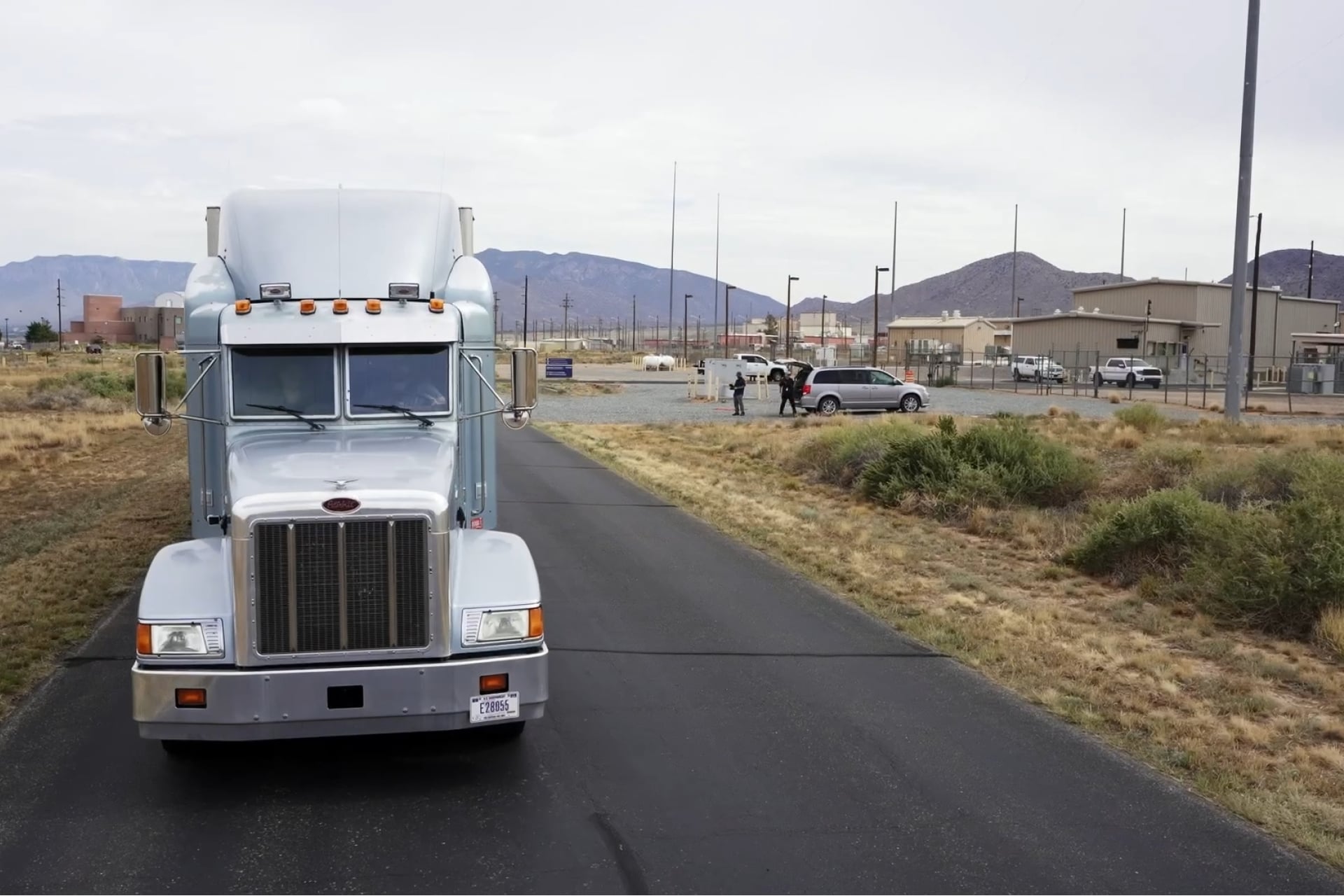
The truck survived, no one was hurt, and scientists got a lot of key information from a brutal crash test of America’s next over-the-road nuclear weapon transporter.
Sandia National Laboratories reported that it successfully completed the second and final full-scale crash test of the Mobile Guardian Transporter, designed to safely transport nuclear weapons and material for the U.S. Department of Energy (DOE). For the test, scientists used rockets to propel the truck, loaded with mock nuclear weapons, down a sled track and slam it into a barrier, all to see whether the truck’s trailer was sturdy enough to withstand a massive impact and protect its sensitive cargo.
“Using the crash test data, we’ll build a modeling and simulation tool that will allow us to analyze many different crash environments,” Jason Berger, the program’s crash test lead, said in a press statement.
Nuclear truck 3.0
Making nuclear materials is one thing, but taking it to places is another whole trial. In the U.S., different government agencies and laboratories have managed nuclear transport over the years. Since the 1970s, Sandia has been tasked with designing and building trailer systems specifically to “provide cargo safety and to prevent any potential unauthorized entry and access to national security assets,” according to an explainer by DOE.
The Mobile Guardian Transporter, the third generation of these specialty trucks, debuted in 2020 and —for obvious reasons— most of what actually goes into the trucks is classified. However, according to previous FOIA requests, there is reportedly an “18-wheel rig that incorporates various deterrents to prevent unauthorized removal of cargo,” and that it would survive being “totally engulfed in a fire without incurring damage to the cargo.”
Special delivery
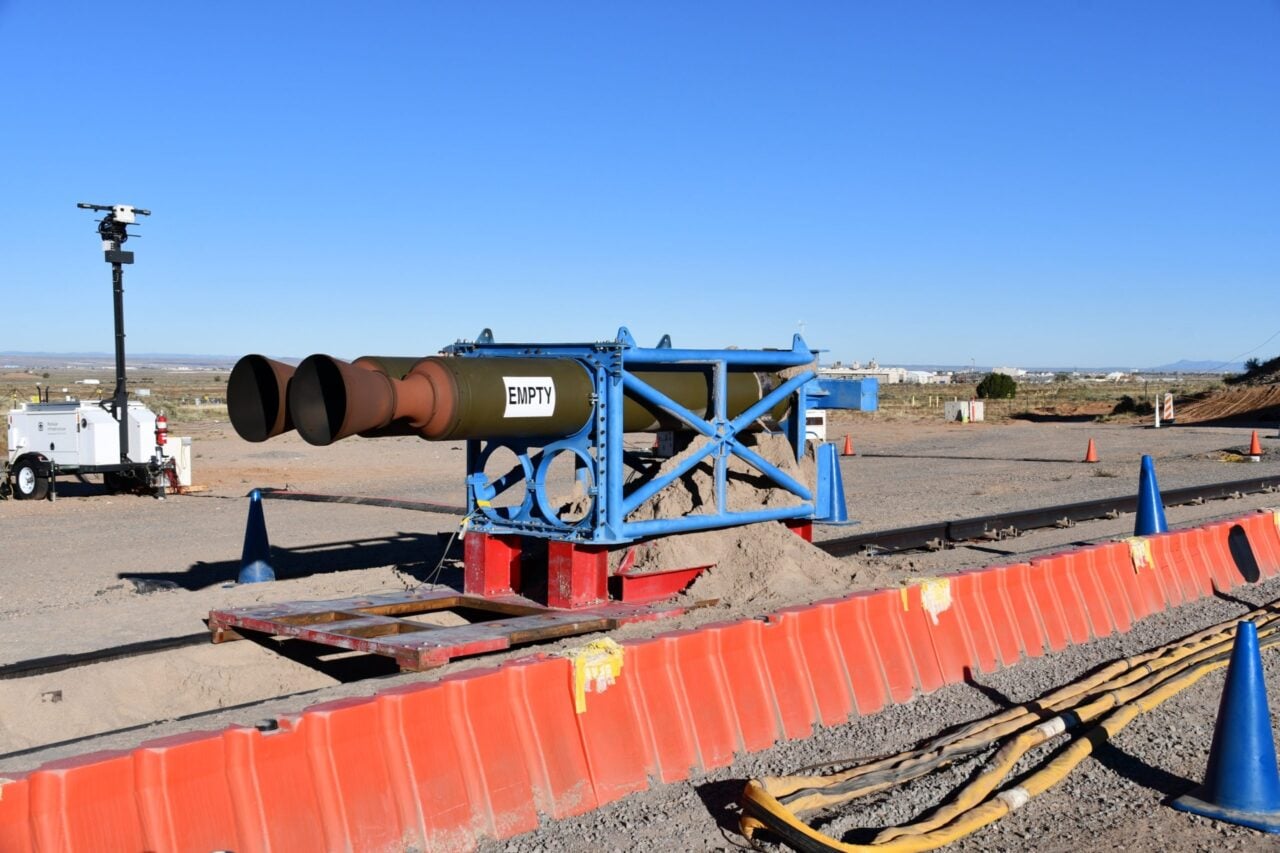
According to Sandia, the purpose of the latest tests was to demonstrate that the truck wouldn’t pose a threat to the public and to assess how exactly an impact of this degree would affect both the trailer and its cargo. The mock nuclear hardware was sourced from the Los Alamos and Lawrence Livermore National Laboratories. The truck was equipped with nearly 500 data collection channels, as well as around three dozen cameras.
“This was a very heavily instrumented test, and the overall scope of it was very large,” said James Dykes, the test director. “These kinds of large-scale, high-consequence tests don’t come along very often because of the complexity.”
“Acceleration, strain, force measurements, and cameras were used to understand the trailer and cargo response,” Berger further clarified in a statement to Gizmodo. “The experimental data is used to create modeling and simulation tools to evaluate the trailer design and performance.”