Researchers with Colossal Biosciences, the private biotechnology and genetic engineering firm, are winners of the 2026 Gizmodo Science Fair for developing an integrated pipeline capable of robust genomic reconstruction, gene-editing, and synthetic embryo maturation.
You might recall the fruits of this effort, the birth of three “dire wolf” pups via surrogate dogs in 2025—which leveraged some (but not all) of the ancient wolves’ genetic code, which this team painstakingly recovered from fossilized remains of the North American dire wolf (Aenocyon dirus).
The question
Can full genomic data from extinct species—including species not seen alive on Earth for tens of thousands of years or even longer—actually be recovered via ancient fossils? And can new genetic material modeled off of that DNA from those extinct species, as well as from still living species on the verge of extinction, really be used to help restore biodiversity for threatened animals and ecosystems?
The results
There are two cohorts by which we can appreciate Colossal’s results. First, there are the three “dire wolf” pups themselves: Romulus, Remus, and their kid sister Khaleesi, born about four months after her brothers. In their first year alive, the elder pups have now each grown to over 120 pounds (54 kilograms) and about 4 feet (1.2 meters) long—well on their way to a potential maximum size of 150 pounds (68 kg) and 6 feet (1.8 meters) long.
The wolves’ (apologies) “colossal” size was one of the handful of observable genetic traits or phenotypes that Colossal’s team opted to devote their genetic editing resources toward when developing these pups as living proofs of concept. Aside from 15 edits made to 14 genes via CRISPR, Romulus, Remus, and Khaleesi share more in common with modern-day common gray wolves (Canis lupus) than their ancient progenitors. (Five additional genetic edits were also made to the “dire wolf” pups’ genomes, but these edits drew their inspiration from variations in modern gray wolf DNA—which, for context, is comprised of about 19,000 genes.)
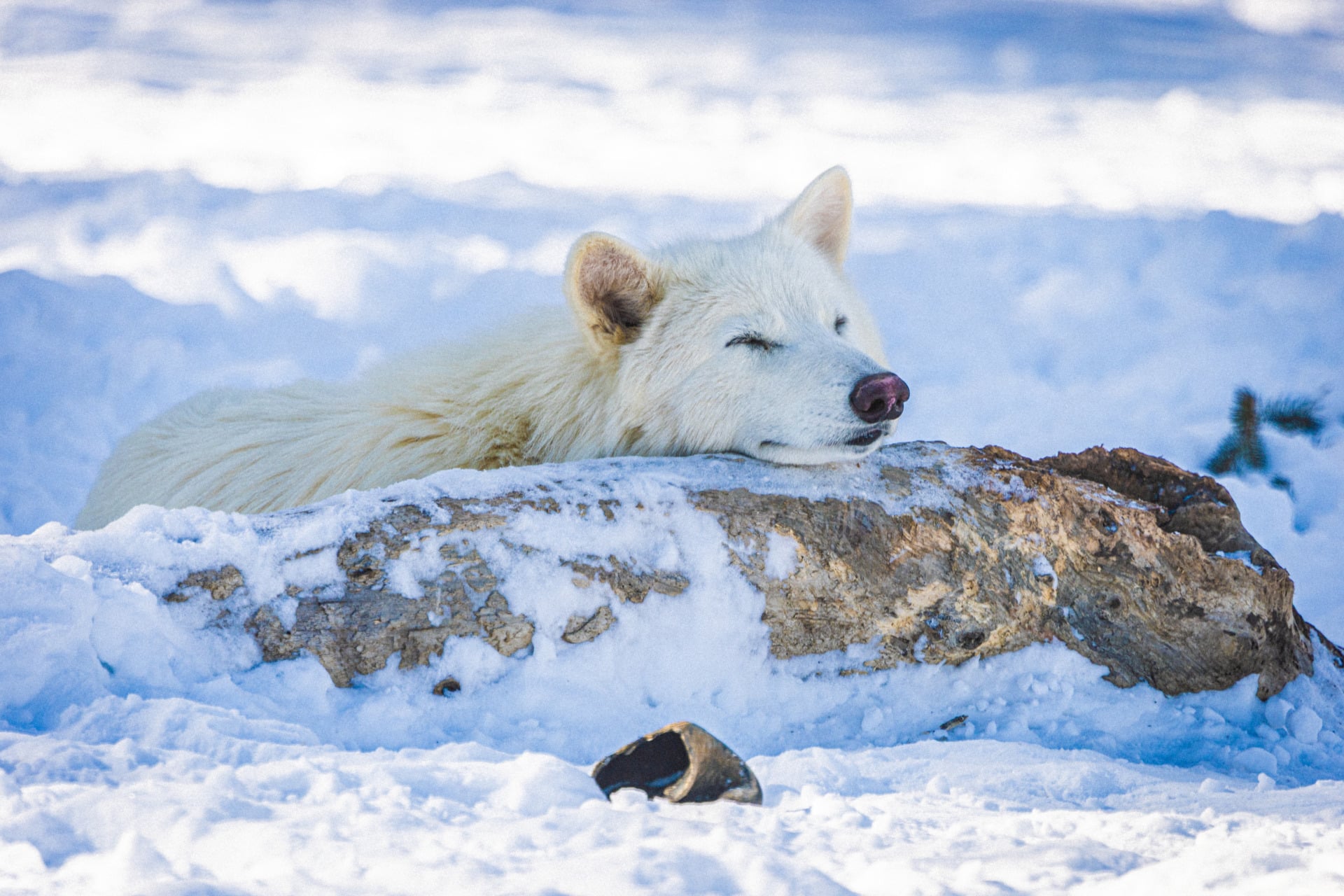
But these 20 minor edits have manifested in stark fashion (apologies, again), producing the trio’s white fur coats, their large size, increased strength in their legs and shoulders, and a wider head with bigger teeth and jaws, among other traits. Evolutionary biologist Beth Shapiro, Colossal’s chief science officer, told Gizmodo that the choice to alter the color of the wolf pup’s fur had certain practical dimensions.
“We thought that would be something that we could engineer,” Shapiro explained in a video call from Colossal’s HQ in Dallas, “and it would be great because we would see it right away.”
“With the other traits we’re looking at, size and musculature, that’s going to take a while,” Shapiro continued. “But with the light-colored coat, you can see it right away. So you could look at the pups and say, ‘We did it! That’s super cool!’”
While inspired by clear genetic markers within the ancient dire wolf genome, this lighter fur color was actually derived from similar genes available in gray wolf DNA—a choice Shapiro and her team made to reduce congenital risks of blindness and deafness associated with these specific ancient genes. (The worry arose, in part, over the fact that genes similar to these can lead to Waardenburg syndrome in humans.)
“We’ve been looking for things that would make a change that would be observable in the phenotypes that we pick, where our deep scan of what is known about gray wolves and mice and humans and every other mammal that’s been sequenced suggests that there isn’t going to be the risk of the downsides,” according to Shapiro, who also serves as a professor at the University of California, Santa Cruz.
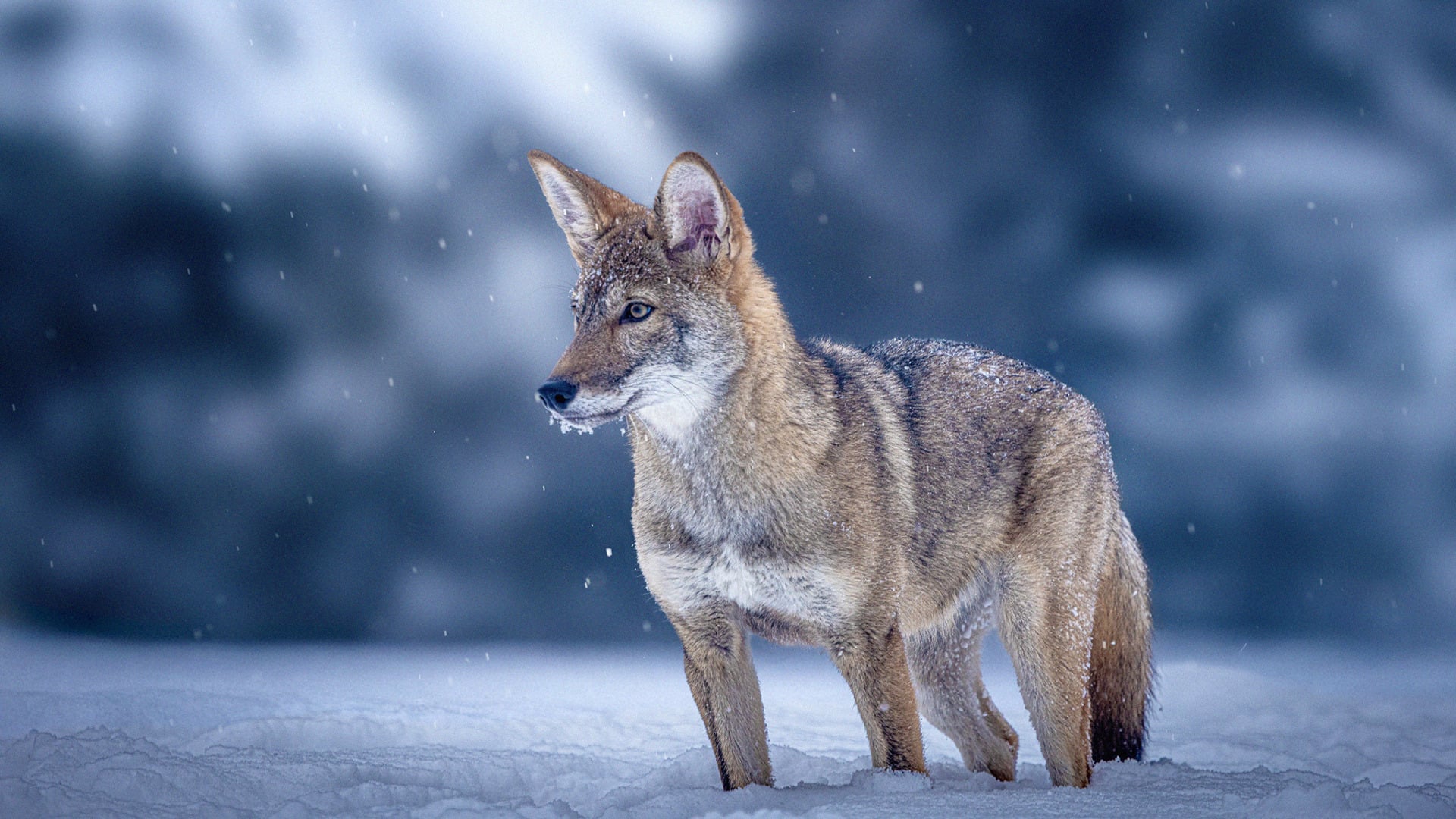
Colossal’s second cohort critical to these breakthroughs—achieved via the same technologies as the firm’s phenotypically “dire wolf”-esque pups—was a set of four cloned red wolves (Canis rufus). The red wolf is a protected species under the U.S. Endangered Species Act, with only about 16 of their kind left in the wild. Beyond Colossal, other conservationists have also bred roughly 270 more red wolves in captivity, which are awaiting reintroduction into the North American wilderness.
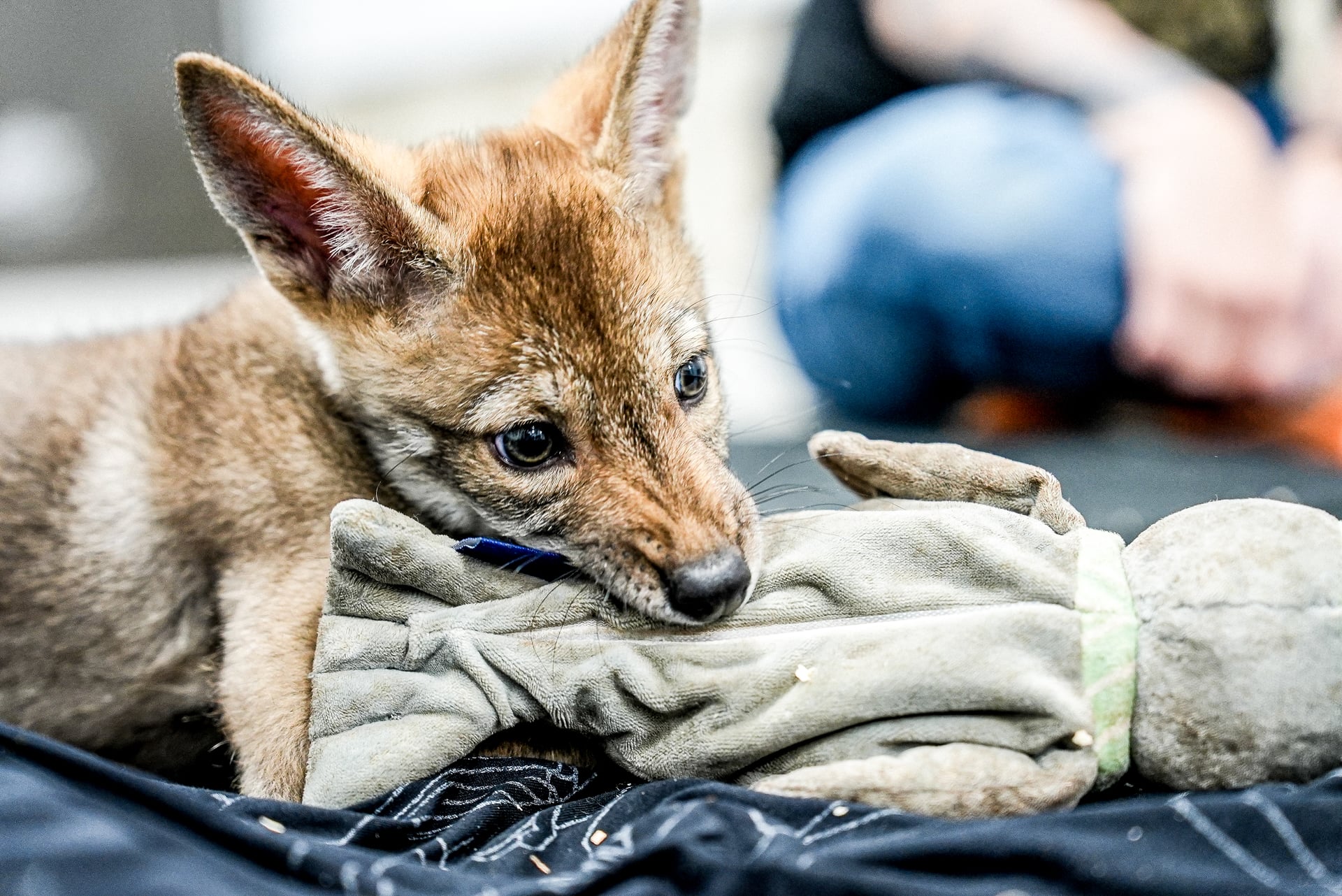
This work was done the old-fashioned way, breeding from a worryingly limited gene pool of 14 red wolves—which is why Colossal partnered with conservation geneticist Kristin Brzeski and evolutionary biologist Bridgett M. vonHoldt and their Gulf Coast Canine Project. Brzeski and vonHoldt’s work has tracked “ghost” DNA from historic red wolf populations that have interbred with coyotes along the Texas and Louisiana shoreline. While those red wolves deceptively seemed to have vanished into those larger coyote populations, their lingering genetic heritage has offered exciting possibilities for reinjecting much-needed diversity into the red wolf gene pool.
“We quickly started to suck resources out of the dire wolf project and apply it to the red wolf work,” Colossal Biosciences’ Chief Animal Officer Matt James told Gizmodo.
“We had tools. Bridget and Kristin brought this amazing genetic resource in ghost wolves. We knew that there was a mission with red wolves, and our tools were the bridge between the gene flow from this incredible lost population to this very important recovery population,” James said.
Why they did it
Many members of Colossal’s research team signed on to work for the company out of a real desire to apply cutting-edge science toward the cause of restoring biodiversity worldwide. True, they also believe in the scientific value of resurrecting the long-lost genetic code of prehistoric species like the dire wolf and the woolly mammoth (Mammuthus primigenius), just like Colossal’s founding scientist, Harvard geneticist George Church. But, by and large, they also want to combat the precipitous pace of global species decline that other feats of human enterprise frankly bear much of the responsibility for.
“My 15 years prior to this were working in non-private conservation based here in North America,” James told Gizmodo. (Specifically, James had previously helped lead animal care and science at public zoos in Dallas and Miami.) “One of my roles at the company is to really find ways to apply the technology of de-extinction to species on the brink of extinction—and you don’t have to be that creative or stretch that hard, because it’s pretty simple.”
When it came to leveraging the firm’s “dire wolf” project, James recalled, “I thought, ‘One of the unsung stories in North American conservation is the red wolf. It’s the world’s most endangered wolf. It should be as emblematic to the United States, I think, as the bald eagle, because it’s truly endemic to the United States. That’s a recovery population that needs a boost.’”
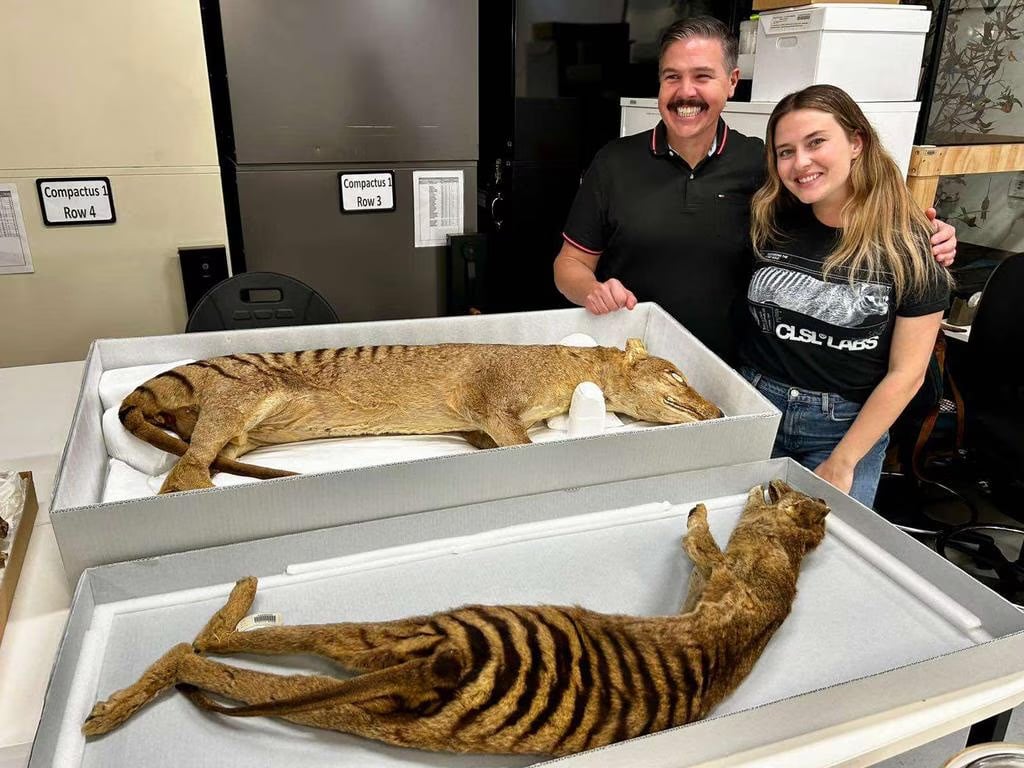
Andrew Pask, Colossal’s chief biology officer, sees the company’s efforts to bring back the extinct thylacine (Thylacinus cynocephalus), sometimes known as the Tasmanian tiger, as establishing a similar beachhead for protecting currently endangered marsupials. Pask was recruited by Colossal for his genetic engineering achievements at the University of Melbourne in Australia—where he had successfully redeployed small bits of the extinct thylacine’s genetic code in lab mice, confirming that further efforts to bring the species back were worth trying.
“With the thylacine, it was clearly a human-driven, recent extinction event. But it was a cornerstone species in the ecosystem in Tasmania,” Pask told Gizmodo. “So there’s a real need to restore that species to help balance out everything else that’s going on there. We can see what we call ‘trophic downgrading,’ where that ecosystem starts to fall apart once you lose that cornerstone species. Very similar to the removal of the wolves from Yellowstone.” (Without getting into it all, elk populations exploded and grazed the hell out of the park by the late 1950s.)
And bringing back the thylacine won’t just help the neighboring species in its ecosystem, Pask noted. As with the dire wolf project and the North American red wolf, the genetic engineering tools developed to resurrect the thylacine would then be readily transferable to cases of endangered marsupial species across Australia.
“We have enormous amounts of extinction events happening in Australia,” according to Pask, who continues his work as a professor of genetics and developmental biology at the University of Melbourne. “It has the highest extinction level for mammals of any country in the world.”
“So there’s a desperate need to develop tech around conserving marsupials, which the thylacine project is leading to.”
Why they’re a winner
Colossal’s “de-extinction” marketing notwithstanding, the firm’s breakthroughs have clearly shown real promise for conservation efforts. But, beyond that, the company’s work has also helped advance tools that paleontologists can use to better map paleogenomes, enhancing our understanding of prehistoric creatures, ecosystems, and arguably evolution itself.
These are big wins for basic science, in other words, born of the serious innovations in computational biology and genomics needed to accomplish Colossal’s projects.
The company’s process toward mapping the dire wolf genome began with two fossils, a 13,000-year-old dire wolf tooth (an incisor) unearthed in Sheriden Pit, Ohio, and a much older dire wolf skull found in Gigantobison Bay, Idaho, that is between 86,000 and 58,000 years old.
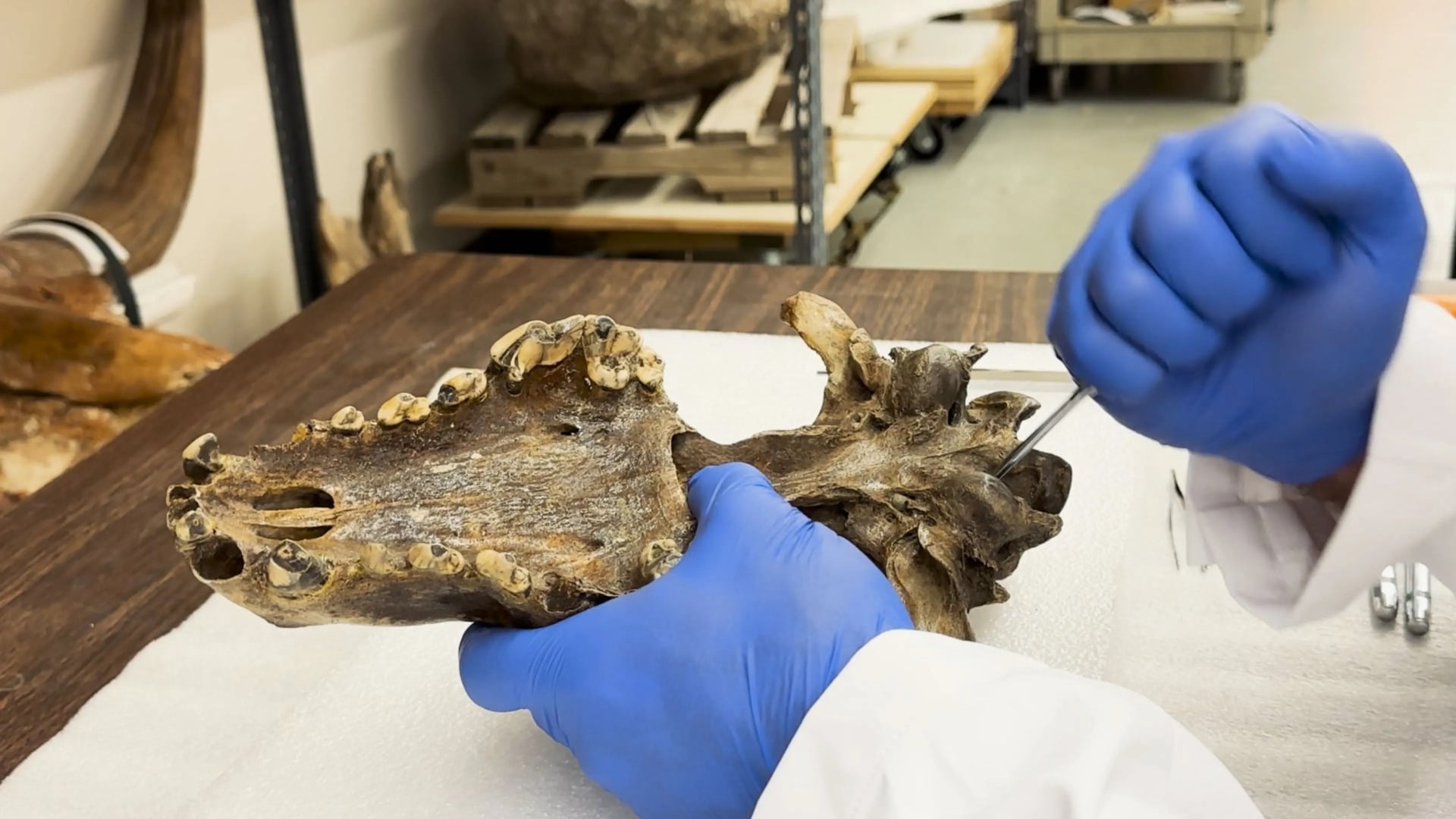
Like most very old DNA, the remnants of these dire wolves’ genetic code were fragmentary, broken apart by millennia of decay at the hands of ultraviolet rays, microbial activity, and the shearing effect of freezing and thawing across winters (and ice ages). If you think of the length of a genetic code in terms of its nucleotides, the compounds that pair up to form the rungs of DNA’s spiral ladder shape, then the average length of one of these ancient DNA fragments tends to run about 60 nucleotides long, according to Shapiro.
Based on work Shapiro and a team of international collaborators had published on this dire wolf DNA in the journal Nature in 2021, it wasn’t even clear which animals from the canid family were the best match to help Colossal’s team attempt to reassemble the puzzle pieces of this genome.
“We weren’t sure what species was closest to the dire wolf, because that paper left it open that it could have been something closely related to a jackal or it could have been on that lineage related to wolves,” Shapiro explained.
“We weren’t sure what the best scaffold for mapping our little broken fragments of ancient DNA would be. So, we came up with an approach that we called an ‘iterative assembly.’”
A prior state of the art, de novo genome assembly, had the benefit of aligning much longer DNA strands on the order of hundreds of millions of nucleotides long, which provided plenty of overlapping segments that made it easier to spot and bridge the breaks. Iterative assembly, by contrast, involves adjusting and shifting between a jackal-genome scaffolding and wolf-genome scaffolding, gradually crafting a new hybrid reference genome in the process.
“We update that scaffold and then we remap all of our little fragments to it. And then we update that scaffold again—and we keep doing that until the reference, the scaffold that we’re using, is not a wolf and it’s not a jackal. It’s something else. And we’re no longer updating it anymore,” Shapiro told Gizmodo. “And then we can validate that that works by mapping the other that we had.”

Over the course of many pieces of DNA fragments, the team managed to entirely map the dire wolf genome from the Sheriden Pit fossil (the tooth) 3.4 times, a metric known as “depth of coverage” that’s used for assessing the repeatability and reliability of this mapping work. For the Gigantobison Bay fossil (the skull), the team achieved a depth of coverage of 12.8 times.
“It’s actually a pretty neat approach that helps all fields of ancient DNA,” Shapiro said. “So we’re now using it for other genomes, and there are other labs that do ancient DNA that are using a similar approach.”
Some of this academic research aided by Colossal’s flashier, VC-funded forays into resurrecting extinct charismatic megafauna includes the use of iterative assembly to study prehistoric DNA dating back to the early Pleistocene, roughly 773,000 to 2.58 million years ago.
Love Dalén, a paleogenomics researcher at Stockholm University and a science advisor to Colossal, has helped guide some of this research. Dalén’s work with his colleagues at Stockholm’s Centre for Palaeogenetics has included developing more powerful automated tools for iterative assembly (DNAharvester) and research into the evolution of multiple mammoth species across millions of years of Pleistocene prehistory.
What’s next
It’s hard to be comprehensive with a company of Colossal’s sprawling ambitions—but, that said, the company has recently expanded into avian cloning technology, debuting an artificial egg this year that may eventually make it possible to revive extinct birds like the dodo and the moa. The firm’s international network of labs is also now working with the U.S. Fish and Wildlife Service on an ambitious BioVault plan to collect, sequence, and preserve genetic material from more than 2,300 threatened and endangered plant and animal species. It has also (very recently) teamed with the International Union for Conservation of Nature (IUCN) to help modernize its conservation efforts, protecting IUCN’s Red List of Threatened Species.
But with respect to their plans to one day rewild their “ghost” red wolves, or perhaps even some future attempt at rewilding the dire wolf, Colossal’s primary mission now is to care for and study these cloned canids on the firm’s mysterious 2,000-acre ecological preserve. (Reportedly, this secure undisclosed location has been certified by the American Humane Society.) Out of an abundance of caution, the team wants to first make sure that they’ve produced healthy, viable specimens that might actually help improve a given ecosystem before introducing these genetically engineered creatures into the wild.
The red wolves, James said, likely will stay in captivity—serving as “significant reservoirs of lost red wolf genetics” that will then hopefully be integrated into the U.S. Fish and Wildlife Service’s existing population of captive red wolves, enhancing these federal breeding and rewilding efforts.
“And for the dire wolves,” according to Pask, “we are going to study their long-term health, reproductive capacity, and all of those things that you would in any other animal just to see that we’re producing really healthy animals from these technologies.” It may take decades, in other words, before any partial dire wolves carrying the ancient DNA of Aenocyon dirus make it back into the forests of North America (much less full dire wolves), if it happens at all.
“This is not a short-term thing,” as Shapiro told Gizmodo.
The team
The research team included Colossal Biosciences Chief Science Officer Beth Shapiro; the company’s two founders, geneticist George Church and entrepreneur Ben Lamm; the Gulf Coast Canine Project’s Bridgett vonHoldt, a geneticist who also holds a professorship with Princeton University’s Department of Ecology & Evolutionary Biology; and at least dozens more senior scientists, fellow researchers, and support staff at Colossal Biosciences, including Colossal’s senior computational biologist Gregory Gedman and one of the firm’s specialists in genome analysis, Kathleen Morrill Pirovich, alongside many, many others working for the firm’s partner institutions in academia.
You are free to interpret this however you like, but Game of Thrones author George R.R. Martin is also listed as a co-author on the Colossal team’s peer-reviewed journal article detailing its reconstruction of the extinct dire wolf’s genome, published just last month in Cell Genomics.
(George! Mr. Martin, sir! Is there anything unrelated to finishing The Winds of Winter that you won’t commit yourself to?)
Click here to see all of the winners of the 2026 Gizmodo Science Fair.