Early this morning, a big (but not too big) asteroid made a close (but not too close!) pass by our planet. While totally unthreatening as a doomsday scenario, this particular asteroid makes for beautiful viewing: it has a tiny, orbiting moon. Update: More radar footage!
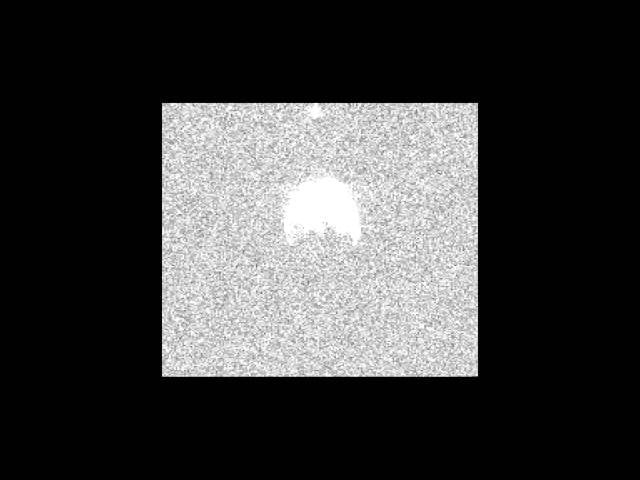
Radar image of asteroid 2004 BL86 and its moon during the January 2015 close approach. Image credit: NASA/Mika McKinnon
The 70-meter Deep Space Network antenna at the Goldstone station in California has been tracking asteroid 2004 BL86 during its close approach. The radar images revealed an unexpected surprise: a small 70-meter diameter moon swooping around the asteroid. Not every asteroid has a moon, but it also isn’t exactly uncommon: about 16% of large (200 meters or greater in diameter) near-Earth asteroids are binary or even triple systems with one or two moons in orbit around them. Some asteroids in the solar system even have tiny rings, a miniature replica of Saturn.
https://gizmodo.com/keeping-in-touch-with-our-space-explorers-1558539151
https://gizmodo.com/watch-the-rotation-of-the-binary-asteroid-and-its-orbit-512106887
https://gizmodo.com/double-ring-around-the-asteroid-1552531752
A quick animated GIF of #2004BL86 zipping across the sky tonight. Taken from Somerset w/ Atik 314L+ & 66mm refractor. pic.twitter.com/byGFyp48HG
— Will Gater (@willgater) January 27, 2015
Twenty individual observation images were collected of asteroid 2004 BL86 on the morning of January 26, 2015 by the Goldstone station.
Image credit: NASA
Along with the asteroid’s shape, size, rotation, and even surface features and roughness, the images reveal the presence of a tiny moon. The observations do not capture a full orbit, so the moon appears to dive-bomb the rock even though it misses and continues its merry journey around its not-so-little asteroid. This type of radar data isn’t taken just for fun — it is fed into trajectory models to better predict future orbital characteristics.
Video of radar image of asteroid 2004 BL86 and its moon as observed on January 26, 2015. Video looped 3x.
At 8:19 am PST this morning, the 325-meter diameter asteroid made its closest approach, coming within 1.2 million kilometers of the Earth. That’s close, but not too close to comfort at just over three times father away than our moon.
Whew! This asteroid will be passing close by Earth tomorrow, but not TOO close. http://t.co/rARkPezkz7 pic.twitter.com/gq5832z3wi
— Public Observatory (@SIObservatory) January 26, 2015
The flyby of asteroid 2004 BL86, and the related lack of doom, was not a surprise. Unlike the surprise-asteroids that we found just in time to watch the flyby, this asteroid was first discovered by the Lincoln Near-Earth Asteroid Research (LINEAR) survey in White Sands, New Mexico in 2004. Since then, the asteroid has been well-observed and its trajectory is well understood. Today’s approach was the closest the asteroid will get to our planet for at least another two centuries. More than that, it’s the closest we expect any asteroid of this size will get to our planet until asteroid 1999 AN10 scoots past in 2027.
The orbital trajectory of asteroid 2004 BL86 made it visible to astronomers in the southern hemisphere prior to the January 26th close-approach, in to astronomers in the northern hemisphere afterwards. Image credit: NASA/JPL-Caltech
The asteroid is too small to see with the naked eye or even binoculars, but you can try to spot it if you have access to even a small 3″ telescope. Meanwhile, astronomers are setting up to see just how much they can see of this tiny system — if you see more photographs and movies popping up, please share them with us!
Update 30 January 2015: JPL captured and released more radar from their imaging of the asteroid, producing several more frames of the moon darting away from its host asteroid.
Asteroid 2004 BL86 as seen by radar on January 27, 2015. Image credit: JPL/Mika McKinnon
You can watch the footage in all its high-resolution, looped glory here, and download it from the JPL site for your own nefarious purposes.
Read more on NASA.