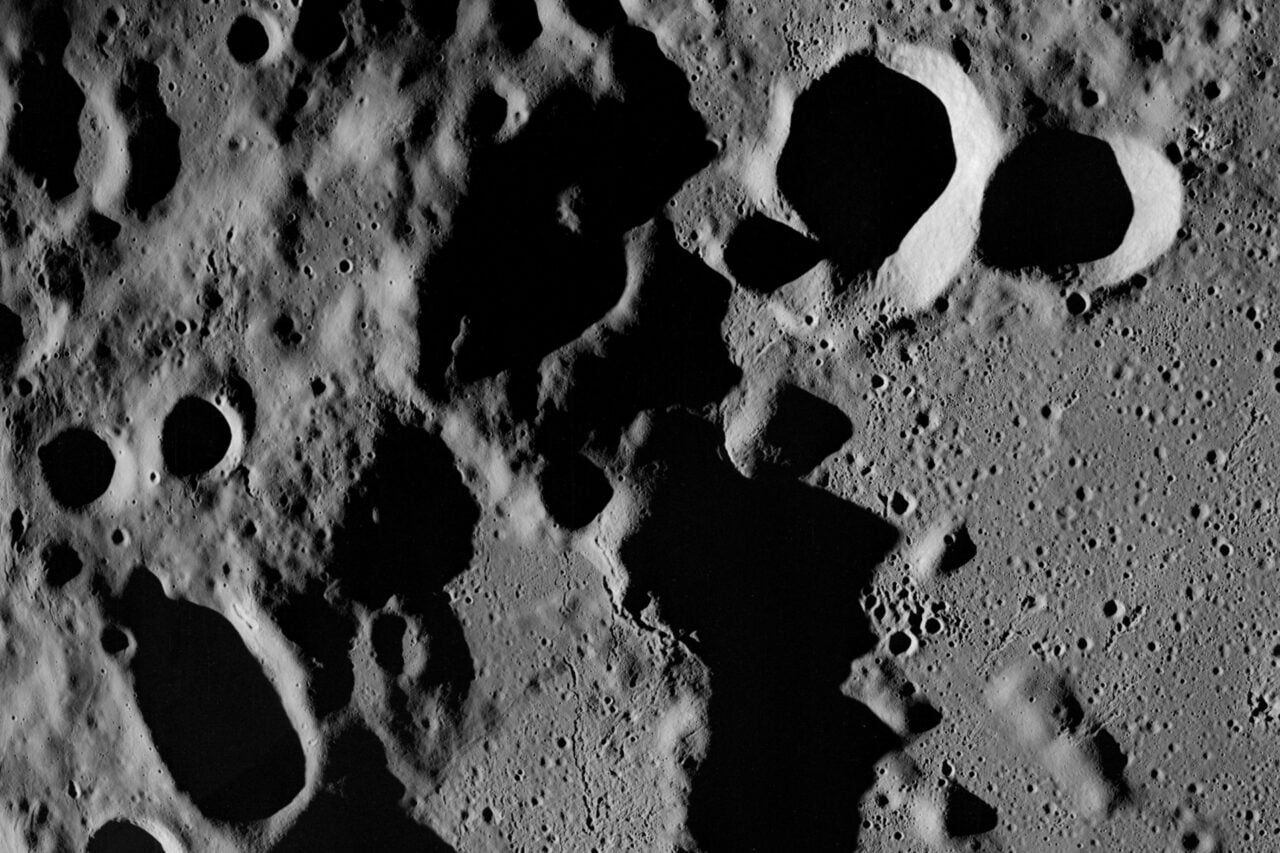
The U.S. and China share a common goal: building a human habitat at the lunar south pole. Both nations are locked in a race to land astronauts on the Moon and secure vital resources needed to establish a permanent base. Although the Moon is an unregulated frontier, a new report suggests that the U.S. should be prepared for a fight over control of lunar resources and territory.
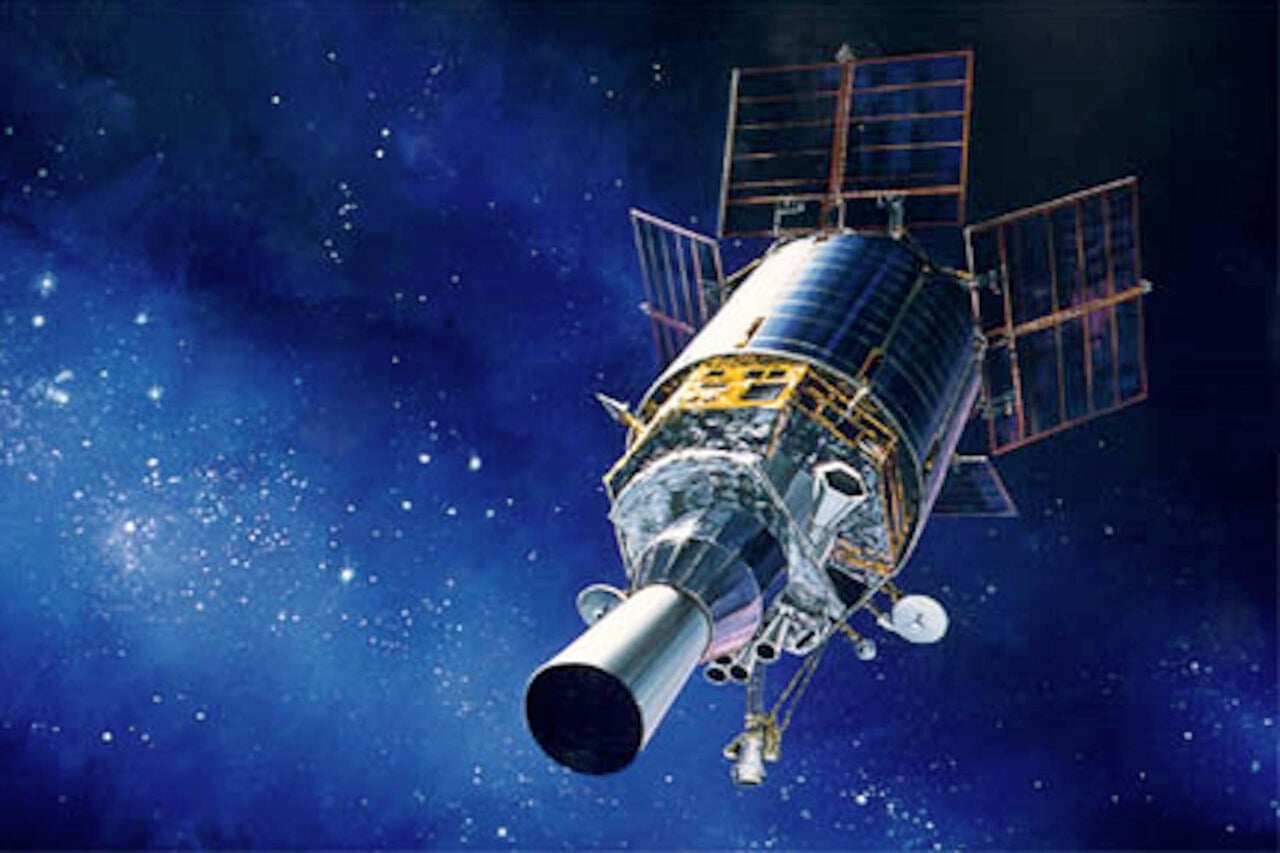
The Mitchell Institute for Aerospace Studies recently published a paper pushing for a military human spaceflight program that could eventually place active-duty U.S. Space Force (USSF) personnel on the Moon and on board orbital space stations for defensive operations against China’s alleged military-focused space initiatives. The report signals a dark turn for the ongoing space race, suggesting that orbital warfare looms behind ongoing efforts to establish a permanent presence on the Moon.
Conflict of interest
The report, written by retired USSF Colonel Kyle Pumroy, warns of the threats that “China’s military-led space habitation and lunar ambitions” pose for U.S. national security. Pumroy argues that the U.S. human spaceflight and Moon programs “have been marred by inconsistency in vision, policy, and funding, allowing China to gain steady ground over time.”
China has shown significant progress with its human spaceflight program over the past few years. The Chinese Manned Space Agency (CMSA) completed the Tiangong space station in October 2022 and has maintained a continuous human presence in low-Earth orbit since then.
The Shenzhou-23 spacecraft carried three astronauts to the space station on Sunday, with one crew member poised to spend a year on board Tiangong for the first time. The prolonged mission helps China prepare for a crewed landing on the Moon by 2030.
“On the present trajectory, China is poised to achieve positional advantage in setting norms, standards, and legal frameworks for lunar habitation and lunar economy,” the paper reads.
Chinese officials have repeatedly stressed the peaceful use and joint exploration of the lunar surface. “China always upholds the principle of equality, mutual benefits, peaceful use and inclusive development in outer space cooperation with other countries,” Guo Jiakun, spokesperson of the Ministry of Foreign Affairs of China, said during a press conference last month.
The recent paper, however, cites China’s “consistent use of belligerent force to assert territorial dominance” as a cause for concern. Therefore, Pumroy argues that the USSF should begin developing a military human spaceflight program now so Guardians can eventually operate in space to defend U.S. interests.
Space troops
As it stands today, the 1967 Outer Space Treaty bans military activities on celestial bodies and forbids any nation from claiming sovereignty over the Moon. Pumroy argues that while the U.S. should want to uphold the treaty, it should prepare otherwise, according to Defense One.
In the paper, he also claims that China has a record of ignoring treaty agreements and territorial aggression and that its plans to build a habitat on the Moon are closely aligned with the country’s military. “When territorial conquest, the potential for economic gain, and national interests overlap, societies seek to establish favorable norms and standards and do so using various degrees of hard power,” Pumroy writes. “Accordingly, hard power will ultimately matter in this new space race.”
Space already has a heavy military presence with surveillance, reconnaissance, and communications satellites that facilitate operations on the ground. However, it remains largely unweaponized. While there is a looming threat of a space war breaking out, the consequences of it would be catastrophic, as it would add onto the growing problem of orbital debris.
The Space Force was established in 2019 to protect the interests of the U.S. in space. Its members, the Guardians, manage space launches, track objects in orbit, and maintain Global Positioning Satellites and various weather and communications satellites, in addition to developing space-based capabilities.
According to the paper, however, the Space Force should instead focus on creating a military human spaceflight program with Title 10 authorities, which grants the Department of Defense the authority to organize, train, and deploy military forces globally.
Whoever first establishes a durable, defendable LEO-to lunar infrastructure will gain the right to establish and enforce norms and standards,” Pumroy writes. “The United States must ensure it wins that right, but it will demand properly trained, organized, and equipped Guardians in space who are empowered with Title 10 authorities.”