Anyone who’s ever been stung by a bee knows how painful it can be. Now, for reportedly the first time, scientists have captured an incredibly detailed and up-close look at how these stingers work to cause us and other animals so much misery.
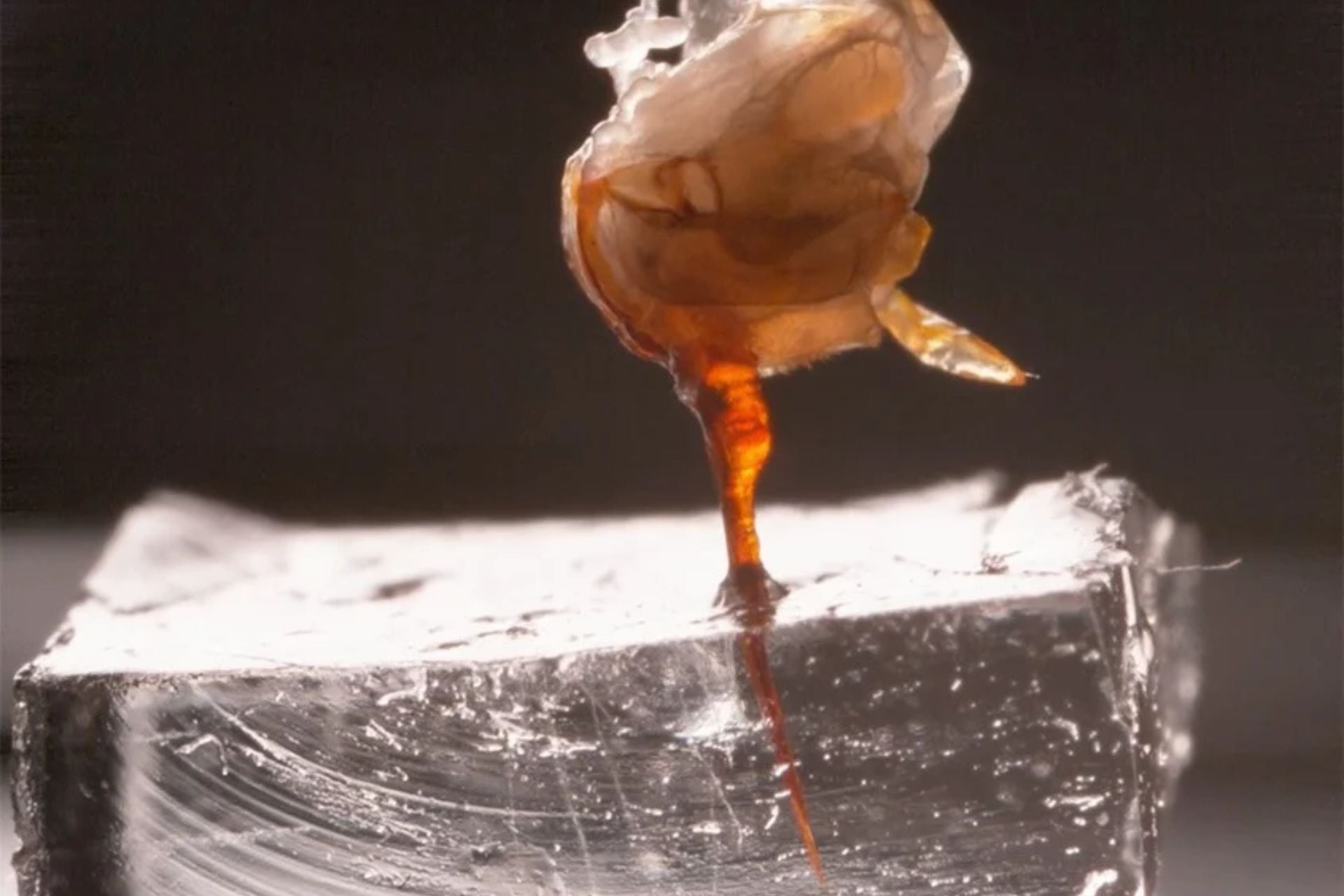
Using high-speed cameras, researchers in Australia recorded bee stingers delivering venom into a clear gel meant to mimic human skin. Among other things, they found that these stingers pump venom through a unique dual-piston mechanism that operates completely independently of the bee itself. The findings might allow us to build new kinds of medical or other devices, the researchers say.
“Our work shows the pumping behavior in a live stinger in a level of detail we did not have before,” lead author Fiorella Ramirez-Esquivel, a postdoctoral fellow in the School of Natural Sciences at Macquarie University, told Gizmodo.
A bee’s sting up close
There are all sorts of venomous animals in the world, some of which—like bees—use specialized stingers to deploy their toxic payload. Most stinging animals use muscles that actively contract around the source of venom in their body to deliver the toxic blow, according to the researchers. The honeybee (Apis mellifera), however, has a unique strategy called autotomy: when they pierce their barbed stinger into a victim’s skin, it breaks off and continues to pump venom out all on its own (unfortunately, this trick is fatal for the bee, though only a few species employ it).
We have already learned much about the honeybee’s stinger and its accompanying structures, which include the venom sac, pumping chamber, nerves, and muscles. We know that it has two pointed lancets that slide backwards and forwards like a reciprocating saw; these lancets allow the stinger to dig deeper into the skin and deliver the venom. The lancets are also connected to valves that sit in the pumping chamber. But it’s only now that scientists have captured on high-speed film the full range of mechanisms at work when a bee stinger stings.
“By using strong transmitted light we were able to capitalize on the translucent nature of the stinger to see what the pumping elements inside the stinger do,” said Ramirez-Esquivel. “The video we captured allowed us to do frame-by-frame tracking to characterize the movement patterns of the pumping valves.”
The team used clear gel as a replacement for human skin, and they observed some previously unknown things about how the stinger works. The biggest discovery was that the valves basically function as alternating pistons, dynamically changing in shape during the pumping process. One valve inflates as the other collapses, generating pumping pressure while preventing the loss of venom as the lancets are refilled. The net result enables the stinger to deliver a continuous flow of venom to its victim.
Based on these findings, the researchers also built a mechanized, if simplified, version of the bee’s stinger, allowing them to verify what they had seen in the videos. The team’s research, along with all of its video footage, was published Monday in the journal PNAS.
Stinging lessons
The honeybee’s stinger appears to be even more remarkable than we knew, and the lessons researchers have learned from it just might have other applications down the road, according to Ramirez-Esquivel.
“The stinger pumps liquid in a very unusual way; having two deformable pumping pistons within a single chamber is just not something we commonly observe, either in nature or in man-made devices,” she said. “We think that the stinger’s approach to pumping liquid could be of interest for the design of manmade pumps such as medical devices, micro-pumps or any systems that require a continuous flow of liquid.”
Bees aren’t the only insects that engineers or other scientists could take inspiration from either, Ramirez-Esquivel added. An insect’s cuticle, the outer layer of their exoskeleton, is very adaptable, and different species have evolved to make their cuticles harder, softer, or more elastic even within very small areas. That malleability could very well teach us a thing or two. “As plastics and manufacturing progress, I am excited to see if we can replicate some of these properties in manmade devices,” she said.
In the meantime, I’m just glad that I already try my best to respectfully admire honeybees from afar. Elegantly ingenious as their stingers are, I don’t need a personal demonstration anytime soon.