Scientists have finally taken a look inside one of the most unusual snakes ever discovered—and what they saw was stranger than expected.
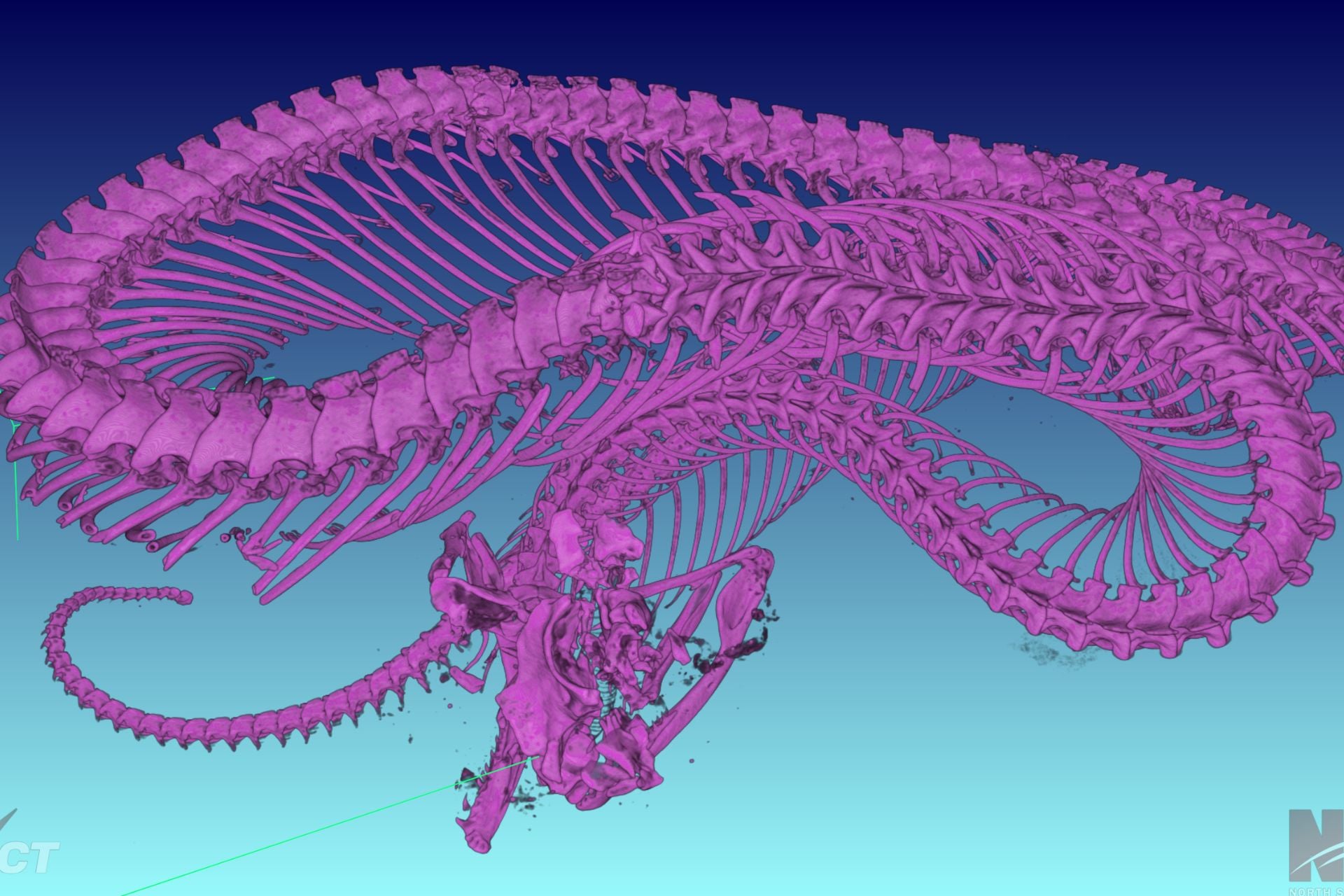
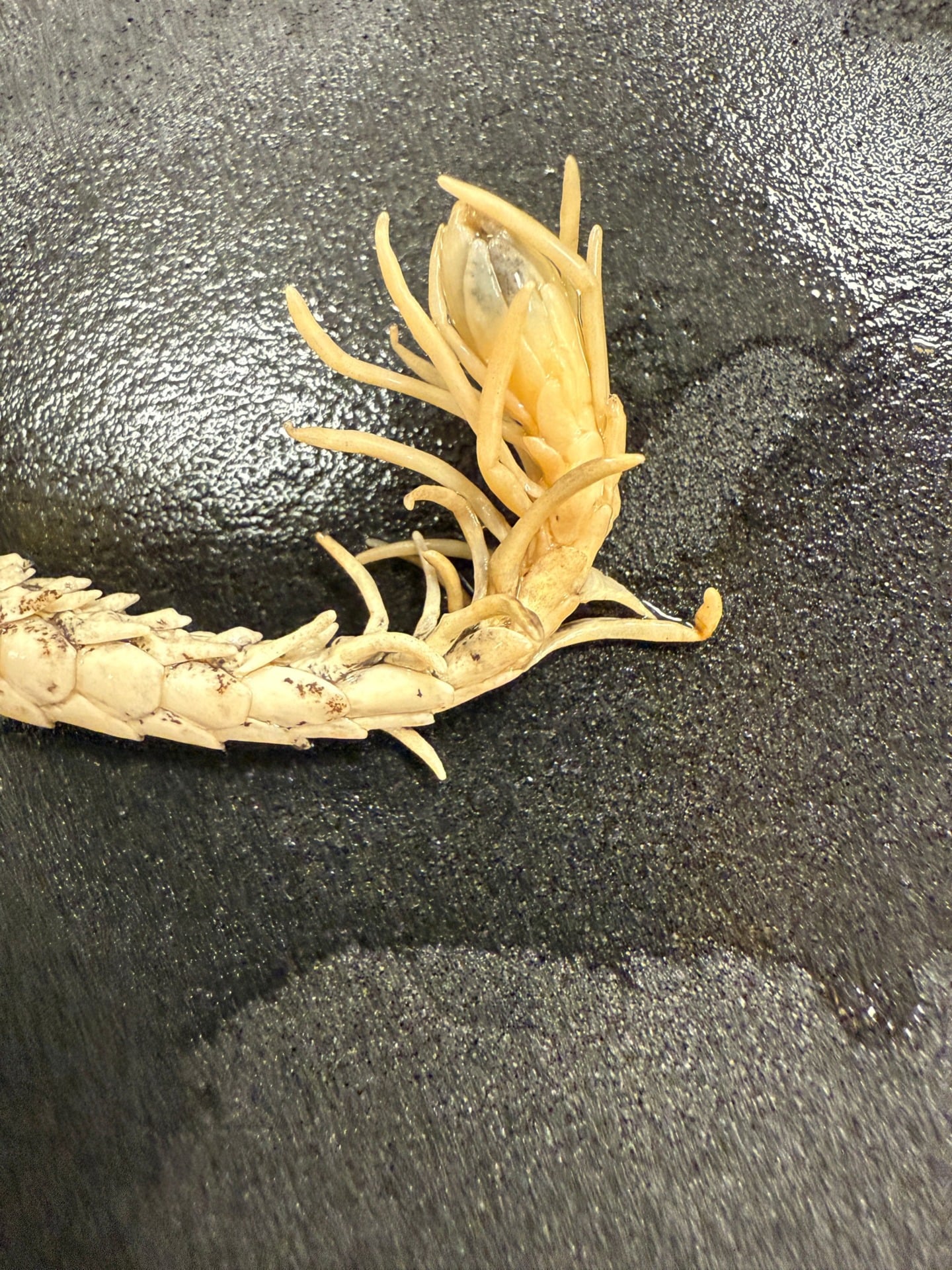
Researchers at the Field Museum in Chicago and others scanned the skeleton of the spider-tailed horned viper (Pseudocerastes urarachnoides), a snake known for having an arachnid-looking appendage that it uses for bait. To their surprise, the snake looked remarkably mundane underneath, meaning that the stark appearance of its tail doesn’t come from its bones. Among other things, the findings illustrate the gaps in our current understanding of snake evolution, the researchers say.
“When it comes to snakes, if all you’re getting are a couple of vertebrae, you’re not going to have any idea about some external but very important features of theirs,” study co-author Sara Ruane, the assistant curator of herpetology at the Field Museum, told Gizmodo.
The spidery snake
P. urarachnoides is native to parts of western Iran. A research team on behalf of the Field Museum collected a specimen nearly 70 years ago in 1968, but scientists back then originally dismissed it as a known species of viper that simply had a disfigured tail, possibly from cancer or a parasitic infection. It wasn’t until 2003, when a second specimen was identified, that it was recognized as something distinct. In 2006, scientists finally gave the snake its formal name, and by 2008, some had captured video footage of the snake in its native habitat.
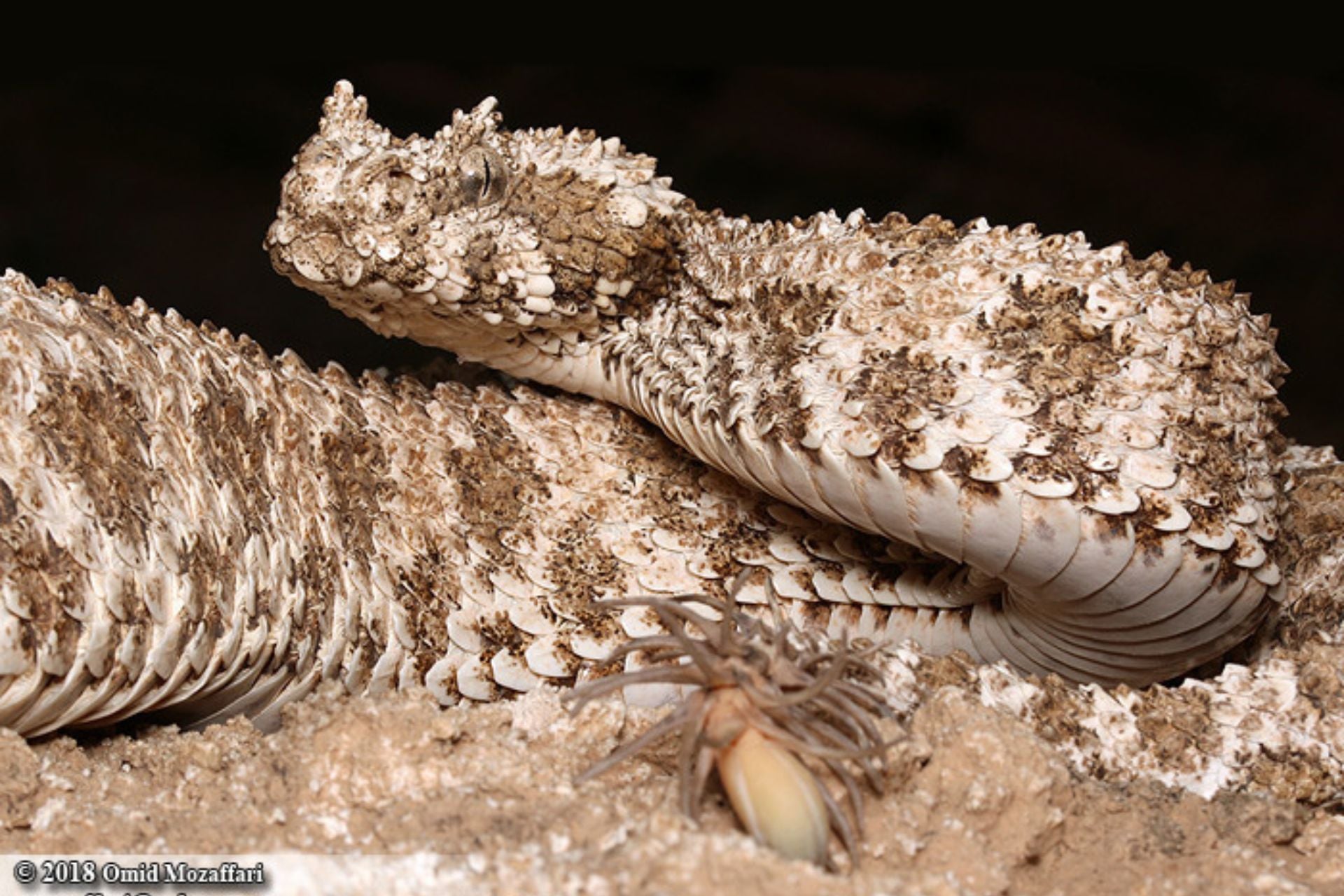
There are some species of snake that bait their prey with a tail that mimics a wiggly piece of food—a strategy known as caudal luring. And other snakes, like the rattlesnake family, have complex tails that serve multiple functions. But only P. urarachnoides seems to have such an elaborately shaped tail that it uses to entice prey, namely birds, with false promises of a spidery meal.
The Field Museum’s preserved P. urarachnoides had since become the holotype, the physical specimen used as the gold standard for describing a species. And Ruane has long been fascinated by the snake.
“I can remember the first time I saw those videos, which was around 2008 or so. I was doing my PhD at the time. And I thought, ‘Oh boy, this snake is cool as hell.’ And so of course, when I came to the Field Museum and saw that it’s actually there for the holotype, that was very exciting,” said Ruane, who is also director of Core Laboratories at the museum.
Ruane primarily focuses on the molecular data of snakes, and she didn’t have any immediate plans to study P. urarachnoides—at least not until she met her co-author Georgios Georgalis, an associate professor at the Polish Academy of Sciences in Kraków, in 2023. As a paleontologist, Georgalis will often look at living snake species to get a better sense of their ancestral lineages. So studying this snake’s skeleton, particularly its backbone, seemed like a golden opportunity.
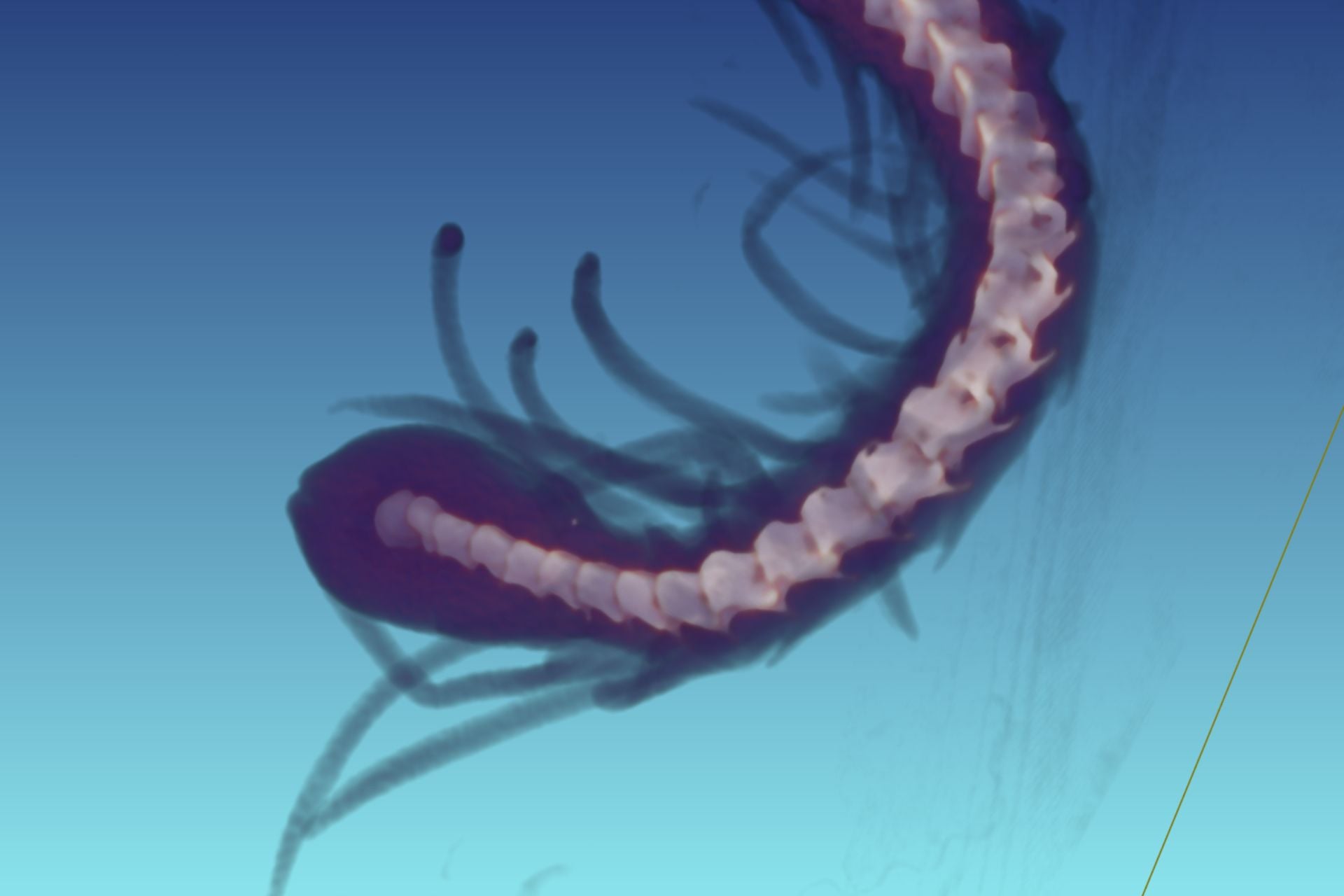
In 2024, the Field Museum acquired a new X-ray computed tomography (XCT) lab. This machine can produce thousands of X-ray scans and stack them together, allowing scientists to non-invasively examine the internal structure of an object, snakes included. And the museum’s P. urarachnoides was one of the first things that Ruane asked to be put in the machine.
The team did observe some distinct features of the snake’s skeleton and backbone relative to other vipers. The tail’s skeletal structure, however, didn’t look much different from its closest relatives. Instead, the tail’s bizarre—the researchers’ own phrasing—appearance seems to be entirely due to specially modified scales. These scales might be keratin-based structures similar to a rattlesnake’s tail or even the nails on our fingers, Ruane explained. The team’s findings were published Thursday in The Anatomical Record.
More to learn
Ruane and her team aren’t disappointed about their discovery or lack thereof. Their work highlights the challenges that scientists face in trying to piece together the ancient past of not only snakes but life in general with incomplete data like the skeletal remains they leave behind.
“This shows us just how much we don’t know about a lot of extinct organisms if we only have their fossils available to study,” Ruane said.
That said, there’s still plenty we can learn from studying snakes like P. urarachnoides today. Scientists surprisingly don’t have much extensive data on the vertebrae of vipers, according to Ruane. So studies like this can start building up the knowledge needed to fill in those gaps. And there are other intriguing questions about the spider-tailed horned viper that she hopes she or others can help answer down the road.
“One of the things I would love to know from my own research program is: What is the migration or the gene flow between populations of this snake? Are these snakes very motile across the mountains that they exist in? Or are they isolated on these mountaintops and they’re not really moving around a whole bunch?,” Ruane said. “Looking at their DNA and gene flow would really let us know more about that. It’d also give us an idea about their population sizes. Right now, they seem rare to us and elusive but they’re also in a place that’s really hard to get to and actually observe them.”
In the meantime, it’s nice to know at least with snakes, some things really are skin-deep.