People typically think of the city-sized Chicxulub asteroid’s devastating collision with North America 66 million years ago as simply a mass extinction event—which, of course, it was for dinosaurs. But a growing body of research is making the case that the pall of death and darkness left worldwide in Chicxulub’s wake proved to be a boon not just for tinier scurrying mammals but also for giant fungi, exotic deep-sea lifeforms, and now the sprawling colonization of Earth by ant kind.
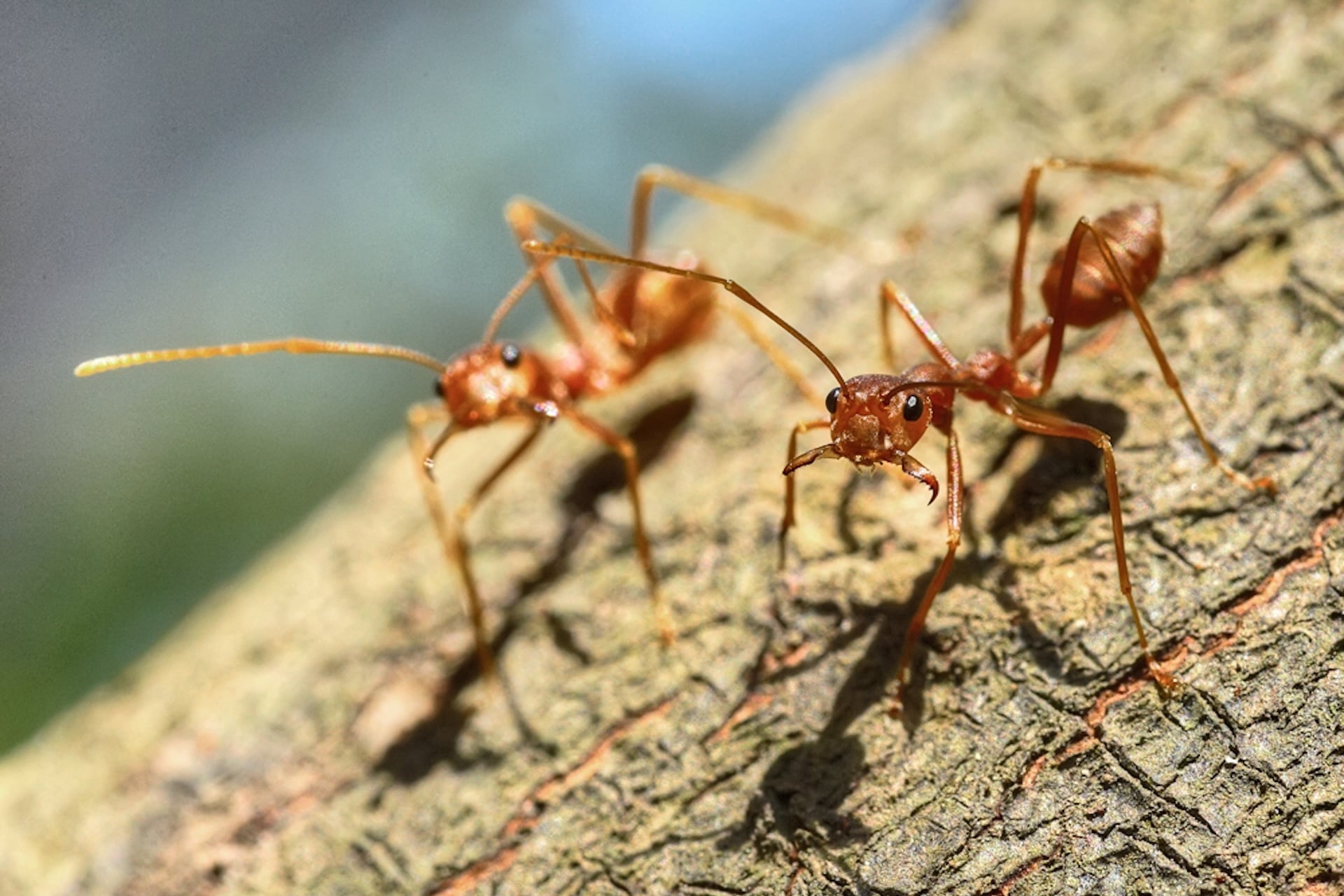
Today, over 15,000 species of ants dot the globe, their queens ruling over a vast empire hidden underground (and also within dead trees or other suitable venues). Evolutionary biologists and genomics researchers, collaborating between Germany, China, and Denmark, have now identified several independent bursts in ant species’ diversification dating back to the early Paleogene just after Chicxulub hit. Their new study attributes ants’ biodiversity boom to retrovirus-like transposable elements of DNA, sometimes called “jumping genes.”
“The asteroid impact had dramatic consequences for the environment,” the study’s lead author, Lukas Schrader, a professor of molecular evolutionary biology at Germany’s University of Münster, said in a statement. “We have now found the genomic mechanism that connects these ecological upheavals to the subsequent rapid diversification of the ants: transposable elements.”
Going viral
Scientists used to think of transposable elements (TEs) as effectively “genomic parasites,” given this DNA’s tendency to spread from host to host, seemingly as an end unto itself, without offering any clear evolutionary advantages. Some TEs, studies have shown, are even suspected of contributing to diseases themselves, including some cancers and neurological disorders.
But biologists have more recently detected comparable spikes in species diversification, sometimes with the promise of new ecological niches or improved hardiness, in the lineages of various animals, including primates and bats. One 2021 study on sub-Saharan Africa’s urban mosquito species Anopheles coluzzii, for example, discovered that TEs had helped these little bloodsuckers protect themselves against insecticides.
“I think we’re going to see more and more cases where TEs help explain cases of rapid adaptive changes,” as Schrader told The Scientist back in 2022, during an earlier phase of his research into how these viral genes benefit ants, meaning all insects in the family Formicidae.
Schrader and his co-authors cross-compared the genomes of 163 ant species sampled from a dozen of the 16 Formicidae subfamilies known to still exist today. This reconstruction of these species’ evolutionary history helped generate something like a timeline of major jumping gene activity across the past 100 million years. It revealed that, among other features, TEs helped spur the generation of new odorant receptors (ORs) and gustatory receptors (GRs) critical to ants’ use of chemicals to communicate and perceive their surroundings.
“Thus, TEs likely provided the raw genetic material facilitating diversification, while the ecological opportunities generated by the extinction event determined how this variation could become consequential,” Schrader’s team explained last month in the journal Science Advances.
Ant history
Beyond the boost that TEs provided to ant species back during the Paleogene, these virus-like genes have also continued to boost ants’ evolutionary resilience in the modern era. Schrader’s work with his colleagues at the University of Münster’s Institute for Evolution and Biodiversity, as well as with their collaborators abroad, found that those ant lineages they traced with the highest number of jumping genes also tended to produce a more diverse number of descendant species today.
Schrader’s team acknowledged that there are still some unknown factors, including the possibility that some extinct species of ants may have “exhibited different patterns of TE activity,” which might have altered this study’s assessment of how jumping genes have helped ants adapt.
There’s also the mystery of ant kind’s origins before this study’s 100-million-year framework: “[We] cannot exclude the possibility of yet unknown TE bursts having affected the earliest history of ant diversification,” the researchers said.