The bizarre contradiction of extinction-level asteroids, like the infamous Chicxulub impact that ended the dinosaurs, is that life simply goes on. The punishing Chicxulub space rock that smashed into the Yucatán with a staggering 100 million megatons of force, for example, also simultaneously created a rich marine ecosystem built off life-giving hydrothermal vents.
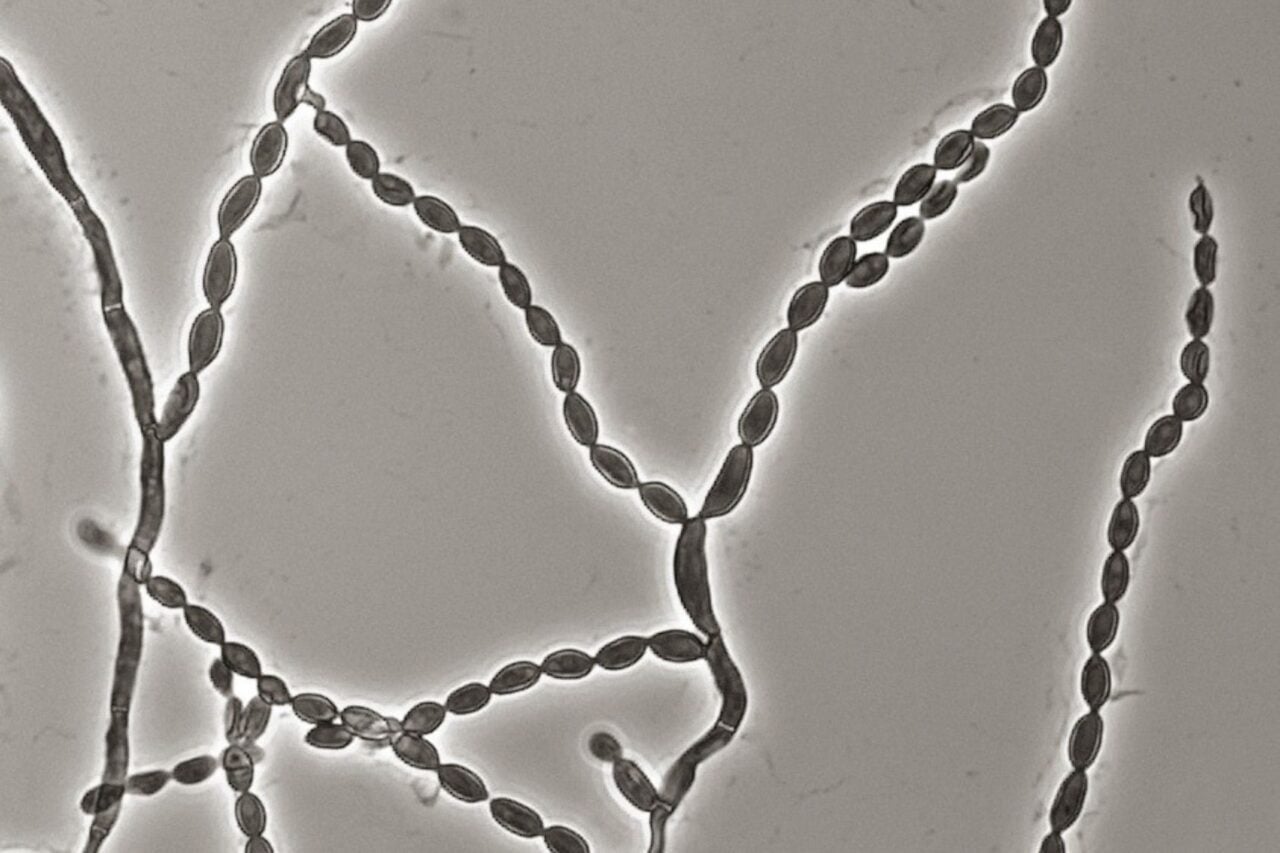
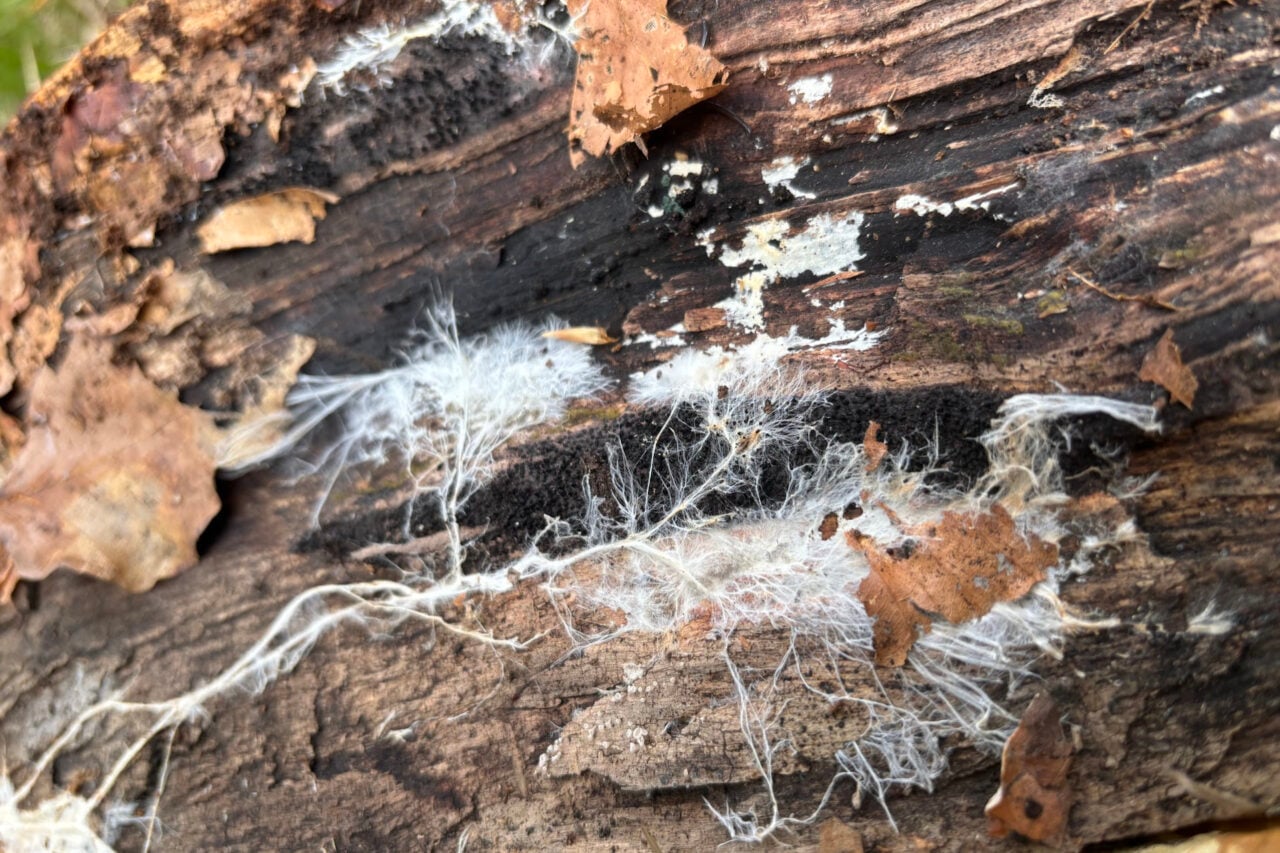
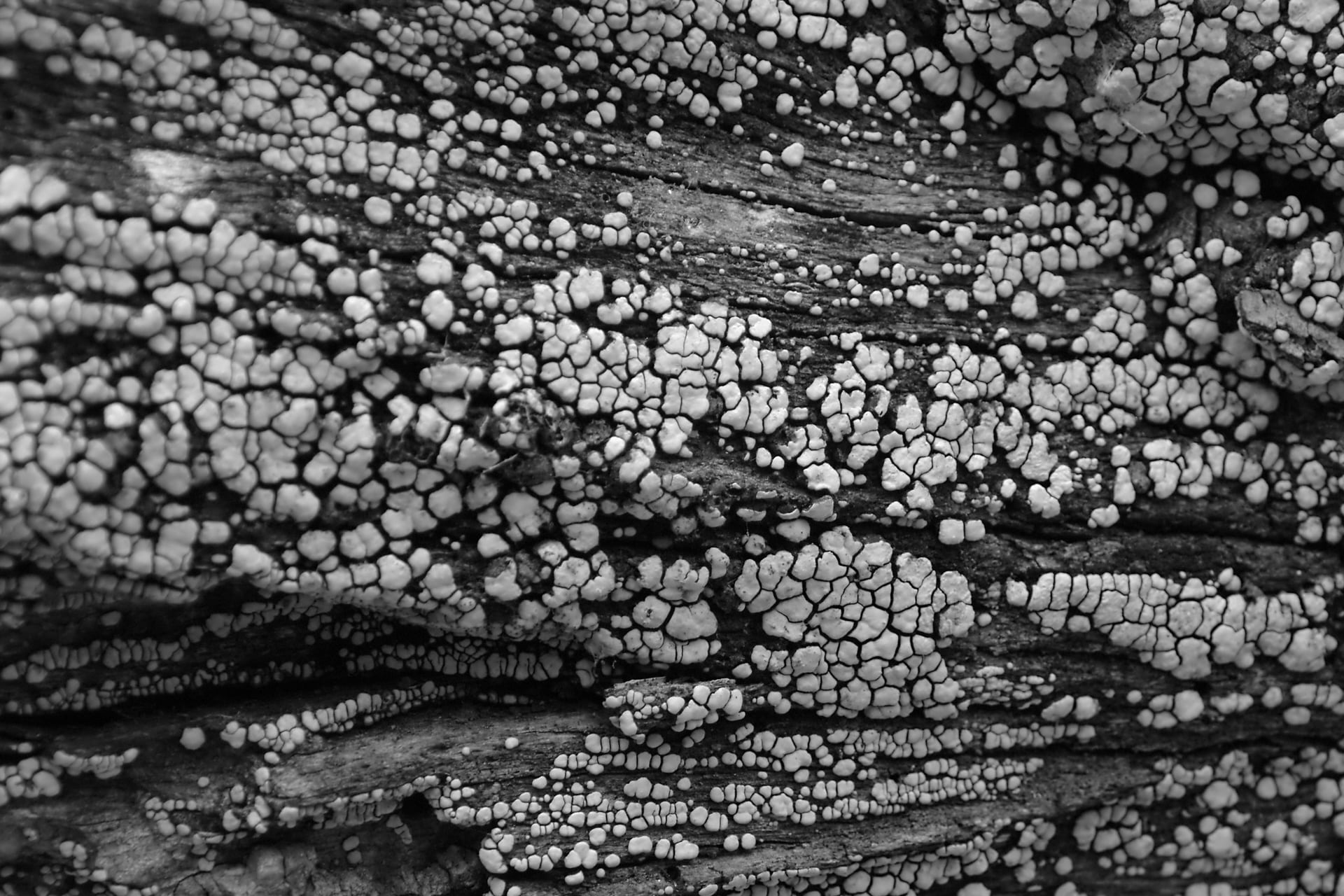
And now two researchers who study fungal pathogens have uncovered geological evidence of what they call a sprawling “global fungal bloom,” which literally mushroomed across the dusty, acrid wastes that followed the Chicxulub strike. The debris kicked up by this impact, alongside other Sun-blotting sooty eruptions from the volcanoes that formed Western India’s Deccan Traps, eventually transformed Earth’s climate into something not unlike a dank basement. While this environment was grimly inhospitable for most megafauna, it created near-perfect conditions for a worldwide network of fungi to feast upon these dying species’ remains.
“Fungi are the great degraders of organic matter,” as microbiologists and immunologists Rosanna Baker and Arturo Casadevall wrote in the preprint to their new study, published Tuesday in the Proceedings of the National Academy of Sciences.
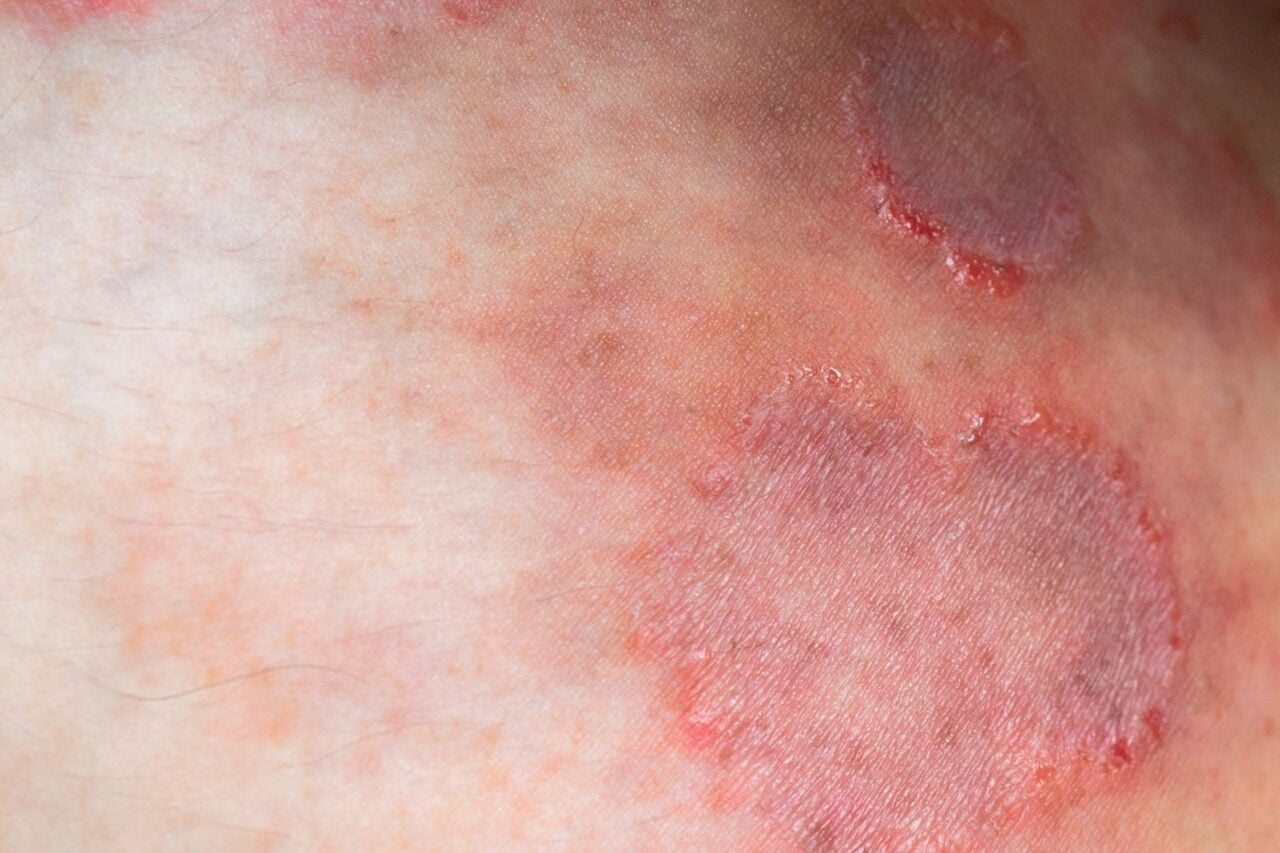
The duo—whose past focus has included the fungal pathogens that afflict people suffering with autoimmune diseases and weakened immune systems—also noted that this sprawling fungal network might have feasted on the living as well.
“Mass mortality may not be required for fungal proliferation since ecological upheavals can also weaken [the] resistance of extant species to fungal diseases,” they noted.
The mushroom kingdom
Baker and Casadevall turned to lithostratigraphy, the geological study of rock layers stacked across millennia, for evidence of this theorized worldwide fungal takeover during the so-called Cretaceous-Tertiary (K/Pg) extinction event roughly 66 million years ago. Prior to their research, only one study of ancient spore fossils, excavated from Moody Creek Mine in New Zealand, had documented solid evidence of this spike in fungi.
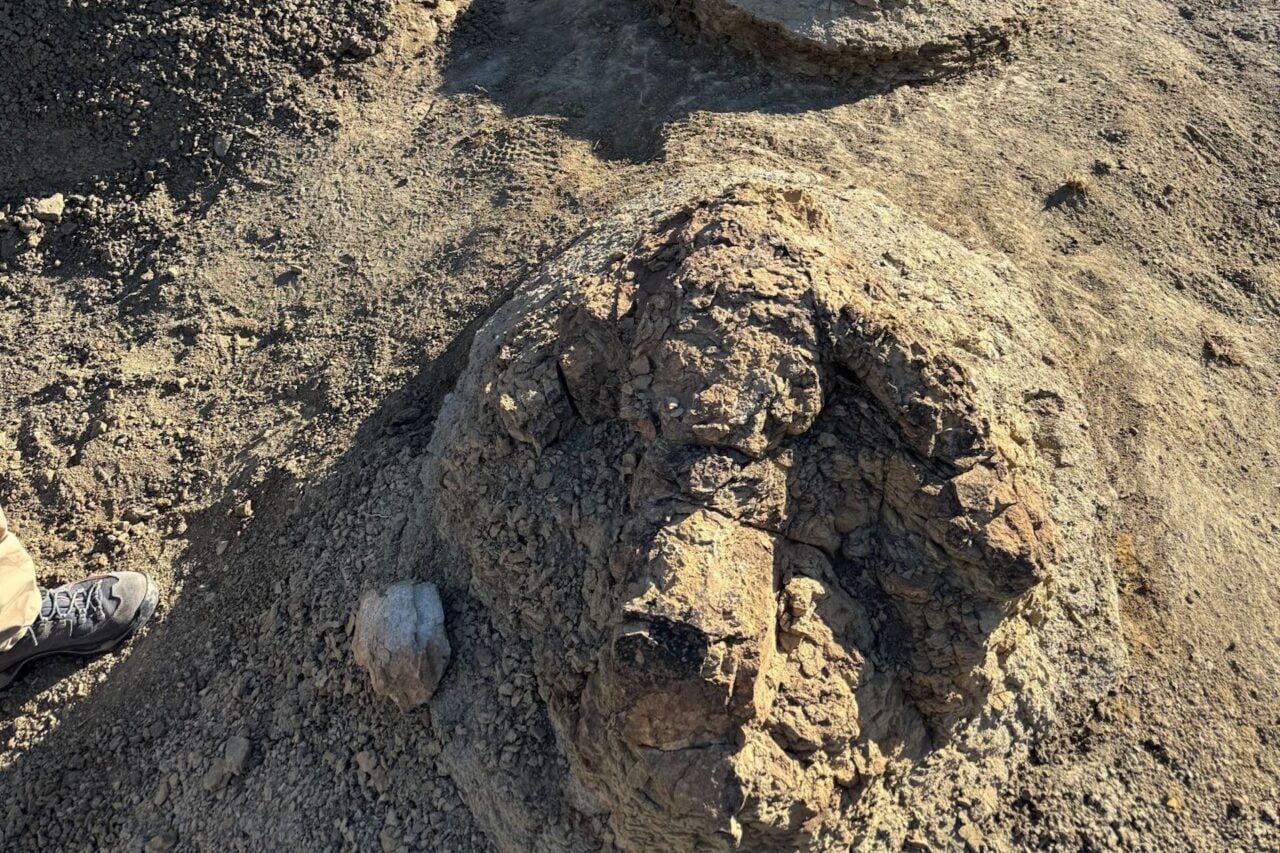
The researchers focused on two well-preserved geological sites at Denver Basin, Colorado, and Williston Basin, North Dakota, sampling material linked to the Cretaceous, as well as some K/Pg era “boundary clay,” and material deposited in the Paleocene.
Most of the layers at Bowring Pit in the Denver Basin, they found, were rich in tiny plant and animal fossil remains, called palynomorphs, except for the K/Pg boundary clay and another surprising layer from the Late Cretaceous, “where fungal forms constituted 50% or more of the total assemblage,” the scientists wrote in their study.
That surprise, Baker and Casadevall said, “correlated to a period of climatic cooling” and was “intriguingly coincident with the Poladpur phase of the Deccan Traps,” a similarly apocalyptic catastrophe that helped hasten the demise of the dinosaurs.
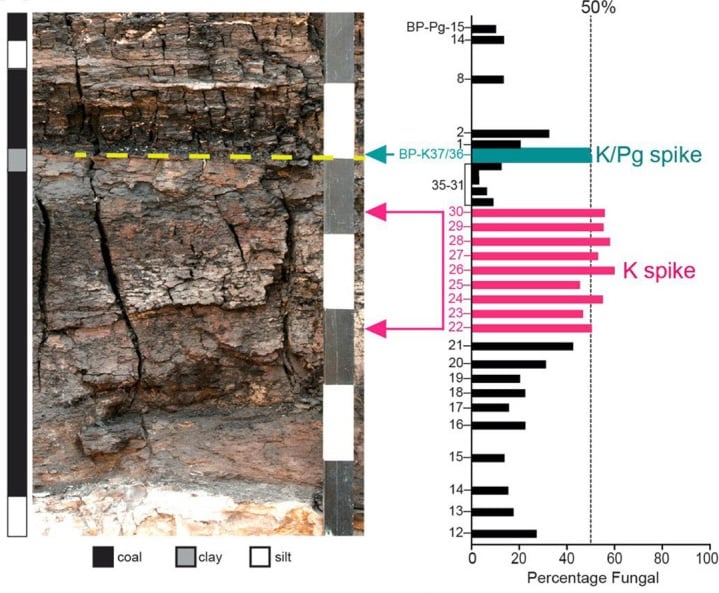
The pair’s samples collected in North Dakota’s Williston Basin revealed two corroborating fungal spikes before and after the K/Pg boundary layers, samples rich in fungal roots or hyphae and various fossilized spores.
The lost layers
Baker and Casadevall attributed their success to a gentler-than-usual approach during their geological sediment analysis. Standard sifting for palynomorphs, they wrote, typically involves the stripping of unrelated minerals “with hydrochloric and hydrofluoric acids, oxidation, alkali treatment, and acetolysis,” all of which can dissolve and wash away telltale ancient fungal evidence from field samples.
Instead, the researchers worked with a non-acid alternative, sodium hexametaphosphate, a compound that reacts in a targeted fashion that breaks up clay particles without doing much damage to any fungal microfossils embedded in them.
“We also omitted the common 10 µm [micrometer] sieving step, which removes amorphous organic material, but also risks the loss of smaller fungal spores,” they added (a simple but powerful filtering change that anyone who grinds their own coffee can imagine).
Baker and Casadevall hope that these updated methods might also help uncover additional episodes of fungal dominance in the fossil record or “additional periods of ecological stress throughout geologic history, including events that were regional rather than global.”