Pottery is among the oldest human inventions known to history, but how exactly we came to discover potterymaking is something of a mystery. New findings, however, might help us answer that question.
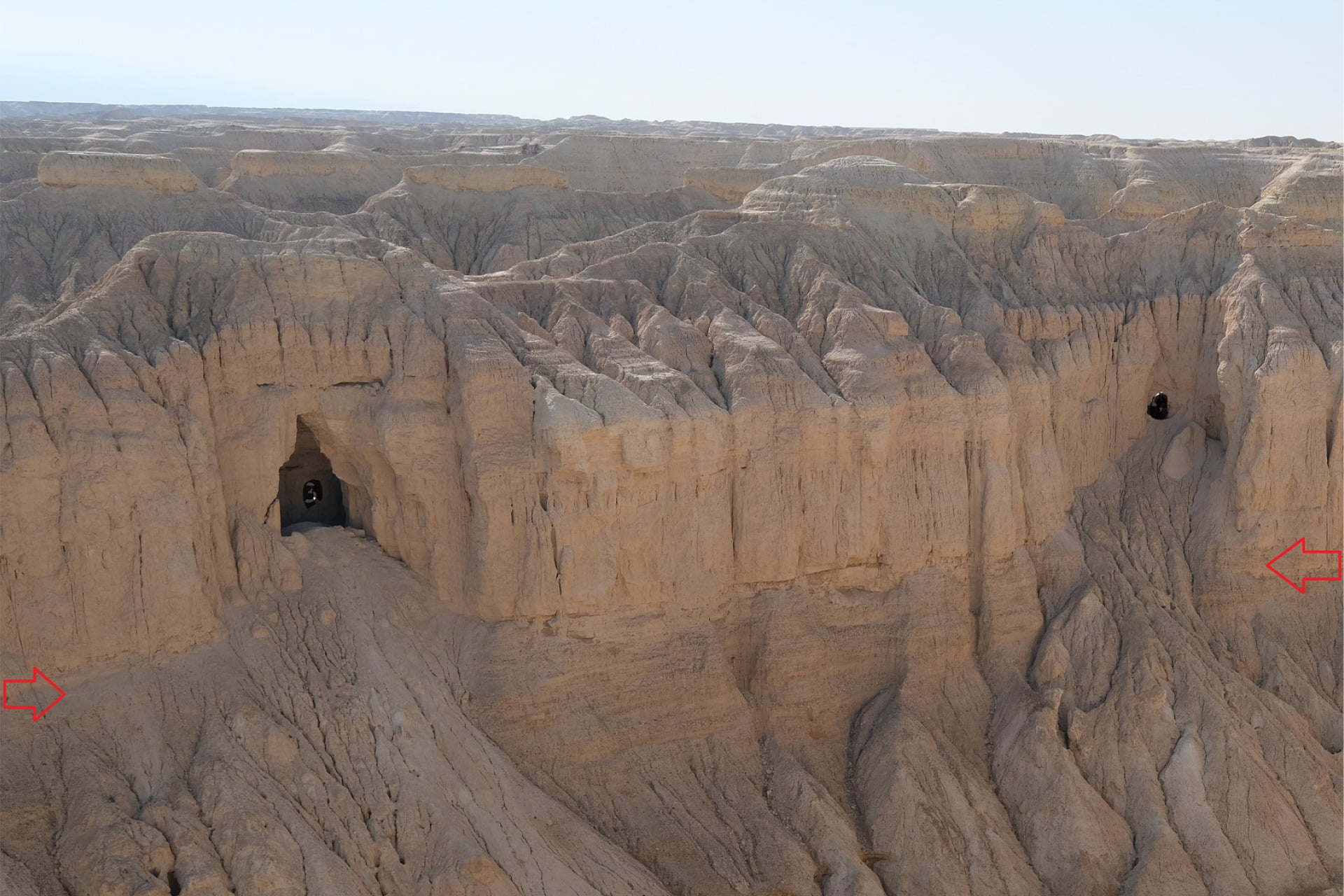
In a new study published in the latest issue of Geomorphology, speleologist Amos Frumkin proposes what he calls the “natural kiln hypothesis,” arguing that observing wildfires taught prehistoric humans that fire permanently hardened clay. Frumkin studied geographic features from two separate periods of time around what is now the Jordan Rift Valley, and found evidence that indicated both periods saw intense episodes of wildfires and environmental erosion. Given that pottery emerged in the region at roughly a similar time as the later period of the two studied, it could be that humans noticed how natural disasters—fire—were affecting the terrain and that they could use this observation to create new tools—pottery.
“A wildfire is normally seen only as a catastrophe, but environmental disruption can also expose people to new materials and new possibilities,” said Frumkin, of the Hebrew University of Jerusalem in Israel. “If so, one of humanity’s most important technologies may have emerged partly from people learning to imitate what they had already seen nature do.”
For the study, Frumkin referenced two separate periods of time, separated by more than 100,000 years. The first period, roughly 129,000 to 116,000 years ago, coincided with the last interglacial period and was “characterized by extreme climatic instability” due to the “fundamental reorganization of regional weather systems,” according to the paper. The geological evidence showed signs of extreme dry spells followed by intense storm events, Frumkin added in the paper.
On the other hand, the second period took place in the early Holocene, about 11,000 to 7,000 years ago. Radiocarbon dating and chemical analysis from both periods indicated major spikes in compounds associated with fires and heavy erosion. The site also hosted one of the largest pre-pottery Neolithic settlements in the region, along with signs that humans abandoned this site at the peak of fires and erosion.
Comparing the two periods could imply several things, Frumkin wrote in the paper. To be clear, no pottery emerged in the region immediately after the last interglacial period. In that sense, that earlier period may serve as a “natural control experiment” with “different cognitive and social contexts,” he explained. Later, however, when human communities evolved to be more sedentary and social, there was more room for people to be “paradoxically creative” in the face of natural disasters, he added.
“Neolithic communities in the Jordan Valley may have watched fire transform the clay beneath and around their settlements and realized that this process could be reproduced deliberately,” Frumkin said in the statement.
Of course, Frumkin stressed that this is one explanation of many possible scenarios. First, as with most things in paleontology and archaeology, the evidence we have now is admittedly insufficient—that is, unless we can travel back in time and ask Neolithic humans directly. The theory also assumes that the natural firing of clay was very obvious to local communities, and it’s very possible that there were multiple factors that drove the invention of pottery.