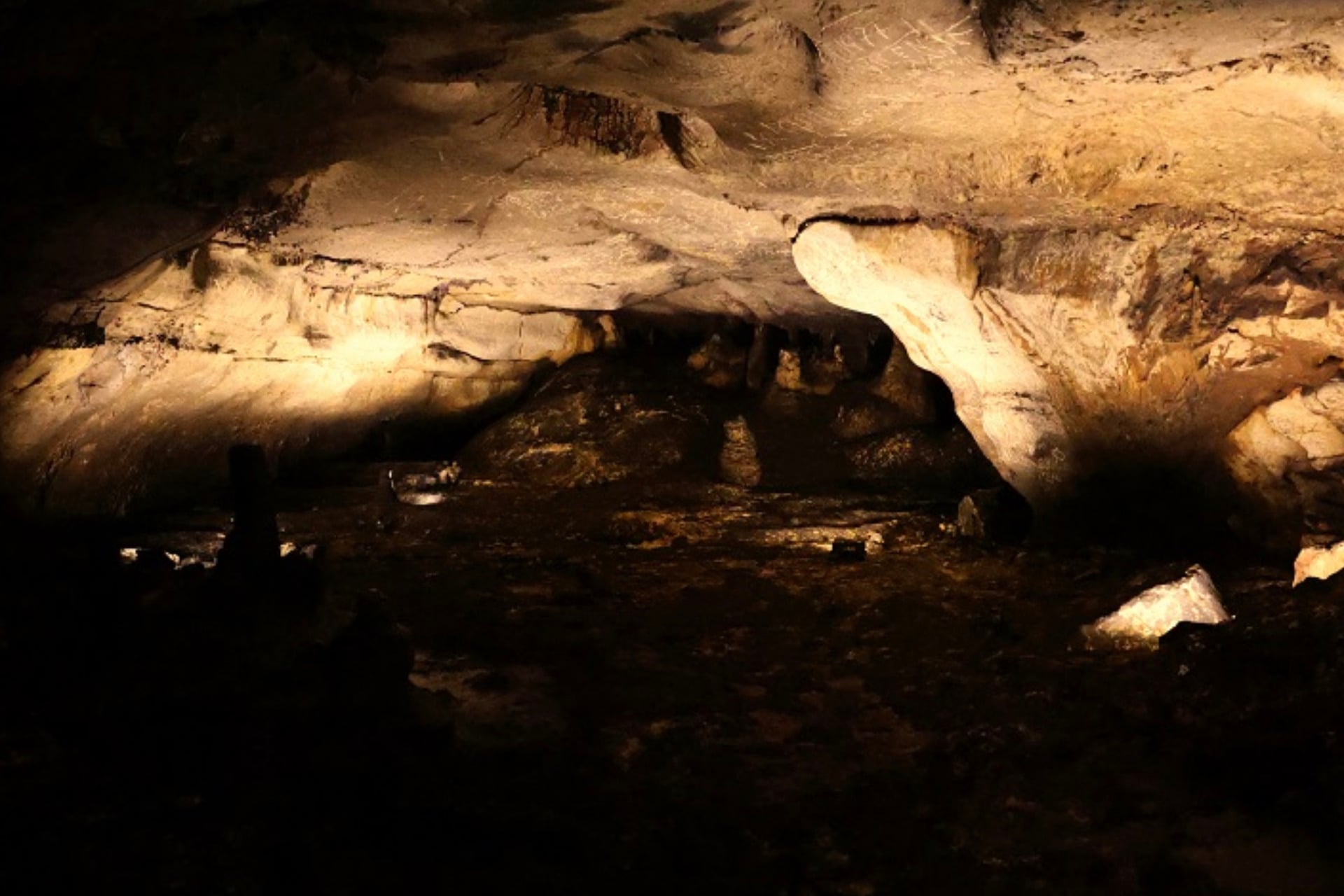
Archaeologists were used to thinking of western Spain’s Cova de les Dones (the “Cave of the Women”)—up a cliffside where the water of the Tambuc switches over into the Zapatero ravine—as primarily a site of Paleolithic rock art: a cow-like auroch painted on one wall, a prehistoric horse’s head etched into another, etc. But, last year, a team co-led by archaeologists Aitor Ruiz-Redondo and Virginia Barciela found a chamber hidden deep within the cave that has forever changed how scholars now think of the site and its role in the ancient world.
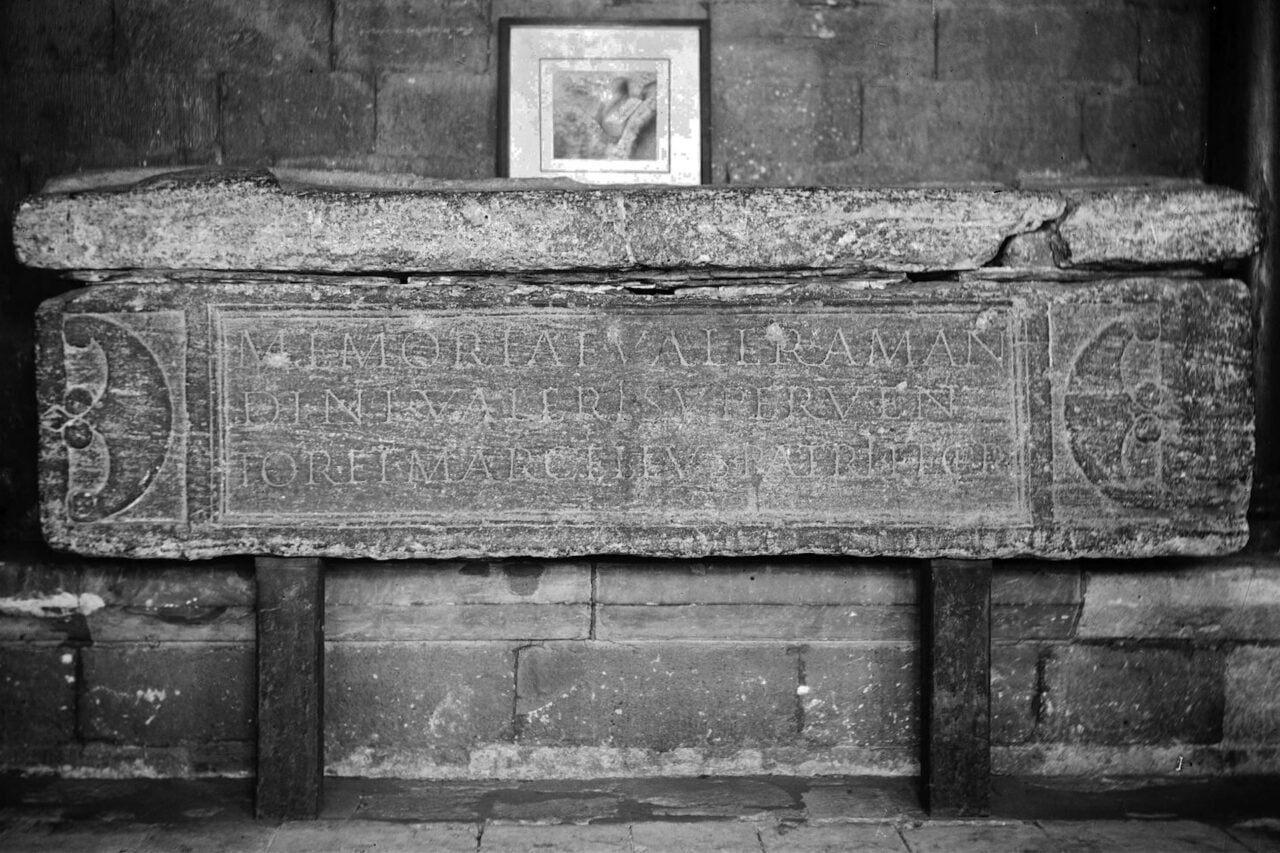
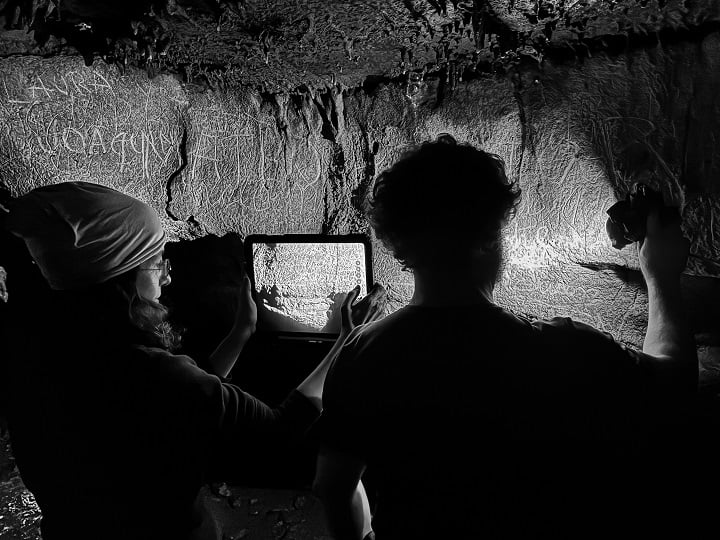
Their team called it a “Roman sanctuary,” initially identified by about 15 Latin inscriptions along its cave walls and a first century CE Roman coin from the reign of the Emperor Claudius. Now, according to the team’s latest announcement, this remote cave holds the record for the highest known number of confirmed Latin inscriptions of any place of its kind across the entire reach of what was once the Roman Empire.
The site’s 120 inscriptions, as Ruiz-Redondo and his colleagues explain, appear to be a clear indication that the cave-sanctuary had once been a place of worship for an obscure Roman goddess, reverentially known as Domina, Latin for “the Lady.”
“The fact that the texts are concentrated in a specific and delimited area of the cave, away from the entrance, confirms that it is an organized cult,” Sergio García-Dils, one of Ruiz-Redondo’s archaeologist and speleologist collaborators, said in a Spanish-language statement (via Google Translate).
The cult of MALACI
At least three inscriptions now identified in the cave reference the Lady and also bear the name “MALACI,” which the researchers believe is not a previously known name for any known goddess, Roman or otherwise. Given the cave’s structure, however, and the sanctuary’s naturally occurring small pools known as rimstone dams or gours, Ruiz-Redondo’s team suspects that the Lady was worshipped for this site’s reliable water resources.
“Each new discovery suggests that Cova Dones has been a landmark for the human groups that inhabited this territory for millennia, perhaps due to the permanent presence of water, the characteristics of the underground landscape or its easy access,” the team said.
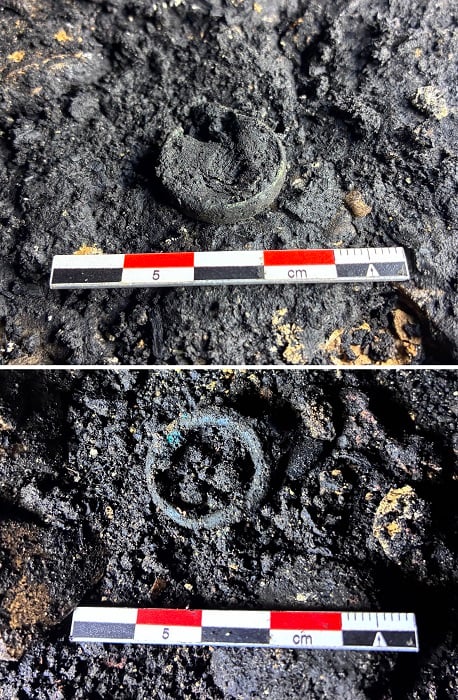
Archaeologist and project co-lead Virginia Barciela of the University of Alicante noted that its first century visitors appear to have deposited offerings within the sanctuary’s gours. These “numerous spindle whorls,” as she described them, “likely indicates the offering of spindles, a textile-working tool that, in antiquity, was associated with the female sphere.”
The spindles, as her colleague García-Dils noted, resonate with the fact that the cave has been colloquially known as the “Cave of the Women” in the local Valencian language ever since it had a name on record at all.
Millennia of cultural significance
The Roman sanctuary’s inscribed Latin texts reside in a chamber over 656 feet (200 meters) deep, discovered over half a century after the first Iron Age artifacts emerged from archaeological work at the cave around 1960. Ruiz-Redondo, Barciela, and their team suspect that the site might have maintained its local cultural significance all the way from the old Stone Age into the Roman era—an impressive feat given the site’s still elusive significance.
In between the discovery of the cave’s paleolithic art and these latest finds, archaeologists investigating the cave in 2025 found over a hundred speleofacts: human-modified cave rock formations, like carved stalactites and stalagmites. These speleofacts, they said, are indicative of a long-term prehistoric interest in Cova de les Dones, leaving open some fairly intriguing questions about just how far in the past the cave’s Roman-era MALACI cult could actually date back to.
Ongoing research at the cave has been supported financially by the Millares City Council in partnership with “Pla Restaura,” a cultural restoration program funded by Generalitat Valenciana, the autonomous government of the region’s local Valencian community in Spain.