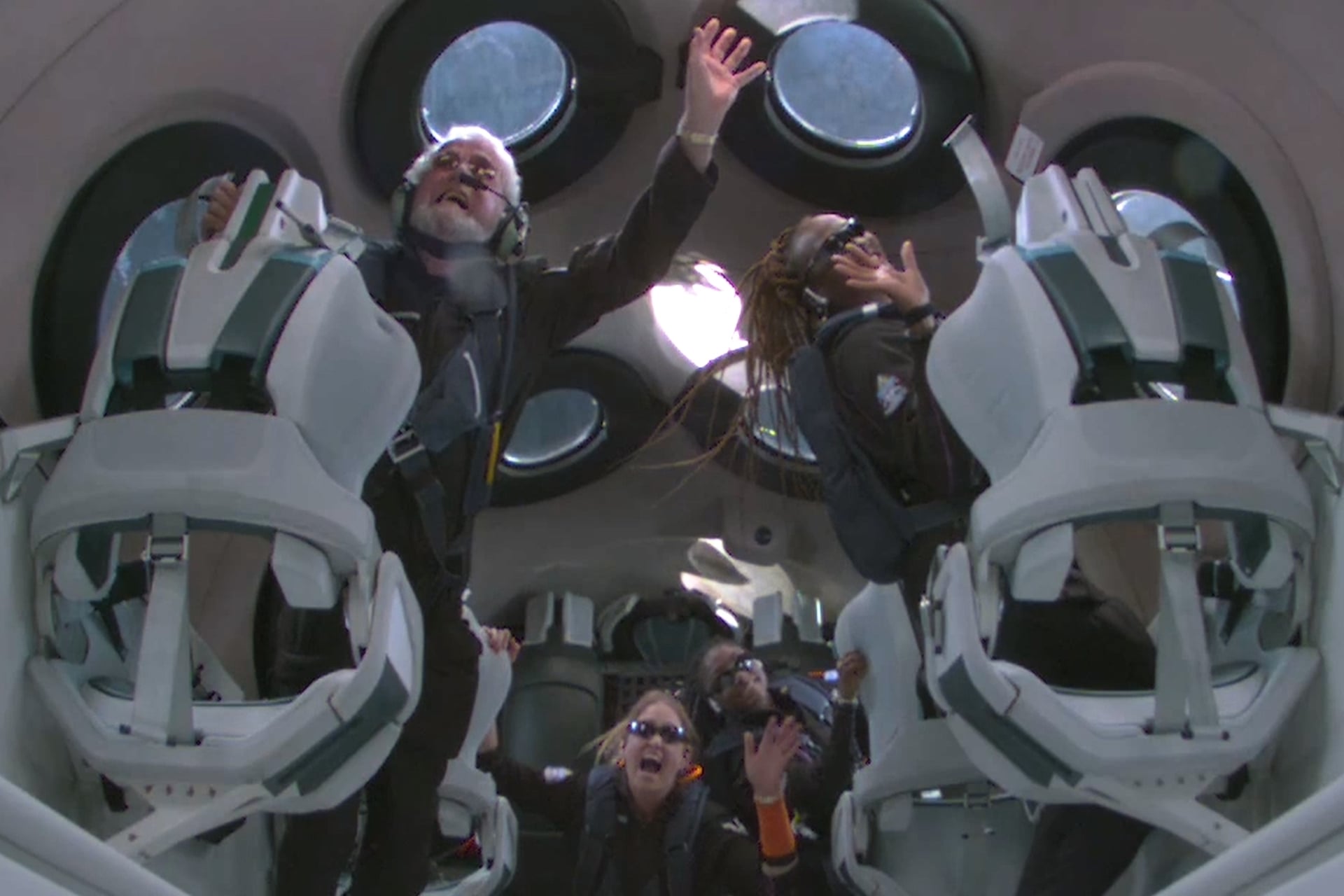
Virgin Galactic is once again open for bookings for suborbital trips above Earth’s surface, reigniting a vision for space tourism that never fully developed.
The company, founded by billionaire Richard Branson, is resuming its space tourism operations after a nearly two-year hiatus. A slew of setbacks and delays have plagued Virgin Galactic’s previous attempts to kick off its commercial spaceflight ambitions, but the company is not giving up despite limited demand for leisurely trips to the edge of space.
Nobody asked for this
Virgin Galactic is selling a limited number of tickets for its 90-minute commercial flights, each priced at a whopping $750,000, the company announced on Monday. That’s a big increase from $450,000 in 2021 and the $600,000 price tag mentioned during the company’s Q1 2025 earnings call.
Michael Colglazier, CEO of Virgin Galactic, announced that the assembly of the company’s next-generation spaceplane, aptly named SpaceShip, is nearly complete, with ground testing set to begin in April. SpaceShip is expected to begin operations late 2026, in line with the company’s “planned ramp in spaceflight cadence,” Colglazier said in a statement.
The previous iteration of the rocket-powered spaceplane has only carried 23 paying passengers to the edge of space, where they hung out in microgravity for a few minutes before coming back down. The spaceplane reaches an altitude of around 50 to 56 miles (80 to 90 kilometers) above Earth’s surface, which is a few miles shy of the internationally recognized boundary of space, also known as the Kármán line.
Try and try again
Virgin Galactic was founded in 2004 with Branson’s vision to establish a presence in the emerging space tourism industry. Its path forward, however, was plagued with technical mishaps. In 2014, a test vehicle operated by Scaled Composites as part of Virgin Galactic’s development program crashed in the California desert, killing the co-pilot and seriously injuring the pilot; investigators determined that a premature system deployment triggered a catastrophic breakup mid-flight, with too few safeguards in place to prevent that kind of error. Branson himself hopped on board a Virgin Galactic flight in July 2021, and reports later suggested that the spaceplane veered off course during its ascent.
The company finally kicked off its commercial spaceflights with the launch of Galactic 01 in June 2023, sending a three-person crew from the Italian Air Force and National Research Council of Italy to suborbital heights. A follow-up mission in August of the same year did not include government customers but instead launched a three-person crew of private citizens.
Subsequent flights took place at a near-monthly pace, with Virgin Galactic launching seven commercial trips back-to-back. Despite the frequent launches, Virgin Galactic admitted that its commercial flights won’t generate much revenue. The company sold about three-fourths of the first 800 tickets at a price tag of between $200,000 and $250,000 before later raising prices to over $450,000.
Following the launch of its last private crew in June 2024, the space venture halted flights in an effort to cut cost and focus on developing its next-generation spaceplane. Virgin Galactic anticipates that its new spaceplane will bring in more revenue as it is designed to fly more frequently and at a lower cost than its predecessor.
The company’s planned comeback to the space tourism sector comes at a time when market supply is down to nil. Earlier this year, Blue Origin announced it was pausing its suborbital space tourism flights for at least two years to focus on developing lunar landers for NASA’s Artemis program.
With Jeff Bezos bowing out of space tourism (at least for now), Branson’s venture can take the lead. But while space tourism has been decades in the making, the ambitious pursuit never really materialized into a profitable industry. The cost of developing reusable spacecraft means soaring ticket prices, which leads to a limited-sized market.
That doesn’t stop billionaires from trying to make their juvenile space dreams a reality. It also doesn’t mean they will be very good at it.
Corrections: This article has been updated to note that the vehicle involved in the 2014 crash was operated by Scaled Composites, not Virgin Galactic. It has also been updated to reflect the most recent previous ticket price ($600,000) and to remove a reference to Virgin Galactic as a “private” venture (it is a publicly traded company).