You might not have heard of dysprosium, but the rare-earth element is likely one reason you’re able to read this sentence right now. The metal’s high sensitivity to magnetic forces has made it a critical component in computer hard drives, as well as in the electric generators needed for wind turbines and the drive motors powering electric vehicles (EVs).
Most of the global supply of dysprosium is mined, rather destructively, from ion-adsorption clay deposits in southern China and nearby Myanmar. But biochemists at North Carolina State University (NC State) have announced a new measurement technique that could finally help make the sourcing of this critical rare-earth element, and others, something of a win-win for the economy and the biosphere. The team has developed a quicker and more convenient laser-measurement system that would make it feasible to harvest rare-earth metals from common plants native to North America.
“Some plant species are capable of taking rare-earth elements out of polluted soil and concentrating it in their tissue,” as NC State biochemist Colleen Doherty explained in a statement.
“Rare-earth metals … these are not actually rare,” Doherty noted, “it’s just that they are rarely found in high concentrations in the environment in their pure form.”
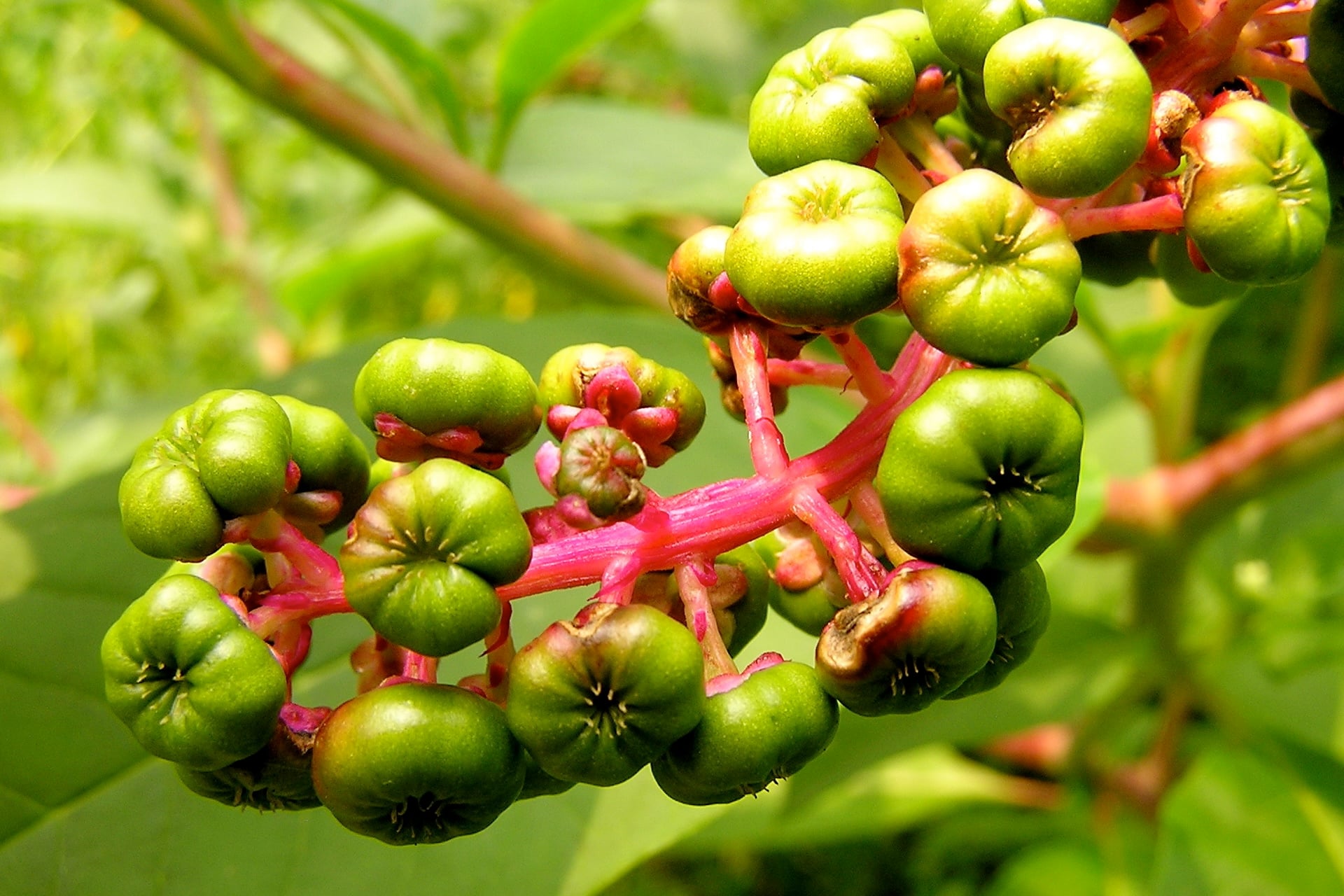
Dragonberries under deep ultraviolet
Doherty’s team worked with the native weed species Phytolacca americana—also known as pokeweed or dragonberries—to investigate its ability to recover rare-earth metals from the kind of land usually condemned as Superfund sites. (The team planted the weed in acid mine drainage sludge, a common waste product often full of heavy metals.)
“In order to maximize this ‘plant mining’ technique, we wanted to find a way to detect and measure the concentration of rare-earth materials in these plants,” Doherty said.
Her team turned to fluorescence spectroscopy. Their version of the technique uses quick scans via a deep ultraviolet laser, measuring the wavelengths of light emitted back as a means of identifying the chemical content inside each plant. The method is blessedly relatively benign—unlike prior methods, like inductively coupled plasma mass spectroscopy, for example, which literally just blasts plant samples into ash to identify their contents.
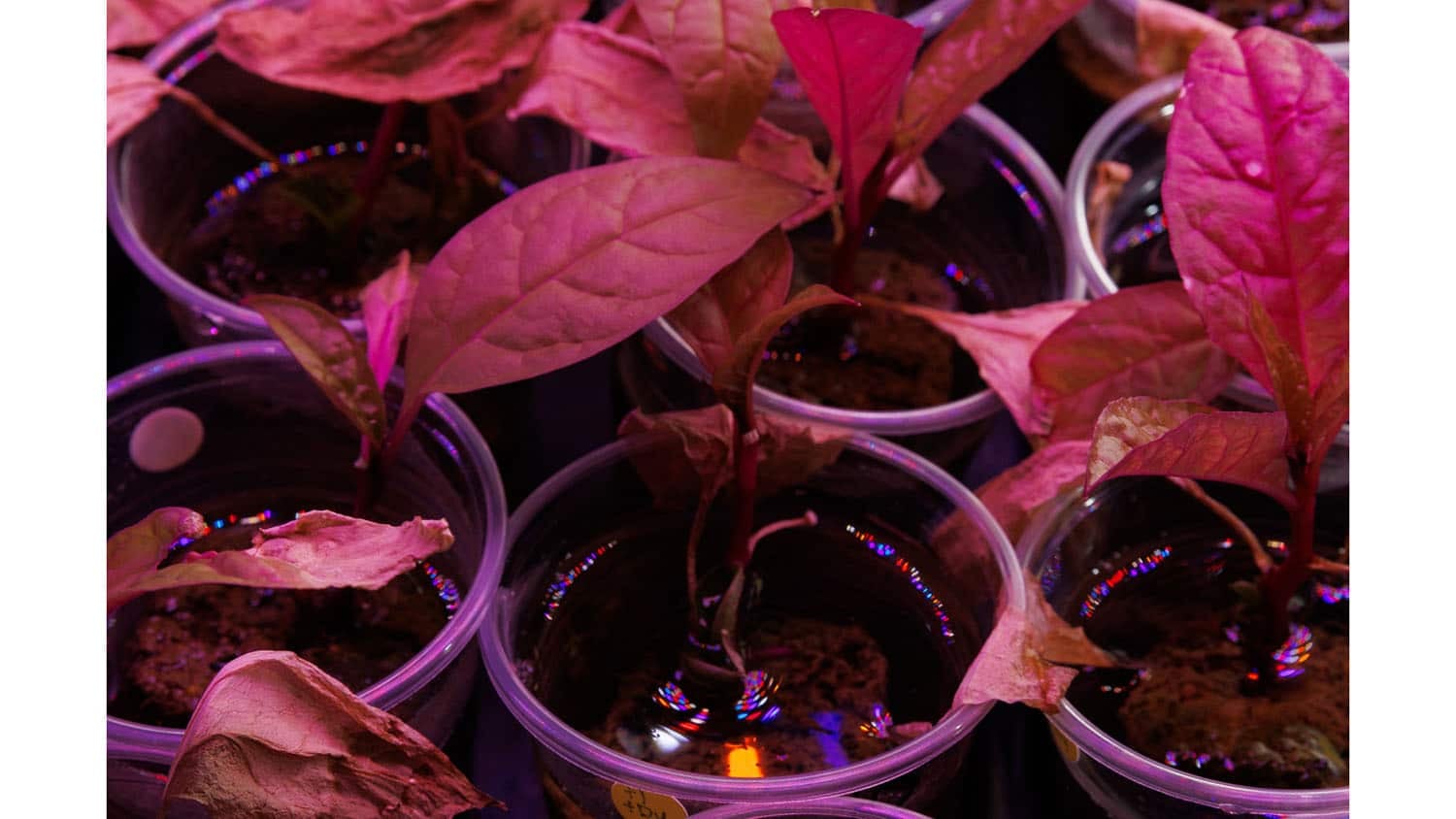
Fluorescence spectroscopy “can be done very quickly,” according to Doherty, “and we’re excited that we can conduct the testing without destroying the plant, which allows us to test the same plant repeatedly.” This ongoing, non-destructive monitoring, she noted, will help time the harvesting of these plants for the “optimal concentration of rare-earth elements.”
Fluorescence spectroscopy also helps beyond timing harvests too, as the team wrote in its study, published in the journal Plant Direct. Developing “alternative, nondestructive screening methods,” they wrote, “will help identify plants with the highest potential for REE accumulation.”
Heavy metal farming
True, the entire concept of using plants to extract metals from soil, technically known as “phytomining,” has been around for a while (since, at least, the 1970s). But, despite major projects recently in Europe and Africa, there’s still a lot of basic R&D, like NC State’s project, needed to make the concept viable.
According to one of Doherty’s coauthors, NC State electrical and computer engineer Michael Kudenov, the team also made progress exploring this technique for a handful of other REEs used in sustainable tech and other advanced electronics.
“We’re fairly confident the technique will work for erbium and neodymium, with minor changes to the experimental setup,” Kudenov said in a statement. (Neodymium is a component in many hybrid cars and EVs.)
“We’ve also done enough preliminary work to be confident that this technique will work for the rare-earth elements terbium and europium,” Kudenov added. (Terbium sees use in flat screens, naval sonar, and fiber optics.)
“We’re optimistic that this can make a real difference,” Doherty said, “for both our manufacturing sector and the environment.”