The harms of screen time can even extend to your skin, a new case report shows—at least if you’re keeping a warm screen hugged to your body for too long.
Doctors in the UK recently detailed the case of a boy with a peculiar skin condition. He developed a bruise-like rash from spending hours of his day with a laptop resting on his abdomen. Thankfully, the heat-triggered condition is usually benign and reversible, and once the boy stopped using himself as a laptop dock, his skin cleared up.
“Early recognition is important to prevent misdiagnosis and avoidable radiation exposure,” the authors wrote in their paper, published this month in BMJ Case Reports.
‘Toasted skin syndrome’
The skin condition is formally called erythema ab igne, or EAI. It’s also more colorfully known as “toasted skin syndrome.” It’s caused by repeated and prolonged exposure to low levels of heat and/or infrared radiation. Though this exposure doesn’t lead to immediate burns, it can still damage the skin and its underlying blood vessels and elastic fibers given enough time.
The doctors provide no specific age for this boy in this case, calling him “mid-childhood.” According to the report, he visited the emergency room with reddish-brown lesions in a net-like pattern on his lower abdomen originally described by a nurse as “spontaneous bruising.” His skin had started changing a week earlier, but he only told his parents after it failed to improve and grew darker. Neither him nor his parents could think of any likely cause, and early tests failed to uncover a glaring culprit. Though doctors initially suspected a possible liver injury, the boy felt and seemed normal otherwise, making that unlikely.
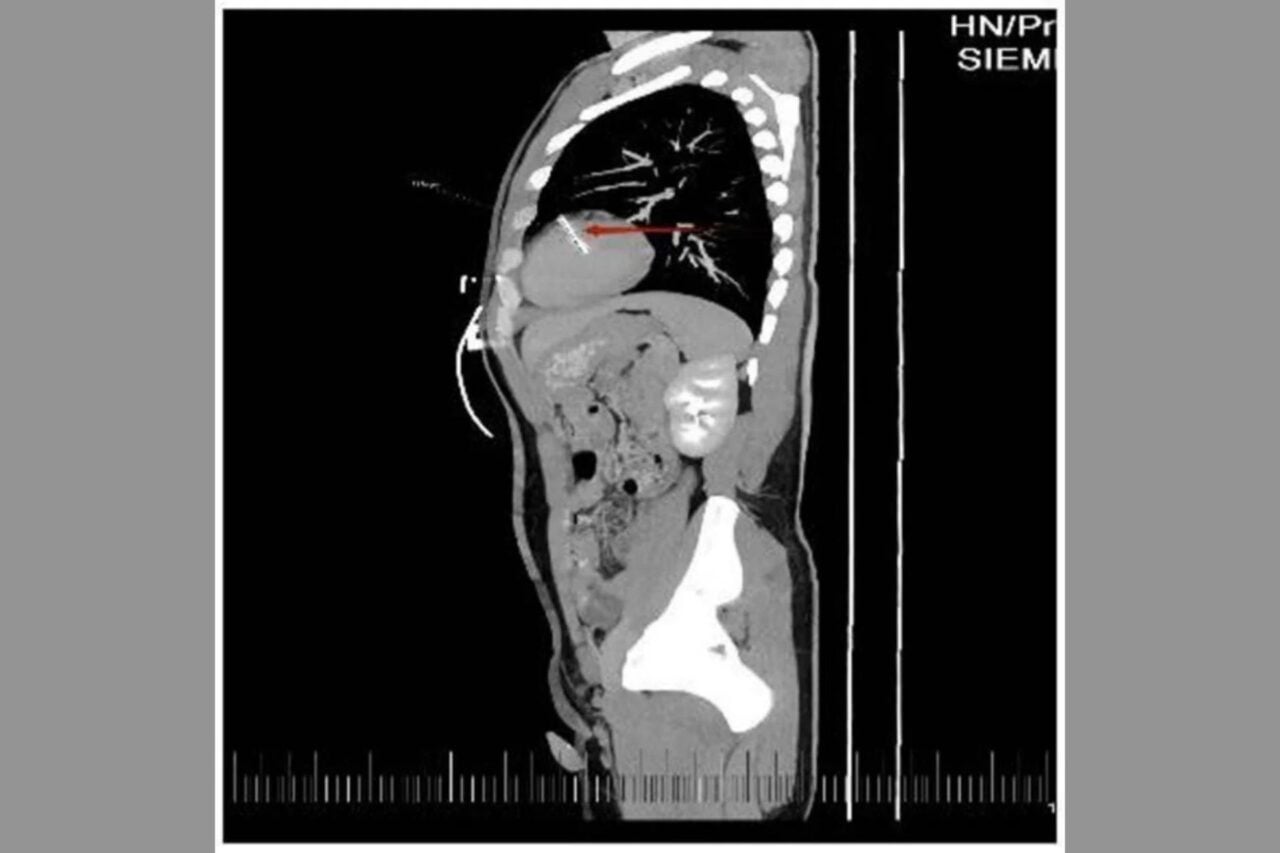
While having his blood drawn, the boy stated he and his sibling had been playfighting a week earlier, and that he had gotten pushed into a chair at some point (the boy didn’t mention the incident at first for fear of getting his sibling in trouble). Doctors then thought he might have had a mild traumatic injury, but imaging scans failed to support that idea either. With little else to go on, the boy was discharged with an antibiotic prescription and advice to keep an eye on his condition.
Weeks later, the boy returned with a larger and worsening rash, along with increased tenderness. The lesions now had pink-hued patches, indicating a breakdown of the skin and its underlying tissues. This led the doctors to completely throw out the bruising theory.
The boy and family initially said no when asked about common heat sources, but upon further questioning this time, the doctors learned the boy was homeschooled and that he routinely used a laptop during the day. The boy then revealed that he frequently rested the laptop on his abdomen for up to eight hours a day, often while charging it. With that key detail and a lack of other plausible explanations, the doctors diagnosed the boy with EAI.
Toasty but temporary
Toasted skin syndrome usually isn’t too serious and is treated by simply removing the source of exposure. If the condition goes untreated for too long, though, it can cause permanent discoloration of the skin. The condition might also raise the risk of certain skin cancers, though this seems to be a rare occurrence that can take years, even decades, of prolonged exposure to manifest.
In this case, the doctors applied a wound dressing to the boy’s affected skin and told him to keep his abdomen laptop-free from now on. Several months later, the boy’s father told the doctors over the phone that his skin gradually improved and was now rash-free.
Though toasted skin syndrome is a condition that’s been documented for centuries, historically among bakers and other professions working with hot objects, laptops and other electronic devices have become a more frequent source of exposure in the modern day. The authors say the condition is typically well-recognized when it happens in adults, but might be more likely to go unnoticed in children. The covid-19 pandemic may have also had an indirect effect on cases lately via the rise of remote learning and prolonged screen time, they add.
“This case highlights the importance of considering EAI in children presenting with reticulated rashes, particularly in the context of increasing electronic device use,” the doctors concluded.
Personally, I just hope having a cat on your lap or chest isn’t hot enough to cause toasted skin, because otherwise I could be in trouble down the line.