Here’s a real-life tale of body horror just in time for Halloween: A farmer whose blurry and itchy eyes were caused by an infestation of worms, some of which had already started to spawn offspring.
Doctors in South Korea detailed the eye-catching case over the weekend in the New England Journal of Medicine. The 71-year-old’s eyes were riddled with a species of parasitic roundworm that typically infects other animals. Thankfully, they successfully removed the man’s unwelcome guests with no complications.
“The patient is doing very well,” lead author Ji Eun Song, an ophthalmologist at Kangwon National University Hospital, told Gizmodo in an email.
The hills have eyeworms
According to Song, the man originally visited their hospital seeking cataract surgery.
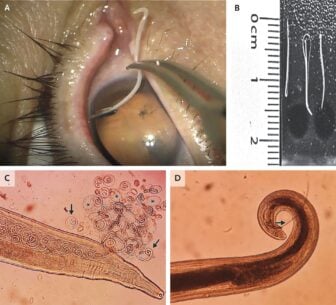
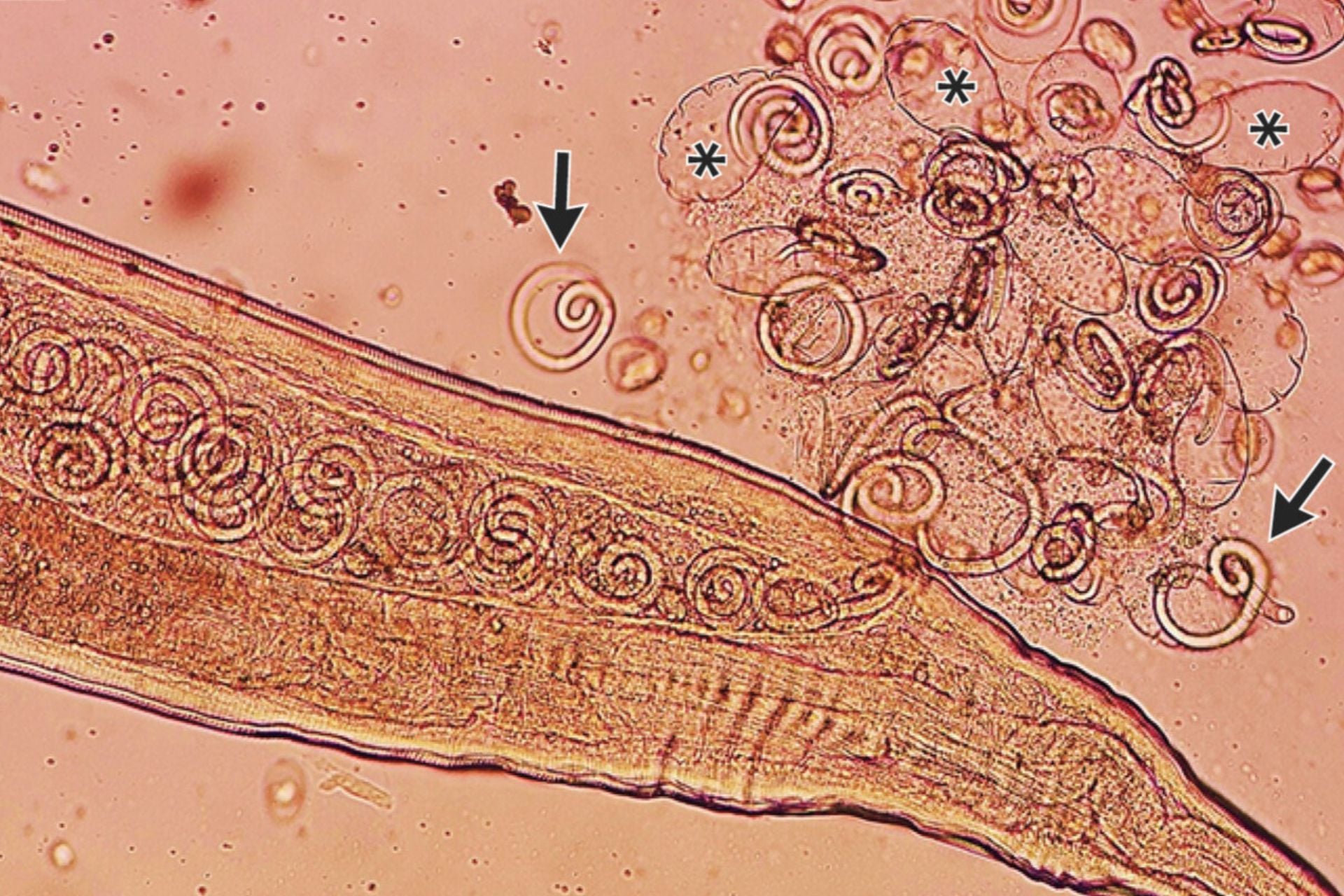
The man reported he had been experiencing persistent bouts of redness, blurred vision, and foreign body sensations in both eyes for about two months. And midway through his tests, the doctors uncovered the large-scale parasitic infestation. To make things worse, some of the female worms were pregnant and had already released fertilized eggs; a few of the eggs had even hatched into their first stage of larval life.
These sorts of eyeworm cases are typically treated through physical removal rather than deworming medication, the doctors wrote. So they administered topical anesthesia and set to work carefully removing the worms with fine forceps. All in all, they pulled out 11 live, translucent worms from the patient’s eyes, which measured from 11 to 20 millimeters in length. Under a microscope, the worms were identified as members of the species Thelazia callipaeda.
“What makes this case particularly interesting is that we found multiple live worms in both eyes, including gravid females containing developing larvae. This indicates that the parasites had reached reproductive maturity within the human eye,” Song said.
A happy ending
Despite the ghastly invasion, the man and his eyes made a smooth recovery following the removal. The doctors monitored him for five months, and he showed no further symptoms nor signs of recurrence. He’s now scheduled to undergo his cataract surgery as originally planned next month, Song said.
Thelazia worms are transmitted via species of face flies that feed on animals’ tears and eye-related fluids. The flies deposit third-stage larvae into the conjunctival sac, where they fully mature, mate, and lay the next generation of worms. With any luck, these youngsters are then scooped up by other feeding flies, starting the whole cycle anew. Humans, however, are an accidental and typically dead-end host, which makes it stranger that the man’s worms managed to produce offspring in the first place. Dogs and cats are the primary animal hosts of T. callipaeda, though this species is also the most common cause of Thelazia cases in humans.
Though these infestations are rarely seen in people, there is some evidence that they’re starting to become a more frequent problem, including in places outside of Asia where they’ve usually been reported. In recent years, scientists have also documented at least one additional species of Thelazia in the U.S. that can infect humans, making for three species total.
So while you probably don’t ever have to worry about eyeworms, you shouldn’t ignore vision-related issues either, the doctors say—especially if you’ve recently come across a faceful of flies.
“The key message is that parasitic infections, although uncommon, should be considered in patients with persistent ocular irritation, redness, or foreign-body sensation,” Song said. “I hope this case raises awareness among both clinicians and the general public that unusual causes of ocular symptoms should not be overlooked, particularly when symptoms persist.”