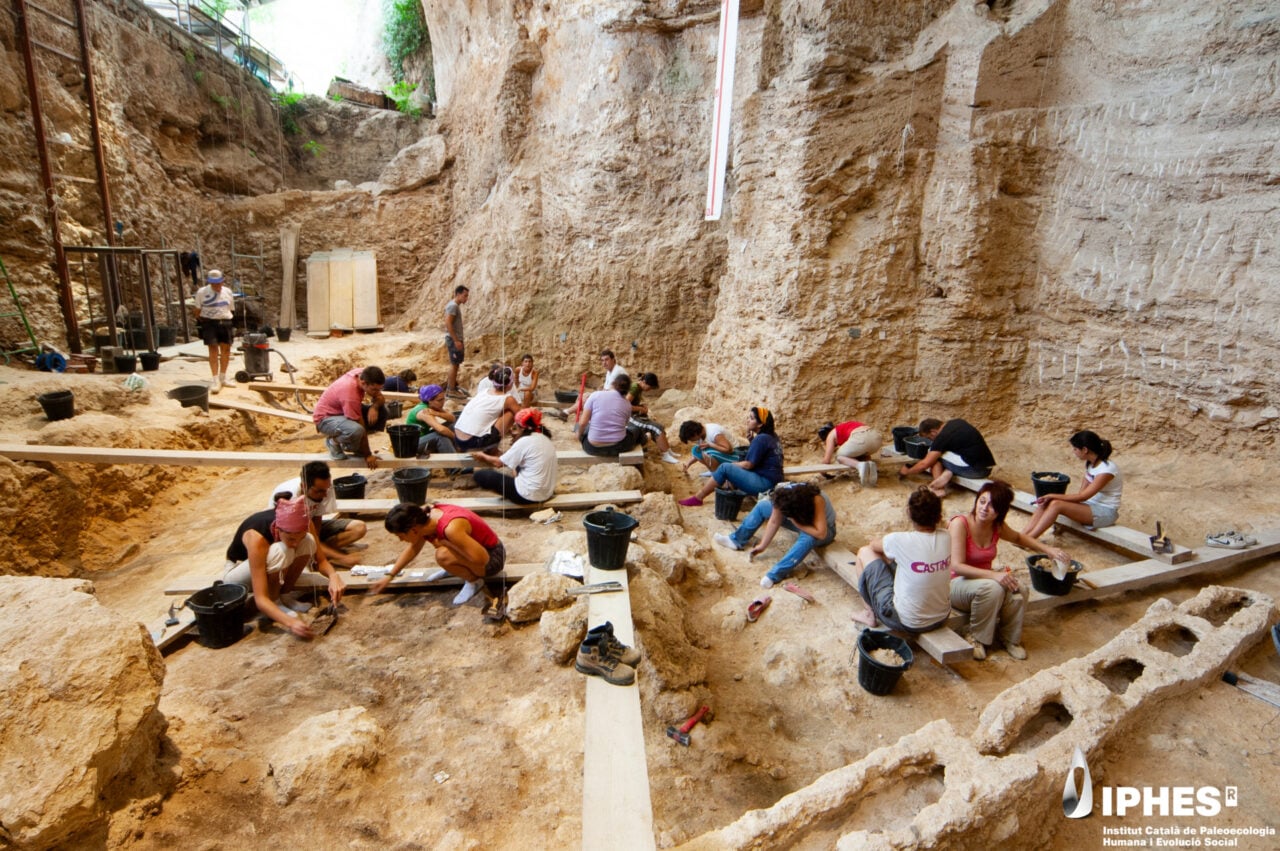
Compared to the rest of the world, the American continent welcomed its first humans relatively later. You’d think that this (relative) proximity to modern times should make it easier to study—but reality isn’t so straightforward, it seems.
At least, that’s one takeaway from a recent review of genomic research on the arrival of humans in the Americas based on a collection of relevant papers and datasets. From the analysis, the University of Kansas (KU) researchers outlined three migration models for when humans started to occupy the American continent: before, during, or after the last glacial maximum, or LGM (which the authors date to between 25,000 and 14,000 years ago, though it is commonly dated to about 26,000 and 19,000 years ago).
The evidence pointed to human arrival no earlier than 21,000 years ago—at the height of the last ice age—although archaeological evidence may be consistent with an earlier date. Based on this research, it appears that humans living in Siberia or Beringia split into different groups during the last glacial maximum and possibly again roughly 16,000 years ago. For context, the last ice age ended about 11,700 years ago.
“The results of this genomic synthesis align closely with our most reliable archaeological evidence,” noted David Kilby, an archaeologist at Texas State University uninvolved in the new work, to Gizmodo. “This paper is an excellent example of how that relationship [between archaeology and genomics] can work to solve one of our most stubborn questions—how and when the ancestors of contemporary Native Americans came to occupy these last uninhabited continents.”
So, which is it?
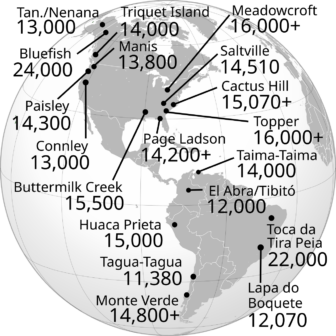
The debate over human arrival in the Americas has progressed over the years. According to the paper, when the debate first started in the 19th century, archaeologists didn’t agree on whether this migration occurred during the Pleistocene (from 2.58 million years to 11,700 years ago). But while it’s now agreed that it happened during the Pleistocene, the exact timing remains elusive.
Over the past 16 years, scientists have published 257 whole genomes of ancient Americans, the team explained in the study. “That’s more than one per month for 16 years,” Jesse Tune, an archaeologist at the University of Mississippi who wasn’t involved in the latest work, told Gizmodo. “During that time an additional 1,204 genome-wide datasets have been published. Incredible.”
More to be desired
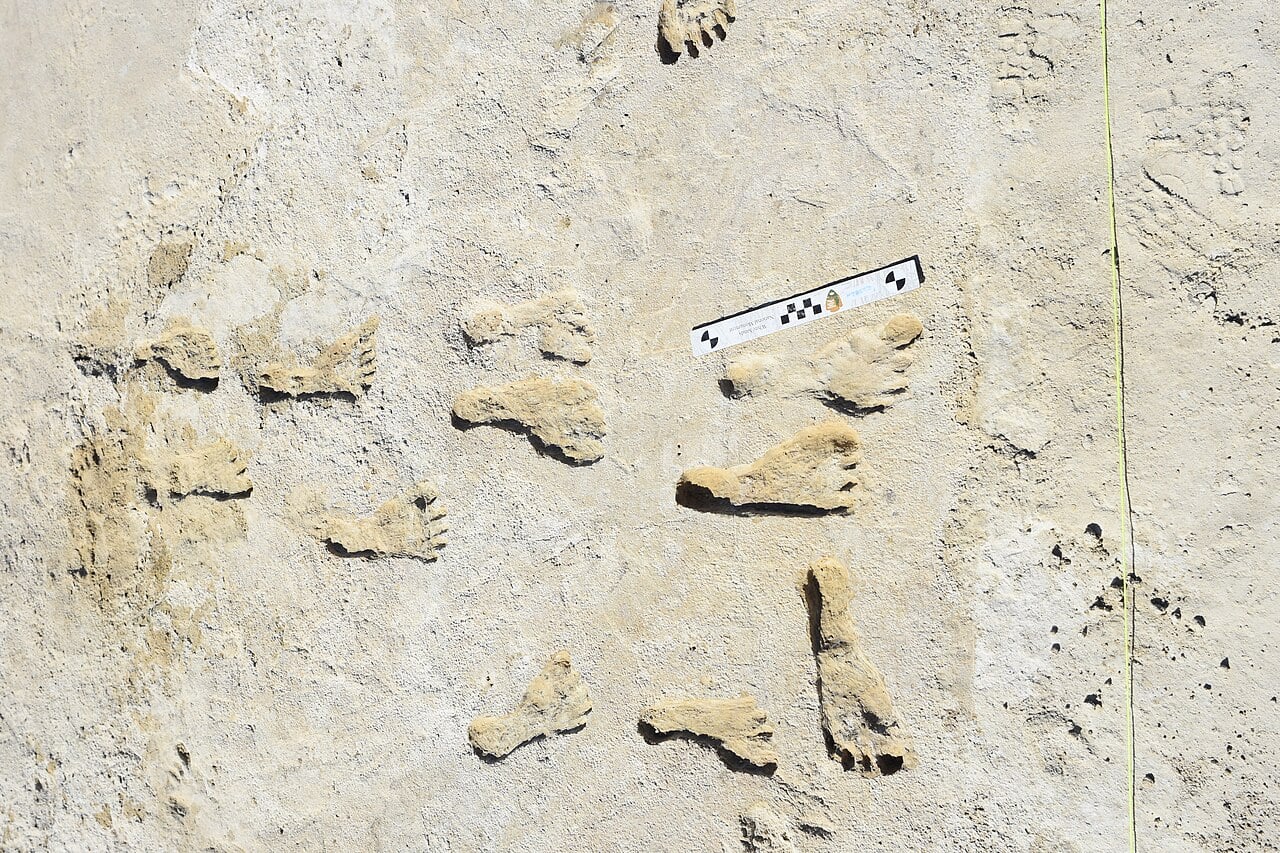
But geneticists still observe significant limits, as study co-authors Jennifer Raff, Savannah Hay, and Bethany Potter told Gizmodo in a joint response. For instance, samples from “very old but (thus far) well-validated sites” like White Sands are dated to 23,000 years ago. However, genetic data suggests that this population didn’t make that big of a contribution to modern Indigenous people, and relationships like these “complicate our understanding of genetic data,” the researchers explained.
To give another example, the oldest published genome in the Americas is the Anzick child, dated to about 12,800 years old, but scientists can’t tell if the child’s genome is representative of earlier migratory waves, the team said. If the team’s estimate of 21,000 years is correct, earlier populations would either belong to an undiscovered or near-decimated lineage or a lineage that’s rare in modern Native Americans.
“This paper is a literature review, so rather than contributing novel data, we compiled recent articles and considered their findings as a whole,” the researchers said, adding that in general, the geographic distribution of genetic data is still quite uneven. Relatedly, the team decided to address three different models in the paper to reflect ongoing debates on the validity of certain sites dated to older than 13,000 years.
One way to see things
Of course, the latest analysis isn’t necessarily an exhaustive account of different interpretations that exist—which really speaks to the contested nature of this topic. Ben Potter, an archaeologist at the University of Alaska Fairbanks uninvolved in the new work (and no relation to Bethany Potter), told Gizmodo that he found the paper’s analysis of archaeological data and consensus “less convincing” compared to the review of genetic data. Potter suggested that reading the latest analysis in tandem with similar reviews may help provide a broader perspective.
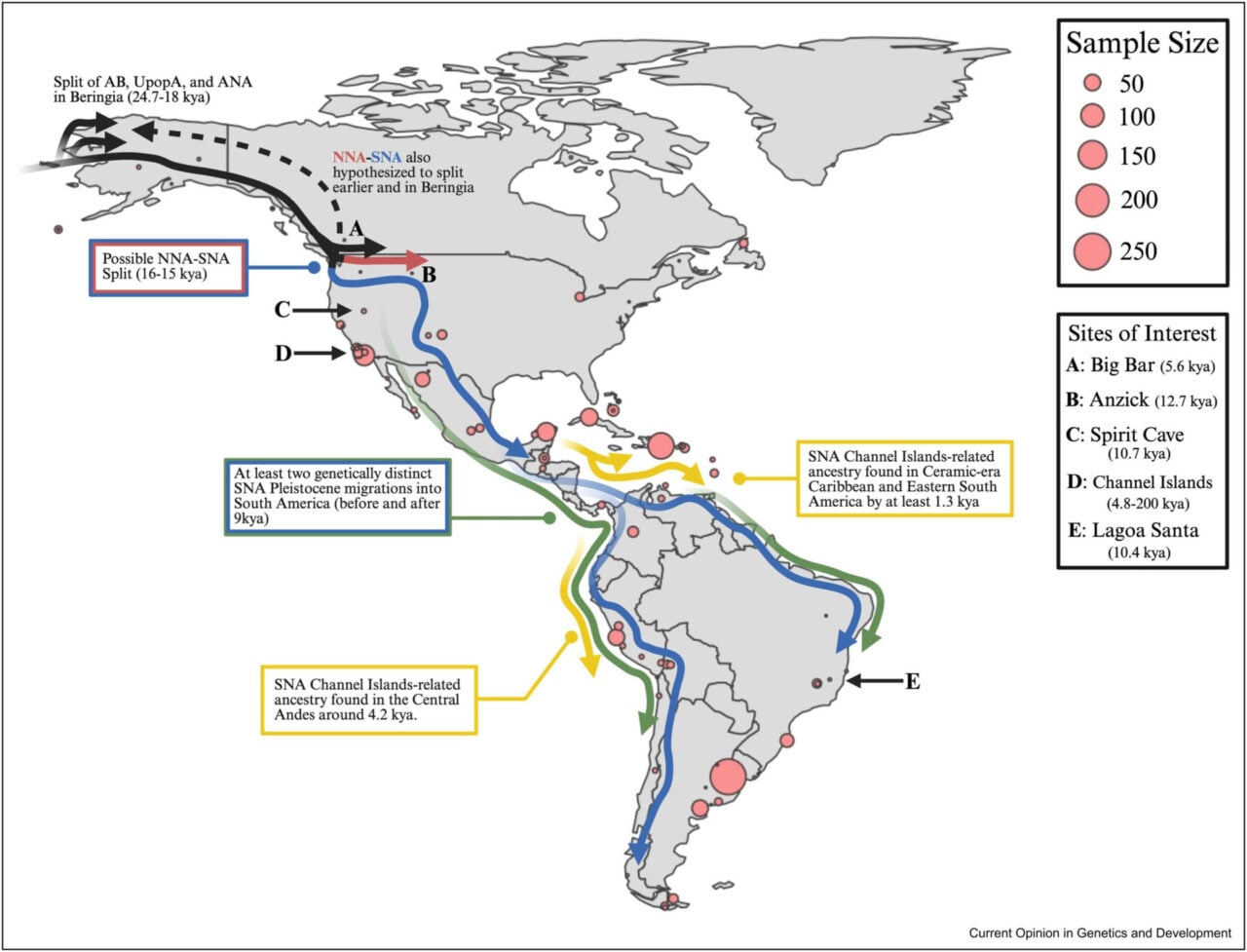
“My feeling is this review provides one perspective on the peopling, based largely on David Meltzer and Eske Willerslev’s interpretations, as well as a survey of some authors (and exclusion of others),” Potter said. “To be transparent, most of my colleagues favor the post-LGM model, after 16,000 to 14,000 years ago, as do most archaeologists, from my experience. That said, I appreciate that the map does provide some alternative models.” Meltzer is an archaeologist at Southern Methodist University, and Willerslev is an evolutionary geneticist at the University of Cambridge in the U.K., both specializing in the peopling of the Americas.
Looking onward
Still, others commended the study for its demonstration of how paleogenomics has contributed to archaeology in the past couple of decades. Kilby said that the genetic pattern “corresponds to a satisfying degree with the currently known archaeological pattern—very few compelling sites older than about 16,000 years, a small but growing number of sites that date between 14,000 and 16,000 years, and widespread occupation of the North American continent by 13,000 years ago.”
“Genomic research is rapidly expanding and improving our understanding of human migrations,” Tune added. “As [the researchers] state, the complex nature of this problem requires genomics and archaeology to work in tandem together to fully understand how the pieces of the puzzle fit together.”
“There is still a lot to learn, and it’s important to be open-minded,” said the KU team. “Our biggest takeaway from this project is the need for additional data as we continue exploring the peopling of the Americas.”