Is Paris burning? This question, famously associated with Hitler in August 1944, finds an answer as unexpected as it is flamboyant in the latest game from Evil Empire, the studio behind The Rogue Prince of Persia: Castlevania: Belmont’s Curse. The answer is yes. Paris is burning—and not just a little. The culprits have fangs and wings, and their appearance heralds the return of a familiar foe: Dracula. The Count may die in one installment after another, but he always seems to come back—much like the flu and stomach bugs in winter.
His return marks a new chapter in a saga that Konami had left to slumber in its coffin since Lords of Shadow 2, released in 2014. Even for a vampire, that’s a long time. To celebrate the franchise’s 40th anniversary, Konami handed the keys to the castle to this talented, passionate studio based in Bordeaux. To take on this daunting challenge, Evil Empire could also count on the invaluable advice of Motion Twin, the studio behind the acclaimed Dead Cells.
To understand the origins of the Castlevania saga, we must travel back in time and delve into the history of Japanese video games. On September 26, 1986, Konami released a title called Akumajō Dracula for the Famicom Disk System, the floppy-disk add-on for Nintendo’s Famicom. Its literal translation is “Dracula, Demon Castle.” We’ll give you that—it certainly sets the mood. At the helm was Hitoshi Akamatsu, a game designer passionate about cinema and driven by one ambition: to create a game that would give players the illusion of stepping into a classic horror film.
The first installment had it all: Frankenstein’s monster, Medusa, Death and his scythe, and even a mummy. Halloween before its time! More than just a video game, Castlevania is above all a love letter to the monsters of the silver screen. Forty years later, the whip still cracks just as loudly—and this time, it’s cracking through the streets of Paris.
Why Should I Download Castlevania: Belmont’s Curse?
Castlevania: Belmont’s Curse is a 2D action-adventure game in the Metroidvania genre. The name of this subgenre combines Castlevania, one of its defining series, with Metroid, which stars Samus Aran. Players explore a vast, side-scrolling labyrinth and battle all kinds of enemies as they unlock new abilities. These powers, in turn, grant access to previously unreachable areas. It’s a familiar formula by now, but it’s still a thrill to watch the different areas and biomes gradually connect.
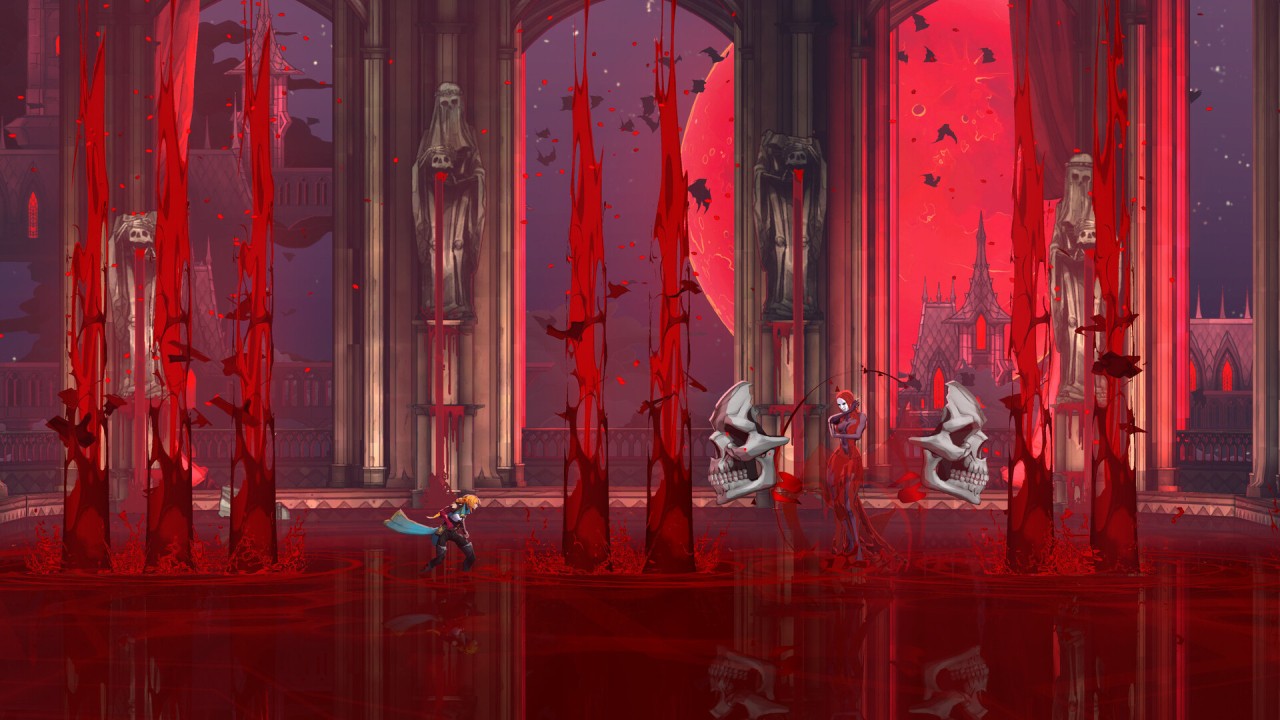
Our heroine is Rose Belmont, the daughter of Trevor Belmont and the sorceress Sypha Belnades. The two fought together to defeat Dracula in Castlevania III: Dracula’s Curse, whose events take place 23 years before this adventure. At Konami’s request, the development team used that installment as a foundation, keeping the new game firmly rooted in the series’ official timeline. At the start of the adventure, Trevor and Rose travel to Paris in response to a call for help. There they find themselves trudging through the smoldering ruins of the capital, fighting off the creatures that lurk in its streets. The duo must uncover why these monsters are emerging from the shadows and do everything they can to save Paris from destruction. What makes this installment interesting is that it retains the pace of yesteryear while embracing a particularly colorful visual style. Gothic, yes, but never relentlessly gloomy. The environments are varied, and it’s clear that the designers have put considerable care into crafting each landscape.
With such a lineage, Rose is no ordinary Belmont. She bears Dracula’s curse in her right arm, a key element of the story that also grants her extraordinary abilities. These powers help her take on even the most terrifying enemies—and there are plenty of them! You’ll encounter familiar figures from Castlevania lore, including Carmilla, Medusa, and Isaac, the demon blacksmith from Curse of Darkness. In short, it’s a greatest-hits collection of the franchise’s bestiary. A distinguished figure from French history has also joined the cast: Joan of Arc. Yes, the Maid of Orléans herself. As for the voice acting, the game offers English and Japanese audio. The English cast includes actors from the Netflix animated series, while Yui Ishikawa, best known for voicing Mikasa in Attack on Titan, lends her voice to the heroine in Japanese. Quite the lineup!
At the heart of the gameplay is the Vampire Killer, the legendary whip wielded by the Belmont family. It’s used to strike enemies, but that’s not all. Anchor points let Rose swing from platform to platform, recalling the unforgettable sequences in Super Castlevania IV on the Super Nintendo. We particularly remember the promotional video cassette showcasing the console’s iconic zoom and rotation effects. Ah, nostalgia! Rose also has a grappling hook that adds even more flexibility to her movement, while the double jump and dash—genre staples—become available later in the adventure. The system works well overall, although swinging with the whip can sometimes feel imprecise. I’ve lost count of the number of times I’ve ended up impaled on spikes, like a character suffering a fatality in Mortal Kombat’s Pit stage.
Alongside a comprehensive arsenal spanning seven weapon categories, including the whip, sword, spear, and gauntlets, the game introduces an original mechanic. Before her death, Sypha created a tarot deck to protect her daughter. Much like in Mega Man, defeated bosses can be collected—in this case, sealed inside cards—and transformed into Arcana, magical abilities that consume mana. These powers are essential for Rose’s progress through the different biomes, helping her reach areas that were previously inaccessible. In this way, the system reinforces the interconnected exploration at the heart of the Metroidvania formula. The clever twist is that defeated bosses effectively become allies: yesterday’s enemy becomes today’s friend. They literally switch sides, and it’s genuinely delightful to see former bosses chatting with the heroine. Each Arcana also comes with challenges that unlock passive effects, which can be stacked to customize your abilities. Together, these elements give Castlevania: Belmont’s Curse a distinctive and captivating atmosphere, even if not every aspect is equally successful.
Visually, the game is a real eye-opener. Evil Empire has turned Castlevania: Belmont’s Curse into a striking work of art. With an art style reminiscent of the Netflix series, it moves away from the pixel art of earlier 16-bit installments in favor of detailed visuals, meticulous lighting, and impressive parallax scrolling. Some players may find that visibility is occasionally compromised during combat, but the soundtrack is another story. Composed by ASADI, who also worked on The Rogue Prince of Persia, it blends baroque and electronic elements, with church organs and energetic string arrangements. The result is an exhilarating rush from the very first seconds. Get ready to tap your feet between whip strikes.
Is Castlevania: Belmont’s Curse Free?
Castlevania: Belmont’s Curse is a paid game available in Standard and Midnight editions. The latter includes a digital art and sound gallery, two exclusive costumes inspired by Trevor and Sypha, and the Family’s Grace relic. If you’d like to try the game before buying it, a free demo is also available. Your progress can be transferred to the full version on the same platform.
What Operating Systems Are Compatible with Castlevania: Belmont’s Curse?
Good news: players on the major gaming platforms won’t be left out. Castlevania: Belmont’s Curse is available for download on Windows PCs via Steam and Xbox on PC, as well as on PlayStation 5, Xbox Series X|S, and Nintendo Switch. It also runs on Nintendo Switch 2 through backward compatibility, although there is no dedicated version for that console. The game targets 60 frames per second on most platforms, while the original Switch version runs at 30 fps. Unfortunately, Mac and Linux users, along with those hoping to play on smartphones or tablets, will have to look elsewhere: no versions for those platforms have been announced.
What Are the Alternatives to Castlevania: Belmont’s Curse?
It’s impossible to discuss Belmont’s Curse without mentioning one of its spiritual predecessors, Castlevania: Symphony of the Night, a landmark of the genre. Released in 1997, the game helped establish many of the conventions of the modern Metroidvania. You play as Alucard, Dracula’s son, exploring a sprawling castle whose interconnected rooms conceal countless secrets. Its standout feature is the way RPG mechanics enrich the exploration and combat, with experience levels, magic spells, equipment, and familiars. And if you think you’ve seen everything, think again: a second, inverted version of the castle awaits the most curious players. Accompanied by a superb score from Michiru Yamane, Symphony of the Night remains a masterpiece worth discovering—or rediscovering.
Koji Igarashi, the creative force behind Castlevania: Symphony of the Night, left Konami in 2014 after a long career with the Japanese publisher. A year later, he launched a Kickstarter campaign to fund its spiritual successor, Bloodstained: Ritual of the Night. Released in 2019, the game follows Miriam, an orphan afflicted by a curse cast by alchemists. Her body is gradually turning to crystal, and she must venture into a castle overrun by demonic creatures to put an end to the curse. The adventure takes place in 18th-century England, against the backdrop of the Industrial Revolution. Miriam’s ability to absorb monsters’ powers allows her to stand up to even the most formidable foes. Inspired by systems seen in earlier entries such as Castlevania: Aria of Sorrow on the Game Boy Advance, this mechanic is one of the game’s greatest strengths. Add crafting, cooking, and a wide variety of weapons, and you have an excellent adventure—though one that demands a fair amount of skill.
Before advising Evil Empire on Castlevania: Belmont’s Curse, Motion Twin created one of the most iconic games of the past decade. Dead Cells is a thrilling adventure in which a cluster of cells takes over a body and attempts to escape a cursed island. The game helped redefine the action-platformer formula by combining fast-paced combat and demanding challenges with roguelite progression. You’ll fail a lot—often, in fact—and each death sends you back to the beginning, with levels that change from one run to the next. Its meticulous, retro-inspired art style and responsive combat make Dead Cells a gem for anyone who loves Castlevania-style worlds and doesn’t mind a challenge.