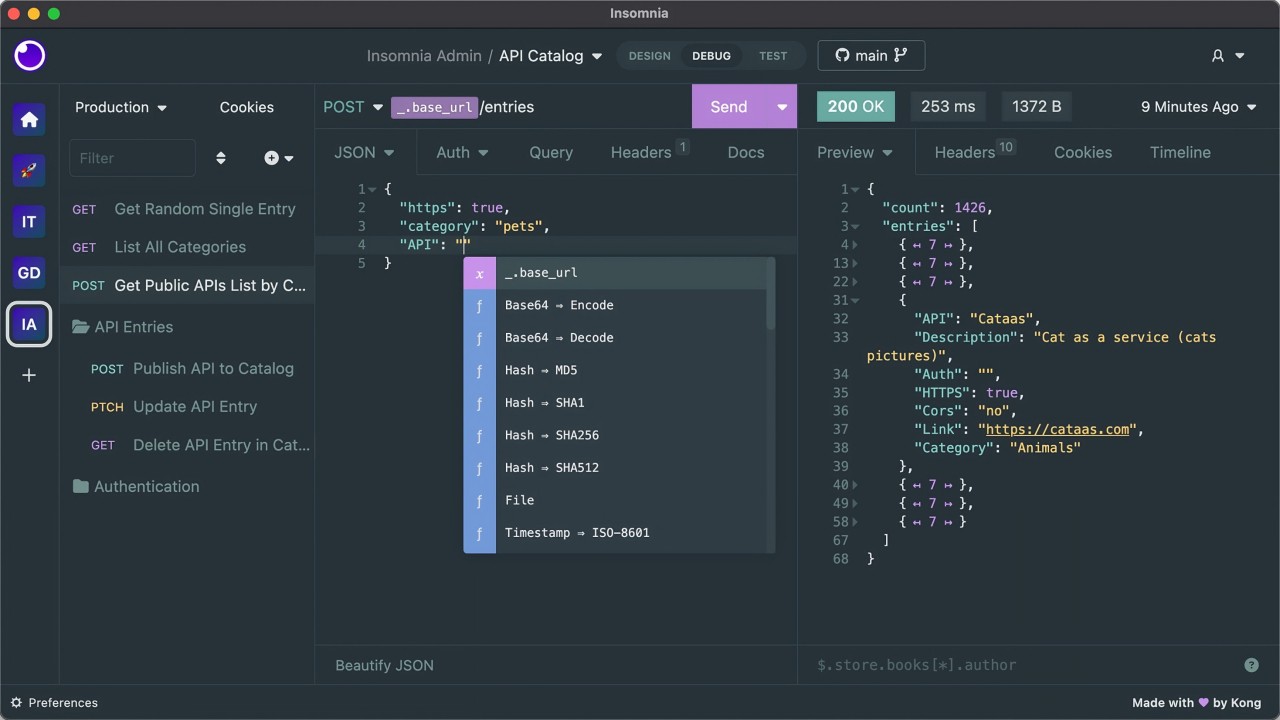
Insomnia by Kong is a dedicated API client built for developers to test and manage APIs efficiently. It is primarily used to send, test, and debug HTTP requests, so it is a daily tool of backend developers, frontend engineers, and all others who are creating or consuming APIs. Whether you're fine-tuning a REST, GraphQL, or gRPC request, viewing a response, or saving your work, Insomnia keeps everything clean and organized.
Insomnia is not like some other complex platforms that overwhelm the user with too many features; rather, it balances power and simplicity. You do not have to write your scripts or environment configurations. The user interface is friendly - you simply enter your endpoint, choose your method (GET, POST, etc.), enter parameters or headers and send it. Everything is there, in front of your eyes, reducing the chance of confusion or mistakes.
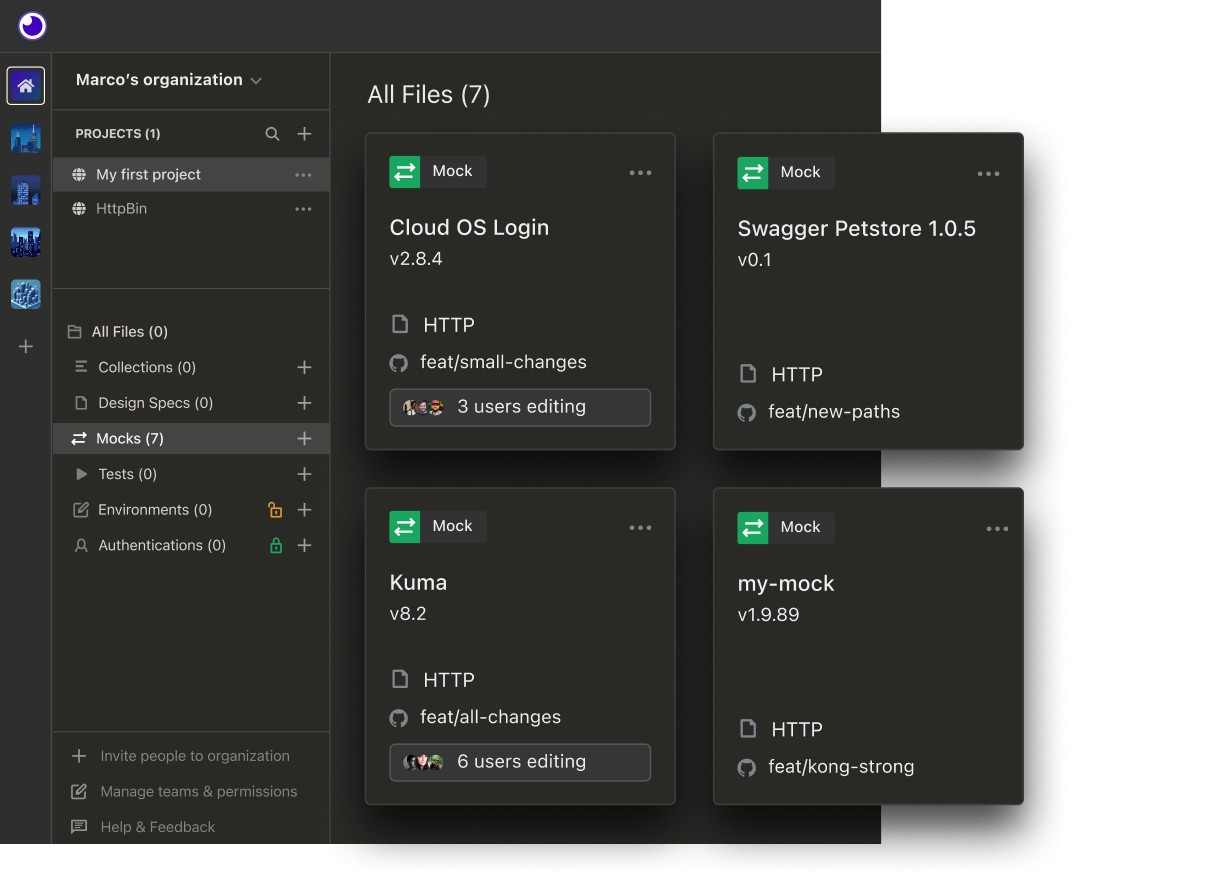
It also has authentication protocols, environment variables, code generation, and response previews, so you get whatever you need but do not have to go seeking it. It also has sync and collaboration features that enable users to share projects and maintain environments across machines, especially useful for team-based environments. The essence of insomnia is to make the work with APIs less frictional, and it achieves this purpose by helping you to keep your workflow clean, focused, and efficient.
Why should I download Insomnia?
Whether you are a developer creating, testing, or debugging APIs, Insomnia by Kong is the tool that will probably become one of your favorites. It allows you to make requests, adjust them on the fly, and instantly get to see what is and is not working. That sort of feedback loop will assist you in constructing more quickly and in correcting what might be wrong before it turns out to be a significant problem.
The ability to keep you organized is one of the important strong points. You no longer have to store the examples of requests in random files or bookmarks on the browser; everything can be saved in organized folders. Requests can be organized by project, API version, or endpoint type—whatever suits your workflow. That saves a lot of time when you come back to projects days or weeks after.
It is also compatible in various settings. You can easily change the variables when you are developing locally, or when testing on stage or production servers. You do not need to rewrite the same requests only because the base URL has changed. It is therefore quite useful when a team is dealing with a big project that has several backends or microservices.
The fact that it deals with authentication is another plus. Be it basic auth, bearer tokens, OAuth2, or API keys, you can configure those once and use them over and over again without copy-pasting. This helps eliminate mistakes and makes it all seem more efficient.
The response viewer is not harsh to the eyes, and it can display various formats: JSON, XML, HTML, plain text, and you can view the headers, response time, and the status codes. Another thing you receive is built-in cookie support, which is useful during testing of sessions or login sequences.
Insomnia provides a schema explorer and autocomplete features to GraphQL developers. That spares you the need to rummage through documents simply to recollect field titles or types. And when it comes to gRPC, well, Insomnia supports that as well - it is actually one of the few tools that can work with it neatly.
Insomnia becomes particularly useful in debugging complex issues. When something fails to work, you can resend the same request with a couple of modifications until you discover what is wrong. And you do not get CORS problems and browser limitations like with browser-based tools.
It is also possible to create code bits in other languages - Python, Node.js, Java, and others. Therefore, when you have tried out a request and wish to employ it in your application, you may simply copy the code and paste it into your editor. That is time-saving and avoids the copy-paste mistakes of the handwritten code.
It is also a good API learning Tool. When you have not worked much with them before, it provides you with the room to make mistakes. Endpoints can be tried, headers can be modified, and payloads can be fiddled with until you get the knack of it, without having to code a complete script or application.
Finally, the application is visually appealing and seems snappy. Probably that does not sound like much, but a clean UI does wonders in terms of decreasing frustration. It does not make you feel that you are struggling with the tool to complete a job.
Is Insomnia free?
Insomnia by Kong is free of charge both to download and to use. The basic functions, making requests, storing environments, debugging, and scripting, are free of charge. It has a paid plan that opens the possibility of team collaboration and cloud sync, although the vast majority of developers will not have any restrictions in using the free version in solo or small-scale projects.
What operating systems are compatible with Insomnia?
Insomnia by Kong is available on Windows, macOS, and Linux. It is nice and speedy on the three main platforms, and it is very simple to install no matter what system you have. There is no fancy configuration required, either: simply download and start the app. The updates are also regular and occur on each OS, meaning that you will not lag behind, whatever machine you are currently working on.
What are the Alternatives to Insomnia?
The most renowned alternative is Postman. It has comparable features, such as request construction, testing, and collection management. It is powerful and popular on teams and in the enterprise. Nevertheless, Postman is slightly heavy or cluttered with some users when performing smaller tasks, and its learning curve may be steep compared to Insomnia.
HTTPie is a terminal-oriented tool that can be used by people who feel more comfortable in terminals. It is light, quick, and excellent with users who are fond of typing commands rather than clicking on interfaces. It lacks a graphical user interface, such as Insomnia has, but it is well-suited to simple, fast requests or shell scripting.
Hoppscotch is a Web-based alternative that has a clean interface and is powerful in terms of supporting REST and GraphQL. It is open source and completely web-based, which means you can get started without an installation. It is light and straightforward, but may lack advanced requests and environment management features found in Insomnia.