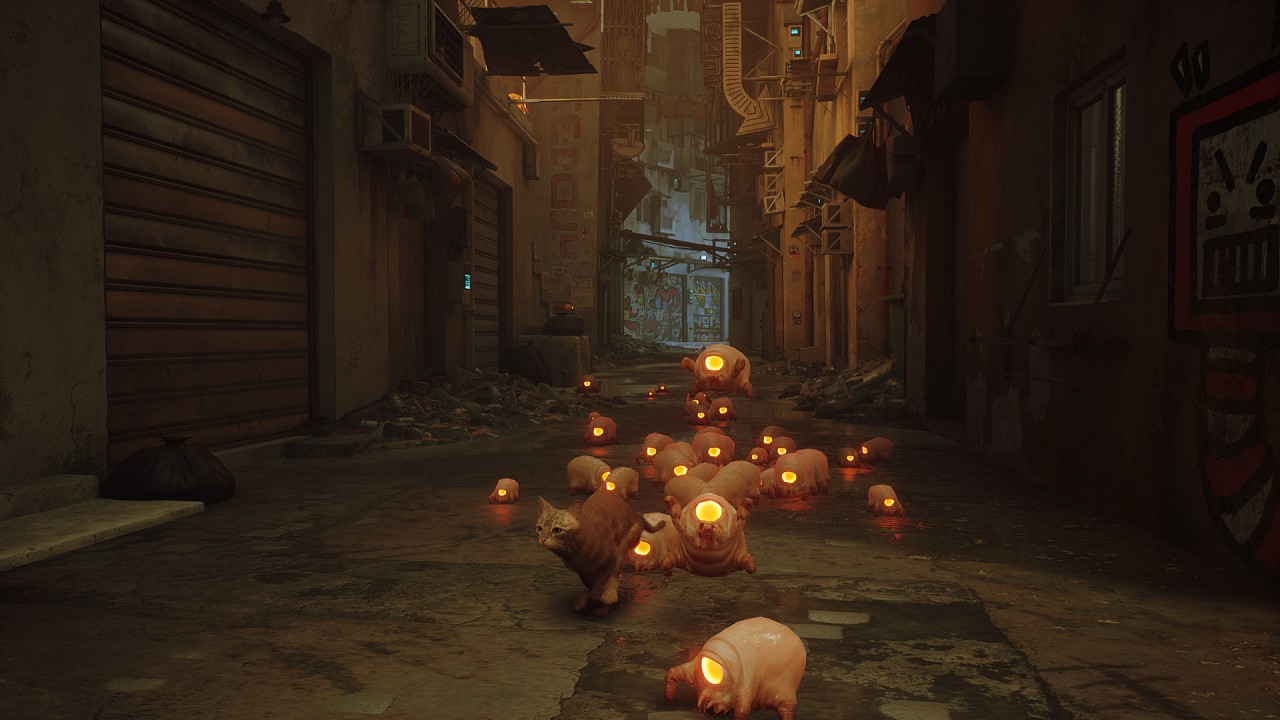
Stray is a game where you don’t play a soldier, a hero, or some armored fighter—you play as a cat. That’s it, a regular stray cat that falls into a cybercity. The city itself is strange. It’s filled with neon signs, broken machines, robots that act a lot like people, and a few creatures that aren’t so friendly. Humans? They’re gone. You never see them. The mystery of why that is sits in the background while you explore.
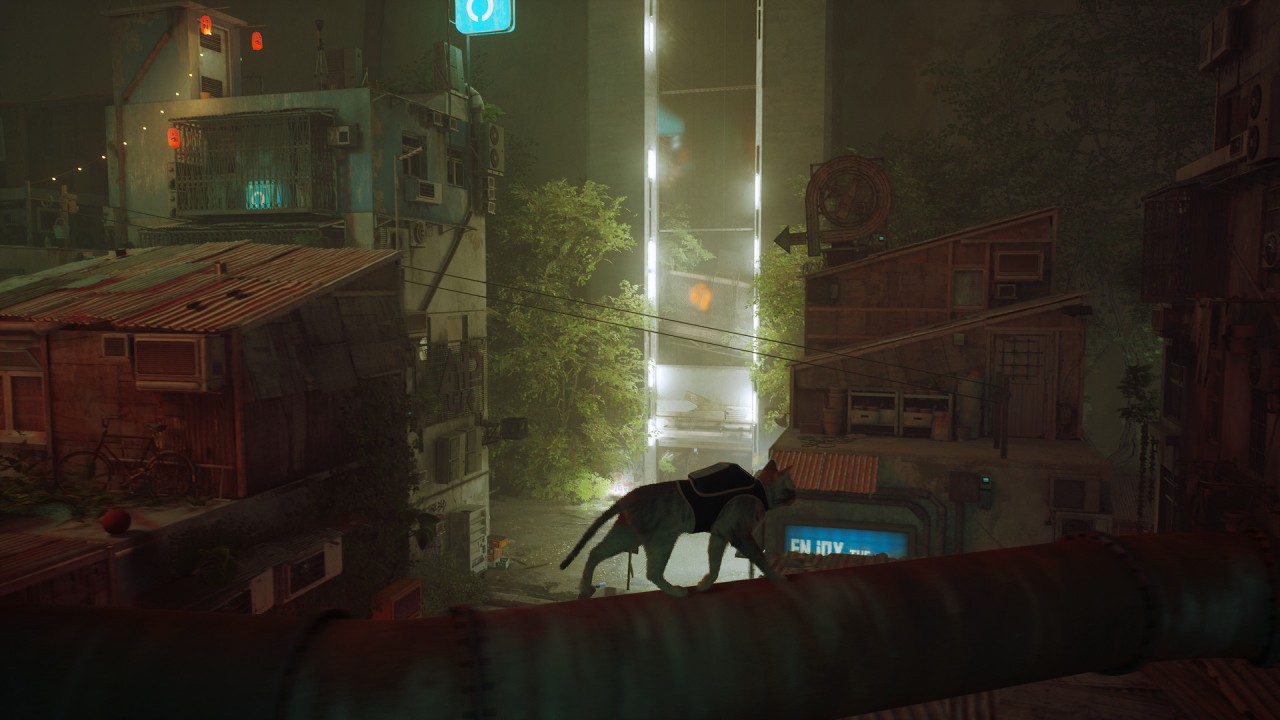
The game is third-person, so you see the cat on screen as you move through alleys, rooftops, and narrow vents. The movements feel like what a cat would actually do. You balance on pipes, squeeze through cracks, and sometimes just sit and scratch a wall or meow for no reason at all. It’s those small things that make it believable.
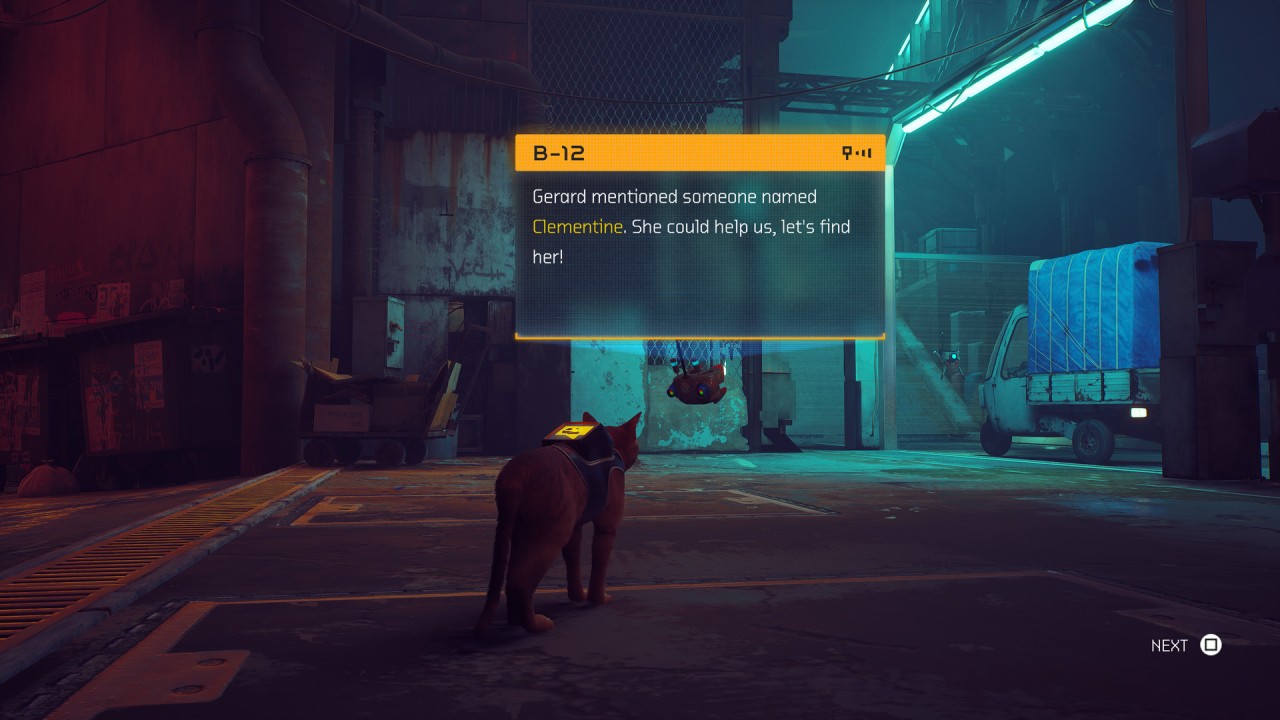
You also meet B-12, a tiny drone that becomes your companion. It translates what robots say, helps you carry items, and unlocks doors you couldn’t handle on your own. That partnership is important because you’re not strong—you’re just a cat. You can’t fight, but you can sneak, run, and solve puzzles with a mix of agility and the drone’s help. That blend of being vulnerable yet clever makes the game different from most.
Why should I download Stray?
Because it doesn’t feel like everything else out there. Most games lean heavily on fighting, collecting loot, or grinding levels. Stray doesn’t. It slows things down and gives you an atmosphere to live in. You walk through this decayed, neon world, and instead of checking boxes on a quest list, you’re exploring and paying attention. That shift is refreshing.
A big reason people connect with it is the detail in how the cat behaves. You can knock bottles off shelves, curl up and nap, scratch a rug, or rub against a robot’s legs. These aren’t gimmicks; they make you feel like the animal you’re controlling. If you’ve owned a cat, the behavior is instantly familiar and makes you smile.
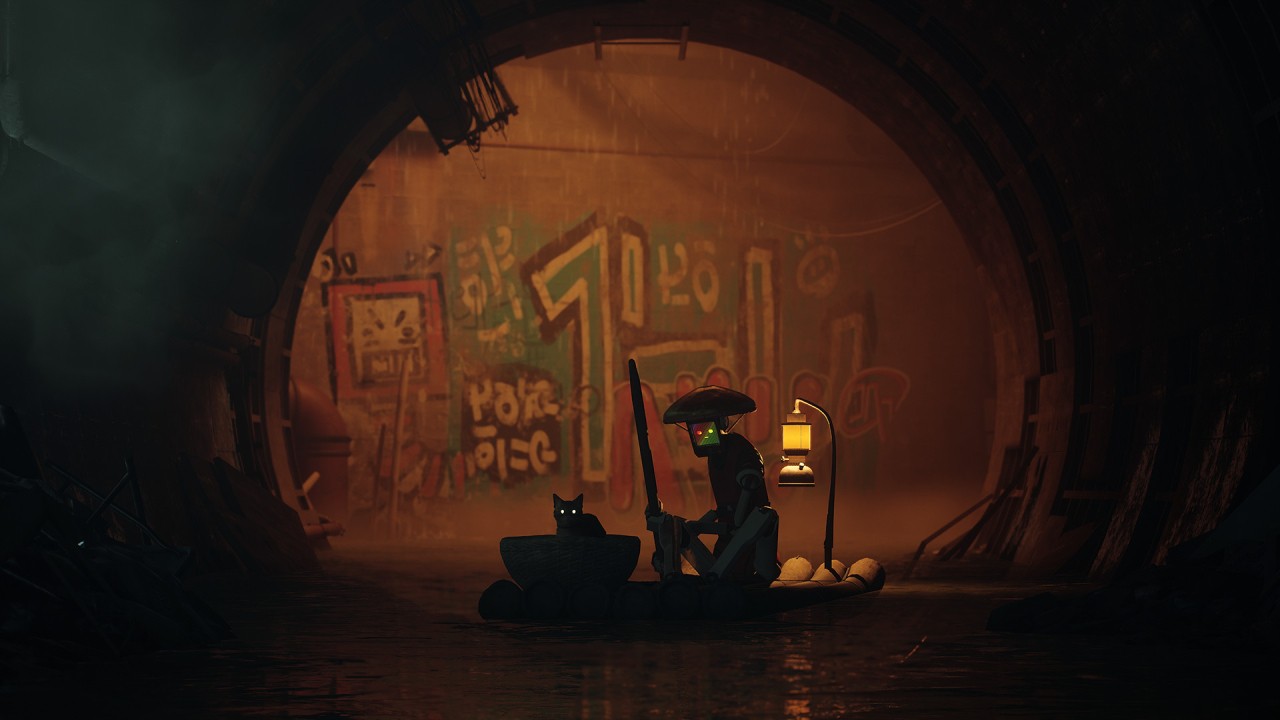
Then there’s the setting itself. The city feels alive even though it’s full of robots. The lights, the graffiti, the trash in the corners, and the way robots go about their routines all add to the mood. You sometimes just want to stop and look around. Many players end up taking screenshots because almost every corner feels like a painting.
The story also works on a smaller scale. You’re not saving the universe—you’re trying to get home. But while you do, you end up changing things for the robots who live in the city. That’s what makes it emotional. It’s about connection, hope, and a bit of loss, told without needing big speeches.
It’s approachable too. The game can be finished in a handful of sessions. It doesn’t demand dozens of hours or pages of tutorials. That makes it good for people who don’t usually play games but are curious, and it’s also good for experienced players who just want something shorter yet meaningful.
And finally, it’s memorable. You won’t confuse Stray with another game. Playing as a cat in a cyberpunk city stands out. That originality is reason enough to give it a shot.
Is Stray free?
No, Stray isn’t free. It’s a paid game, and you buy it on whatever platform you want to play it on. The price isn’t as high as a massive blockbuster release, but it’s not free-to-play either.
Sometimes it’s available through subscription services like PlayStation Plus or Xbox Game Pass. In those cases, subscribers could play it without paying extra. But that depends on timing and region. Outside of that, you purchase it once, and that’s it. There aren’t hidden microtransactions or extra payments waiting after you start.
What operating systems are compatible with Stray?
In 2022, Stray began on PlayStation and PC. It has been released on PS4, PS5, and Windows Steam. In 2023, Apple Silicon Mac was released for the macOS version. That was then preceded by Xbox One and Xbox Series X/S support. It even found its way to Nintendo Switch at the end of 2024.
It is spreadable and can be played on nearly everything but phones. It is smooth and sharp on high-performance hardware, such as PS5 or Series X. It also performs well on older systems such as PS4. The graphics are not as sharp, and the frame rate can sometimes drop, but you can play it on the go; this gives it a different form of attraction on Switch. On PC, the system specifications are average, and therefore, you do not require a high-performance machine to enjoy it.
What are the Alternatives to Stray?
The nearest analog is Little Kitty Big City. It also places you in the position of a cat, but it is more colorful, brighter, and playful. You go through a sunny city as opposed to a neon cybercity, making mischief and gradually attempting to get home. It does not depend on mystery or atmosphere so much. More about fun, exploration, and humor. In case Stray was too heavy or too serious, there is Little Kitty Big City, the lighter counterpart.
The Spirit and the Mouse is different in perspective. You do not play a cat but a small mouse in a lovely village in France. It is as slow, but in a different area, with a narrow neon lights replacing warm streets and welcoming spirits. It is a game of rescuing people in the village and puzzles, and goodwill. It is comfortable and not stressful, only in case you enjoyed the relaxing part of Stray, this one scratches a similar itch.
Grounded does not have a cat or a mouse; still, it resembles the concept of shrinking the player in a large, unfamiliar world. In Grounded, you are a miniaturized human dwelling in a backyard, amidst enormous insects and enormous blades of grass. The gameplay is more of a survival-based game, with crafting and fighting, but there is a feeling of scale and vulnerability similar to Stray. It is a much different kind of game, but the shift in view is equally refreshing.