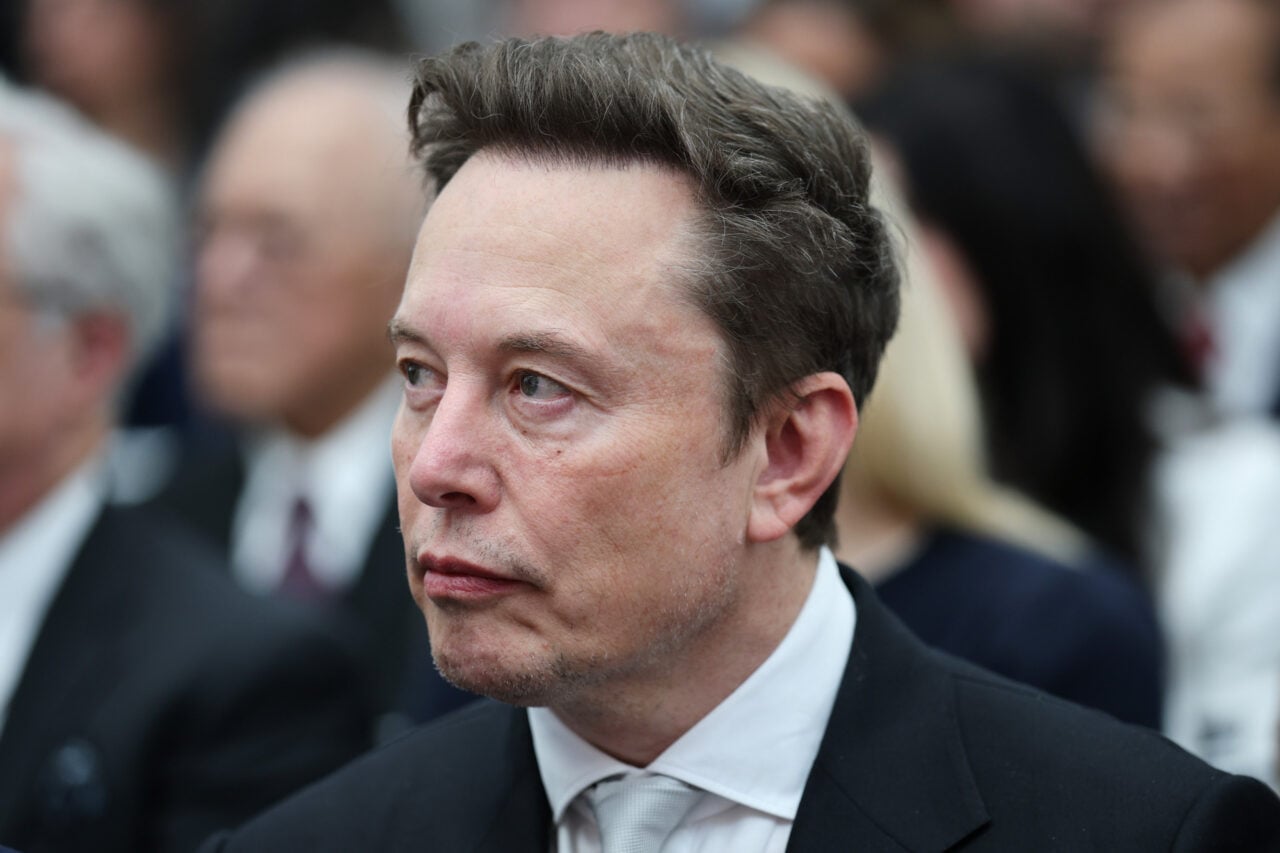
After Tesla’s sales in Europe took a nosedive last year, the company appears to be making a comeback on the continent. While it appeared that Elon Musk’s political maneuvering had soured buyers’ appetites across the pond, time heals all wounds.
Tesla said Thursday it plans to hire 1,000 new workers at its Gigafactory near Berlin as part of a push to increase production to 7,500 vehicles per week by October, Electrek reports.
The news arrives just months after Tesla announced a previous round of 1,000 new jobs at the plant and said it planned to increase production to 6,000 vehicles per week by the end of June.
Electrek points out that this production boost would put Tesla’s German factory on track to produce around 390,000 EVs per year. That is still below the 500,000 cars per year Tesla was targeting when it opened the facility in 2022.
Tesla did not immediately respond to a request for comment.
Like in the United States, Elon Musk’s hardcore conservative politics, direct involvement in DOGE, and personal ties to President Donald Trump hurt 2025 sales in Europe.
At the time, Trump was threatening to take over Greenland and followed through on his promise to impose various tariffs on the continent. Meanwhile, Musk promoted far-right and anti-immigrant movements in Europe, including Germany’s AfD party. More recently, Musk was accused of inciting violence with posts related to violent anti-immigrant demonstrations in Belfast.
But sales now appear to be moving in the other direction, driven by rising fuel costs and new government incentives for zero-emission vehicles in Germany.
Tesla registrations in Europe rose 57 percent to more than 118,000 vehicles from January through May, compared with the same period last year, according to the European Automobile Manufacturers’ Association.
That rebound arrives at a time when European leaders have spent much of this year talking about the need to reduce dependence on U.S. technology companies.
“In this new geopolitical environment, Europe has to become a geopolitical power,” French President Emmanuel Macron said at the Munich Security Conference in February. “It’s ongoing, but we have to accelerate and clearly deliver all the components of a geopolitical power, in defence, in technology, and in the derisking vis-à-vis all the big powers in order to be much more independent.”
Earlier this year, the French government announced it would stop using American video conferencing platforms like Microsoft Teams and Zoom, and instead use the French platform Visio. France has also signed a deal for its armed forces to use Mistral’s models and software.
Additionally, this month, the European Commission unveiled a “tech sovereignty package” meant to strengthen the bloc’s digital autonomy with a focus on semiconductors, AI, cloud computing, and open-source software. The Commission also announced Thursday that it has reached a preliminary position that Amazon Web Services and Microsoft Azure should be regulated as “gatekeepers” under the Digital Markets Act, the EU’s sweeping antitrust law for large digital platforms.
Still, EVs should be one of the easiest sectors for Europe to break its dependence on American tech. Unlike cloud computing or social media, Europe already has several homegrown automakers making EVs, including Volkswagen, BMW, and Stellantis. European customers also have more access to options from China, where companies like BYD have been making breakthroughs in driving range and charging speed.
But for now, Tesla seems confident European customers will keep making their way back to its showrooms.