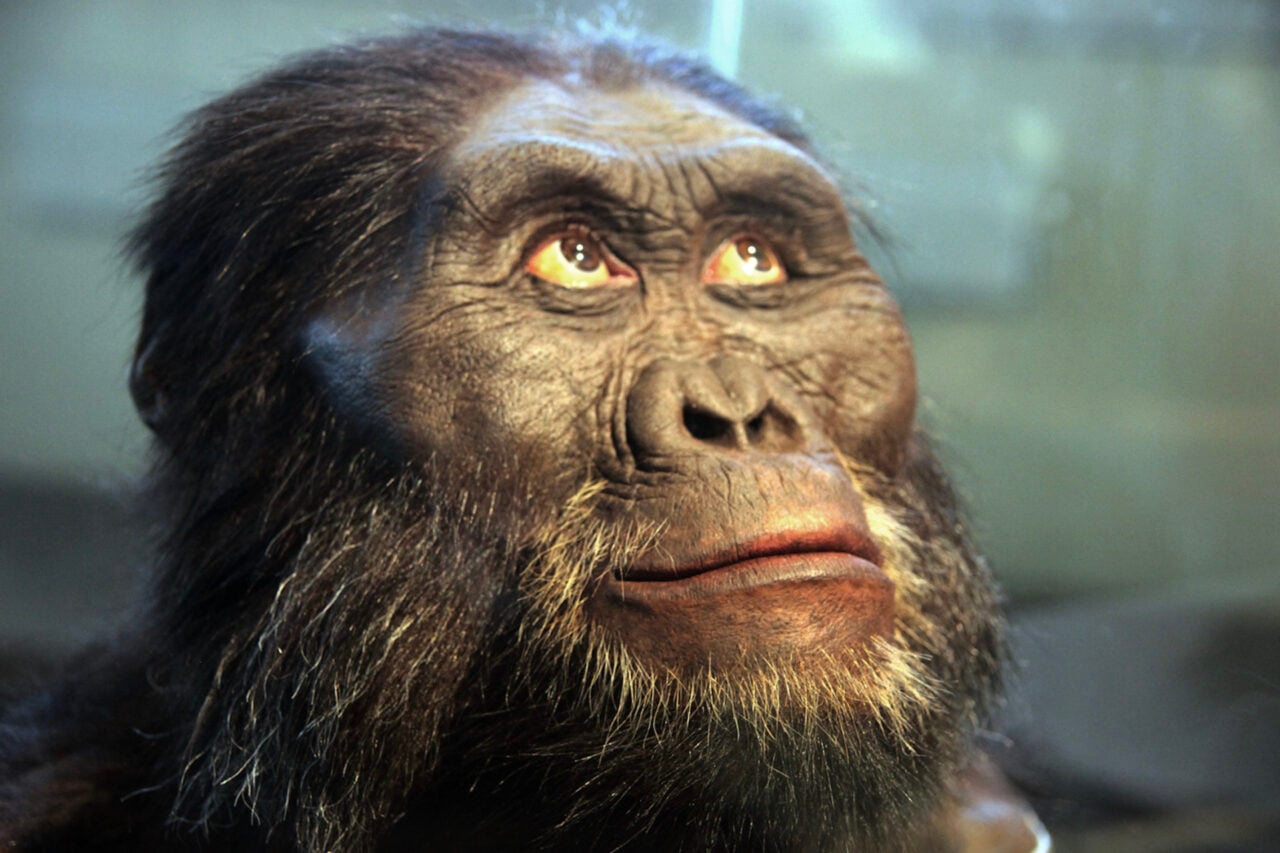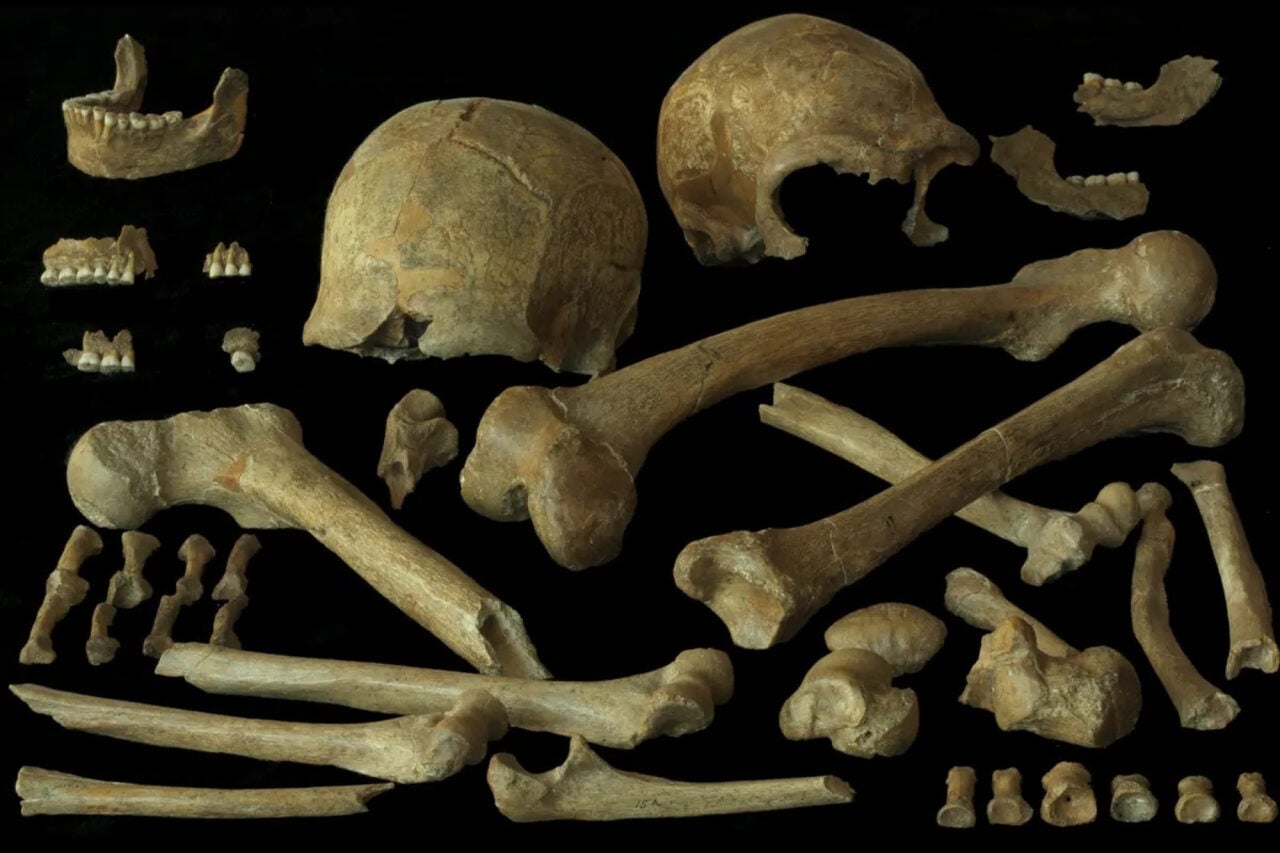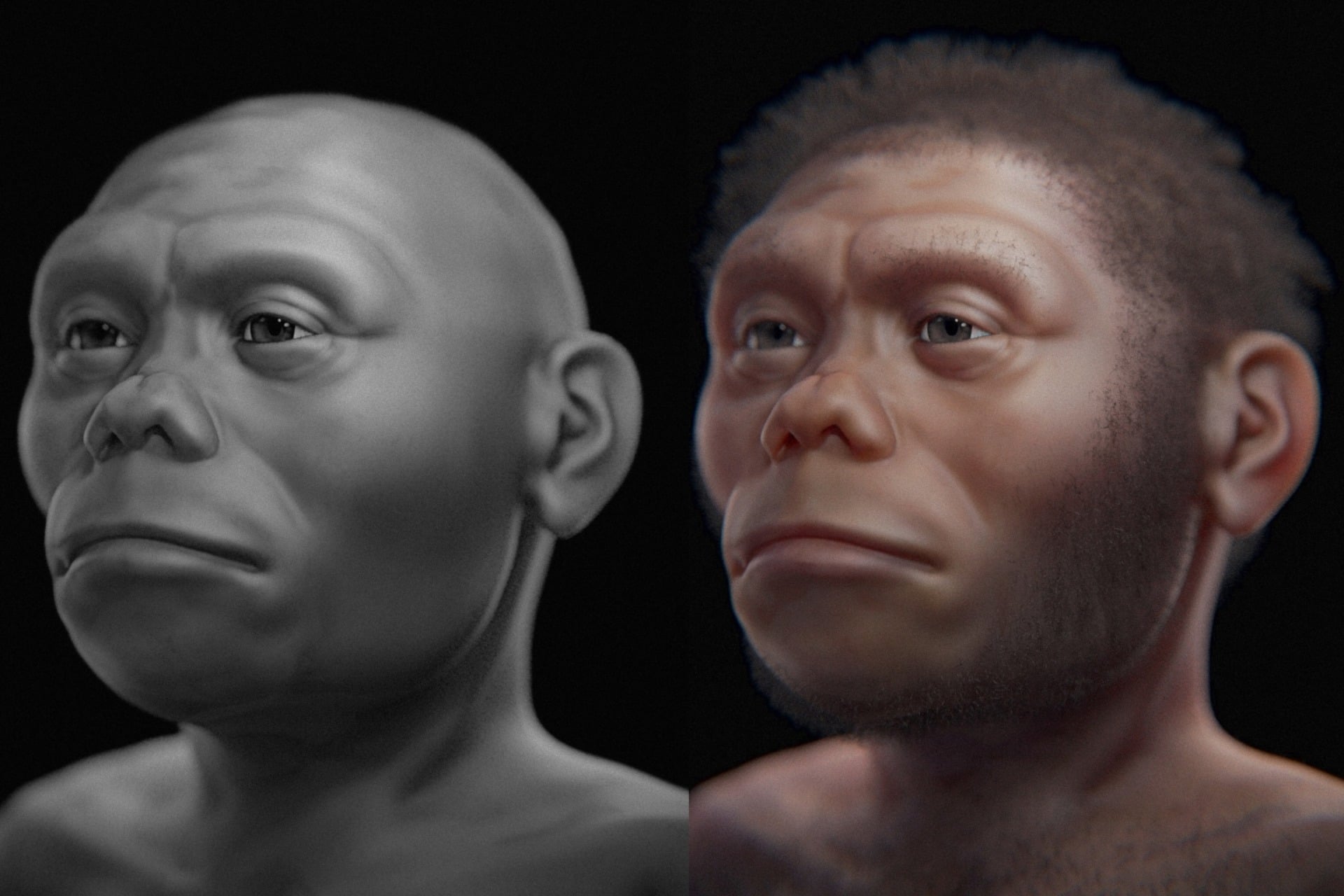
Anthropologists have been debating the life and times of Indonesia’s prehistoric “hobbit-like” human ancestor, Homo floresiensis, ever since the remains of the first known specimen were discovered on the island of Flores in 2003. How small could an individual H. floresiensis really be? (Pretty small!) Are we sure H. floresiensis was really its own species? (Yes, can confirm.) What did these little folks eat? (Giant rats sometimes, maybe.) Etc.
Now, an international team of scientists collaborating with the Smithsonian’s Human Origins Program in Washington D.C. has determined that these diminutive early hominins might have been less hunter-gathers than scavengers. The researchers analyzed ancient “predatory marks” left behind on the skeletal remains of a small and now-extinct cousin to today’s elephants, Stegodon florensis insularis, which appear to indicate that H. floresiensis snuck meals away from the fresh Stegodon leftovers of Komodo dragons. The American Association for the Advancement of Science likened the find to the quintessential “second breakfast” enjoyed by Tolkien’s hobbits of Middle Earth, which (despite a strong fantasy nerd compulsion) I’m not going to quibble with.
But, perhaps more importantly, the findings indicate that H. floresiensis may not have been as sophisticated as prior research has argued—making them unlikely to be either big game hunters or masters of fire, as anthropologists had once theorized.
Dragon fodder
“Komodo dragons are extremely skilled predators, ambushing unsuspecting prey while also relying on their keen sense of smell to locate decomposing flesh from up to several kilometers away,” paleoanthropologist E. Grace Veatch and her colleagues wrote in their new study, published Friday in the journal Science Advances.
That dramatic ability to chase down distant dead carcasses, the team noted, is just one of the reasons why H. floresiensis scavengers would have been unlikely to enjoy even accidentally dead big game, like the genus Stegodon, before the dragons had their fill.
Veatch, a postdoctoral fellow at the Smithsonian, and her researcher partners compared the anatomical position of Komodo dragon tooth scratches, or “scores,” on the fossil remains of Stegodon bones to primitive tool scratch marks left on these bones by H. floresiensis. To better interpret these bones—found at the main H. floresiensis dig site at the on Liang Bua cave on Flores—the team conducted experiments observing present-day Komodo dragons as they ate prey at Zoo Atlanta in Atlanta, Georgia. The results really drove home the meager “second breakfast” meats Flores’ ancient hobbits were left with.

“Komodo dragon tooth scores were concentrated largely on elements yielding greater meat volumes that are targeted during consumption, such as the forequarter and hindquarter,” Veatch and her team noted.
In contrast, the scratches left by H. floresiensis were on (frankly) not especially juicy pieces of Stegodon, focused around this distant elephant relation’s head, neck, and feet.
They didn’t start the fire
Veatch, the study’s first author, and her fellow researchers pored over a reported 10,061 individual artifacts and other elements uncovered at Liang Bua cave in the hopes of determining whether or not H. floresiensis had used fire. But, based on their analysis of the rock layers corresponding to the era in which these hominins occupied the cave, a period somewhere between 774,100 and 60,000 years ago, the researchers determined that all the available evidence of fire use could be attributed to more modern Homo sapiens like us.
“[It] is reasonable to conclude that past fire use at the site was the sole result of H. sapiens behavior that occurred from ~46 ka [46,000 years ago] until present day, well after H. floresiensis and Stegodon disappeared from the area,” the researchers wrote.
But Veatch and her colleagues know people want to believe that these endearingly small hobbit-like hominins enjoyed rich complex lives, so their work is not likely to be the last word: “The fact that H. floresiensis was originally described as having these behavioral adaptations continues to be a source of intense debate,” they noted.