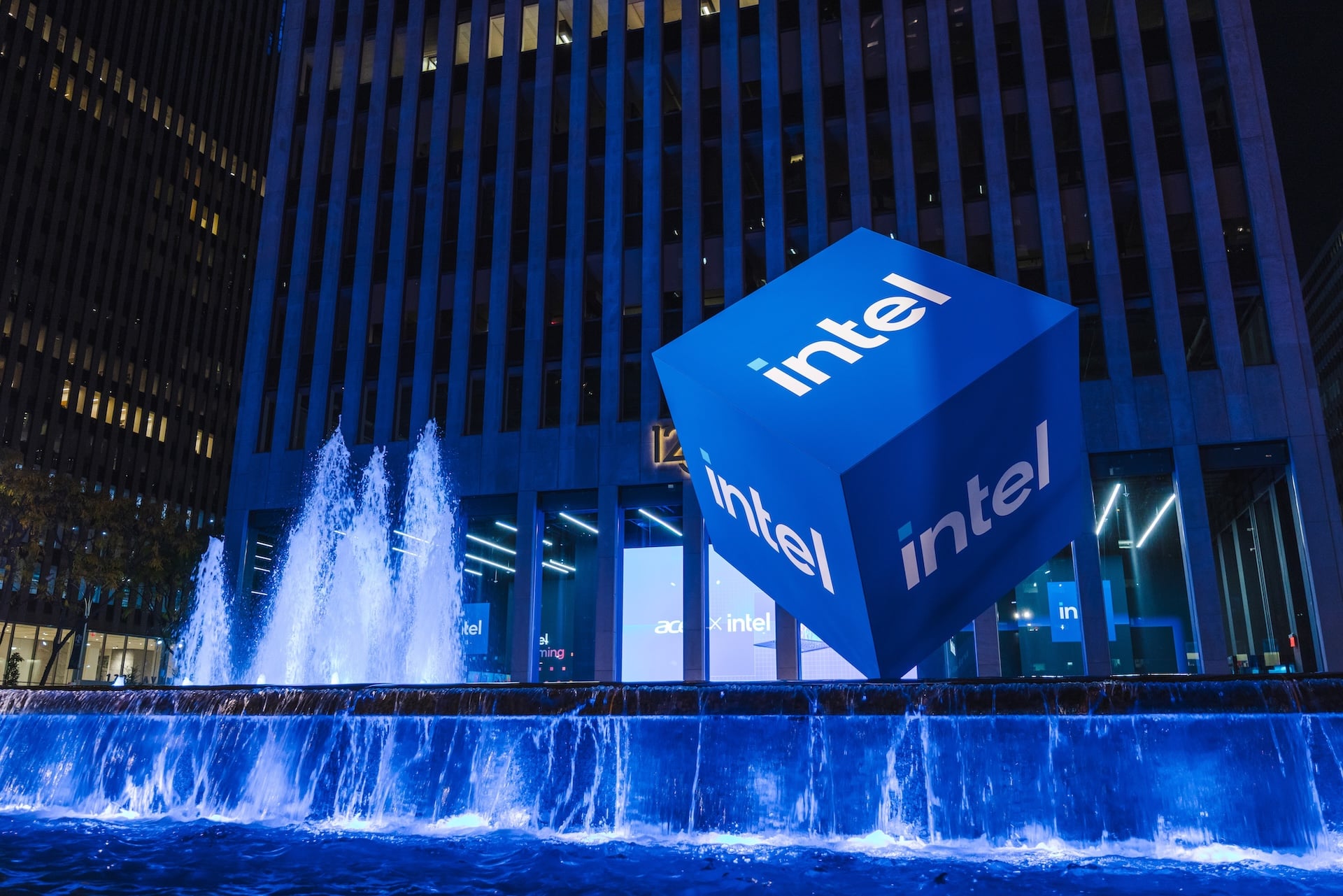
A little over a year ago, Bill Gates said the following of Intel, the U.S. chipmaker that led the PC revolution in the 1990s:
“I am stunned that Intel basically lost its way. […] [T]hey are kind of behind in terms of chip design and they are kind of behind in chip fabrication. And both of those are very capital intensive.”
Without any sort of segue, here’s what Intel is up to now:
Intel is proud to join the Terafab project with @SpaceX, @xAI, and @Tesla to help refactor silicon fab technology.
Our ability to design, fabricate, and package ultra-high-performance chips at scale will help accelerate Terafab’s aim to produce 1 TW/year of compute to power… pic.twitter.com/2vUmXn0YhH
— Intel (@intel) April 7, 2026
In fairness, it hasn’t all been bad news for Intel lately. For what it’s worth, the company’s stock price has recovered from it’s slump following the start of the AI gold rush—the point in time when Intel seemed most lost. According to Yahoo Finance this was not because of a long overdue technological breakthrough, but simply due to a string of lucrative deals, with the federal government, Apple, and now Elon Musk and Terafab.
According to Reuters, shares jumped 2% after the Terafab deal alone was announced.
Terafab, which was announced last month as a SpaceX-Tesla team-up, is meant to be a giant chipmaking operation, or “fab,” in Austin, Texas, intended to create two kinds of chips: one meant for inference (running AI models that already exist) and edge computing (running models without assistance from the cloud, such as inside of a robot); and another for what sounds like training models in space, something he has indicated will be accomplished with the help of space catapults on the moon that will launch AI satellites into Earth’s orbit.
And now Intel is involved. According to a 2023 Intel infographic:
“A typical fab includes 1,200 multimillion-dollar tools and 1,500 pieces of utility equipment. It costs about $10 billion and takes three to five years and 6,000 construction workers to complete.”
“Elon has a proven track record of re-imagining entire industries,” Intel CEO Lip Bu-Tan said on X, adding that “Terafab represents a step change in how silicon logic, memory and packaging will get built in the future.”