Most of the individuals who pursue careers in pop culture journalism tend to be those who were obsessed with pop culture as they were growing up, and I am no exception to this rule. That obsession can be a bit of a double-edged sword, however, when it comes to interviewing the figures who were part of the fabric of your formative years, and it forces you to develop the ability to shove aside the instinct to go “oh my god, oh my god, oh my god” in favor of being a professional journalist and doing your job.
In January 2010, I was at the Television Critics Association press tour, standing outside a hotel room in Pasadena, California, and definitely not feeling like a professional journalist.
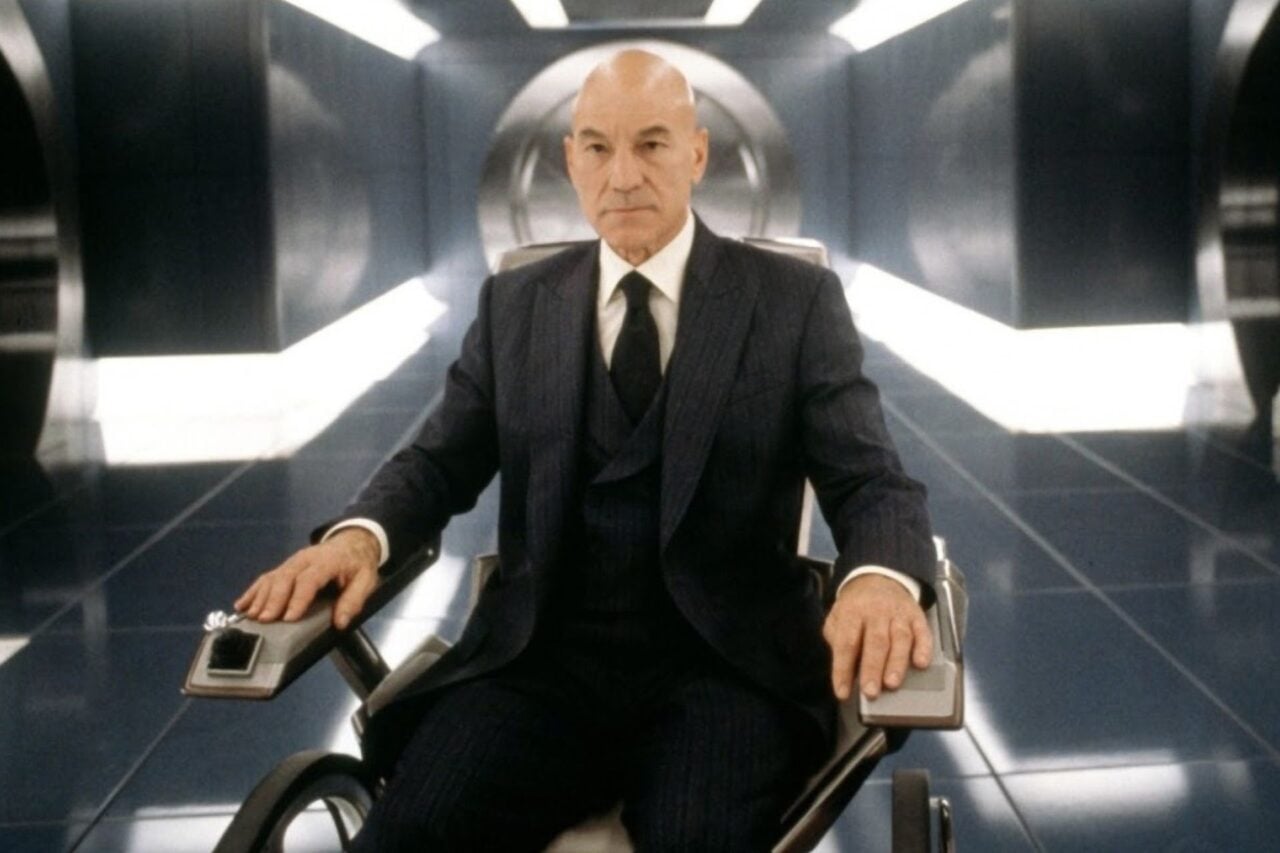
That’s because I was about to interview Sir Patrick Stewart.
To offer a bit of back story, I’d been a Star Trek fan since sometime in the ‘70s, when I was on an out-of-town visit with family to see one of my father’s cousins and “Who Mourns for Adonais?” came on their TV. You know, the one where Captain Kirk and his crew run afoul of an alien entity purporting to be the Greek god Apollo? Well, I was as gripped by the episode as that giant green hand gripped the hull of the Enterprise—if you know, you know—and from that moment on, I never looked back.
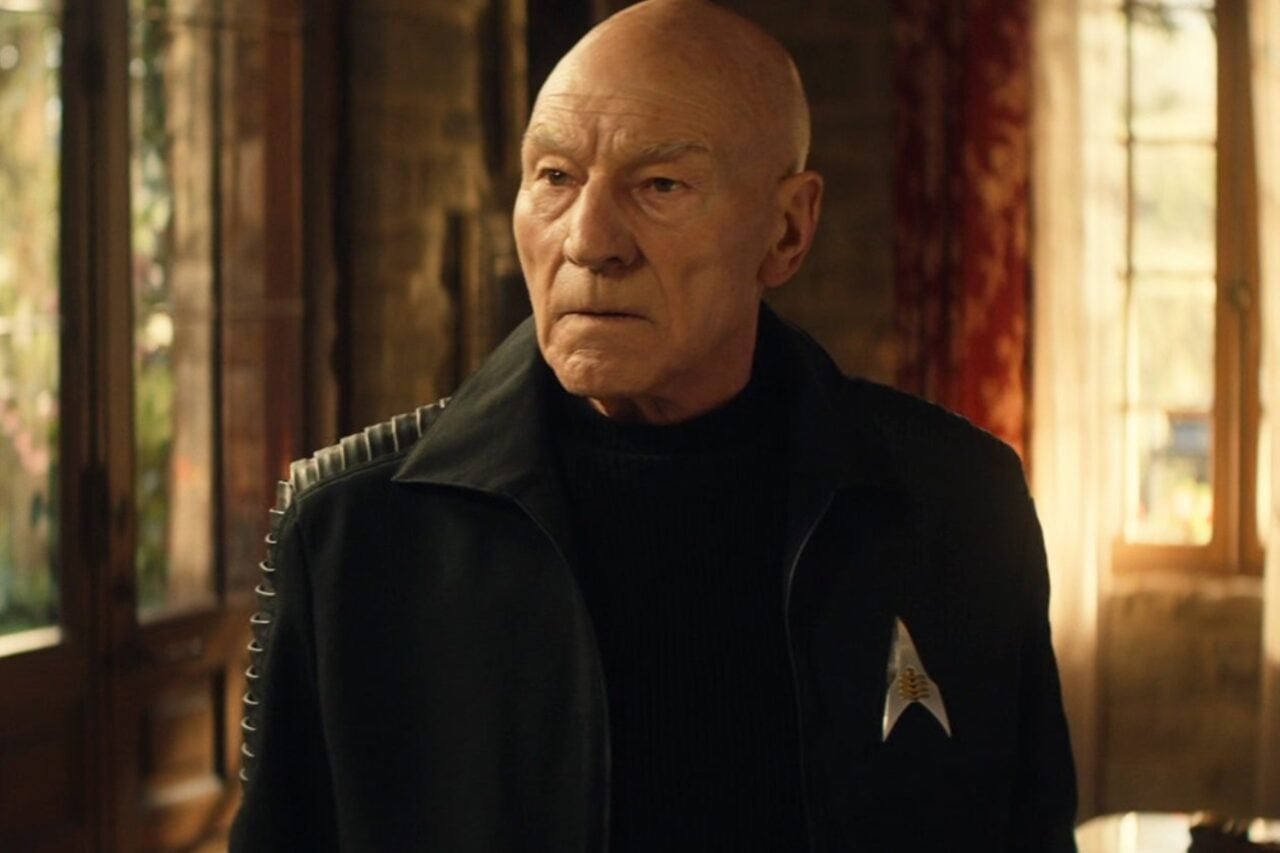
As a result, I was the prime demographic when, in 1987, Gene Roddenberry presented the world at large with Star Trek: The Next Generation. Having somehow managed to avoid seeing Excalibur, Dune, or even Lifeforce, this was my first introduction to Patrick Stewart, and while Captain Jean-Luc Picard certainly wasn’t the second coming of James T. Kirk, I’ve always been an Anglophile, so it wasn’t hard for me to latch onto Picard as a character.
The show became appointment viewing for me for the entirety of its seven-season run, from screaming at the television at the end of “The Best of Both Worlds, Pt. 1” to threatening people in my dorm with bodily harm if I didn’t have access to the TV to watch Captain Picard meet Ambassador Spock in the two-part “Unification.” And, yes, I cried at the end of “All Good Things…” And at the end of “The Inner Light,” for that matter. (Look, I’m very sensitive, okay?)
Anyway, that’s probably enough backstory to explain why I was a nervous wreck as I stood in that hotel hallway. But as soon as I was ushered into the room, I was surprised to discover that my journalist instincts were kicking in, possibly because Stewart was instantly charming. It also didn’t hurt that his assistant introduced me as having interviewed Sir Ian McKellen at a previous TCA tour, which led Stewart to grin widely and greet me warmly.
At the time, Stewart was there to promote his Shakespearean work for two installments of PBS’ Great Performances, playing Claudius in Hamlet and the titular character in Macbeth, and I’d been warned ahead of time that I’d only have about 10 minutes with him. As such, there was much talk of Shakespeare. In fact, I actually reached out to my college Shakespeare professor to get a question from her. (She suggested I ask about the increased sexual tension between Macbeth and Lady Macbeth in recent productions of the play.) In order to expand the conversation beyond PBS but still keep things more or less on topic, I asked about his TV movie King of Texas, which took King Lear and placed it in a western setting.
Just as we were about to hit the 10-minute mark, I decided to throw in a final question about his comedic work… and suddenly I found myself with our time expanding, because he was so enjoying the opportunity to discuss his work with Seth MacFarlane and the time he hosted Saturday Night Live. He even briefly drifted into the voice of Phil McCracken, Scottish Therapist, which gave me a cheap thrill that I hadn’t expected. And finally, as I stood to depart, I decided I wasn’t going to leave the room without at least mentioning that my favorite ST:TNG episode was “The Inner Light.” He told me it was his as well.
As I turned to leave, I decided to throw caution to the wind and ask if I could get a picture. He looked slightly stricken, at which point I assured him that I wasn’t looking to be in it, I just wanted something that perhaps we could post with the interview. At that point, he relented, and I’m so glad that he did.
I was riding high on adrenaline for the rest of the day, as you might well imagine, but it was the kind of high where I knew I was going to need another hit eventually. For years, I tried to secure another chat with him. I really wanted to do a Random Roles with him for the A.V. Club, thereby giving me an excuse to ask him about everything from I, Claudius to L.A. Story. It wasn’t happening, and although his publicist was always quick to reply and very pleasant about it, I got the impression that he wasn’t one for trolling through his back catalog any more than absolutely necessary. So I just stopped asking and got back to enjoying his work.
But one of the hazards of being a pop culture interviewer for any significant length of time is that you will inevitably see actors die that you’ve had the good fortune to interview, and I got the news while walking through the frozen food aisle at the grocery store. My wife texted me and simply wrote, “Patrick Stewart???” Given my profession, I’m usually the one breaking the news of a celebrity’s death, so to be blindsided by the death of one of my favorite actors… I was numb.
Since then, I’ve done my obligatory social media posts, I’ve fondly remembered the experience of meeting him and chatting with him, I’ve even gone back and re-watched “The Inner Light” again. But for as much sighing as I’ve done, I still haven’t found myself feeling properly sad… and, frankly, I blame Stewart for that.
Yes. Picard may have famously said, “What we leave behind is not as important as how we’ve lived,” and that’s a perfect sentiment for Stewart himself, who lived a life that at this point has surely touched billions of individuals, including numerous charitable contributions.
For us, however, what Stewart leaves behind is extremely important, because he’s left us so many films and TV episodes and, yes, even memories of first-person encounters that he’ll be impossible to forget… and to borrow a line from a physician from a previous generation, he’s not really gone as long as we remember him.
Farewell, mon capitaine, and to let Shakespeare have the final word, “Only I have left to say, More is thy due than more than all can pay.”
Want more io9 news? Check out the best movies and TV shows to stream this month and all the upcoming sci-fi, fantasy, and horror books that should be on your radar.