For more than 20 years, Gizmodo has headed to Las Vegas after ringing in the new year to cover the Consumer Electronics Show—aka CES—and 2026 is no different.
The consumer tech team will be on the ground at the year’s largest tech show to check out all of the innovation that companies big and small will be announcing.
There will be the usual new TVs with more pixels and colors than your eyes can appreciate and aesthetic Wi-Fi speakers that will only ever look good in a million-dollar loft. But the fun stuff will be devices like a gaming laptop with a screen that rolls horizontally, smart glasses that make it easier to post content to social media, and uh… the return of the QWERTY smartphone. We can’t wait to find the weirdest tech at CES 2026.
And while AI will no doubt be the top buzzword in every product pitch, we’re gonna do what we at Gizmodo have always done: not pull any punches. We’ll give kudos to products that deserve them and clown on the ridiculous and overpromised.
CES 2026 officially runs Jan. 6 through Jan. 9, but the news has already started to trickle out. So strap in and get ready for a joyride because we’ll be going hands-on with as many gadgets as soon as the crew lands in Sin City, and the best place to learn about it all as it unfolds is here on this live blog!
Until Next Year!

And with that, CES 2026 is over. Okay, technically, the show ended last Friday, but we’re closing up this live blog until we return to Las Vegas in 2027. To all our readers, thanks so much for reading our live blog and all of our news and hands-on impressions. The consumer tech team—Kyle Barr, James Pero, Sasha Lekech, Wes Davis, and myself—pulled 12 to 16 hours daily to bring you the latest tech from the show, and now we all need some much-deserved sleep and edible nourishment. Signing off! —Raymond Wong
This Headset Wants to Train My Brain for ESports

When I slap on a gaming headset, I’m more concerned about the voice and sound quality than how good it makes me at playing video games. And yet, somehow, this headset’s odd earcups are still interesting for somebody who doesn’t care about his K/D ratio. HyperX is teaming up with EEG brain-sensing company Neurable to craft a headset that’s supposed to help you enter a flow state. I tried on an early prototype, and the headset supposedly enhanced my accuracy in first-person shooters. If you only care about winning in video games, it may be a gadget to keep an eye out for later this year. —Kyle Barr
Can a Brain-Sensing Gaming Headset Finally Make Me a Pro Player?
Don’t Let the Next Humanoid Robot Crush Your Feet

When you think of humanoid robots, you imagine Rosey the Robot from The Jetsons, not a slow-moving maid bot that will lethargically fold your towels until it inevitably screws up. At CES 2026 there was a horde of humanoid and non-humanoid robots on display, more than what we usually see at CES. And still, I left the show with the sense that these bots are nowhere close to ready, at least for consumers. Multiple bots broke down during the show, and in one the robot fell on top of the reporter who went there to check it out. When these bots did work, they did their job at such a slow pace it was agonizing to watch. This poor outing for humanoid robots arrives just after Samsung all but declared its rounded Ballie bot was dead, at least for the time being. Perhaps the only future use for humanoid robots will be bullying them in the boxing ring. —Kyle Barr
Humanoid Robots Are Here… and Embarrassingly Bad at Being Our Servants
It’s Not CES if Things Don’t Get Really Weird

We go to CES to see the future of consumer electronics—the new laptops, monitors, headphones, CPUs, and more—that we’ll be able to buy within the calendar year. But we also go to see a different kind of future—a world of “what if?” gadgets that really make you scratch your head. Presenting the weirdetst gadgets our team saw at the week-long tech show. —Raymond Wong
The Best Smart Home Tech We Saw

If you read our CES coverage, you’ll have seen that the smart home had a massive presence at the show. Our smart home guru, Wes Davis, covered everything from Ikea’s new RGB donut lamps to Roborock’s Saros Rover and its legs for climbing stairs to Aqara’s new Thermostat Hub W200 that he won’t stop raving about. He crowned a bunch of smart home products winners as part of the Gizmodo Awards. Check out all of his favorites below. —Raymond Wong
Our Favorite Automotive Tech at CES 2026

Our transportation expert Sasha Lekach was on the ground all CES 2026 to bring you the biggest automotive announcements. Although a quieter show for car news than expected, there were still some major drops, including the adorable Waymo Ojai robotaxi, Meta Neural Band controlling car infotainments, and updates on the Sony and Honda Afeela 1 launching later this year. Here are all of the best automotive tech announcements, according to Sasha. —Raymond Wong
We Have Winners of The Gizmodo Awards: CES 2026

It’s basically a wrap on CES 2026! As the largest tech show of the year fades into the rearview mirror, definitely go and check out the winners of the Gizmodo Awards: CES 2026 if you didn’t already see them last week. It was no easy feat, but the Gizmodo consumer tech team recognized 30 products announced at the show for their innovation and design. We have the usual winners for “Best Laptop,” “Best TV,” and “Best Concept Device,” but also a slew of new categories like “Best In-Vehicle Assistant,” “Best Smart Bird Feeder,” and “Best Sex Toy.” Yeah, we really went there this year! —Raymond Wong
LG’s Latest Ultra-Wide UltraGear Includes Upscaling
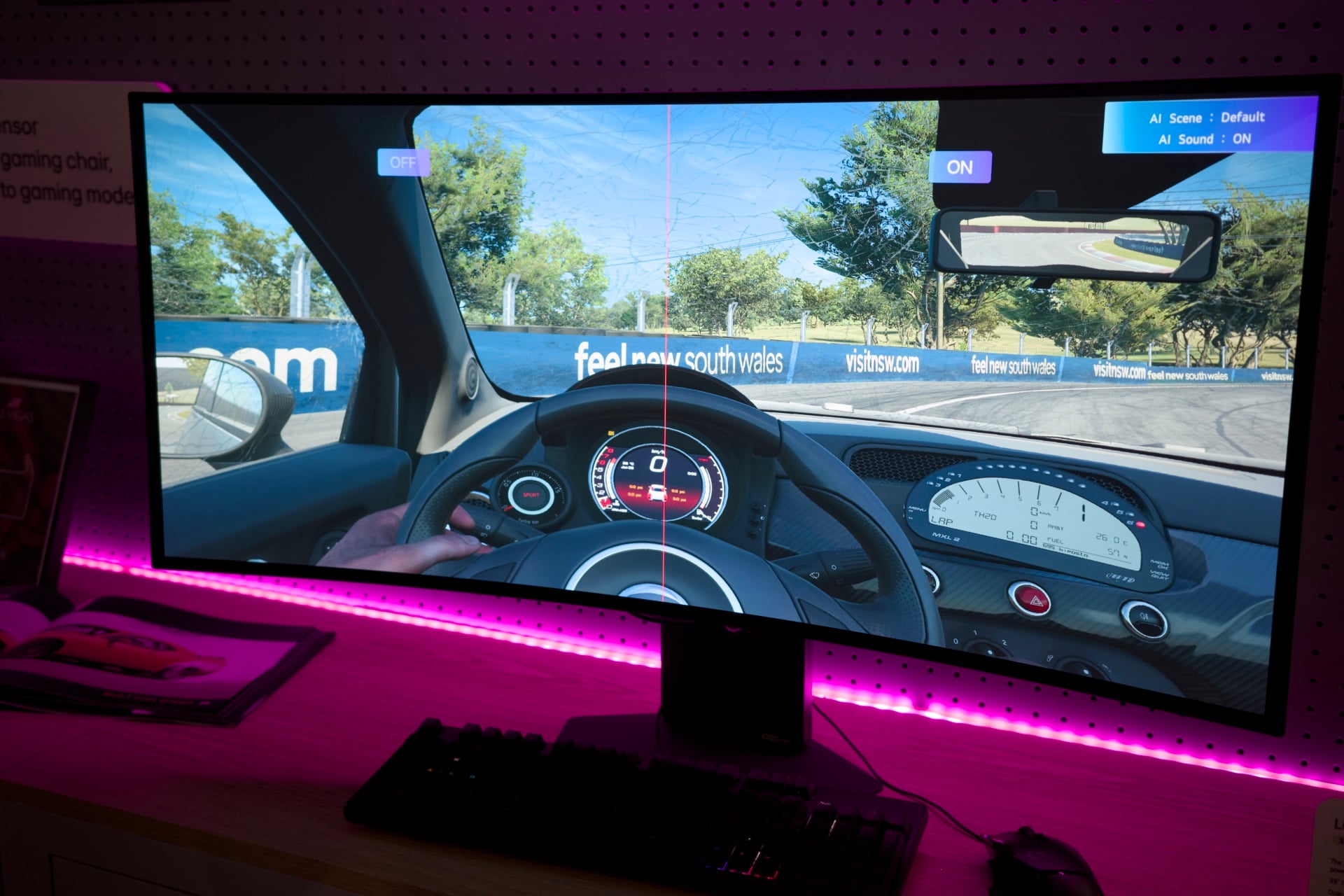
LG’s latest UltraGear evo G9 52G930B monitor would already be enticing enough with its dual-mode 5K2K resolution and a stated 240Hz refresh rate. Then, you learn that this is LG’s first monitor to support AI upscaling technology taken from the company’s TVs to sharpen non-4K or 5K content. Upscaling isn’t the end-all-be-all for improving image quality. Any AI technology like this is essentially trying to fill in pixels, so it’s better to think of it as denoising software, providing extra visual clarity. Either way, the screen managed to draw our eyes despite how CES is full to the brim with high-quality OLED monitors. —Kyle Barr
Acer’s Latest Laptops Add More Capabilities to the Mousepad
Like last year’s Predator Triton 14 AI, Acer has added some unique capabilities to the 2026 Swift 16 AI’s touchpad. The new laptop allows you to use an ActivePen stylus to draw and scribble on the touchpad, rather than on the display. No, you can’t use the stylus on both the screen and the touchpad. If you were looking for a mobile alternative to your typical drawing pad, the new Swift may fit the bill. For more videos from CES 2026, check out Gizmodo’s Instagram, TikTok, and YouTube. —Kyle Barr / Gizmodo
The Cherry Red ‘Hollow Knight: Silksong Case’ I Didn’t Know I Wanted
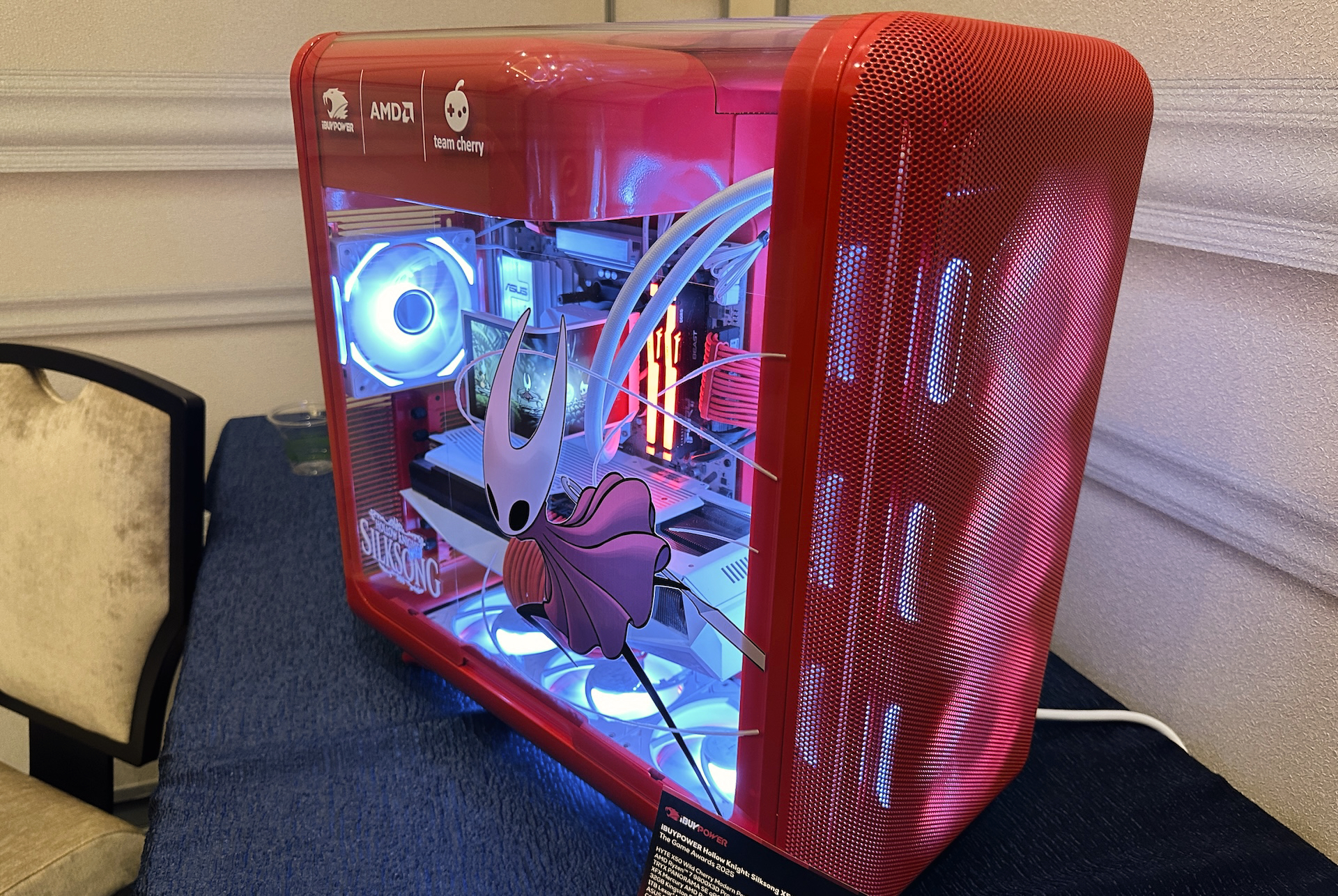
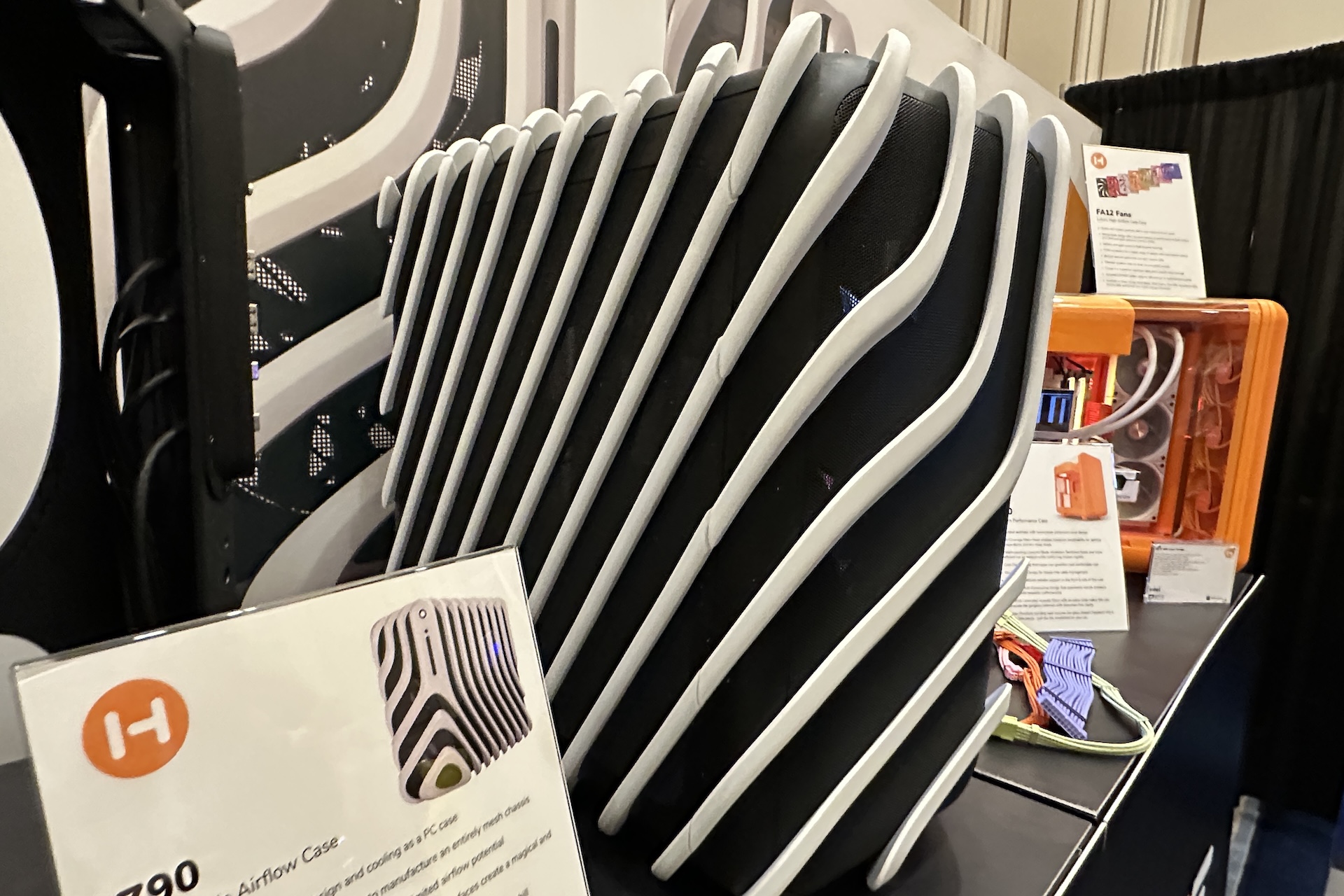
Hyte’s CES 2026 booth was dedicated to its iBuyPower prebuilt designs for 2026 as well as a whole shelf detailing the work that went into its X50 PC cases that debuted at Computex 2025. In case you were curious, the company had once devised a strange PC case with large zebra stripe-like fins running all around it. Those earlier Z90 prototypes for all-over airflow eventually became the cutesy mid-size tower. However, my favorite of its PCs on display was one designed in honor of Team Cherry’s landmark indie game Hollow Knight: Silksong. That cherry red colorway plus the image of Hornet embellished on the glass panel makes me wonder if I could accomplish something similar if I had one of Anker or (more recently) XTool’s desktop UV printers on hand. —Kyle Barr
The Brave Little Bot Gets Beat Up
Unitree’s boxing robots made their U.S. debut at CES 2026. Instead of throwing two bots in the ring with one another, they asked real flesh-and-blood humans to give these hunks of metal the old one-two. Robots should already be used to excessive amounts of bullying, but beating a bot half your size with a quarter of your reach will certainly get jotted in the ledger of grudges for when the robo revolution comes. Be sure to check out our Instagram, TikTok, and YouTube for more videos from CES. —Kyle Barr
Watch a Robot Beat You in Chess With Its Own Hands
X Sense’s little robot chess-playing devices are mesmerizing for the first few minutes, until you realize just how long it takes them to make a move. The SenseRobot chess-playing device has been around since last year, but the company’s new product for 2026 is a SenseRobot Chess Mini version that is supposedly faster and more compact. That robot was supposedly designed to help children learn to play chess with the addition of 25 additional lessons and difficulty ratings from Elo 200 to 1,700. Be sure to check out our Instagram, TikTok, and YouTube for more videos from CES. —Kyle Barr
This Screen on a Pair of Headphones Isn’t VR; It’s Even Weirder
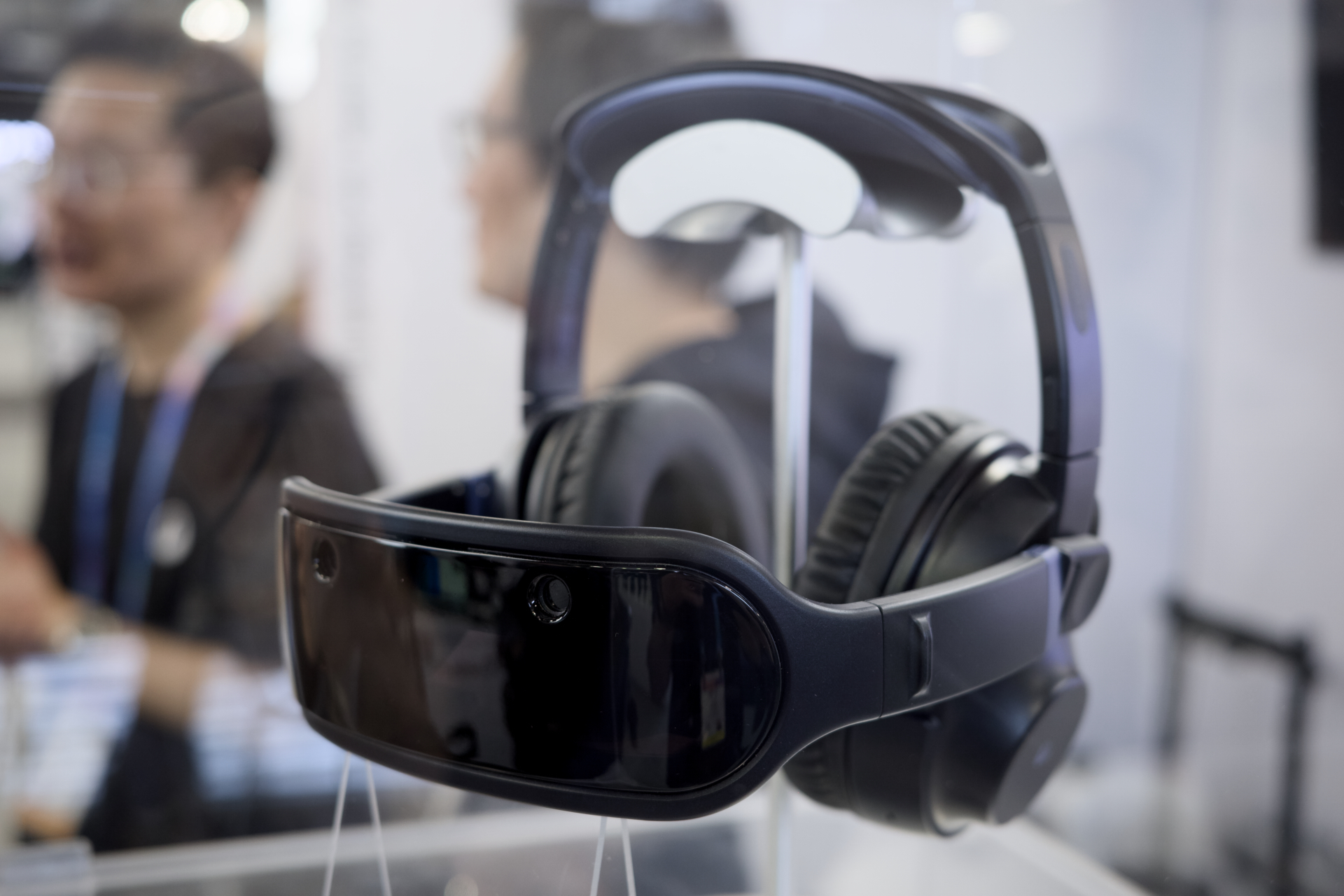
I spent too much time searching the halls of CES to find a fabled device I knew I needed to see in person. Unfortunately, it was locked behind a pane of glass, and they wouldn’t let me touch it. The Korean company Geeks Loft is developing Perisphere, a kind of headphones with a wide, curved screen that flips down from on top of the headrest. Geeks Loft said the 1080p screen would be useful for mirroring YouTube videos or movies on your daily commute without needing to reach for your phone. The whole device weighs a little less than a pound, though it also includes two stereoscopic cameras for “3D” video recording and a stereo microphone if you want to take any calls through your headset. No, I didn’t get to see behind the screen to check out the visual quality. The company told me the Perisphere is launching sometime later this year. —Kyle Barr
VR Ain’t Dead Yet

I wasn’t expecting to be impressed by VR hardware this year at CES, but Pimax brought a welcome surprise. The Dream Air is a PCVR headset that is almost impossibly light at 170g (lighter than an iPhone 17), but still packs an 8K screen. I tried the tiny-but-mighty headset for myself, and it restored my zeal for VR hardware.
Is it expensive? At $2,000, I think most people would qualify that way. But I’ll be damned if I didn’t want to keep gaming in the Dream Air, even if VR still makes me motion sick. —James Pero
My Hair Was Too Long for the Robot Hair
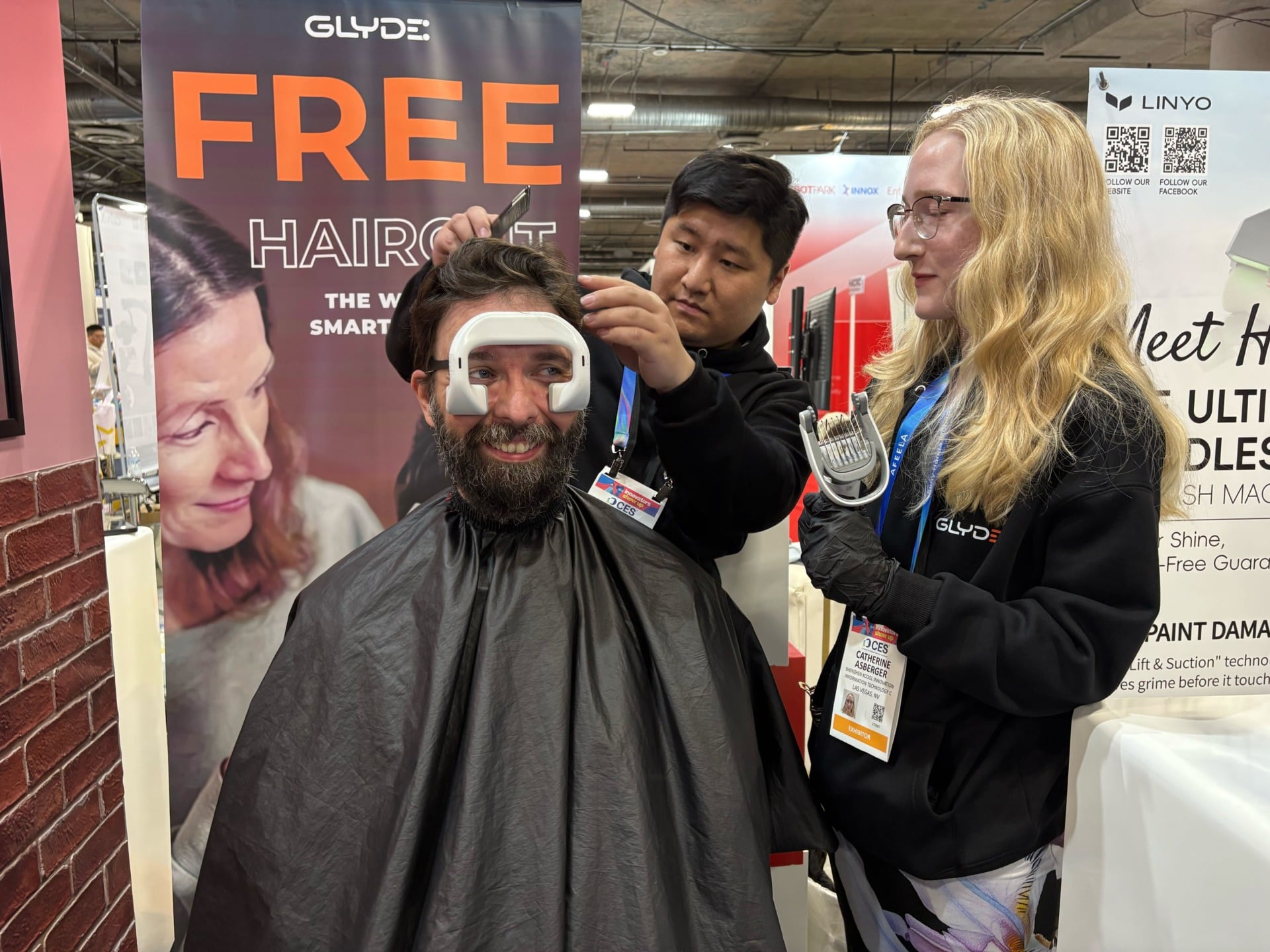
I need a haircut, and there’s a company here, called Glyde, that says its robotic Smart Hair Clippers can make a perfect fade, even if you’re a newbie, and even if you’re cutting your hair yourself. Unfortunately, when I sat down to do it, the booth attendants told me my hair is too long. Guess I’ll be getting my hair cut the old-fashioned way, after all. —Wes Davis
Even Lyft Wants In on Robotaxis

Lyft doesn’t want to be left behind on the autonomous taxi front, so it’s teaming up with Tensor (formerly AutoX). Tensor is promising your very own AV to own and has built its own autonomous vehicle with 37 cameras and five LiDAR sensors. The accelerated production timeline by the end of the year seems highly unlikely, but Lyft is all in. If you can afford an AV you can soon send it off to make money driving for you. Sounds like the Elon Musk dream come true. —Sasha Lekach
Guess Which Military Contractor Brought His N64 to CES?

ModRetro, the company that brought us the Chromatic recreation of the Game Boy, brought its upcoming FPGA (field-programmable gate array) Nintendo 64 recreation to CES. The ModRetro M64 uses an FPGA built by AMD, so the chipmaker displayed the console proudly in its AMD booth. The company was handing out Chromatics if you could answer a trivia question correctly. By the time I saw this device, there was one box left suspiciously empty. The M64 is set to launch this year for $200, less than the competing Analogue 3D.
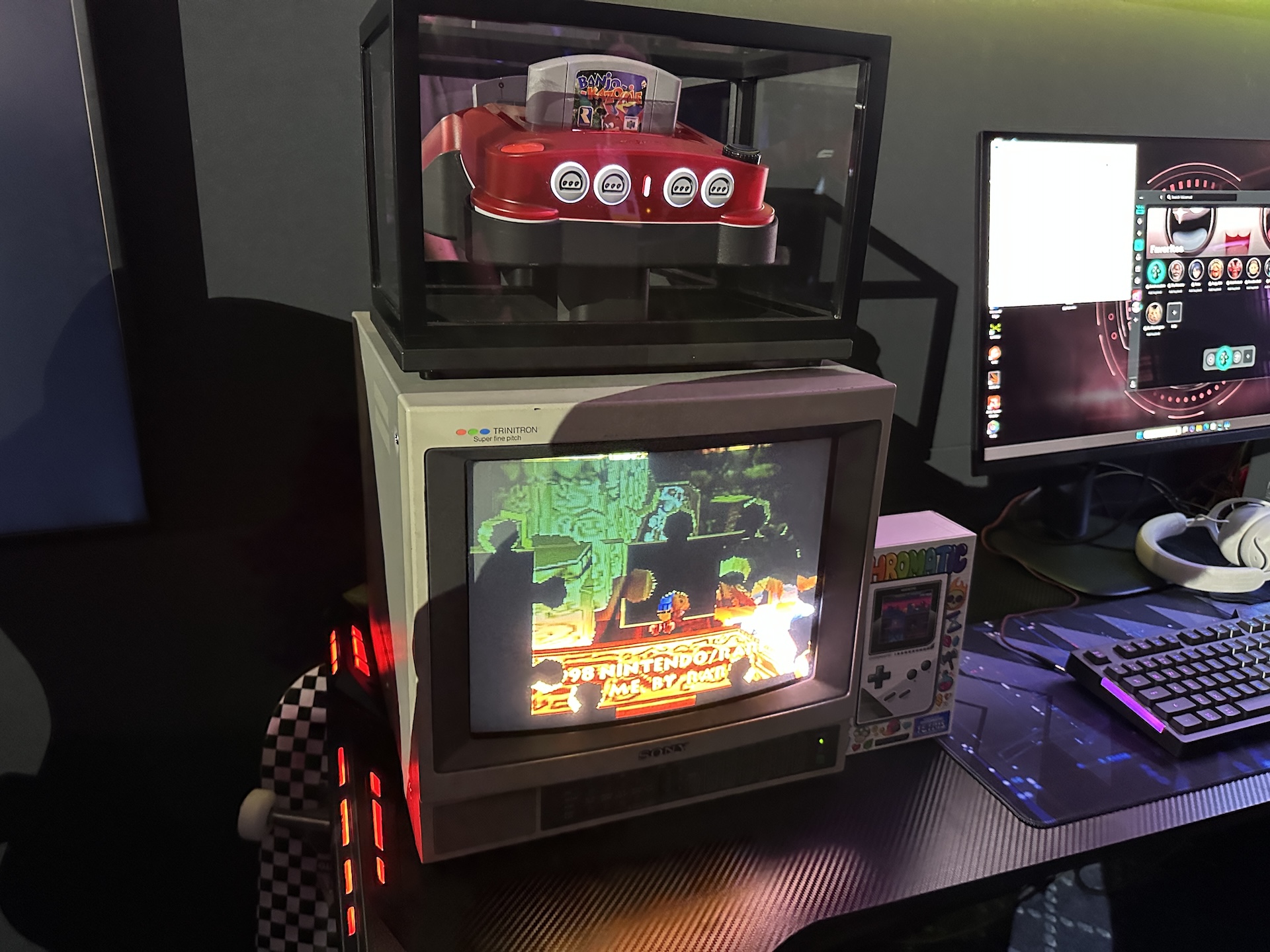
However, you’ll need to overlook that ModRetro is founded by Palmer Luckey, who sells weaponized drones and other surveillance equipment to the U.S. military through his company Anduril. Luckey recently hawked a special edition of the Chromatic made from the same material as one of its headlining killer drones, a move that caused no small amount of backlash from some retro gamers who would prefer their hobby not bear the responsibility of giving credence to a fervent arms dealer. —Kyle Barr
You May Want a Controller With a Steering Wheel

I’ve been eyeing GameSir’s Swift Drive controller ever since the device cropped up in my emails. Actually going hands-on with it revealed this may be one of the best controllers for racing fans when they don’t have access to their full-sized simulationist steering wheel. The controller uses several motors to offer haptic rumble and force feedback on the wheel as you use your thumbs to drive. The only issue is GameSir removed and replaced the right thumbstick with a nub, so you won’t necessarily want to use this controller for anything other than racing.
Readers were quick to point to Namco’s Jogcon from 1998, which I failed to mention in my news post. Mea culpa. I neglected to reference the influence of the 27-year-old controller built for the original PlayStation. Can we at least acknowledge this controller may be a better, more ergonomic design? —Kyle Barr
GameSir Stuck a Steering Wheel Inside a Controller, and It’s Actually Brilliant
Catch Some Rays With Govee’s New Smart Light

As a lighting snob, Govee’s new ceiling light has captured my attention. I hate overhead lights—lamps or die—but the Sky Ceiling Light is meant to mimic natural sun, giving the impression of a skylight. Color me intrigued, Govee. —James Pero
Govee’s New Smart Ceiling Light Gives You AI Art to Look Up To
These Smart Glasses Do Not Have That Dog in Them

I’ve seen a lot of vaporware in my day, but CES has a habit of surprising even the most seasoned of tech nerds. For me, that surprise came courtesy of the Syncglasses G2, which is a pair of smart glasses that purports to offer “pet translation.”
Long story short, the Syncglasses G2 are trained on pet data and can apparently observe animals with the on-board cameras and then tell you what they want. I didn’t have a pet to translate in my brief demo, but I’m just going to assume they’re as good at translating pets as my cat is at not waking me up at 5 a.m. because he’s hungry. —James Pero
What’s NeXt for NXTPaper?
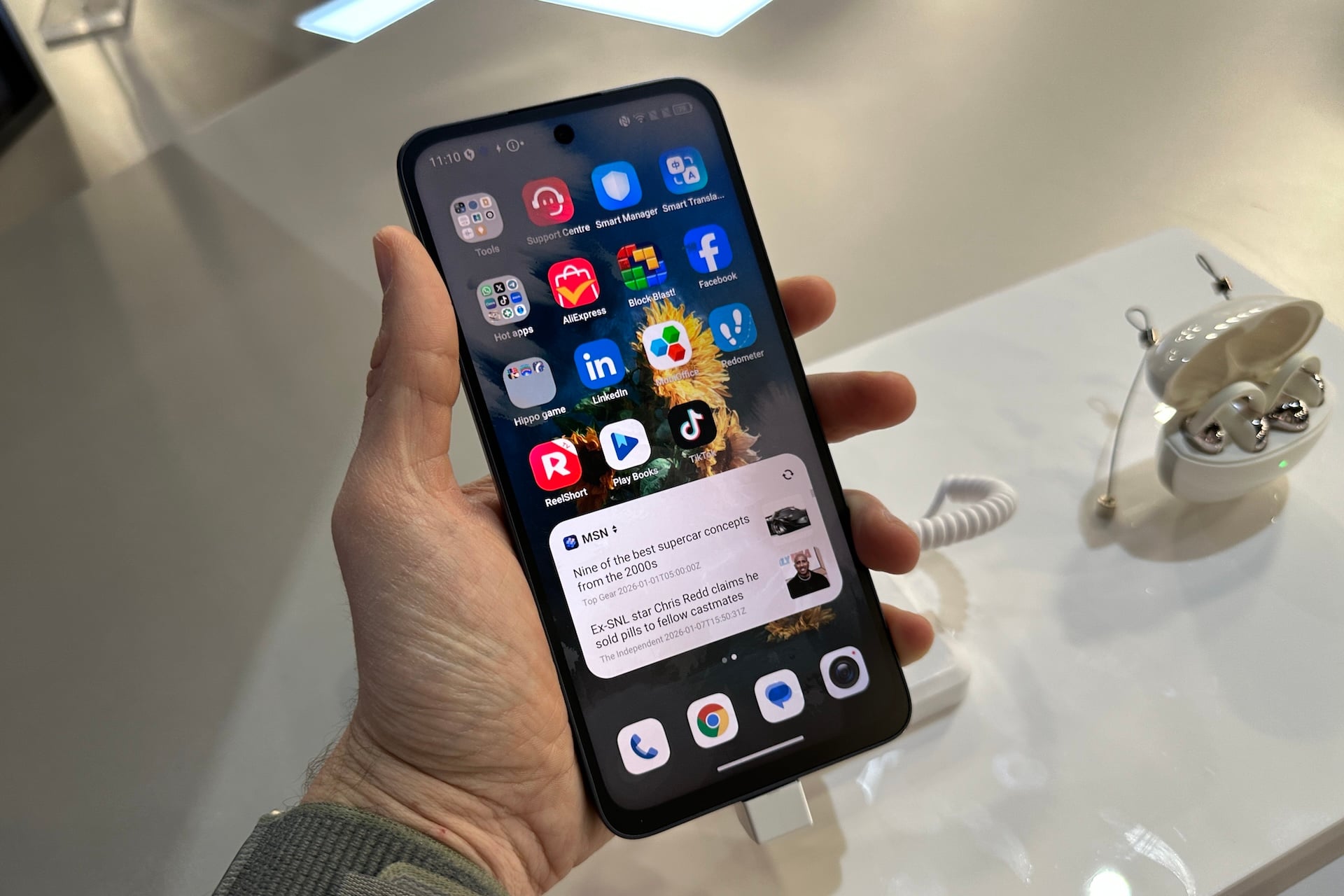
TCL’s still beating the drum for screens that don’t strain your eyes. Finally, after several years of sticking to Europe and Asia, TCL is ready to bring its NXTPaper phones to the U.S., starting with the NXTPaper 70 Pro. The device sports a 6.9-inch, 120Hz display using TCL’s NXTPaper 4.0 technology, which reduces eye-straining blue light behind a textured matte screen surface. The phone still features a special key you flip to drain all the color from the device, making it better as an e-reader. TCL said it’s planning to start shipping the phone in the next few months, though they weren’t ready to detail the price just yet.
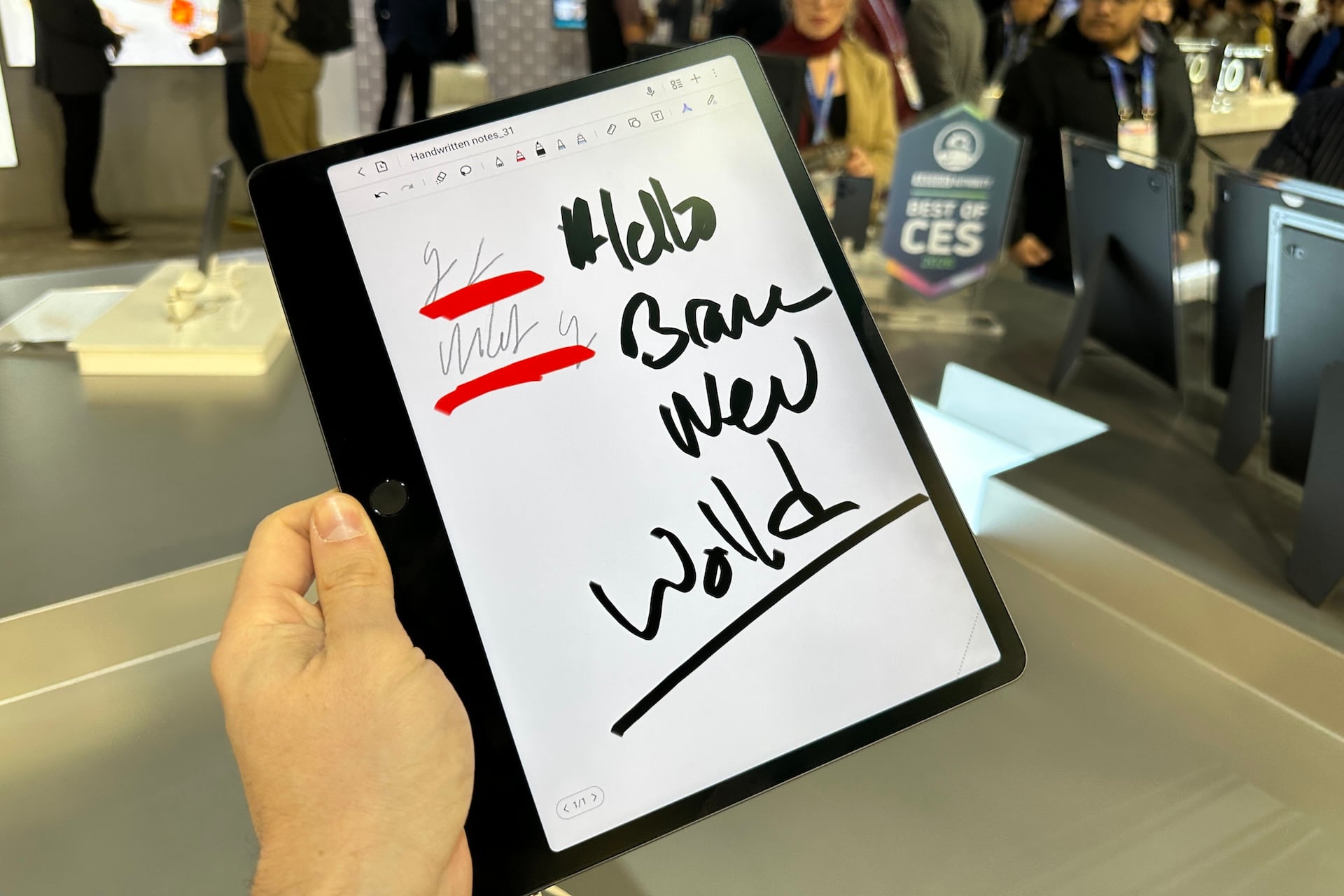
The company known for its budget-end TVs also has an actual e-reader/e-notetaker called the Note A1. This 11.5-inch device also sports this same screen technology as the phone, meaning it’s pretty easy on the eyes. That device should cost $420 when it starts shipping in February. —Kyle Barr
8BitDo’s Latest Will Turn Any Phone Into a Game Boy
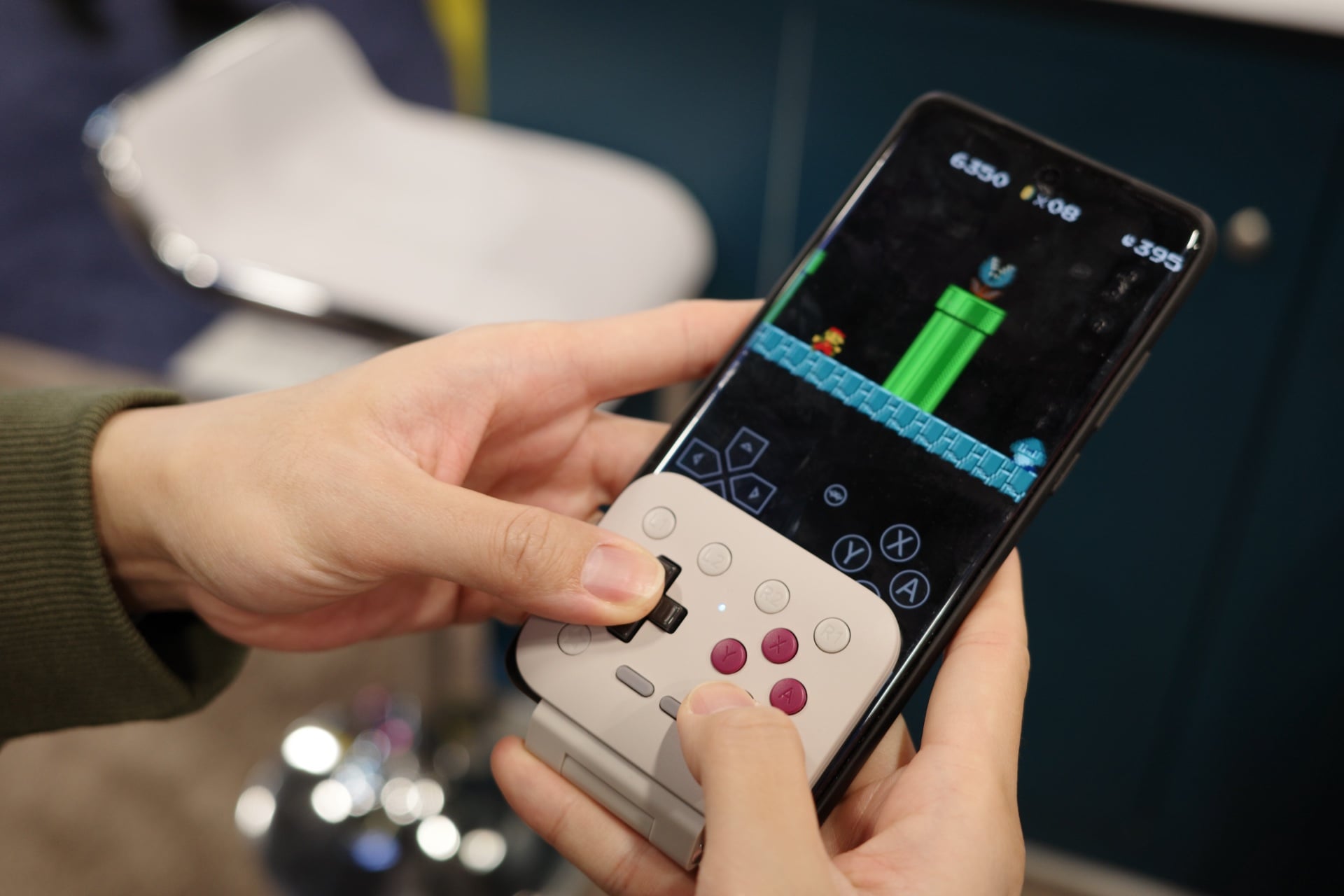
8BitDo’s latest controller will offer the same comforts as a Game Boy right from your phone. The compact FlipPad plugs into your phone’s USB-C port, then folds up to cover up half the screen. It’s a simple design, but the controls themselves had the compact snappiness I expect from the company’s controllers. The company claims it’s completely supported by Apple, though you’ll likely be using this device to play retro emulation with apps like Delta.
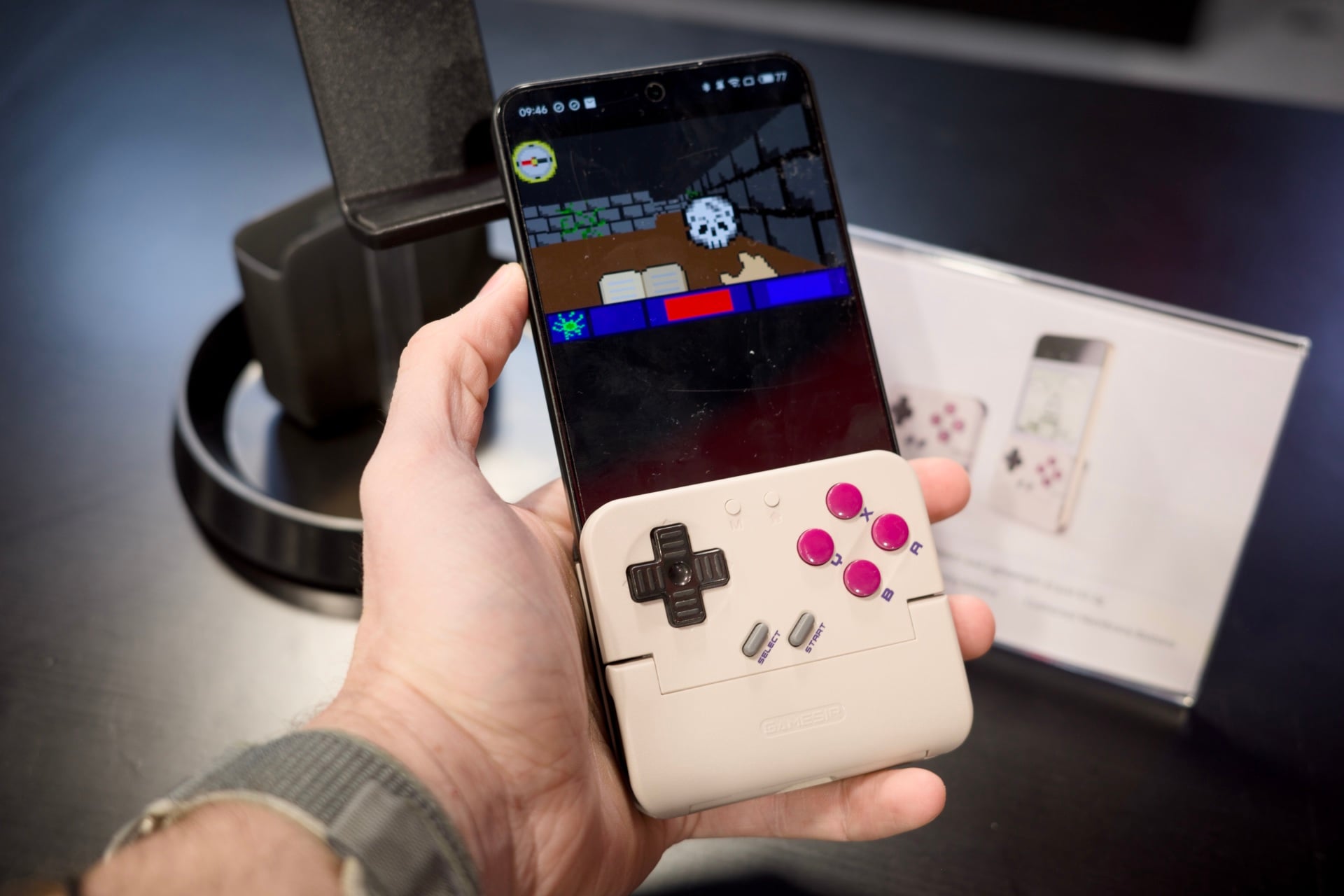
I also tried GameSir’s similar $35 Pocket Taco, though based on my short time spent with each, the 8BitDo version feels far more responsive. The FlipPad should be going on sale later this year. The company told me it’s planning to sell it for between $30 and $35. —Kyle Barr
Longbow Speedster Adds Some Style to West Hall
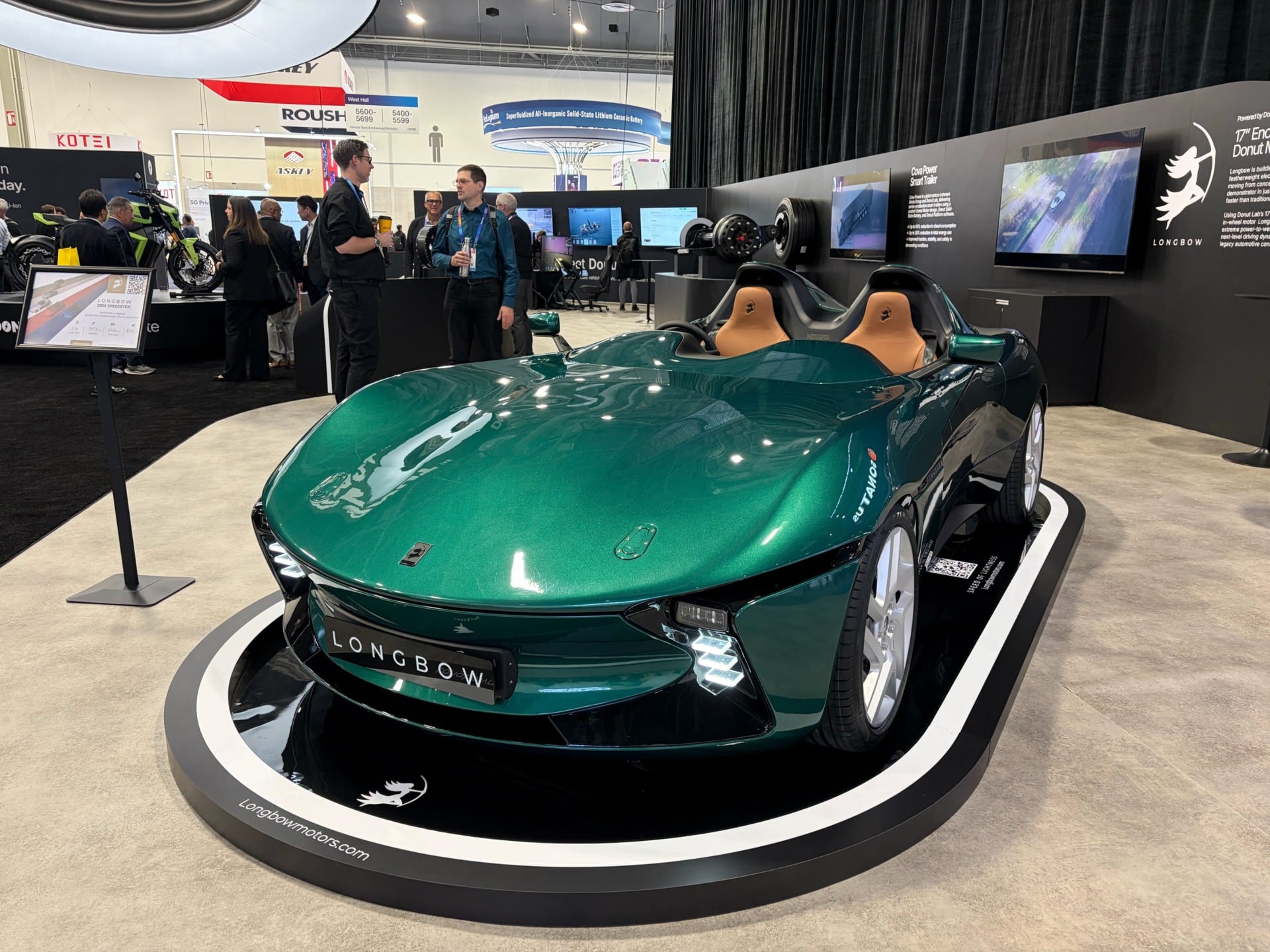
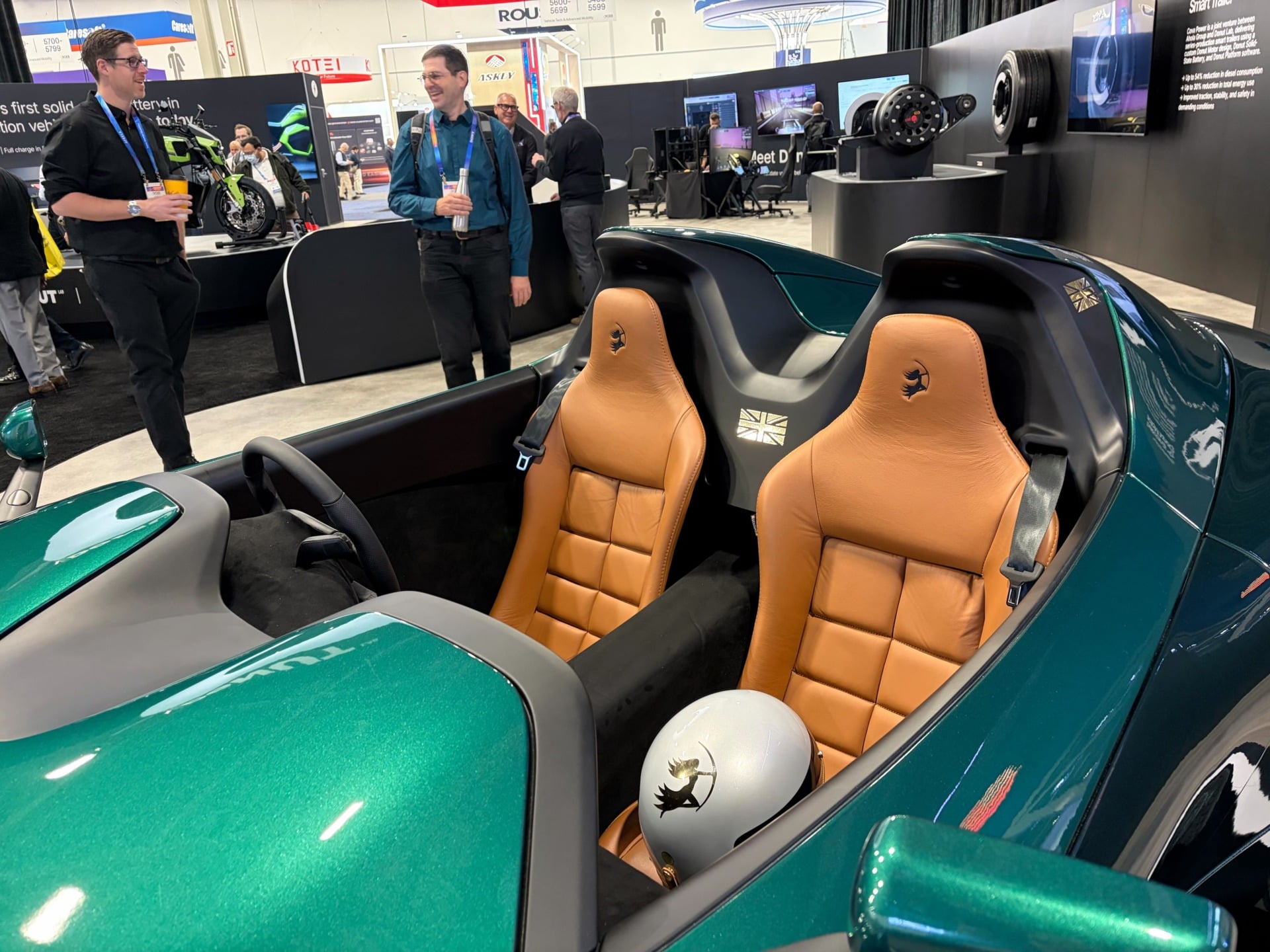
Longbow is making its debut here with its British electric sports car. The Speedster doesn’t even need doors or a roof. The $110,000 car is supposed to start deliveries at some point this year along with its Roadster. That one has a roof and will definitely piss off Elon Musk if it hits the road before his long-promised Tesla Roadster update. —Sasha Lekach
Good Morning From will.i.am
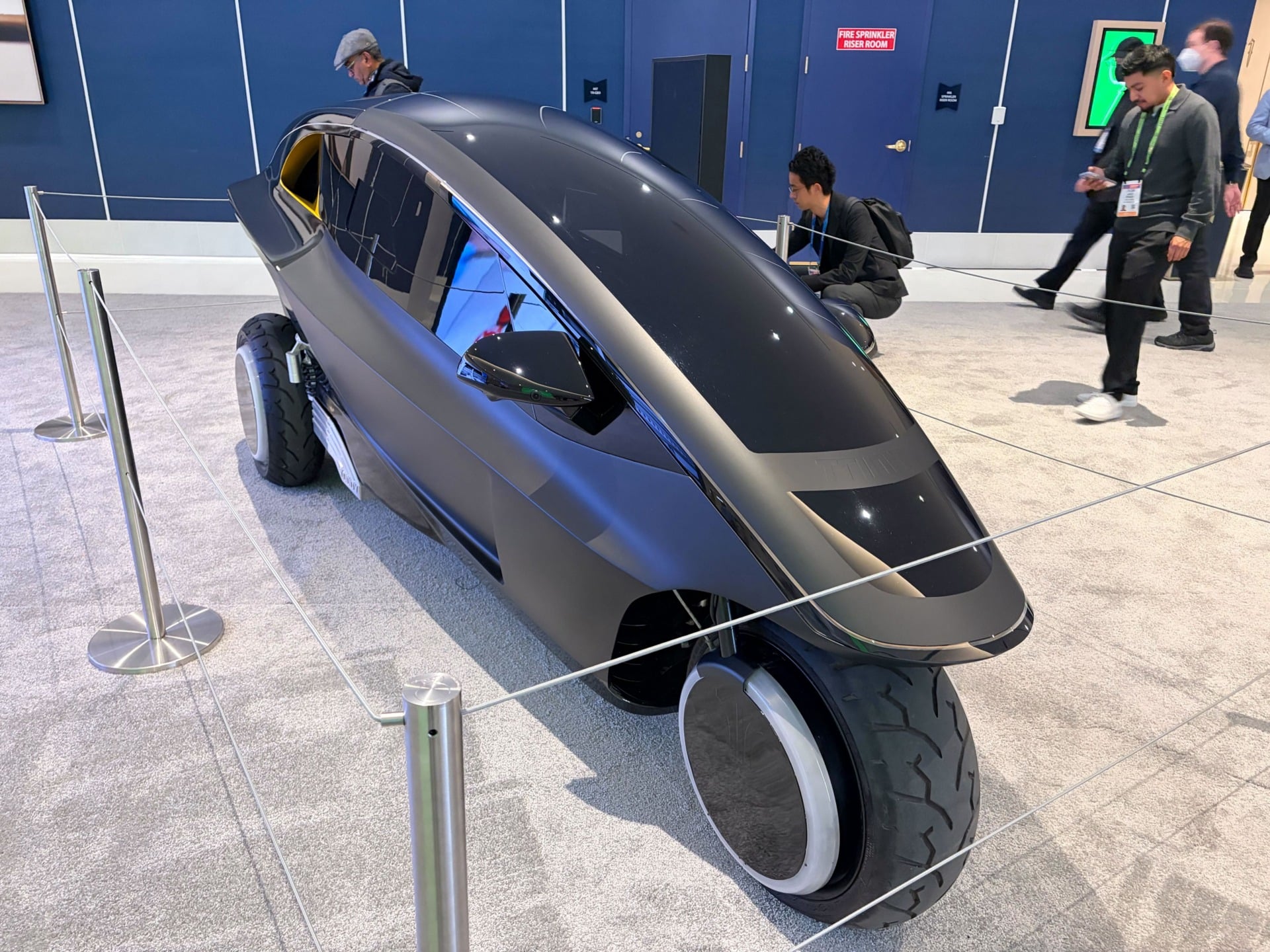
TIL the artist will.i.am is passionate about micromobility. He’s behind the Trinity three-wheeler, which is a single-seat EV pod that self-balances.
I peered into the dark cockpit and it seems extra cozy (claustrophobic) in there. There’s an AI agent, which is the brains of the vehicle, but it’s supposed to always be human-driven.
With 150-mile range and zero to 60 mph in two seconds, it could be fun. There’s a Kickstarter to help will.i.am get this on the road. —Sasha Lekach


Uber’s Next Attempt at Robotaxis
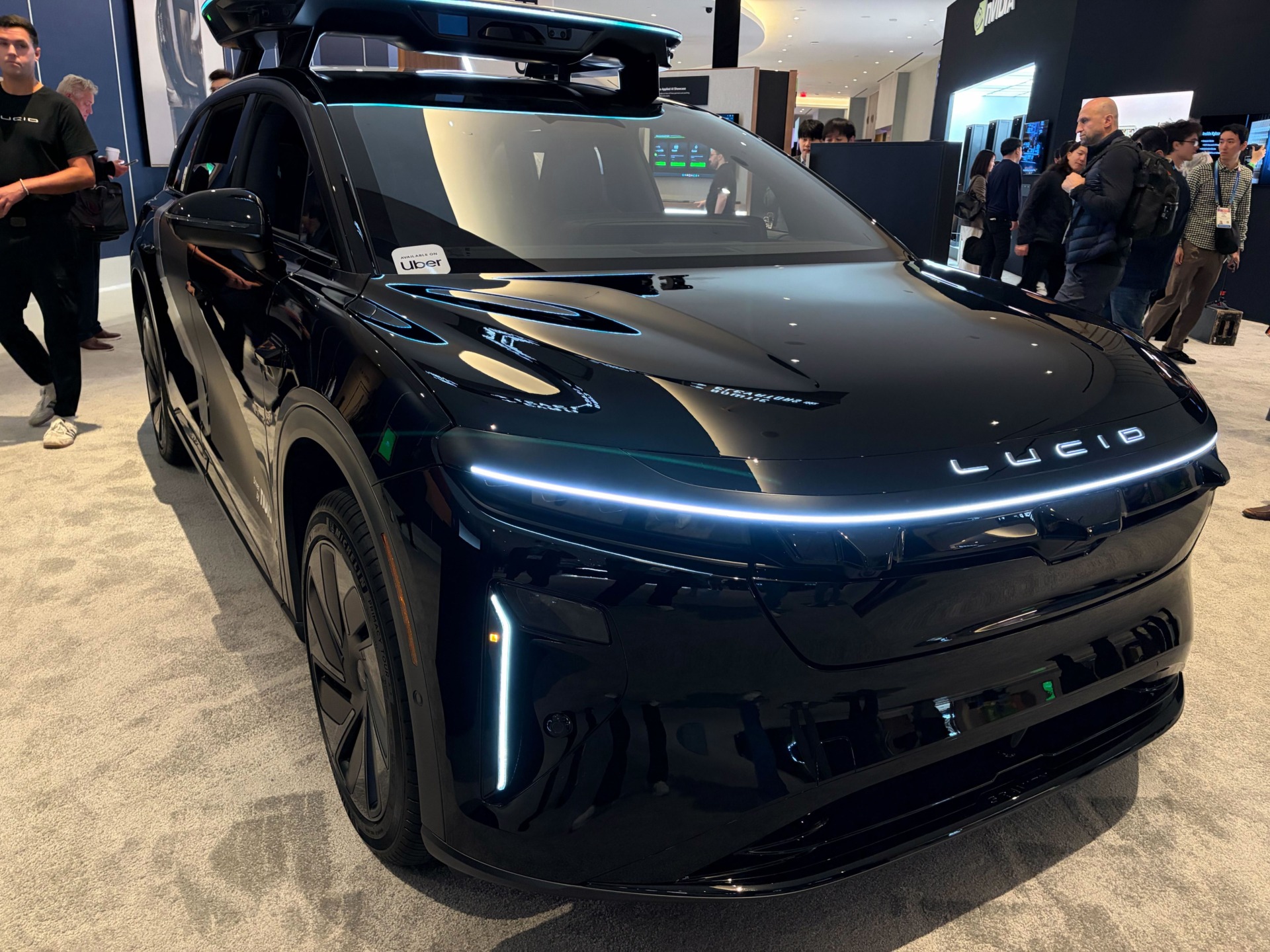
This time Uber isn’t going alone in its quest to take on Waymo. Using a Lucid Gravity EV, Nuro self-driving brains, and Nvidia processing power, Uber seems determined to dominate self-driving once and for all.
The prototype taxi is tucked away at the Nvidia showcase at the Fontainebleau hotel for anyone who wants to check it out. —Sasha Lekach


Lenovo’s Ultra-Portable Ultrawide

Your gaming laptop screen can sometimes feel like a prison; those bezels are the jailhouse bars that keep you from seeing your games in a wider aspect ratio. Lenovo’s latest concept, the Legion Pro Rollable, solves that issue with a flexible display attached to a pulley mechanism housed in the laptop lid. The rolling laptop can extend to either side to 21.5 inches as well as a full 24 inches. That results in a few odd aspect ratios at the extreme, though Lenovo is still working out the kinks. If you prefer a vertical screen, Lenovo’s other big concept device for this CES is the ThinkPad Rollable XD. The screen can extend from a little under 14 inches to around 16 inches by shoving the screen into the laptop lid. This has an added benefit of showing off a heads-up display if you want to check any alerts before you crack it open. —Kyle Barr
Lenovo Thinks You Want an Ultrawide Gaming Laptop That Uses a Rollable Screen
The Same Handheld With a Better OS
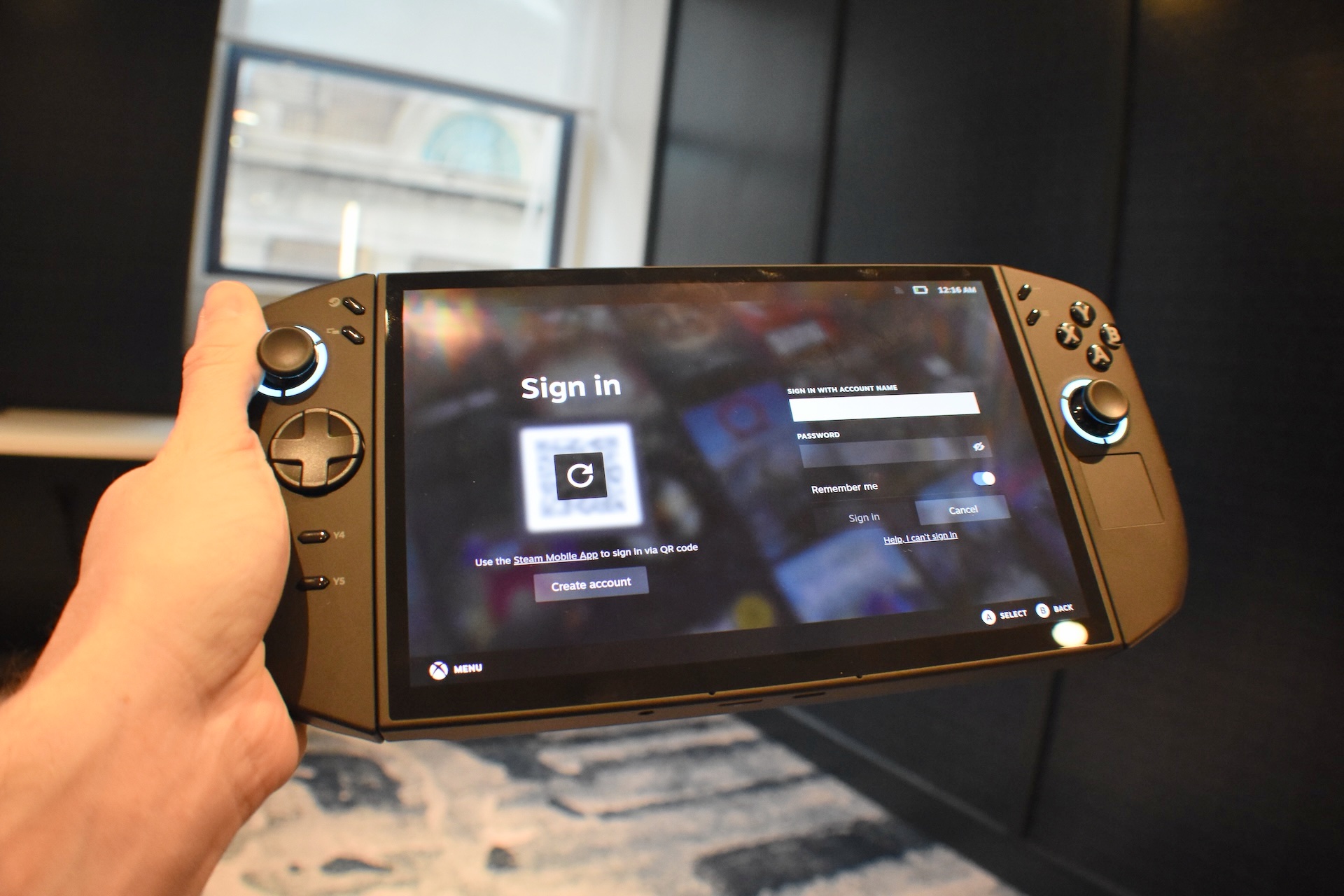
The Legion Go 2 remains one of the most expensive gaming handhelds on the market, and that’s not changing even though you can grab a version that supports SteamOS. Lenovo’s 8.8-inch handheld PC with its brilliant OLED display normally costs $1,350 with Windows, but with SteamOS you can knock that price down to $1,200 when it launches in June. That’s still pricey, but as somebody who has personally appreciated the extra-large, extra-expensive handheld’s performance as of late, it could prove to be one of the better handhelds available. —Kyle Barr
Lenovo: ‘I’ll Try Spinning—That’s a Good Trick’
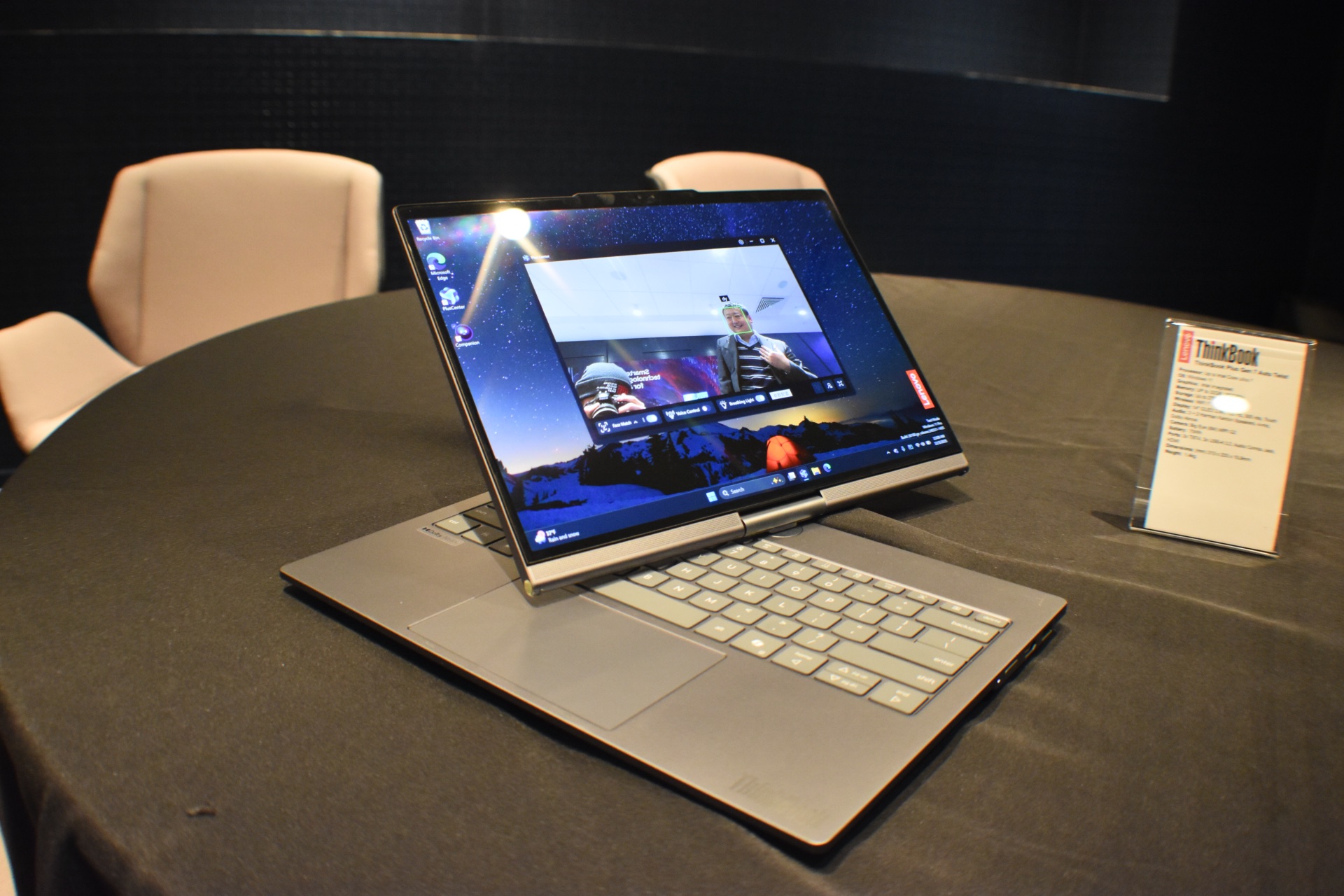
Lenovo’s concept devices have a stronger chance of becoming actual products compared to other laptop makers. The ThinkBook Plus Gen 7 Auto Twist puts its laptop screen on a motorized stand that allows it to twist and tilt. Why do you need that? Well, in the case of when you’re hosting a video call, the screen can track you as you pace. Or, on the flip side, it will ensure you’ll never “accidentally” fall out of frame during a marathon meeting. The laptop costs $1,650 and should launch later this year. —Kyle Barr
Lenovo Spins Its Latest ThinkBook Right Round (Like a Record, Baby)
Don’t Run Through Any Puddles in These Custom, 3D-Printed Shoes
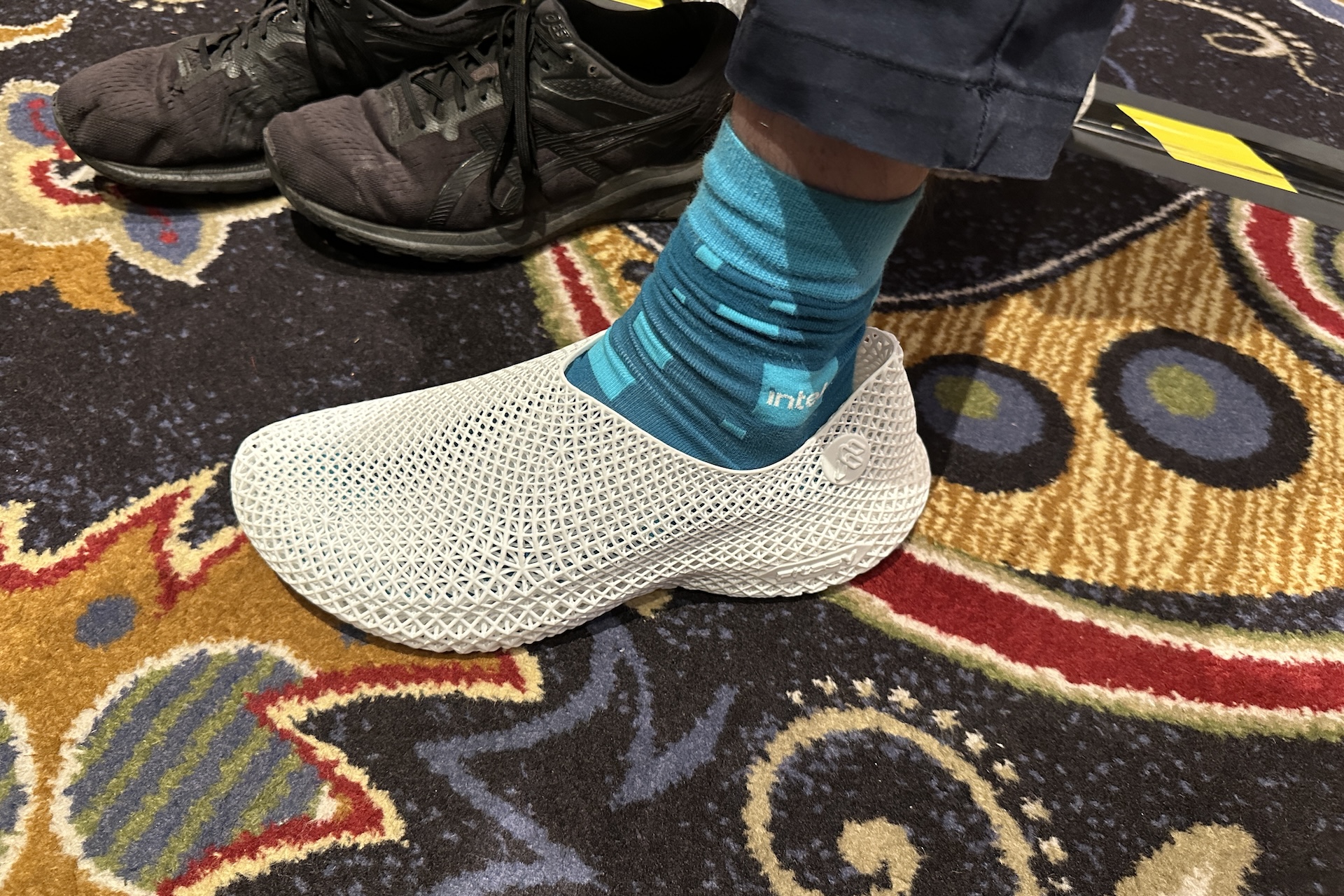
For years, various companies have promised us 3D-printed shoes would end the agonizing process of finding footwear that fits. Some concepts have been more successful than others, though Fitasy, with its Stride shoes, is offering a truly unique look that’s meant to mold to your specific kind of foot. The $210 footwear (yes, custom shoes are still absurdly expensive) requires users to use their phones to scan their feet. Fitasy’s Stride shoes are made from a single print of polyurethane, and I can attest they did feel comfortable despite how these shoes were not designed for my wide feet. The bottom treads are much harder than the flexible top of the shoe, but you’ve likely noticed they’re quite porous due to the single print design. This could make a fancy summer shoe, though I’d hesitate to take it anywhere wearing socks. The company told me their next design could use an extra membrane along the inside of the shoe to keep out wayward sand or water. —Kyle Barr
This May Be the Last Guitar Hero Controller You Need

Hyperkin, through its subsidiary Drakong, is helping us return to the Guitar Hero glory days. Its plastic, button-filled guitars may have peaked with its upcoming InfiniKore controller. The guitar uses either a wired, Bluetooth, or 2.4GHz connection to play any of your old Guitar Hero games or more modern versions of the rhythm game formula, like Fortnite Festival and Clone Hero.
Sure, it bears a classic design, but its best feature is just how modular and customizable it can be. You can remove the plate around the buttons to swap in your preferred button switches. The guitar body slots in as two separate parts, meaning you can 3D print a new body if you want a different kind of stratocaster or telecaster-type guitar to jam on. The tuner head, whammy bar, and frets can all be replaced as well. And just to cap it off, the neck folds back onto the body for easier transport. We don’t have specifics on pricing or a release date, but the InfiniKore controller should hit the stage early in 2026. —Kyle Barr
Fender’s First Headphones Might Actually Be Good

I’m always skeptical of big-name brands just slapping their names on stuff, but I tried the Fender Mix (the guitar titan’s first foray into the world of wireless headphones), and I’m pretty optimistic. Not only are the Mix headphones super modular, allowing you to swap out earcups and headbands and even letting you pull the whole speaker off if you want, but there’s a hidden trick inside.
If you pull off the earcups, inside is a USB-C dongle that lets you pair to your phone for lossless hi-fi. There’s nothing groundbreaking about dongles, but the fact that you can store Mix’s inside the headphones is a nice touch, especially if you’re prone to losing little things like that, like (checks notes) most people.
Oh, and they sounded pretty nice in my brief listen! I don’t know if the Mix will be Stratocaster levels of big, but they’re at least pretty thoughtful. —James Pero
It’s Like a Motorcycle for the Skies, Except It’s a Tricycle and Not a Real Product (…Yet?)


Rictor, an e-bike company, was showing off a couple of single-seater electric vertical take-off and landing (eVTOL) quadcopters that it says it plans to produce and sell. The smaller of these, the CY-X4, is a “multirotor flight pod designed for future low-altitude mobility.” It sits on rails, weighs 220 pounds, and can go about 50 mph. It’ll cost $70,000 and be available in the second quarter, according to an engineer I spoke with at Rictor’s booth. We’ll see.


The other was the Skyrider X6, a three-wheeled model with a motorcycle chain driving the back wheel, will also be under $100,000, according to the engineer. When I asked if and when it will be available, he paused and hazarded a very unsure “2029?” —Wes Davis
Electric Camping on the Show Floor

The Evotrex-PG5 took up a lot of space in the North Hall at the Las Vegas Convention Center. The electric RV trailer is 29-feet long and has a queen bed (and a second that folds out in the living area), a shower, and even a coffee machine and refrigerator in the compact space. Its 43 kWh LFP battery makes it like three Tesla Powerwalls where you can sleep, eat, and hang out. Luxury camping doesn’t come cheap: The e-RV starts at $119,999. —Sasha Lekach


Five-Year-Old Wes Really Wants the Bugatti Power Wheels

I saw it after many of the vendors left for the day, so there was nobody around to tell me if I could buy one for my kid. Oh well, I’m sure I can’t afford it, anyway. —Wes Davis


Here’s the Vacuum Company’s Concept Car
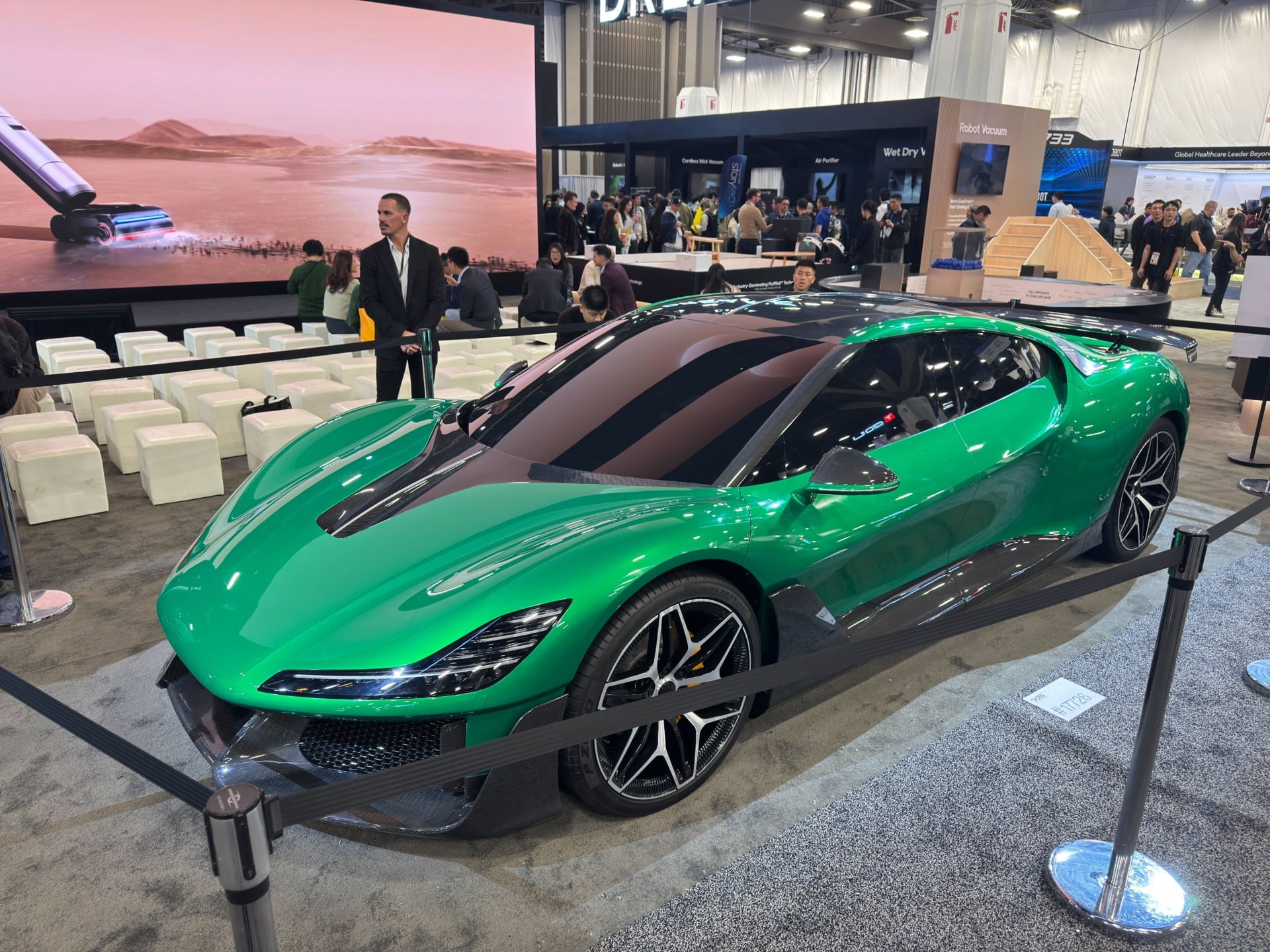
Dreame seemingly said to hell with it, let’s make a (concept) car. The company teased its EV Bugatti-like back in September, and here it is, looking, well, kind of like a Bugatti. —Wes Davis


So, Apparently, This Electronic Doggy Door Is Bulletproof
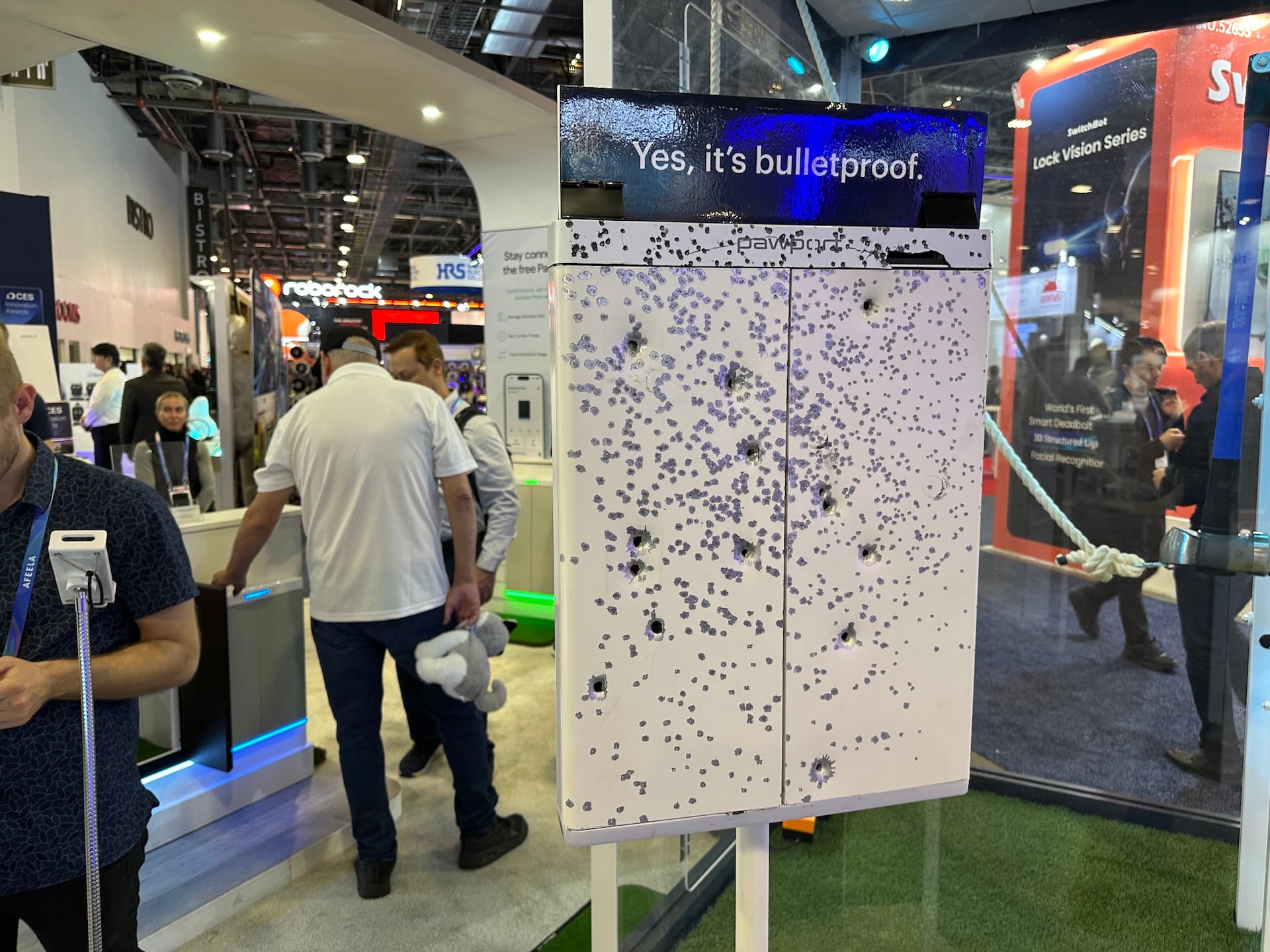
Pawport, a company that makes electronic doggy doors, wants you to know that its latest $700 smart pet door can survive a few rounds of buckshot. Why does the company care about that? Well, it could be for security, I guess. The device is activated when a special tag attached to your pet’s collar comes into proximity of the door. The signal uses an encrypted protocol instead of any kind of RFID or Bluetooth. That should mean that no ne’er-do-wells will be crawling through your expensive doggy door. If you happen to live in an active warzone (an unfortunately growing trend across the world), you might shield yourself and your pets behind Pawport. —Kyle Barr
Keychron’s Latest Keyboard Doesn’t Mess Around
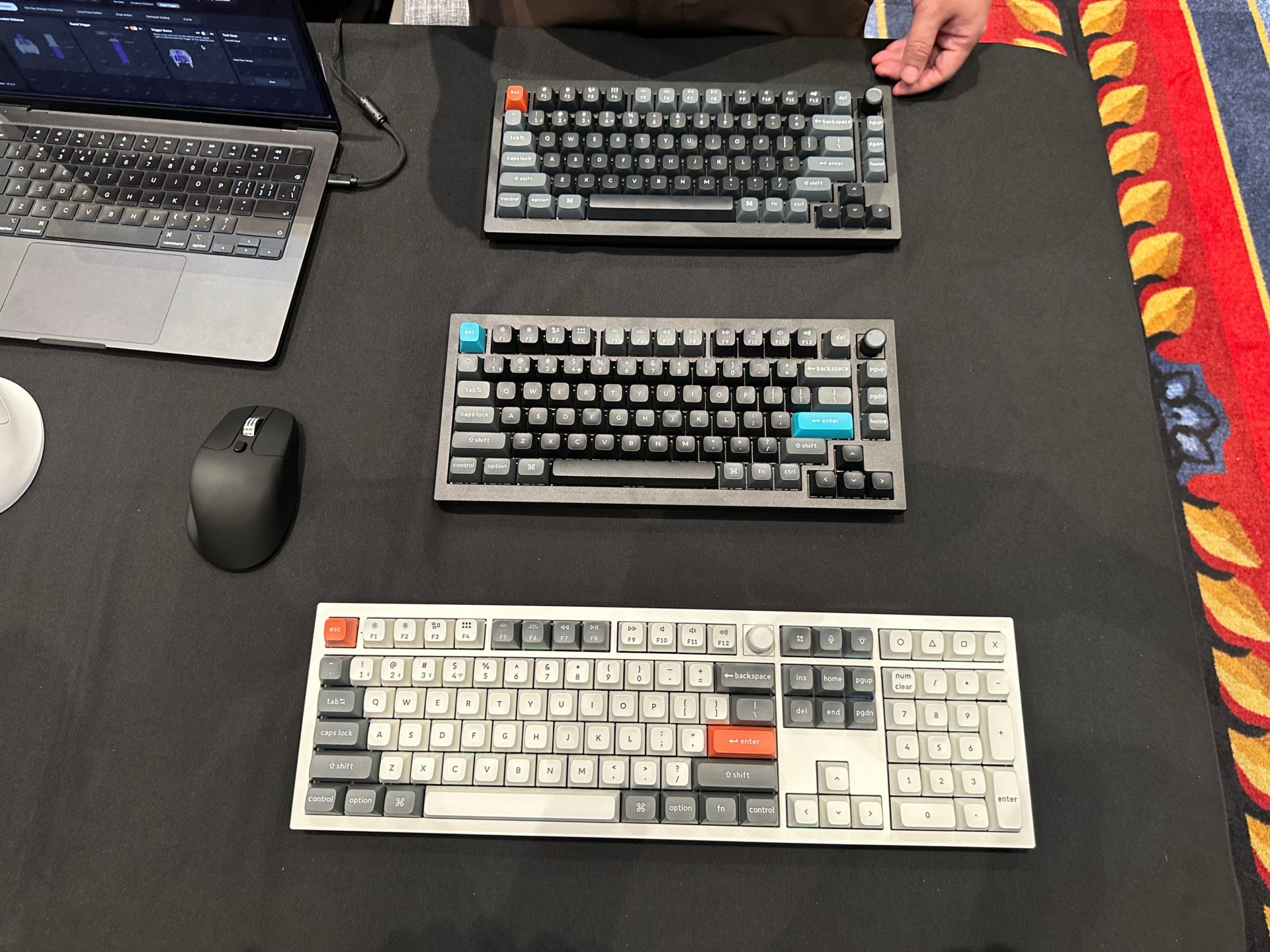
The Keychron Q3 Ultra 8K Wireless is already enticing enough just with the stated 8,000Hz polling rate, which is already very fast. And despite that, the wireless keyboard should also last for a total of 600 hours of active use. The $230 keyboard also uses Keychron’s new Silk POM switches that have the mechanical feel without any obtuse noisy clacking. You can get the keyboard in either black or white. —Kyle Barr
Beating the Few Paint Points of OLED
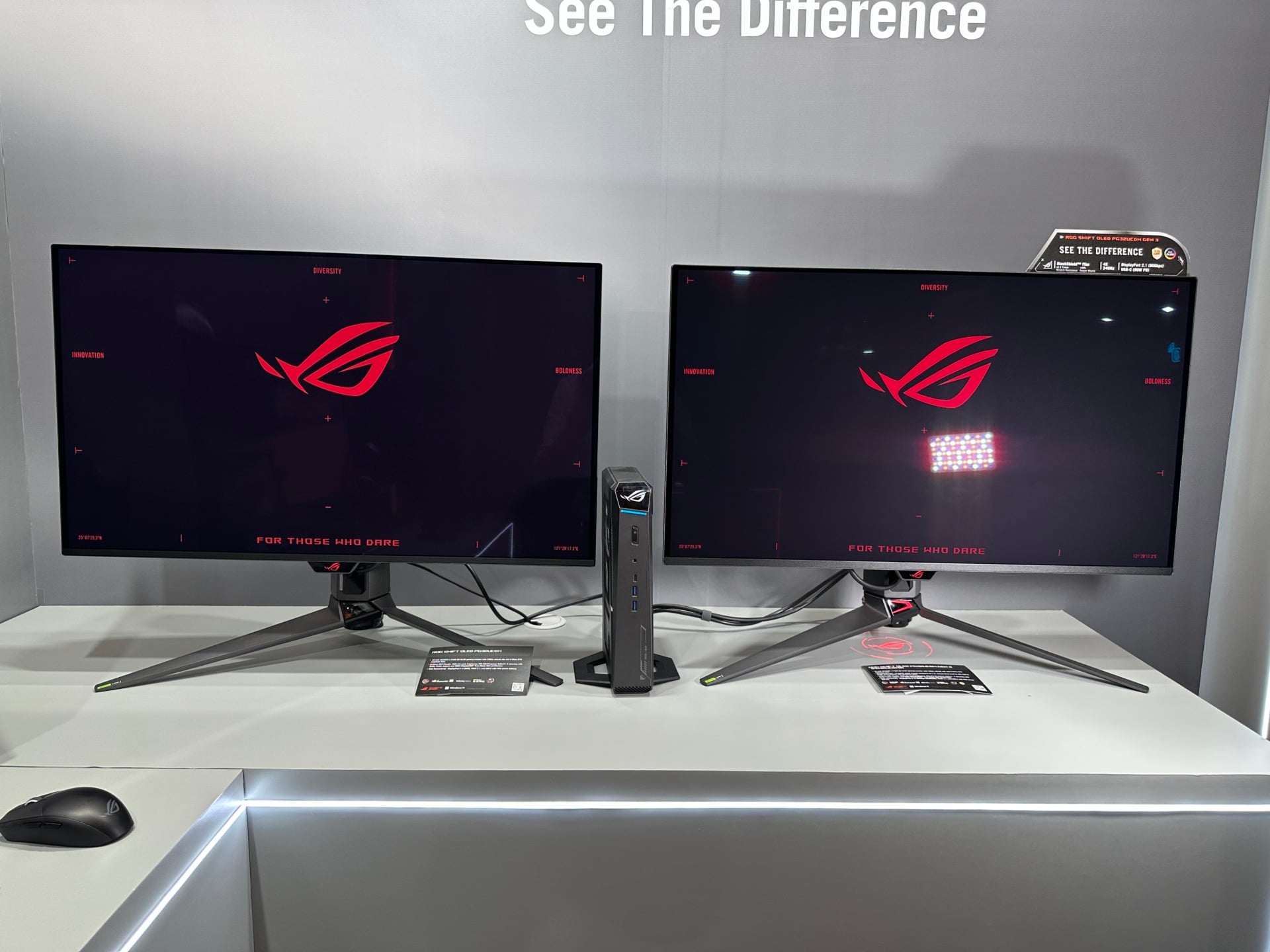
OLED, aka organic light-emitting diode displays, already feature some of the best contrast and deepest blacks you can see. So why are companies like Gigabyte and Asus showing off monitors with an extra black plastic layer on top of the screen? That’s because of QDOLEDs, which use an extra layer of quantum dots in front of the diodes to offer a clearer picture than OLED by itself. This has the added effect of creating a reddish-purplish hue on the screen if there’s a light shining directly at it. Asus ROG and Gigabyte are both using an extra black layer to eliminate this issue. The ROG Swift OLED PG34WCDN and Strix OLED XG34WCDMS both include a plastic “BlackShield” film.
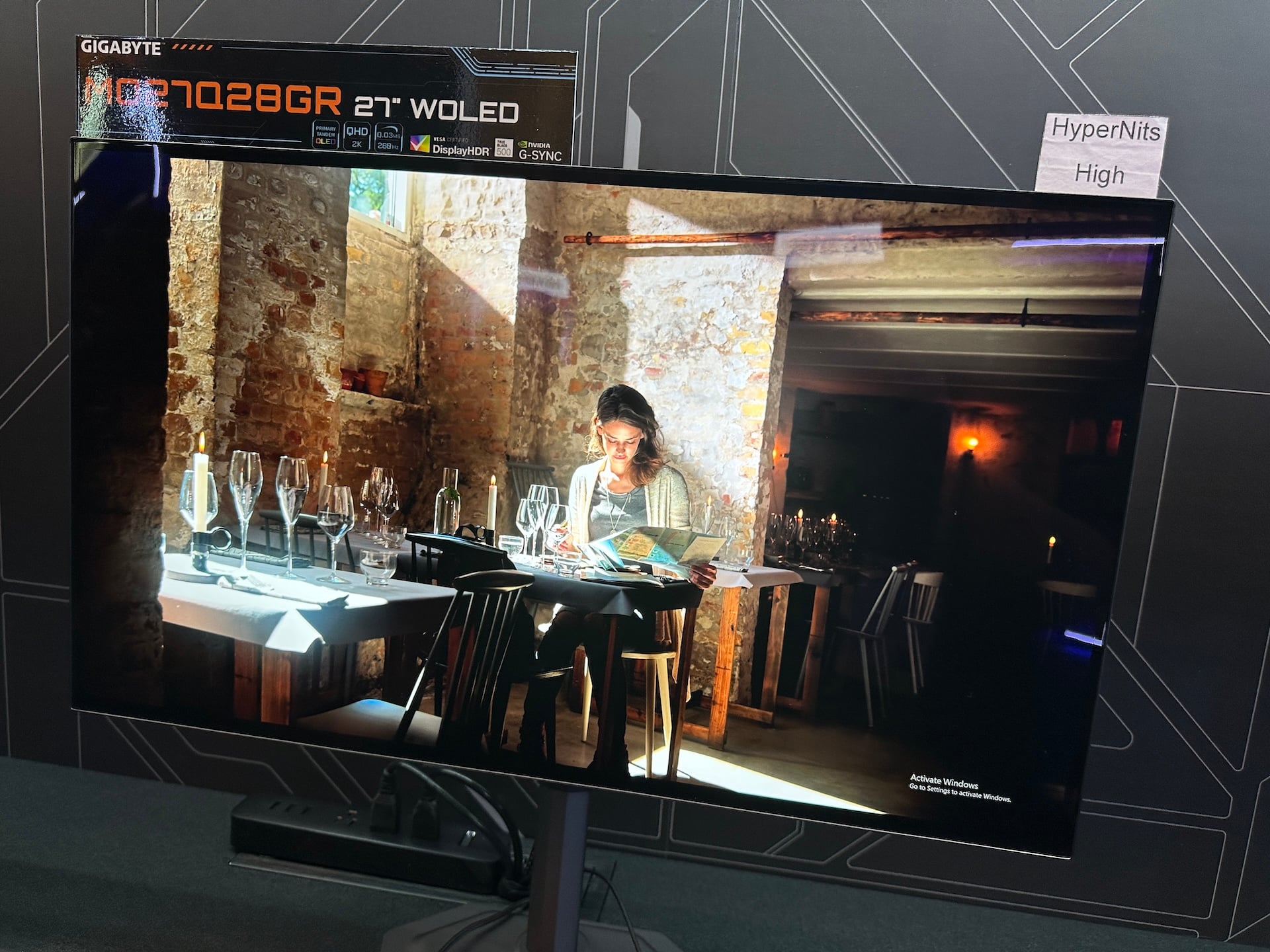
Meanwhile, Gigabyte is making use of its WOLED (an extra layer of white lights behind the diodes) to enhance the brightness on its M027Q28GR. You can also turn off this “HyperNits” feature if you prefer the original picture quality. —Kyle Barr
Remember Kodak?


Kodak used to be synonymous with taking photos, but as we all know, they’re currently synonymous with, uh… not being that now. That’s old news, but one thing you may not know is that Kodak is still hanging in there and making stuff like Bluetooth speakers. Seriously, they had so many speakers?
And even new vlogging cameras. I can’t speak to the quality of any of this stuff, but there are actually a lot more new Kodak-branded gadgets in the world than you’d think. —James Pero
That’s No Space Station, That’s an RTX 5090
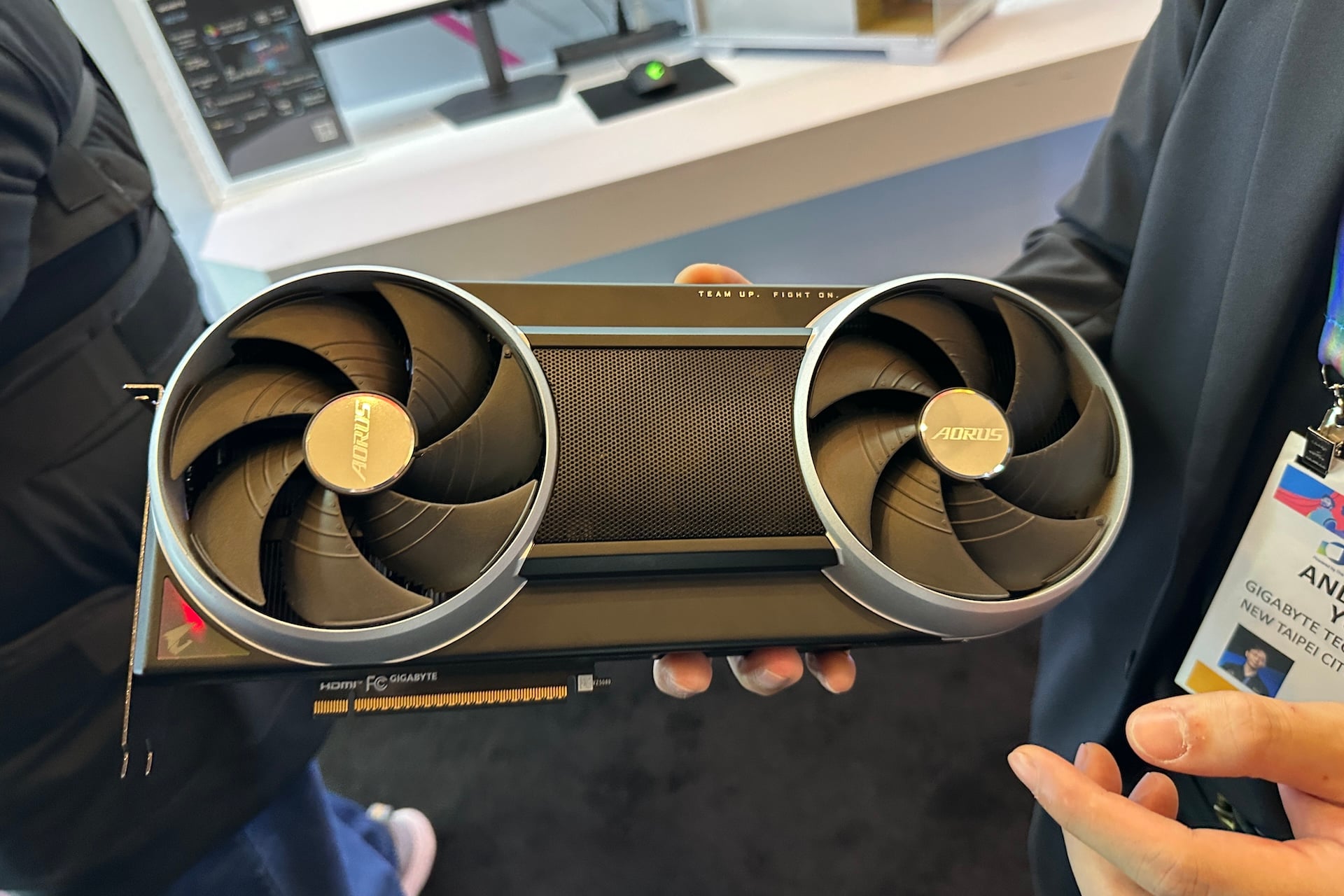
Major PC and component company Gigabyte is 40 years old as of this year. The venerable company is celebrating with an extra-large graphics card, specifically its Aorus GeForce RTX 5090 Infinity 32G. The GPU is massive and hefty in hand. The card demands an extra-large case since it measures 12 by 5 inches. It’s packing two massive fans and another, smaller “overdrive” fan that sits directly on the headpipes. Gigabyte calls this apparatus its “Windforce Hyperburst” cooling system. All that extra cooling apparatus will ask for a PSU that can generate at least 1,000W. It may be Gigabyte’s mid-life crisis GPU, but the company hasn’t revealed how much it will cost. When it finally launches, I suspect it will likely cost well over $3,000. —Kyle Barr
Bugatti E-Scooter, if You’re Fancy
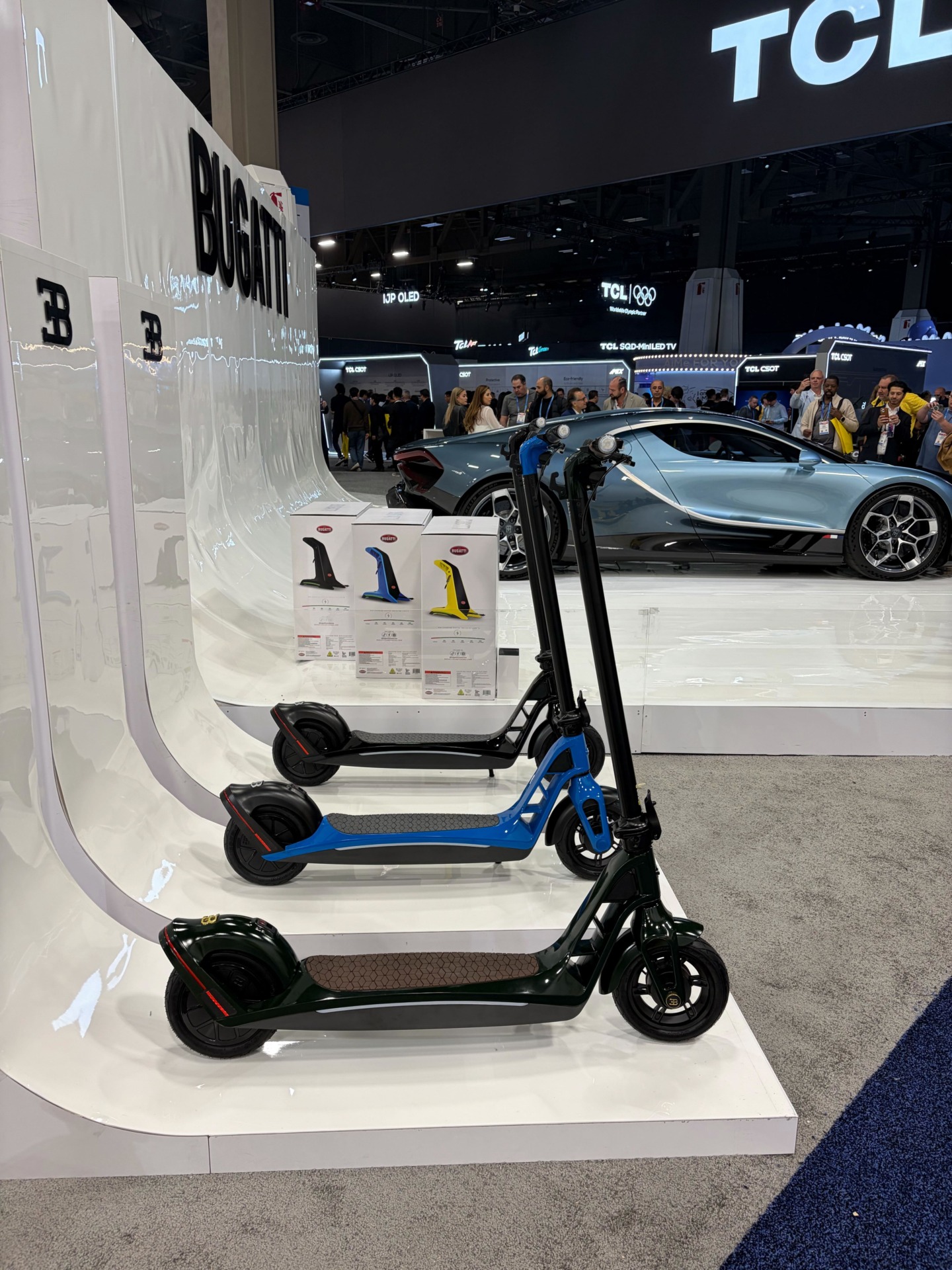
Instead of spending millions on a Bugatti, you can have essentially the same experience when you snag a Bugatti-branded e-scooter from Bytech for only $1,000. A steal! The Bugatti-inspired two-wheelers are on display alongside the real thing at CES’s Central Hall. Choose the Agile Blue scooter to match the ultra-luxury hypercar. —Sasha Lekach
Use Your AR Glasses on Every Console, No Matter the Framerate
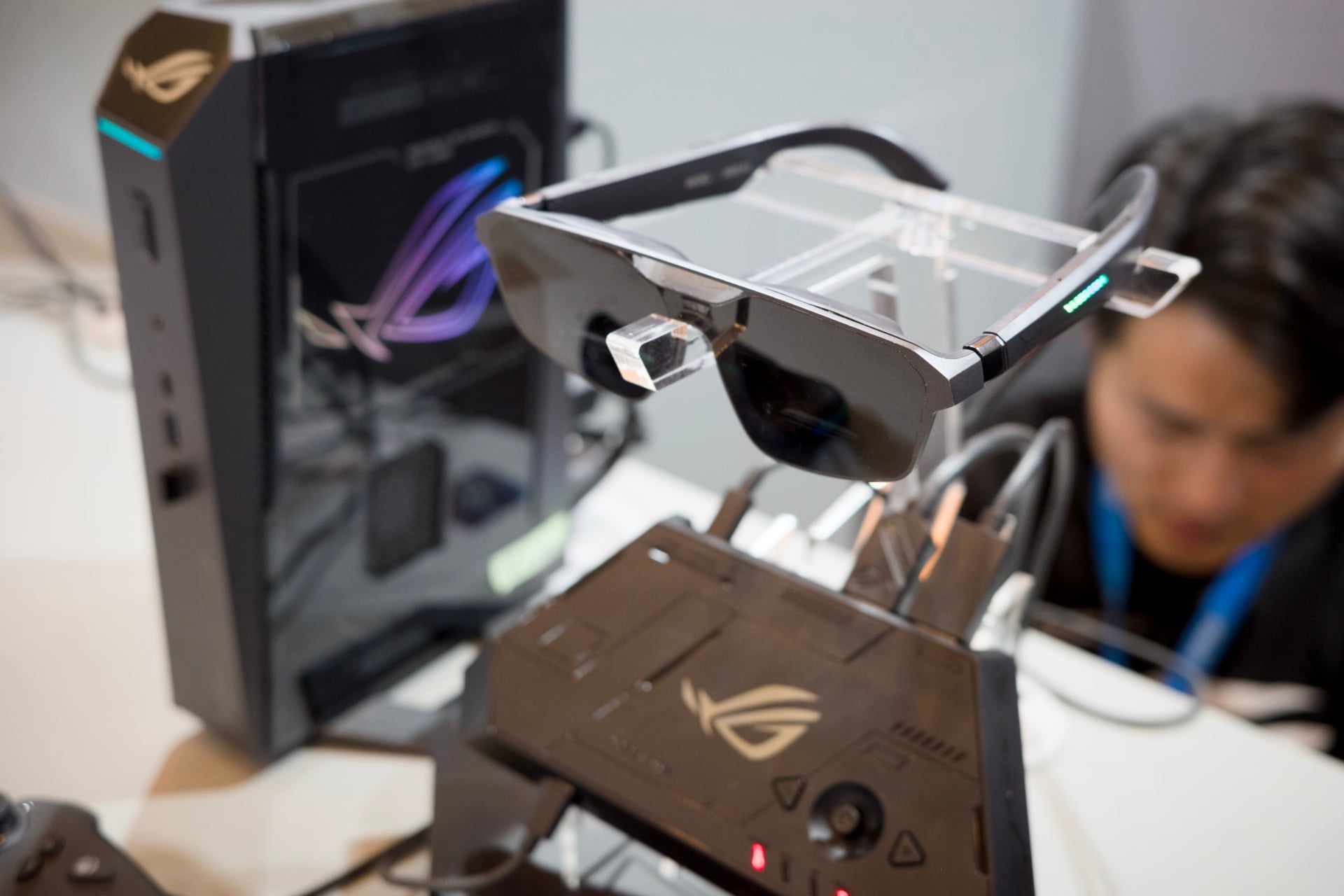
Asus ROG’s collaboration with smart glasses maker Xreal won’t just allow you to mirror your phone or handheld, but all your consoles as well. The ROG Xreal R1 comes with a massive dock (just like the Viture Mobile Dock) that can hook up with HDMI to a Nintendo Switch 2, Xbox Series S/X, or PlayStation 5 to mirror the screen on the glasses’ internal lenses. The other big selling feature of the glasses is the promised 240Hz refresh rate. Those blistering fast speeds make the R1 extra gamer-fueled compared to Xreal’s other, similar glasses.

These smart glasses include a base field of view of 57 degrees, though you can anchor the image in front of you or have the screen follow your eyes. The image looked to be fairly strong quality, though dealing with such a mess of wires may not be the right level of convenience for on-the-go gaming. The ROG Xreal R1 smart glasses are set to ship in the first half of 2026, though we still don’t know how much they’ll cost. —Kyle Barr
Meta’s Sad Trombone Noise at CES

We’re here for the vaporware and weird robots, but Meta decided to use its CES moment to announce that… Europe and Canada will not be getting the Meta Ray-Ban Display. According to the company, plans to expand the Meta Ray-Ban Display to global markets outside of the U.S. are paused because of “high demand” in the U.S. There’s probably a bigger picture story here that we’re not getting, but that’s the info we have to work with for now.
On the bright side, Meta says it’s focusing its energy on the U.S., so if you’ve been patiently waiting for your Meta Ray-Ban Display to arrive, maybe they’ll get to you just a little bit faster. In the meantime, you can read my review here. —James Pero
Meta Hits Pause on Ray-Ban Display Expansion to Europe and Canada
You Can Feel Gaming in Your Butt

Razer had some fun with gaming chairs at CES, too. This bad boy, called Project Madison, combines some of Razer’s previous endeavors, like Project Freyja and Project Clio, to deliver a gaming chair that has built-in surround sound and haptics that vibrate your butt. Yes, the haptics do other things, but I’m not even trying to be cheeky (pun intended—or should I say bun intended?), when I say you really feel Project Madison in your loins. —James Pero
Razer Shoves All Its Wackiest Immersion Products Into a Single Gaming Chair
Everyone Wants a Piece of the Ray-Ban Pie

Razer didn’t stop at AI holograms; it also dipped its toes into the AI wearable game with a concept called Project Motoko. Motoko is a pair of headphones with cameras on them that allow for computer vision. Razer—according to what they said to me in a briefing—definitely sees this as an alternative to Meta’s smart glasses. Just like a pair of Ray-Ban Meta AI glasses, you can use Motoko for translation, cooking tips, or just to ask about your surroundings.
Unfortunately, for me at least, computer vision is still one of the least compelling parts of smart glasses, but if you like this sort of thing, then I guess Project Motoko is something to be excited about. This is just a concept, so no release date or anything, but if there’s one thing Project Motoko proves, it’s that XR is going to have another big year. —James Pero
Razer Thinks AI Headphones With Cameras Can Take On Meta’s Ray-Bans
Razer Went Full Waifu With Project Ava

Razer is known for its CES shenanigans, and this year it didn’t disappoint. Remember Razer’s AI chatbot for gaming, Project Ava? No? Well, that’s okay, because there’s a new version this time around and a freaking hologram to go with it.
That’s right; Razer is embodying Project Ava and letting you put the chatbot on your desk. You can choose a waifu-coded avatar or some guy named Zane, along with “esports legends.” To top it all off, there’s a camera that can look at stuff and give you style tips. Oh, and Ava now also checks your email and helps you decide what to eat for dinner, like every other chatbot. —James Pero
Robot Vacuums Are Getting Legs
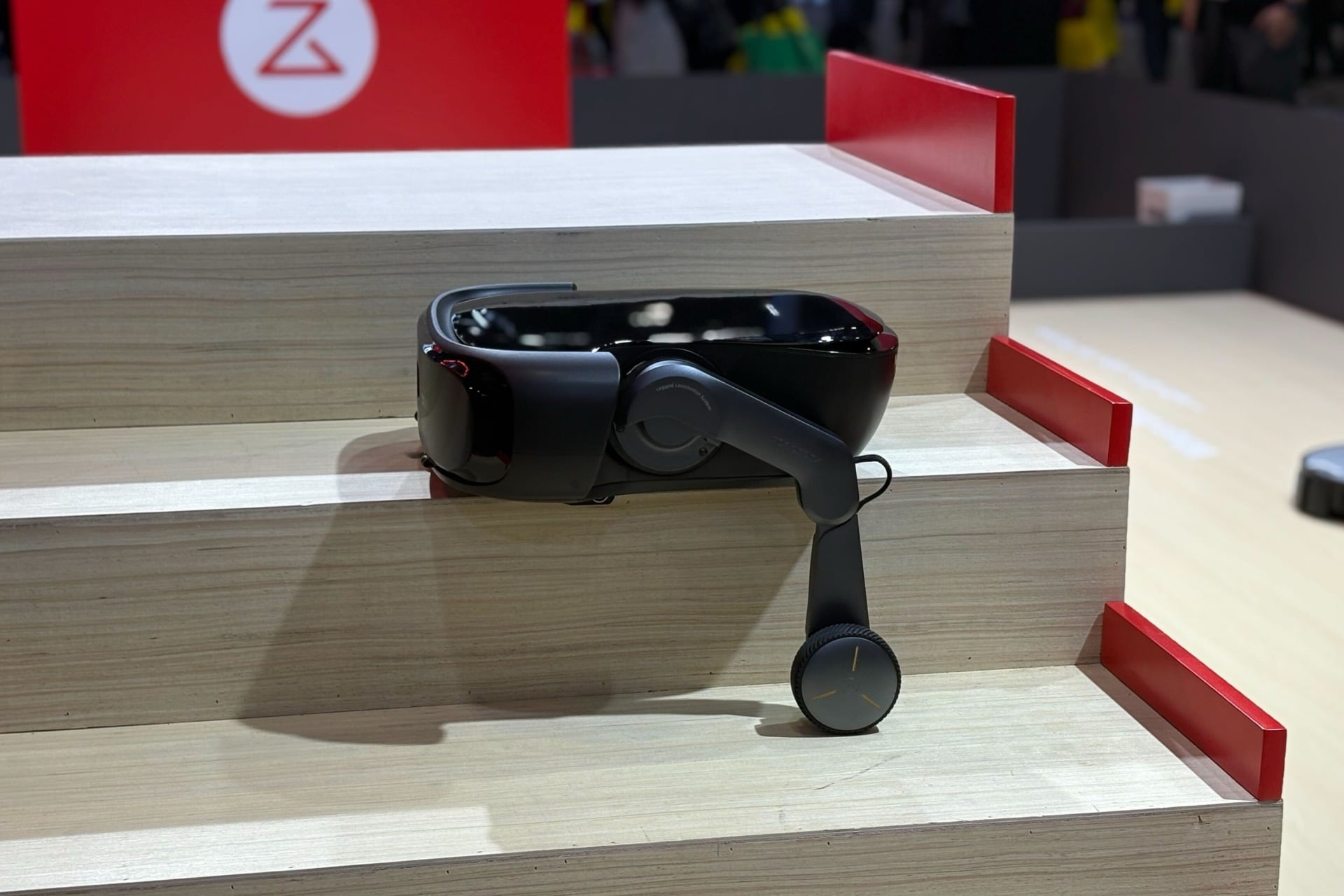
Here I thought the “mech” suit to help robot vacuums climb stairs was wild, Roborock’s gone and added two whole legs to the Saros Rover to also help it climb stairs and clean them. This isn’t a concept Roborock tells us; it’s actually in development, though there’s no launch date yet. Read on for Wes Davis’ take on the futuristic hopping, balancing, and swiveling robot vac. —Raymond Wong
Roborock's Saros Rover is a robot vacuum with legs that can climb stairs and clean them #CES2026 pic.twitter.com/1dCHSAeyJZ
— Ray Wong (@raywongy) January 7, 2026
It’s Like a Giant Nintendo 3DS
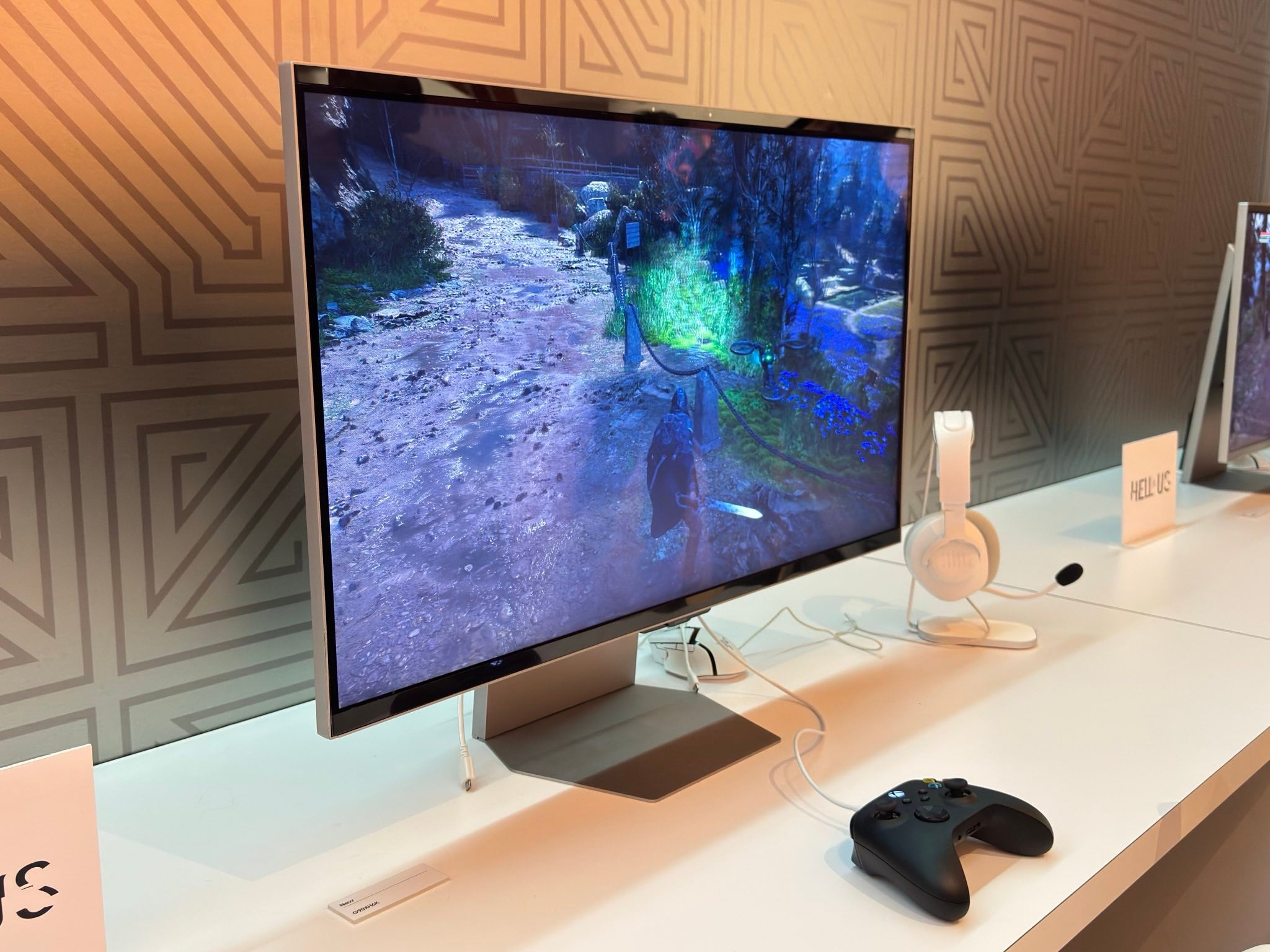
In person, Samsung’s 32-inch 6K Odyssey 3D lenticular display was a lot like looking at a way, way bigger upper screen from the Nintendo 3DS, and way, way sharper than that. But it suffered from the same issues, too—I could still make out the vertical lines of the panel, for instance, and I could still see faint ghosts of the character I was playing as on either side of them.
Also, when I moved my head, the image had to adjust to my new position. It was brief, maybe a split second, but I could tell it was happening. It’s a very neat effect on the tiny screen of the 3DS, where the tech’s warts were forgivable. I can’t imagine paying whatever Samsung will charge for this display for those same warts and being happy I did. —Wes Davis
Look at This Guy, He Loves to Have Fun

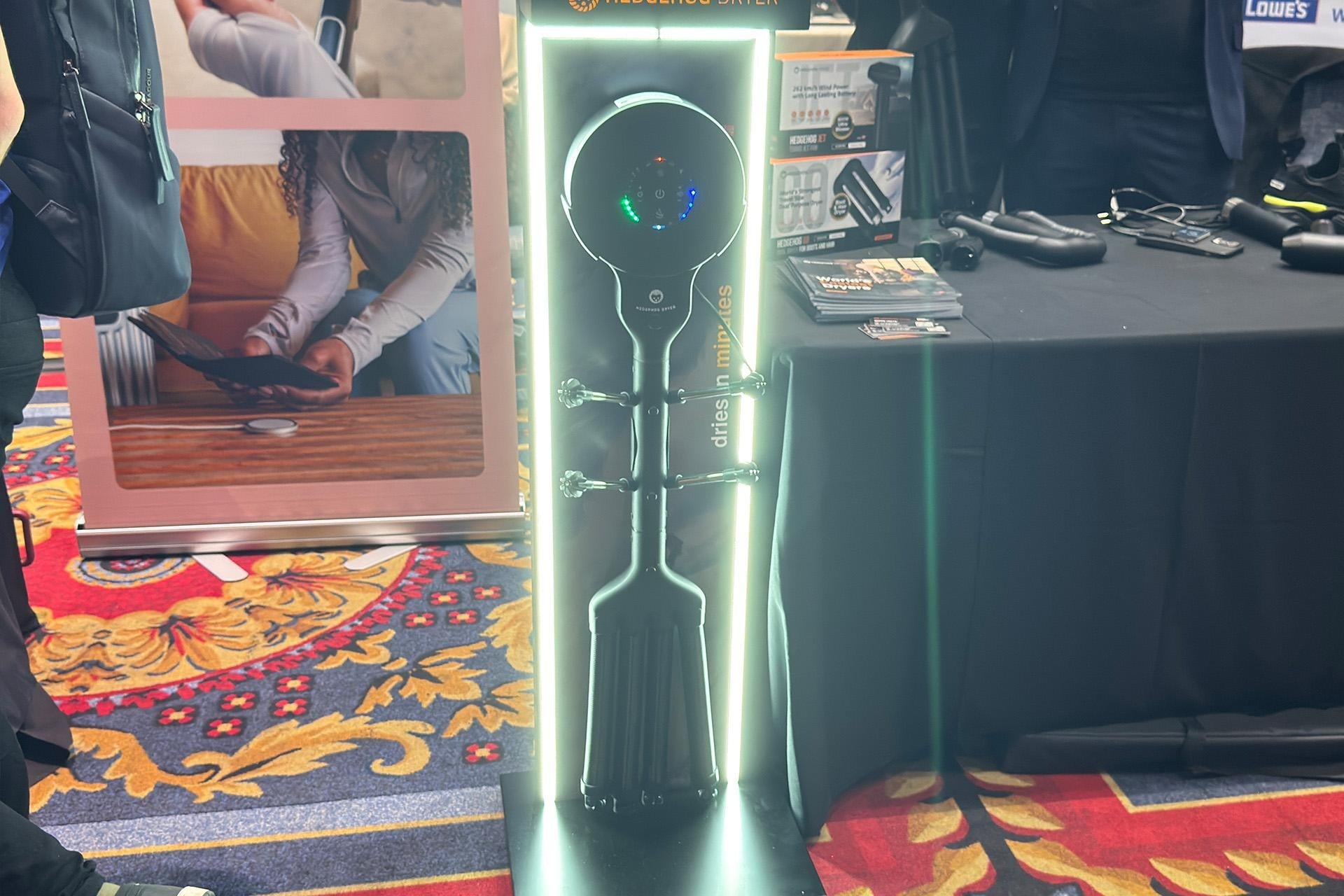
Hedgehog Dryer was out showing off its very powerful air blower (see above), but also, an outdoor gear dryer called the Buddy 4×4. You just stick your wet shoes or gloves or whatever on the ends of those stalks, and it’ll dry them for you. The Buddy 4×4 features a 700W motor, and the air it blasts can apparently get as hot as 140 degrees Fahrenheit. It’s also $249 and available now. —Wes Davis
LIFX Announced a Mirror
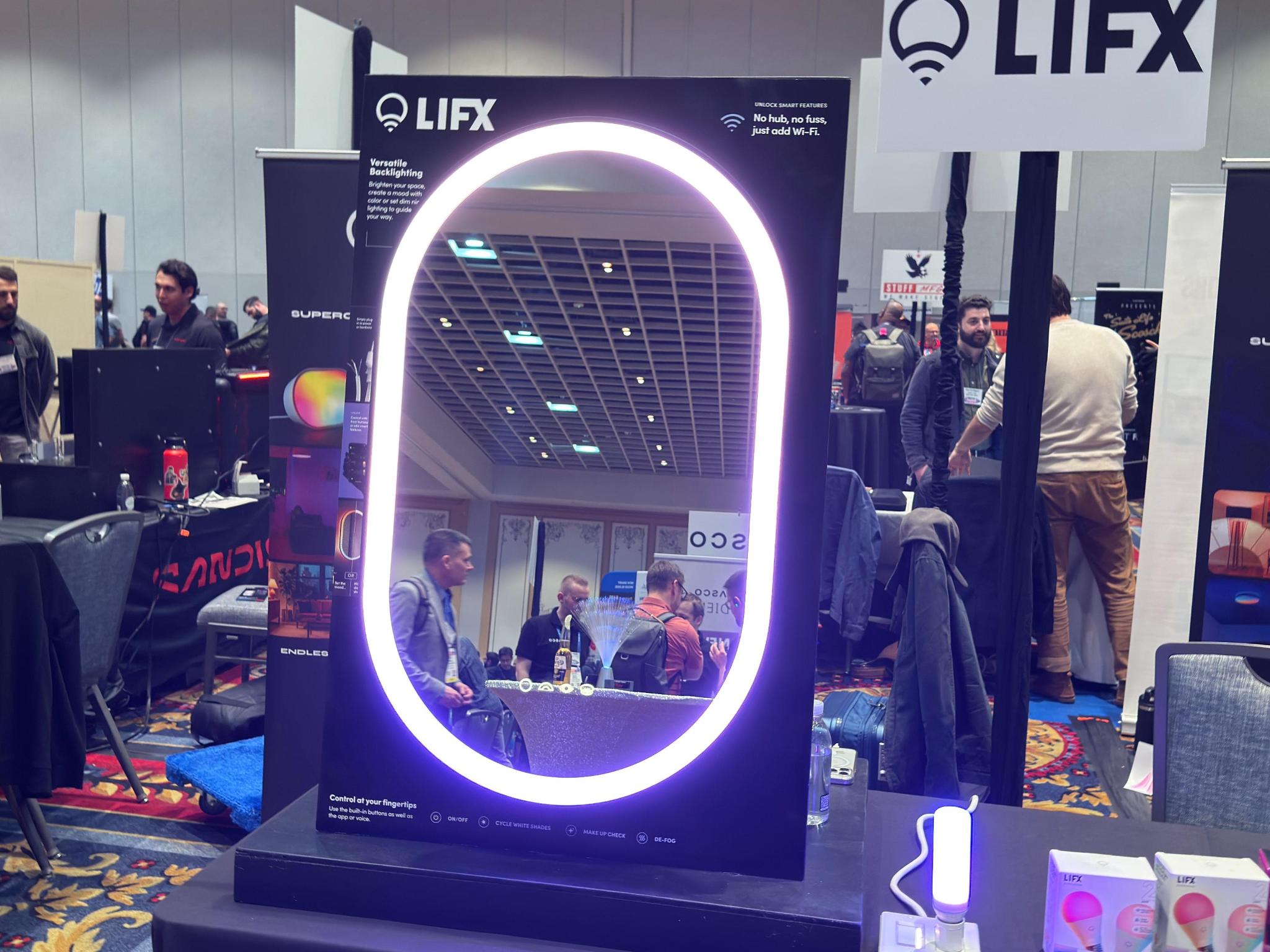
The SuperColor Mirror is not exactly a smart mirror, but it does have a ring of RGBIC lights around it. And it’s got four touch targets that activate preset lighting modes, but can also be buttons in your smart home platform of choice. (It’s Matter-compatible.)
Also, LIFX CTO Mark Hollands told me the company has been hiding Thread radios in many of its recent products, and it’s turning the radio on around the SuperColor Mirror’s release in the second quarter of this year. Pricing hasn’t been finalized, but the team tells me it’s shooting for under $200. —Wes Davis
Not Quite C-3PO
AGIBOT also trotted out its more humanoid-looking A2 robot. It’s designed more for customer service applications as opposed to dancing, education, or entertainment use cases like the X2.
It lasts double the runtime—4 hours—compared to the X2. I’m told it’s fully customizable based on the customer’s needs—go ahead and change out the arms if you want. It’s got an array of camera sensors to “see” and it’s apparently capable of doing translations… just like C-3PO. But that’s only if the customer wants to include that. —Raymond Wong


What if Headphones Were Also a Bluetooth Speaker?

I’m going to take the liberty of filing headphones that turn into speakers under the “sure, why not?” category, but also, it’s hard not to gawk at the novelty. These bad boys, made by TDM, can fold up and then snap together magnetically. Once they’re all folded up, they play music out of the speakers so the world can hear and revel in your music taste.
It was hard to get a sense for how the audio quality was in a crowded convention center, but to me it sounded… alright. At least in my brief demo. I guess these headphones make sense if you’re really averse to carrying around headphones and a Bluetooth speaker. That probably isn’t most people, but this is CES, folks; we’re not in it for the practicality, we’re in it for the vibes. —James Pero
You Can Overclock This ‘High-End Male Stroker’
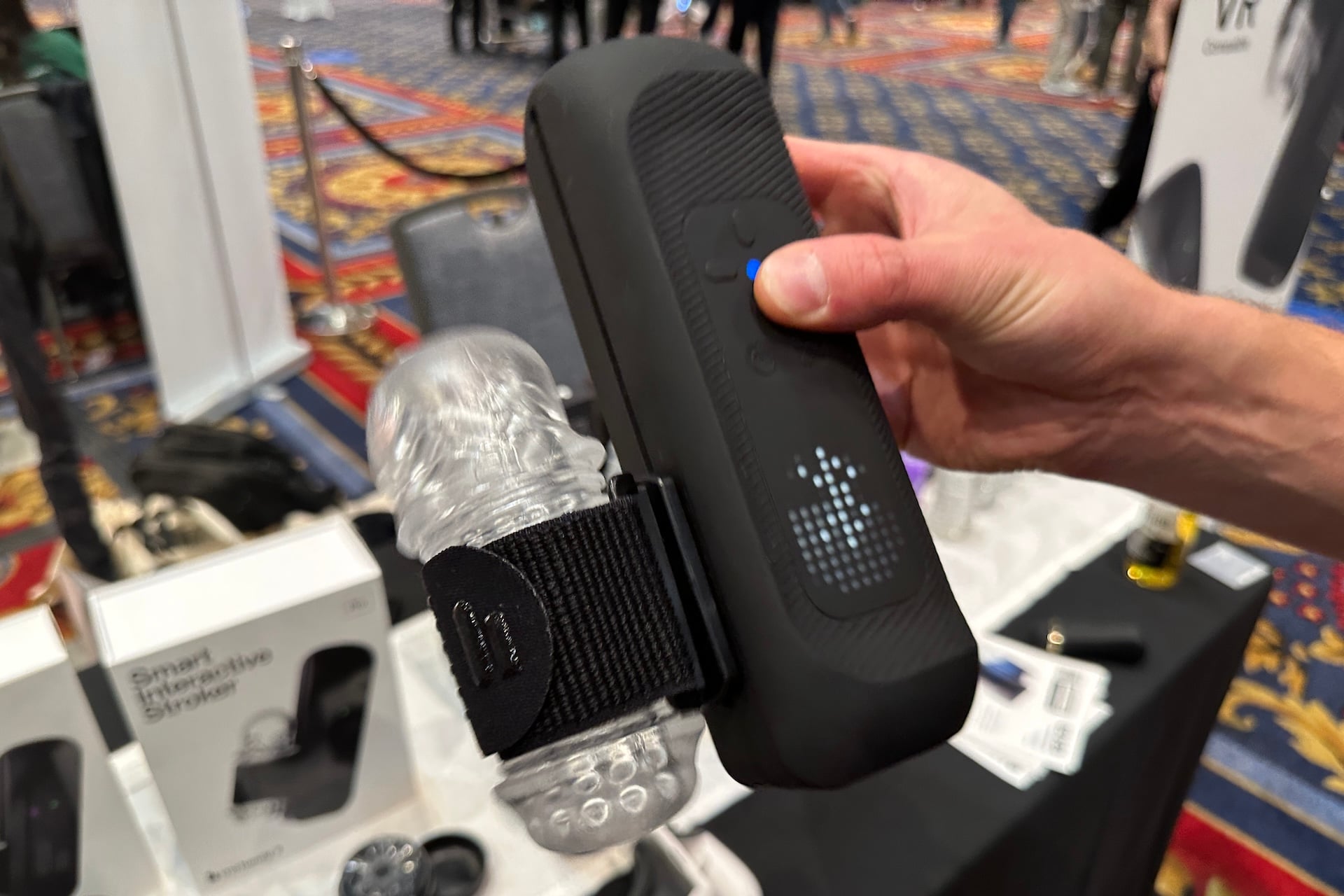
Handy is back with a device that does exactly what you think. The Handy 2 Pro, on the other hand, is doing far more than that. Let’s get the childish notions out of the way. This is a male sex toy that includes a number of attachments for stimulation. While the regular Handy 2 can do 600 strokes per minute, the Handy 2 Pro goes so hard it literally voids its own warranty. If you push the actuation, you can make it do a staggering 1,200 strokes per minute. The Pro also has a larger battery that promises five hours of battery life instead of one hour on the regular Handy. —Kyle Barr
Everybody Was Kung Fu Fighting!
There are a lot of robots at CES this year. At least it feels like there’s more than I’ve seen in past years. This one, the X2, from AGIBOT, kept drawing a large crowd. It dances, it can do kung fu, and it’s friggin’ adorable. AGIBOT told me it’s becoming quite popular in China. Companies can rent one out for corporate outings, birthday parties, or even as a backup dancer. It can’t last that long, though. Apparently, only 2 hours. If you’re a party entertainer, it might be time to look into new skills. —Raymond Wong
The AGIBOT X2 doing kung-fu is pretty cute! #CES2026 pic.twitter.com/kpOLtmaJJX
— Ray Wong (@raywongy) January 6, 2026
It’s MCON, but Smol
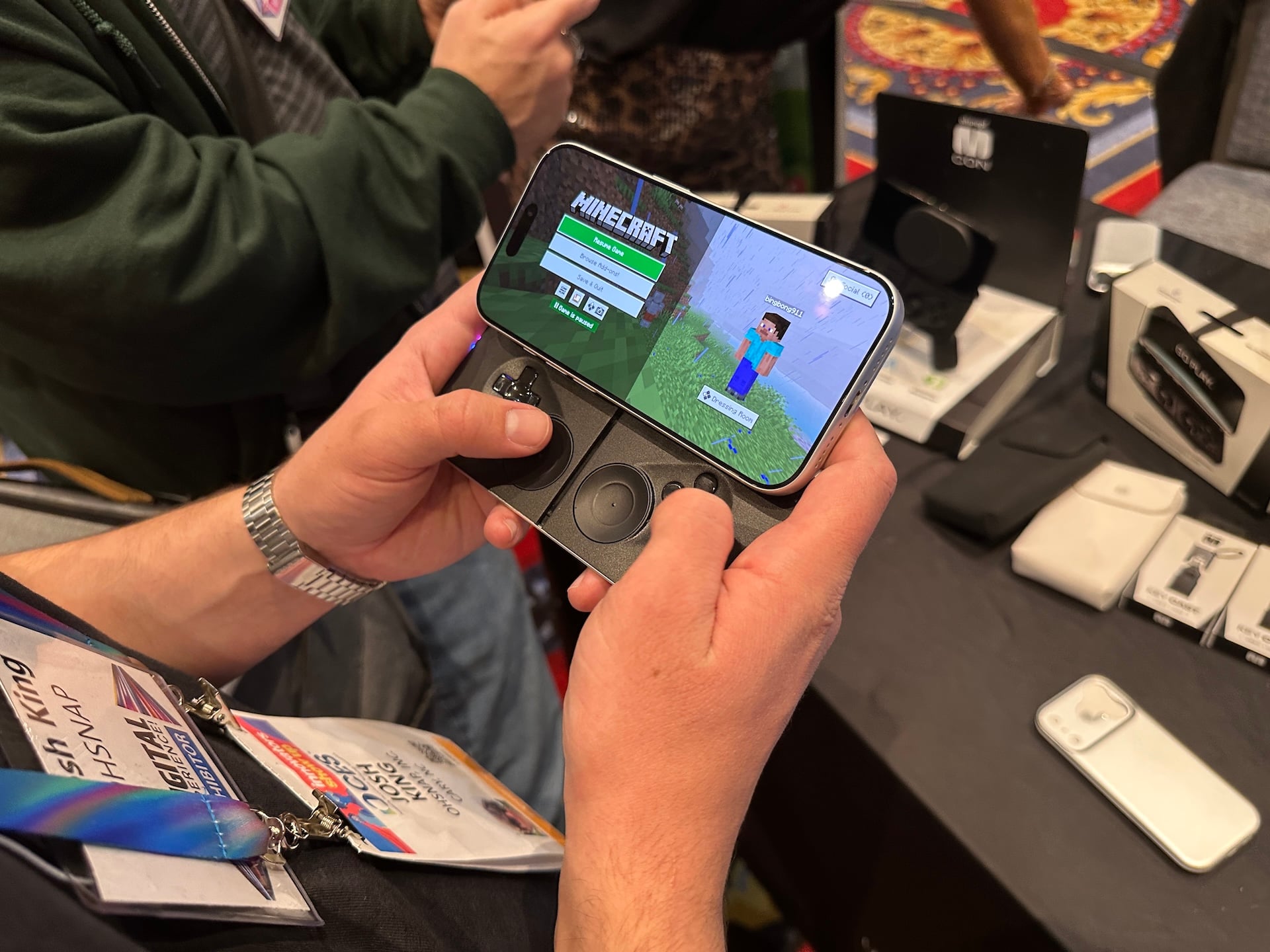
When I’m considering mobile controllers, only MCON can claim to be small enough to fit in your pocket. Still, it wasn’t that compact that it didn’t make my pants feel a little too tight with it combined with a phone. OhSnap is back again, and this time they’re trying to make their mobile controller smaller than the phone itself. The upcoming slimmer controllers use a similar MagSafe plate to the original controller, though they are shaped to fit a specific phone.
The slide-out controls now sport a Nintendo 3DS-style flat joystick and linear analog triggers. It felt surprisingly ergonomic even though it lacked any of the original fold-out wings. The company is also working on a version of the device with trackpads, though the software wasn’t yet up to snuff to support them. Device creator Josh King told me they hope to sell these Bluetooth controllers for around $50 to $70 as a new budget option. They should arrive sometime later this year, perhaps to coincide with a fall iPhone launch. —Kyle Barr
MagSafe Wireless Earbuds, Folks
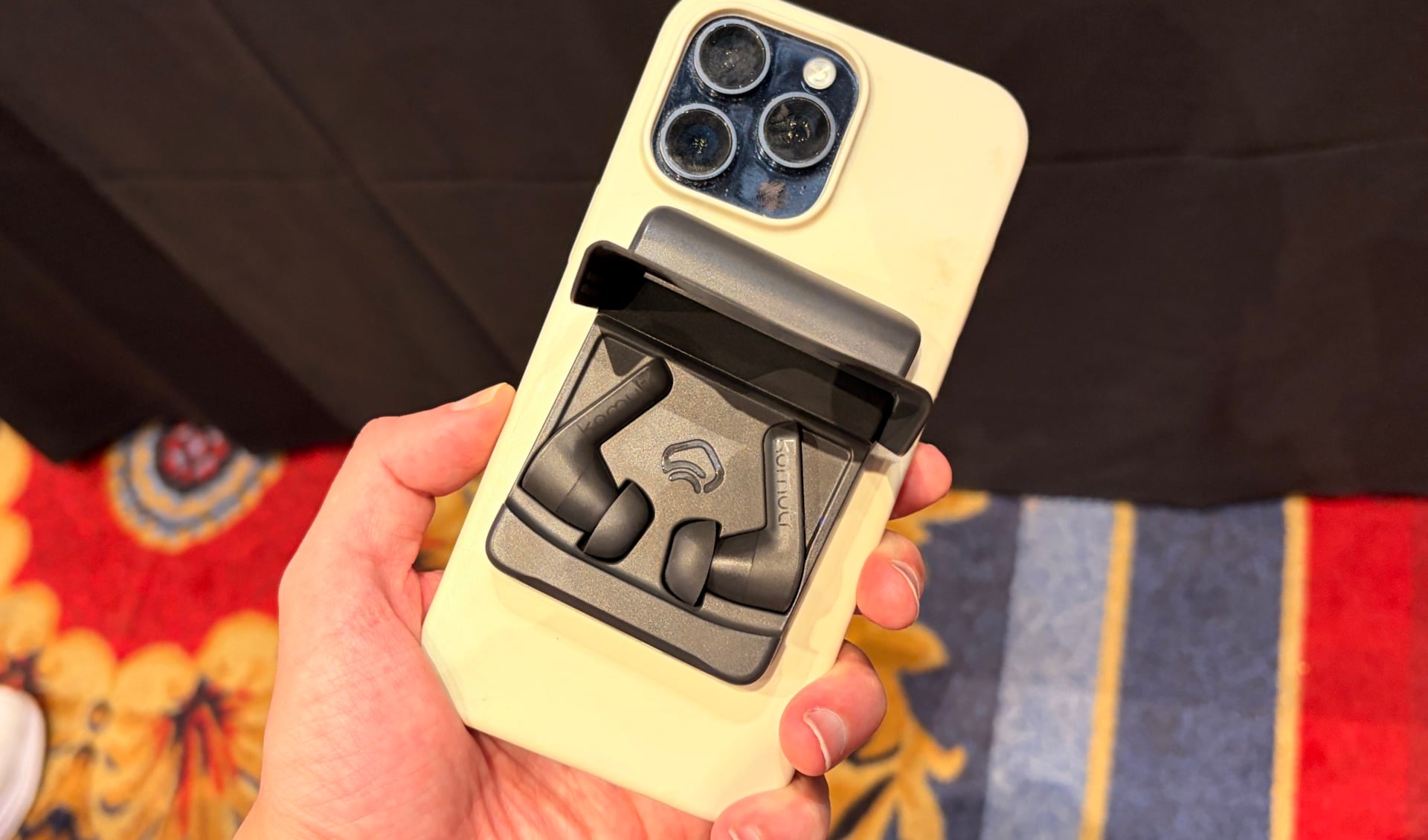
Sometimes innovations are just lying right there for the taking; all it takes is for someone to connect the dots, or in this case, the magnets. Introducing: MagSafe earbuds. There’s not much to them, but that’s kind of the beauty.
These wireless earbuds, made by a company called Komutur, snap right to the back of your iPhone and just live there, which is great if you’re the type of person who tends to do that thing where you put your earbuds down, and you literally never find them again. If you do manage to lose these, though (bravo, by the way), the case also has Find My. That should (in most cases) help you clean up your wireless earbud indiscretion.
The case has USB-C but also charges wirelessly, which is nice, but your phone will not if the case is equipped. No wireless charging is definitely a small price to pay when you weigh it against losing your wireless earbuds altogether, though. —James Pero
The Pinball Strikes Back
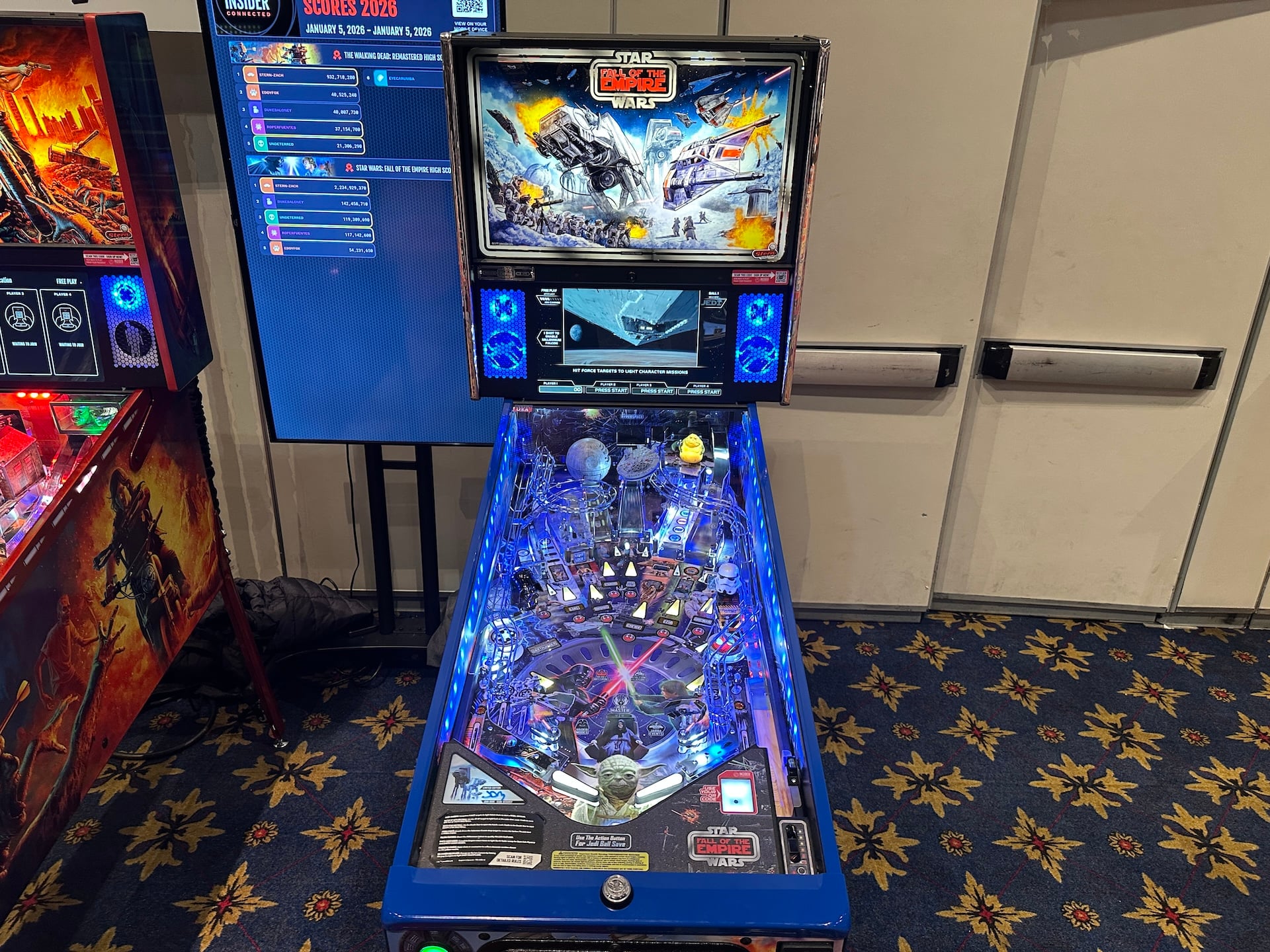
When I come to CES, one of my few pleasures is checking out whatever new pinball machine Stern has for sale that year. This time, it’s promoting a Star Wars Fall of the Empire machine that’s purely centered on the first three films. Your first ball will throw the classic title crawl for Episode IV at you, and the subsequent balls will scroll the two sequels. This machine is designed by John Borg, who also crafted one of the OG Star Wars pinball machines from over 30 years ago. Fall of the Empire starts at $7,000, but versions with more flair will cost $10,000 or more. —Kyle Barr
Are Two Screens Better Than One?

Asus ROG’s last attempt at creating a two-screen laptop with the original Zephyrus Duo offered a miniscule touchscreen with an impossibly small touchpad. The new version scraps all that and takes its cues from the similar Zenbook Duo. The device is essentially two screens on a hinge. The keyboard magnetically attaches to the screen bezels, meaning you can hold the device like a regular laptop or else set up the screens in a vertical or horizontal formation. This laptop will be more useful to creatives than gamers, especially because Windows 11 won’t let you control two different games at the same time. However, you could mirror a game on both screens if you want to play some co-op without huddling around your single laptop display. —Kyle Barr
Asus’ Latest Gaming Laptop Is Twice the Machine With Twice the Screen
The Flip, the Turn, the Prestige…
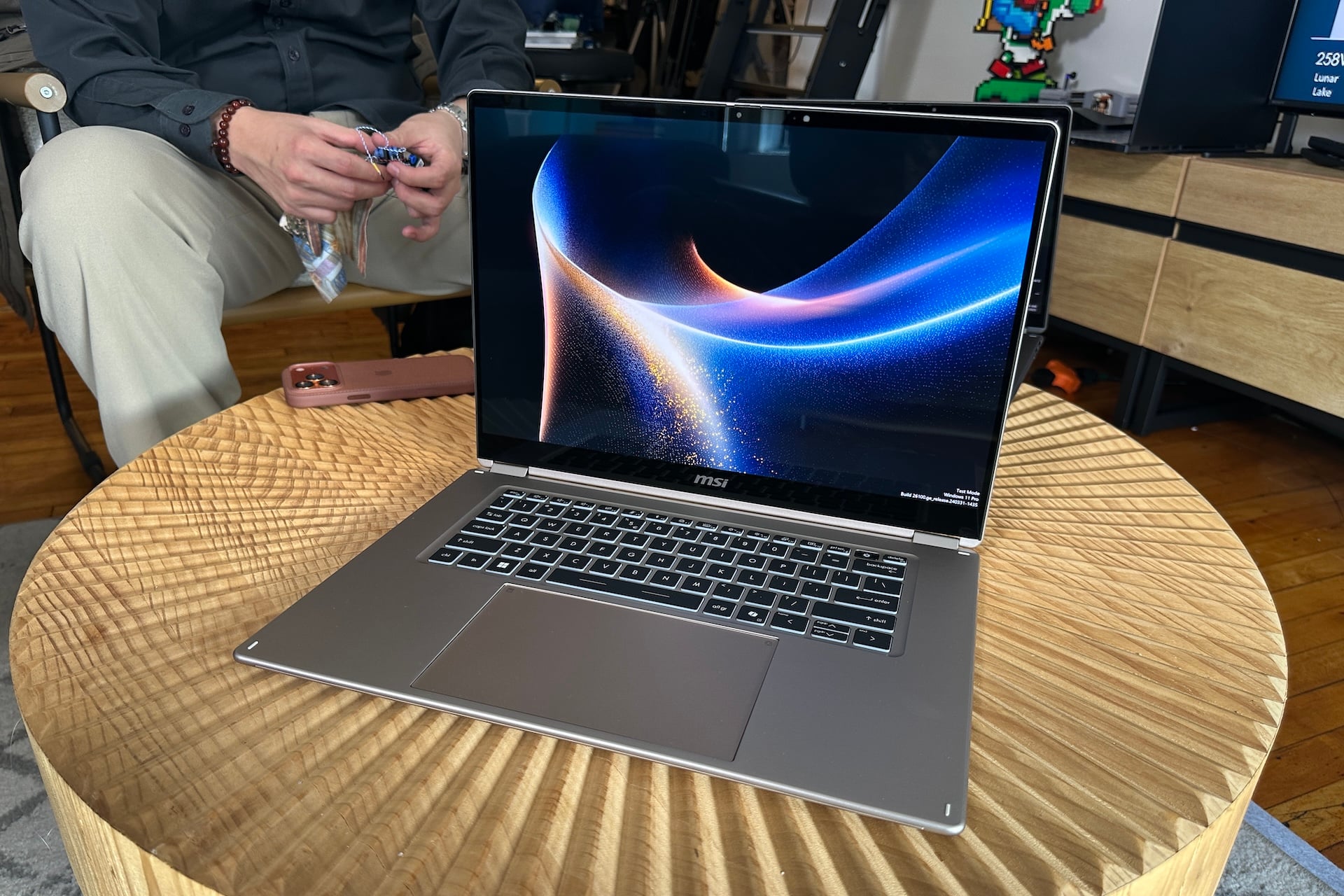
MSI wants to make sure its lineup of non-gaming laptops shares in the limelight of the new Intel Core Ultra Series 3 chips. The Prestige 14 and 16 both sport a 2-in-1 design with a clean look. What’s unique is that they all come with a stylus that slots into the chassis. If you want to do some quick and dirty drawing on the go, the Prestige could be a unique option. Of course, MSI also has many gaming machines available, including a new Raider 18 HX with a few extra RGB embellishments and a 300W total power package. —Kyle Barr
Is It an Omen to See HyperX Swallow Up HP’s Gaming Slate?

HP no longer wants to divide its gaming gear between HyperX and its namesake. Now, all laptops, desktops, and peripherals will fit under the HyperX logo. Well, beyond a name change, what else is going on here? The HyperX Omen Max 16 is a refresh from last year’s Omen Max, but most of the upgrades are happening under the hood. The laptop now sports a total power package of 300W. That should be enough to push an Nvidia GeForce RTX 5090 mobile GPU to its limits. It also comes packed with a 460W GaN power brick. Sure, it’s a big adapter, but it being gallium nitride means it can be more compact than another AC adapter of the same size. —Kyle Barr
All of HP’s Gaming Laptops Are Now Under the HyperX Umbrella
You Could Get ‘Plus’ or ‘Elite Extreme’

Qualcomm is rounding out its 2026 slate of lightweight laptop CPUs with the Snapdragon X2 Plus. It’s supposed to be several times better than the Snapdragon X Plus in terms of CPU and GPU performance, and it won’t be a slouch in battery life either. Qualcomm will need to compete against Intel and AMD’s latest chips as well, but what’s more interesting is how Qualcomm has managed to deal with the lingering compatibility questions of its lightweight laptops.
Qualcomm’s Next PC Chip Promises Even Better Battery Life Than Before
I’m Afraid for Laptop Prices in 2026

Dell has finally come back from the brink of idiocy, and now it plans to sell laptops under the legacy XPS brand. The company killed the name last year in a move that drove longtime users and tech reporters mad. So all’s good now, right? Not quite. After we published the news of Dell’s name change, the company came back to us with updated pricing. Now, an XPS 14 starts at $2,050 while the 16-inch model costs $2,200. It’s not a good sign for laptop pricing going forward. —Kyle Barr
Intel Wants to Usurp AMD’s Gaming Handheld Dominion

During today’s press conference, Intel made a big claim that it was going to work with most major device makers, like MSI and Acer, to craft handhelds that make use of the new Panther Lake generation of lightweight chips. And why not? I saw these CPUs running on an HP Omnibook playing relatively taxing games like Dying Light: The Beast at 60 fps and 1080p even with high graphics settings. IGN has it from some anonymous sources at Intel that the company is actually crafting a specific handheld CPU, dubbed “Intel Core G3.” This will be akin to AMD’s handheld-specific Ryzen Z series, but it would make use of Team Blue’s Arc B390 graphics microarchitecture. We may see a new device sporting this chip later this year. —Kyle Barr
These Chips Will Be in All the Laptops This Year
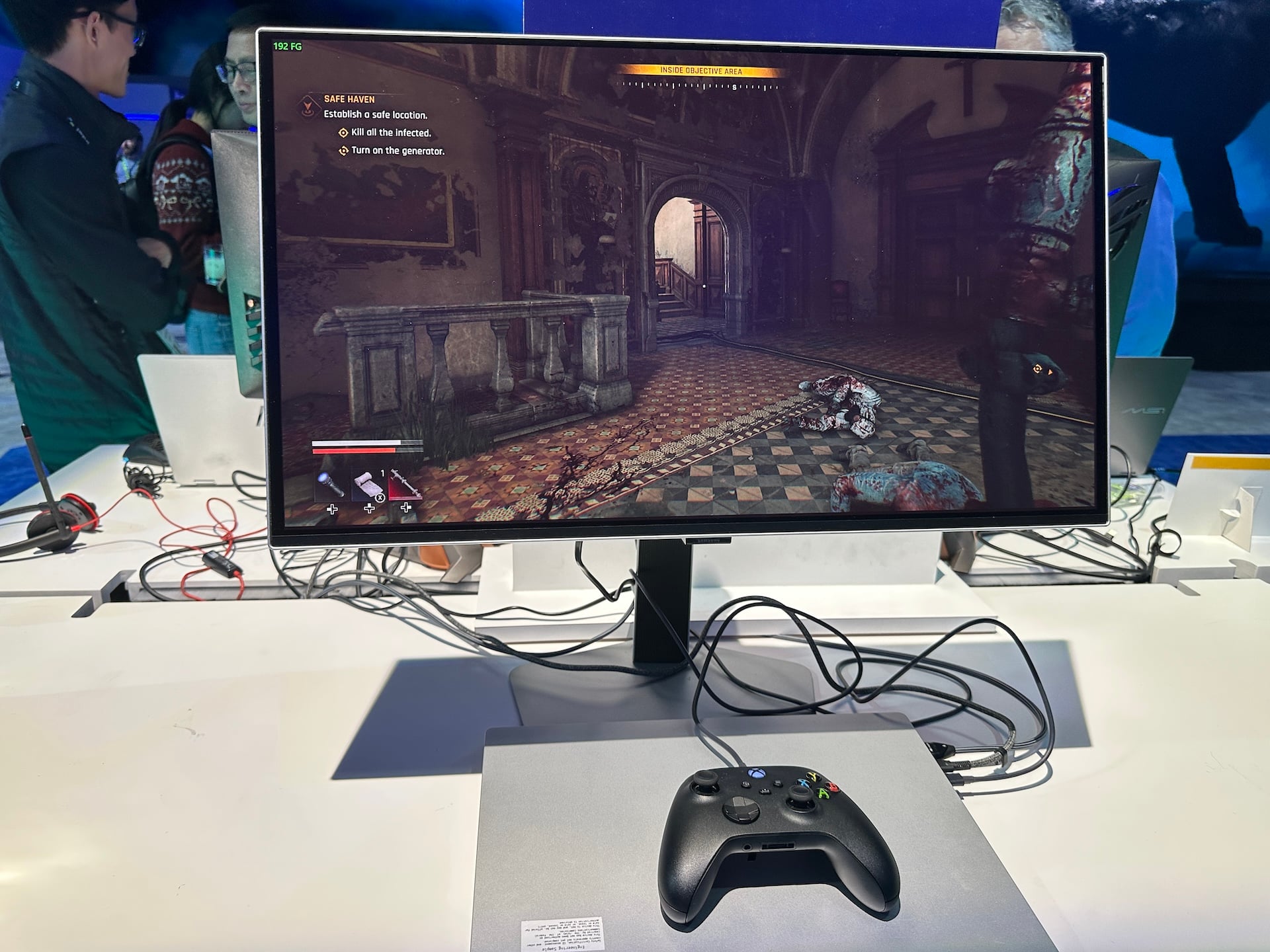
Intel finally detailed the full range of Panther Lake CPUs that will be running in this year’s lightweight laptops. The ones you want are designated with an “X,” as that signifies they have the 12Xe3 GPU cores for better graphics performance. Intel showed off one of their X7 chips playing Dying Light: The Beast at 1080p and high settings. The game was using the new XeSS upscaling software, and the HP Omnibook was able to maintain a stable 60 fps. The game was also running with the new XeSS 3 multi-frame gen capabilities, which pushed the frame rate past 160. I’ll admit, it was impressive to see the game running on a lightweight machine. Let’s see what happens when we have the device in hand. —Kyle Barr
Intel’s New Chips Promise Power and Battery Life in Equal Measure
California Gets All the Fun
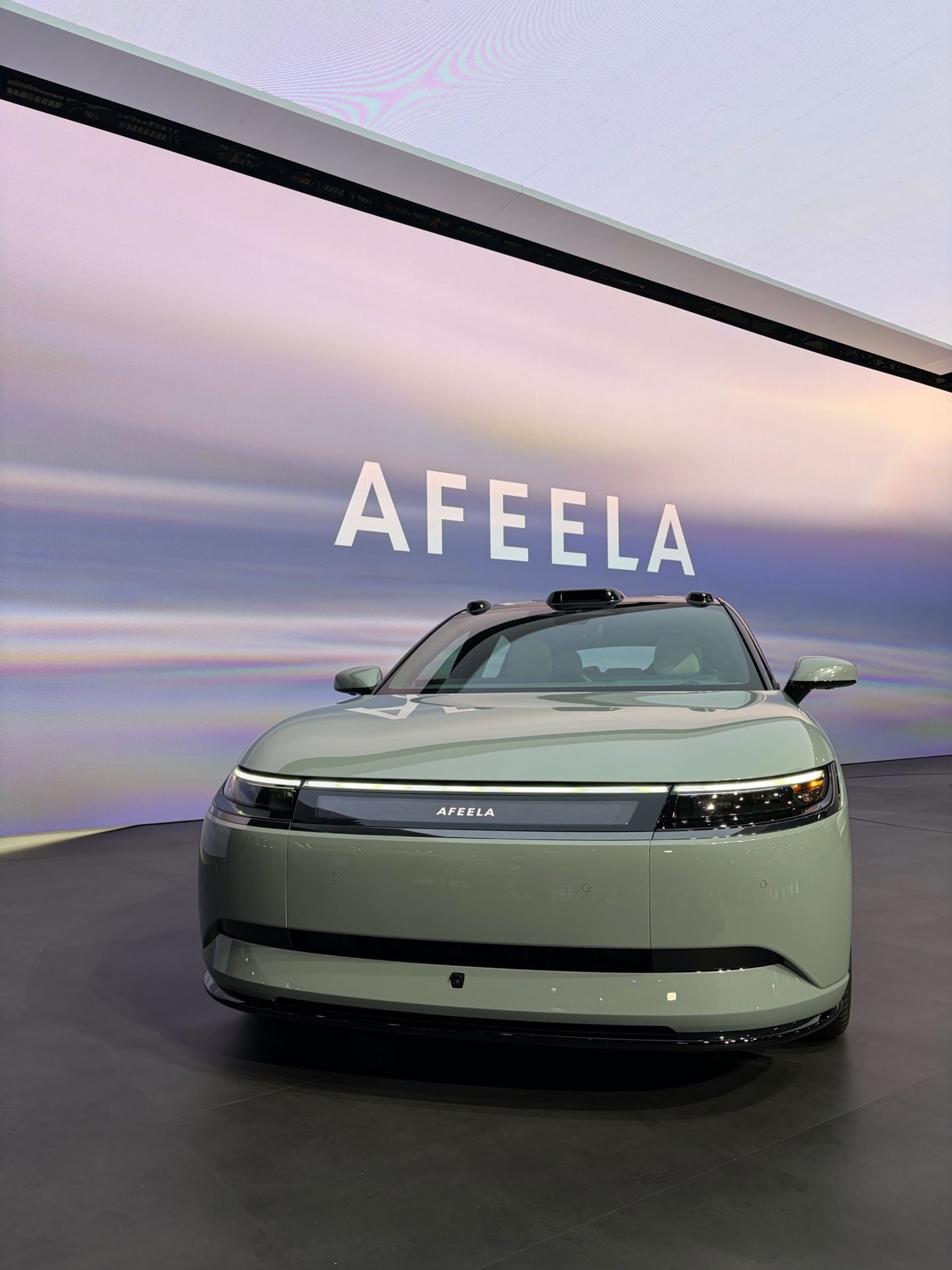
Sony Honda Mobility is determined to get its entertainment-mobile out by the end of the year. But only California customers will see the Afeela 1 in driveways by the end of 2026. Japanese drivers can expect the EV in the first half of 2027. Also coming in 2027: Afeelas will be in Arizona, too.
Production is getting underway at Honda’s Ohio plant, so SHM made sure to show some manufacturing shots to prove this car isn’t vaporware. —Sasha Lekach

Afeela 2?

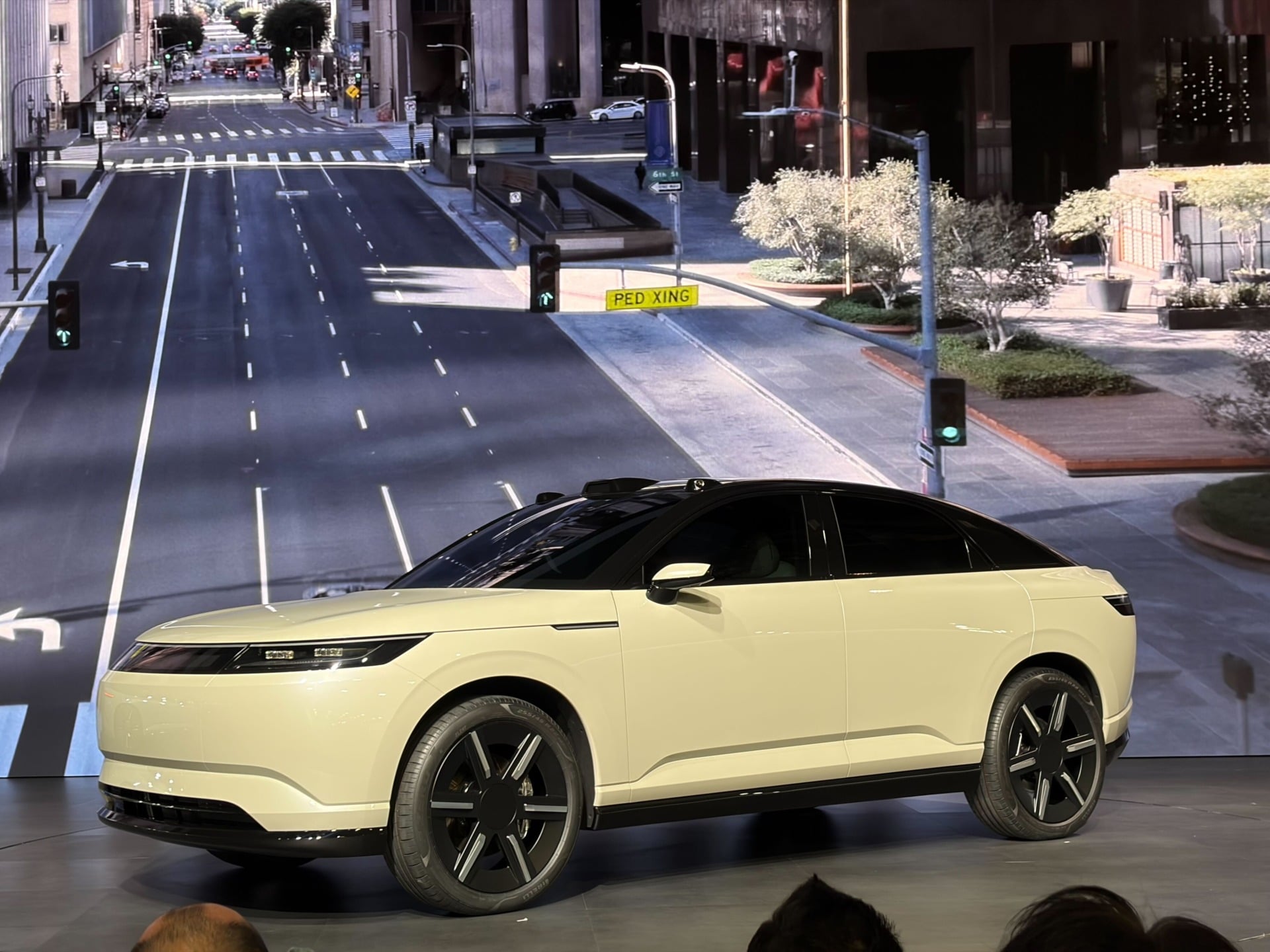
At first glance the concept car that Sony Honda Mobility CEO Yasuhide Mizuno rolled on stage didn’t look that different from the Afeela 1. But a closer look shows it’s a compact crossover with a hatchback rear.
Not much was divulged about the creatively named “Afeela Prototype 2026” but the next model will supposedly arrive in 2028 in the U.S. Now’s a good time to remember that the Afeela 1 hasn’t made it onto the road yet. —Sasha Lekach
Afeela 1 Is Basically a Giant Console On Wheels
If anyone thought Sony Honda Mobility’s first car was about anything other than gaming, well, it’s not. The SHM COO said, ”Being in a car will no longer be about driving.”
Sony is clearly edging out Honda in this collab. A Sony executive highlighted PlayStation Remote Play in the car with a console that hooks up to the seat screens. —Sasha Lekach

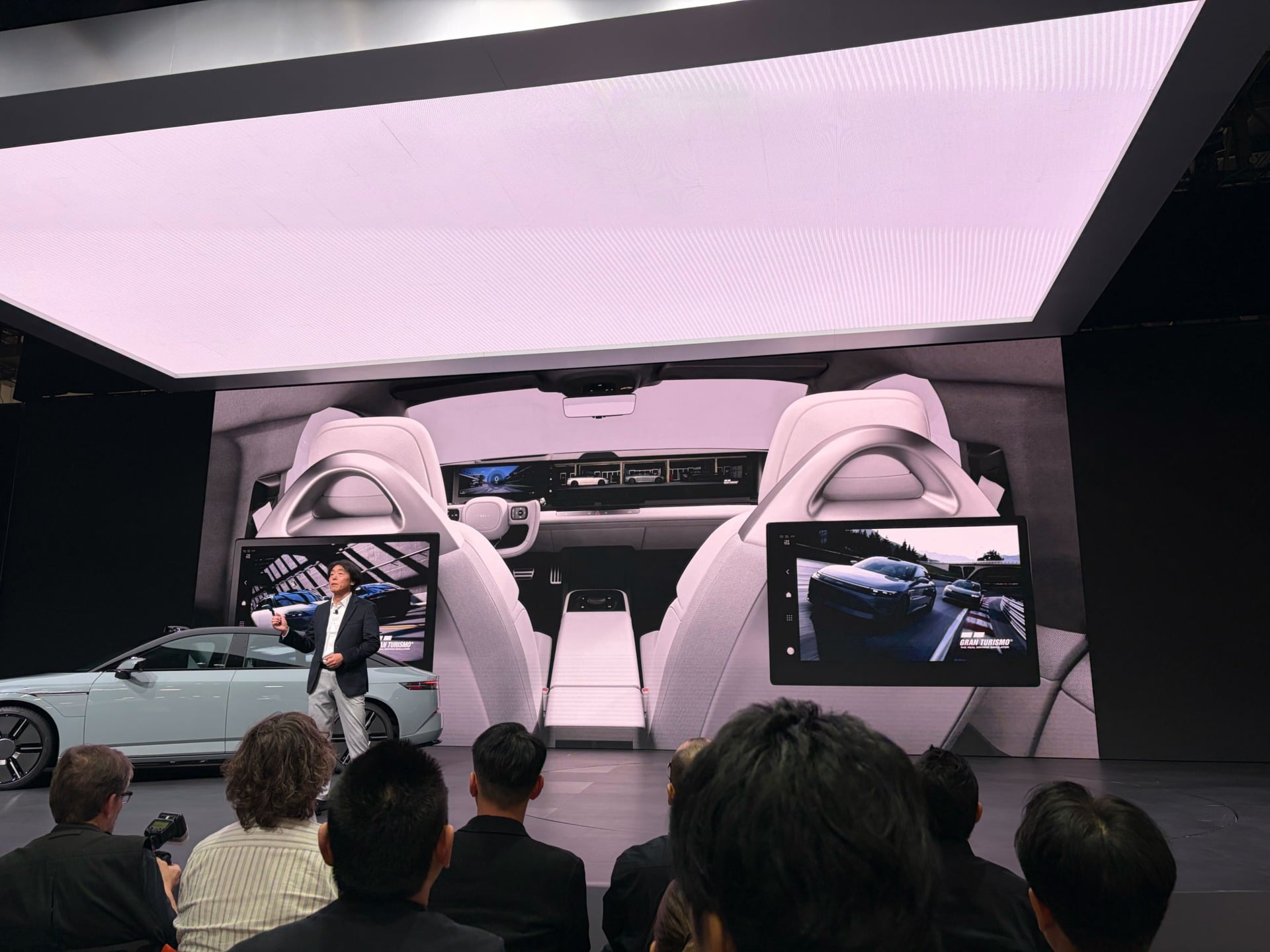
Countdown to Sony Honda Mobility Press Conference

Any minute now Sony Honda Mobility is supposed to give updates on its pre-production AFEELA 1 EV. And there’s supposed to be an all-new concept car unveiled. —Sasha Lekach
A Trio of Galaxy Book 6

Samsung wants everyone to write Galaxy Book6 (no space between Book and 6). I refuse. Anyway, the company announced a trio of Galaxy Book 6 laptops with Intel’s latest Panther Lake chipsets. These laptops focus on performance and battery life. The high-end Galaxy Book 6 Ultra even comes with options for Nvidia RTX 5060 or 5070 GPUs if you need the graphics oomph. Link below for my first impressions below —Raymond Wong
Samsung’s Most Powerful Galaxy Book 6 Ultra Shoves Nvidia RTX 5070 and 5060 GPUs Inside
Nvidia’s Next-Gen AI Processors Are in Production
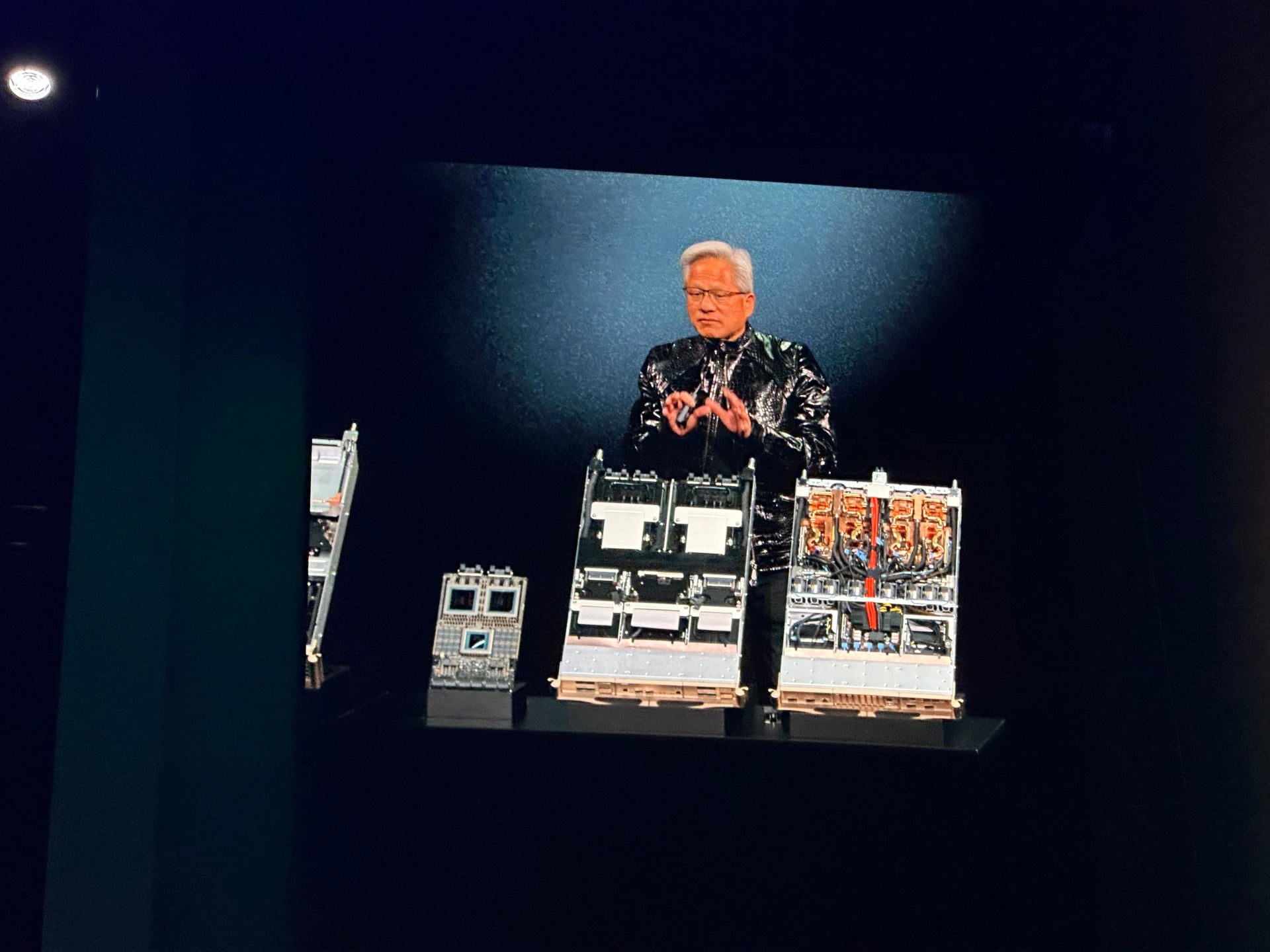
Nvidia says its long-awaited Vera Rubin AI processors are now, finally, in production. The silicon houses two GPU dies and a Vera CPU promising a leap in performance over the previous GB 200. It’s not going to matter for the layperson who’s already tired of AI inside every new device. Now you know how big an individual AI processing chip is. The server banks housing these things can contain hundreds or even thousands of these Vera Rubin chips. –Kyle Barr
The Droids Are Back

Huang will never not bring his favorite droids on stage. He’s using it to promote Nvidia’s work in robotics. So why won’t he ever let the rest of us hang out with his cute, waddling robots? —Kyle Barr
Nvidia Is Putting Itself in Cars With AI for AVs
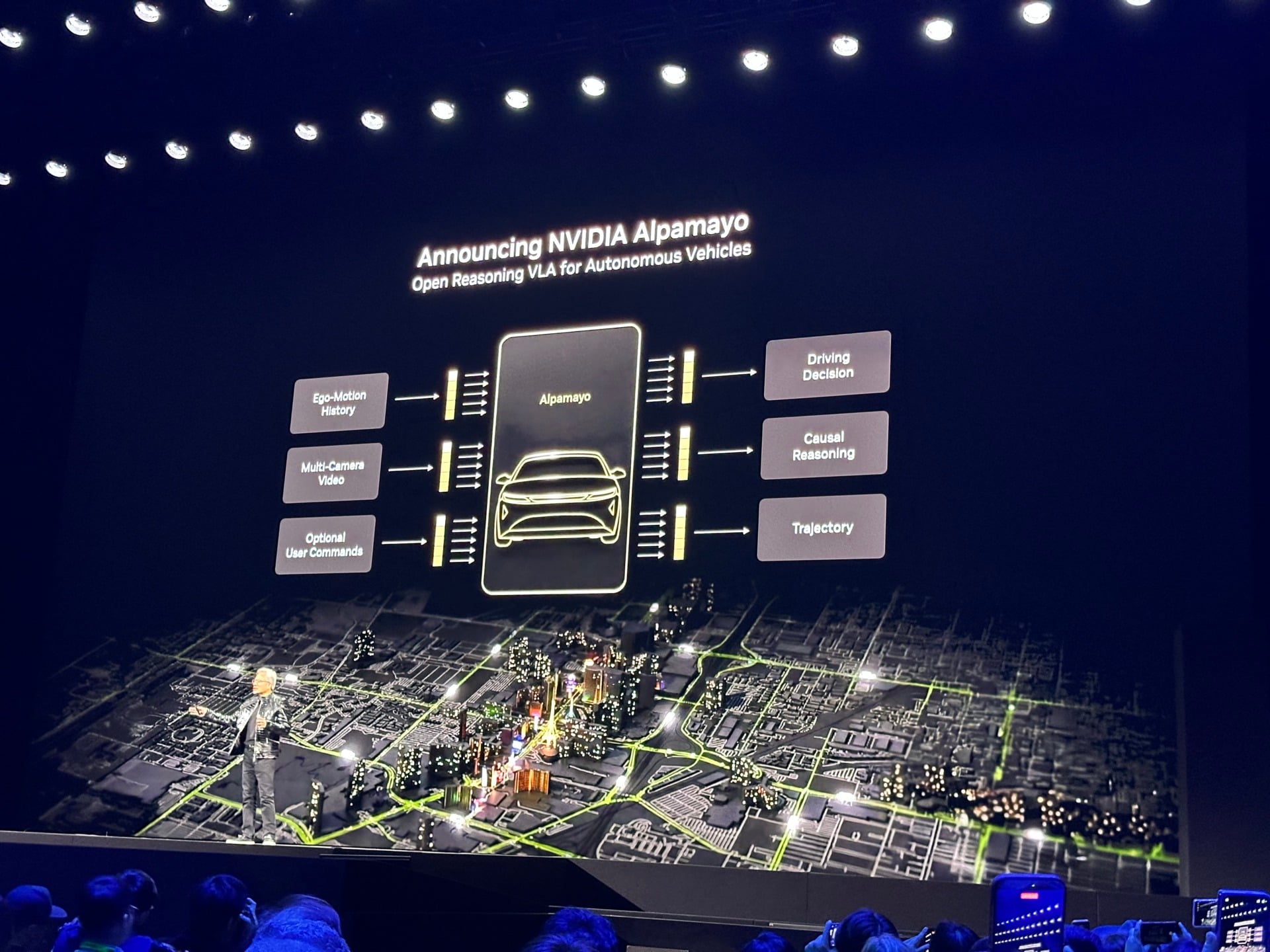
Jensen Huang wants to be inside your cars, or at least any future vehicle with autonomous features. Nvidia’s Alpamayo is an AI model for autonomous vehicles that uses data from its Cosmos world model to make decisions on the fly. That could be yielding to pedestrians on right-hand turns or seeing a ball rolling in the street and stopping before it sees a child cross its path. That added predictive nature could be what sets Alpamayo apart from other AV systems. Would I still trust a car to operate itself for the millions of possible edge cases? Let’s just say I’m not leaving the steering wheel alone.
Huang said, “Every car will have autonomous features” one day. Mercedes has already partnered with Nvidia and we’ll see cars with it, namely the 2025 Mercedes-Benz CLA, early this year. —Kyle Barr
I Would Prefer Jensen Announce… Something

Nvidia already told us we wouldn’t be getting new GPUs today, but so far this keynote has just been a big AI pep rally, promising us again and again AI is going to revolutionize how we operate every day. I’d love it if we had a real example of any of this working as intended. Unfortunately, we don’t. —Kyle Barr
All This for a Man in a Leather Jacket

Just like last year’s CES, the Nvidia keynote is turning into a madhouse. The lines to register for the event snake through the halls of the Fontainebleau resort. Remember when the only people who cared about “Team Green” were nerds? Now that the GPU maker is worth an astronomical $4.55 trillion, everybody cares even if Nvidia itself isn’t here at CES to announce new consumer hardware. Press and analysts get to skip the queue, but we’re forced to sit on our hands until CEO Jensen Huang takes the stage. —Kyle Barr
Star Wars Is First Collab

Filoni didn’t come all the way to CES to announce nothing. The first Lego Smart Brick collaboration sets will be Star Wars related with the above sets slated for a release in March. Using the Smart Bricks, you’ll be able to listen to Star Wars-related sounds as you play with the sets. In a video, two kids played with starfighters and Darth Vader and Luke Skywalker minifigs, clashing their lightsabers. I’m very curious to see how reactive the Smart Brick is when it comes into contact with other bricks and pieces.
In demos, it all looked super responsive. I’ll be checking out a demo of the Lego Smart Brick tomorrow, so I’ll have impressions soon! —Raymond Wong
Oh man Lego really coming out with Smart Brick x Star Wars collab sets releasing in March. First look at how the smart brick works with lights and sounds #CES2026 pic.twitter.com/LO9CVkgVQ2
— Ray Wong (@raywongy) January 5, 2026
Dave Filoni Just Showed Up

Look who just showed up, Lucasfilm’s creative officer himself. The man, the legend, Dave Filoni. —Raymond Wong
Some Quick Demos of the Possibilities
The Lego Smart Brick is joke. Its sensors seem genuinely advanced. —Raymond Wong
Demo of the Lego Smart Brick in action #CES2026 pic.twitter.com/HieJFiHCYb
— Ray Wong (@raywongy) January 5, 2026
Chock Full of Sensors
Okay, this is pretty damn cool. The Smart Brick is a 2 x 4 brick with built-in light, sound, motion, and distance sensors. Place different “tags” on it, and you can watch how your creations come to life. —Raymond Wong
Check it out:
Lego Smart Brick is packed with sound, light, and motion sensors pic.twitter.com/7rvxbmETjL
— Ray Wong (@raywongy) January 5, 2026
It’s a Smart Brick

The Lego Smart Brick is what comes after the minifig, according to The Lego Group. “No screens, no power buttons.”
Lego Smart Brick is official at #CES2026 pic.twitter.com/1uQDe9SWhF
— Ray Wong (@raywongy) January 5, 2026
Lego Is Announcing Something?!

It has to be tech-related, right? —Raymond Wong
Everyone Has an Art TV Now

I’m curious to learn why it’s taken so long for the various TV manufacturers to make their own copy of Samsung’s The Frame art TV. No matter, because now you can even get one directly from Amazon. The online retail giant’s new Ember Artline is a QLED screen with a matte layer on top, just like every other gallery-type screen. The main difference with this screen is that it can also act as an Alexa smart home hub thanks to the built-in far-field microphone. Artline includes more than 2,000 pieces of artwork that you can flip through or show on a carousel. The TV comes in 55- and 65-inch varieties and starts at $900 and should go on sale sometime this spring.
Artline is also one of the first TVs to launch with a new version of Amazon’s Fire TV UI that the company promises will load faster than before. It also comes with a new UI. You can now pin up to 20 apps to your home screen and access a shortcut menu by holding the Home button on your Fire TV remote. —Kyle Barr
Birdbuddy, the Squawkuell

The most popular smart bird feeder has a new look, a larger camera, and a few extra tweaks. The $200 Birdbuddy 2 now no longer requires users to take out the camera pod to charge thanks to the built-in solar panels. The new camera shoots 2K HDR footage you can watch from an app, and you can capture footage in either portrait or landscape if you’re planning to post your feathered friends to Instagram or TikTok. It includes an improved mic for capturing bird sounds as well as improved Wi-Fi connectivity supporting 2.4GHz and 5GHz bands. Birdbuddy is also selling a new $130 Birdbuddy 2 Mini with less seed capacity, built for smaller yards. The new smart bird feeder should arrive sometime in February, but the Mini likely won’t fly the coop until later this year. —Kyle Barr
There’s a Machine if You Hate Cooking That Much
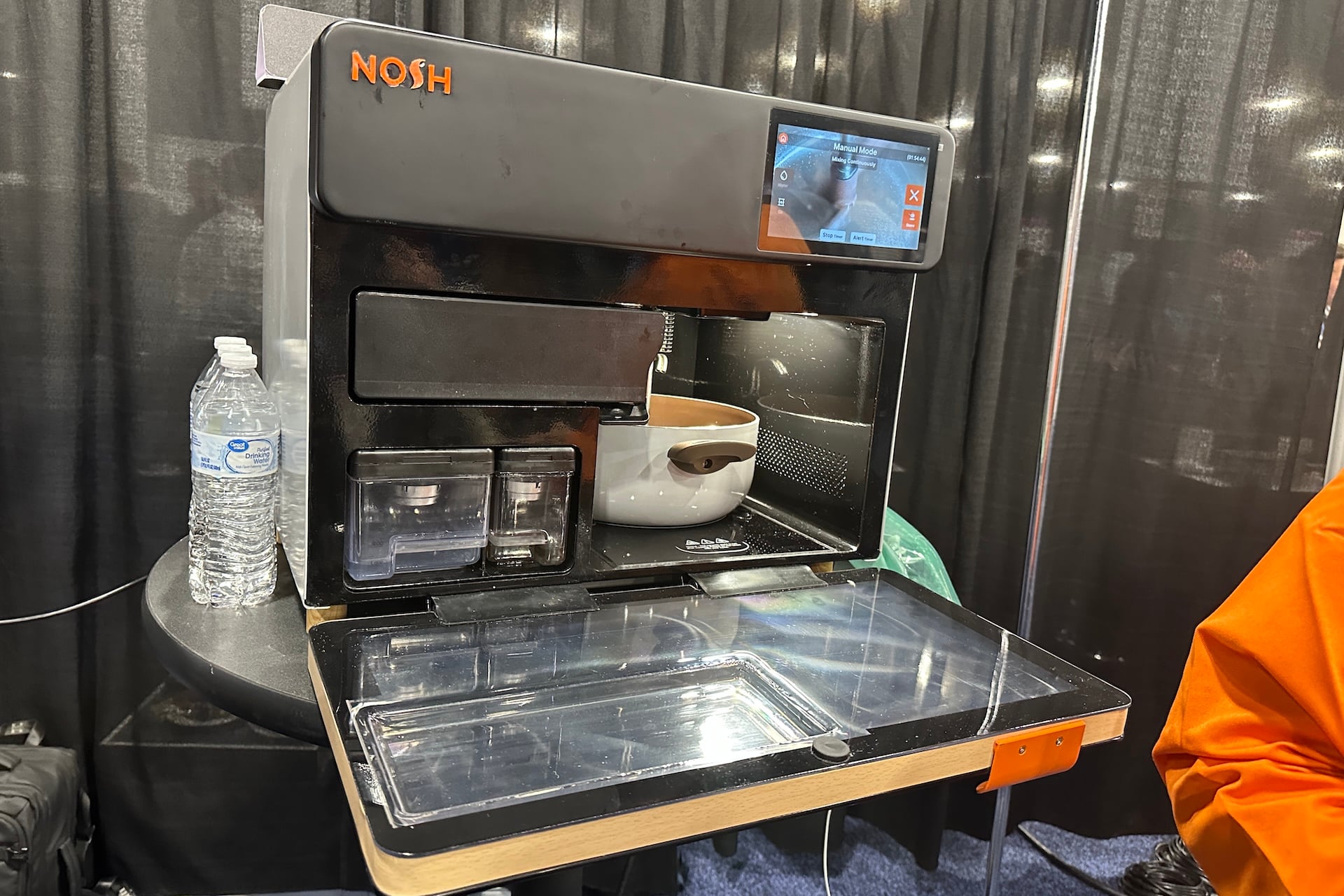
I love cooking. It’s a tactile activity where I can focus my entire being on creation. I find that even if I’m tired after work, I can still muster the energy needed to craft a simple, though flavorful, meal. But, yes, I know that there are many more people who hate cooking for themselves. We’re seeing more machines built to do everything for you, which is how we get Nosh. Think of it as a large convection stovetop connected to various hoppers that contain all the necessary ingredients. You’re expected to check an app for all the necessary ingredients, and you put each component into their specific bin that slides into the machine. After that, Nosh is supposed to do the rest, even stirring your meal as it goes.
So yes, you’re still expected to do the prep work of slicing your veggies, normally the most tedious aspect of cooking at home. The whole apparatus will cost $2,000 when it finally goes on sale. Nosh will also run a Kickstarter crowdfunding campaign starting Jan. 15, where it will instead sell for $1,200. —Kyle Barr
No GPUs, Move Along, Sir
Nvidia will be dropping an announcement today. Stop, don’t get too excited. The company that supplies the vast majority of consumer-end graphics cards won’t have any news to share about new GPUs. So while we won’t hear any news about an RTX Super graphics card, we will likely see more updates to Nvidia’s gaming software stack. AMD’s latest FSR Redstone update put the ball in team green’s court to create the best gaming upscaler. —Kyle Barr
Watch the GeForce On community update today January 5 at 9PM PT to hear about the latest features, games, apps, and partner products for gamers and creators.
Quick note: No new GPUs will be announced.
📺 https://t.co/OQiFvri8nY pic.twitter.com/DSNyrsty1t
— NVIDIA GeForce (@NVIDIAGeForce) January 5, 2026
A Tale of Two Gizmodos

The best part of going to a big tech event like CES is meeting new people. I bumped into Gizmodo Japan’s Taro Kanamoto, Richard S. Nishitani, and Yushin Nakahashi. I can confirm they’re every bit as nice and friendly in person as they are in their videos. Definitely check out their YouTube channel, where they’re always reviewing the latest gadgets. I’ve long been impressed with their video production quality. They’re just such genuine gizmo lovers and really hilarious in their social videos! —Raymond Wong
Dreame Wants to Put a Hairdryer Behind Your Couch
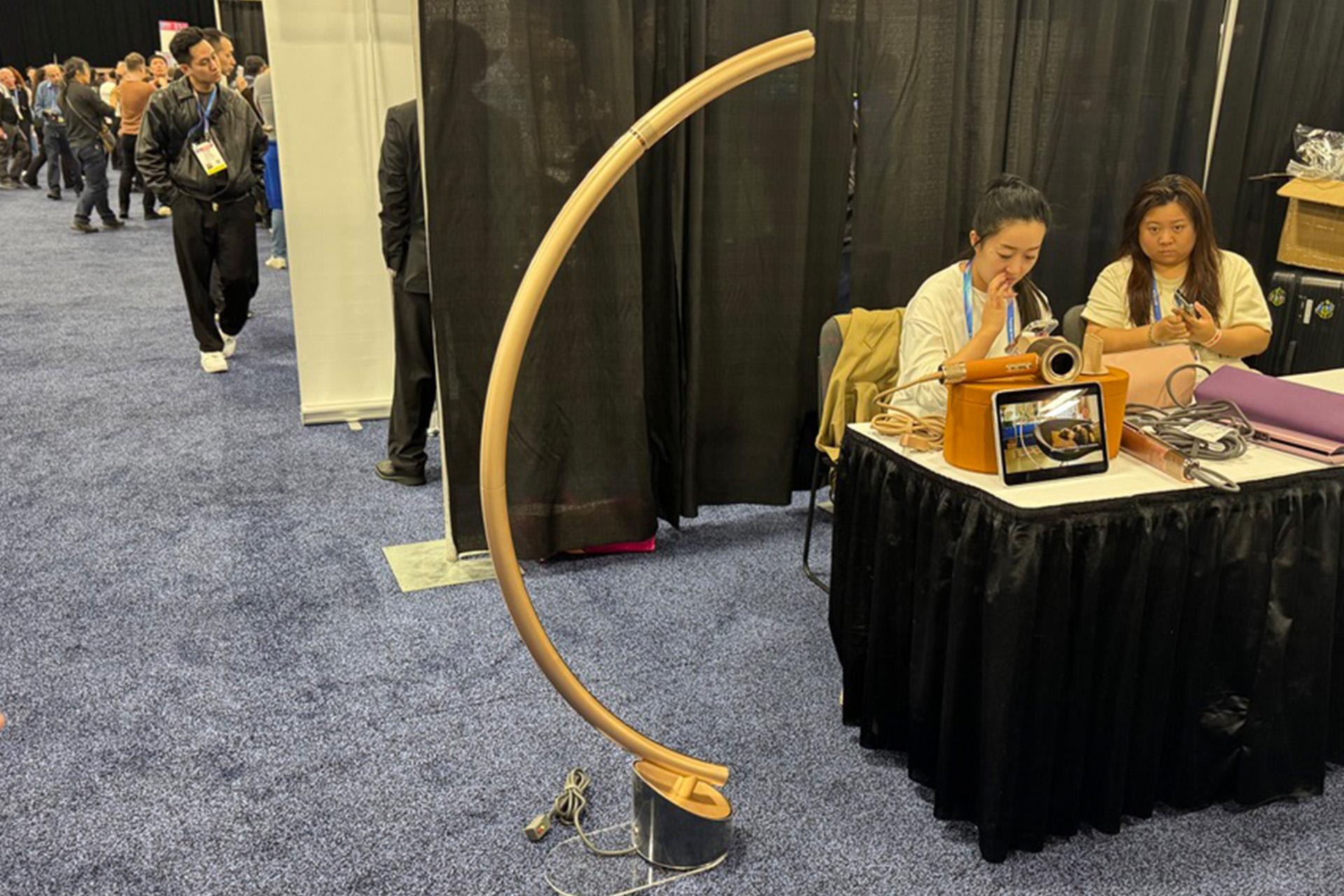
It’s a big golden curve that spews warm air at your wet head while you, I don’t know, sit and read a magazine? I couldn’t confirm that it actually does anything, as it wasn’t plugged in. I’ll get a look at it on the CES show floor proper in coming days, though. —Wes Davis
I Love This Overwrought Battery Charger


From flashlight maker Ostation, the Ostation 2 Pro is $140; you drop AAA or AA rechargeables into the top in any orientation, and it pops them out at the bottom when they’re done. Plus, it has a touchscreen and it’s translucent. It works with any regular NiMH rechargeable, but only Ostation’s own Ecolast 1.5V lithium-ion batteries work—for safety reasons, the company tells me. —Wes Davis
Land Skiing, Anyone?


Skwheel is back with its next-gen electric skis meant for urban and outdoor fun? Transportation? Crash-testing? Definitely not an accident waiting to happen, the two-wheeled boards that attach separately to each foot start at €1,490 (about $1,740). The French company claims after a year of feedback from its first generation, the e-skis with rear-wheel drive are ready for the streets or trails. This pair was resting on a pedestal, so I couldn’t see it in action, but I did see that the wireless remote control conveniently attaches to the backside and turns into a handle to tote the pair of skis around. Good luck out there. —Sasha Lekach
Guess How Much This Giant Telescope Costs
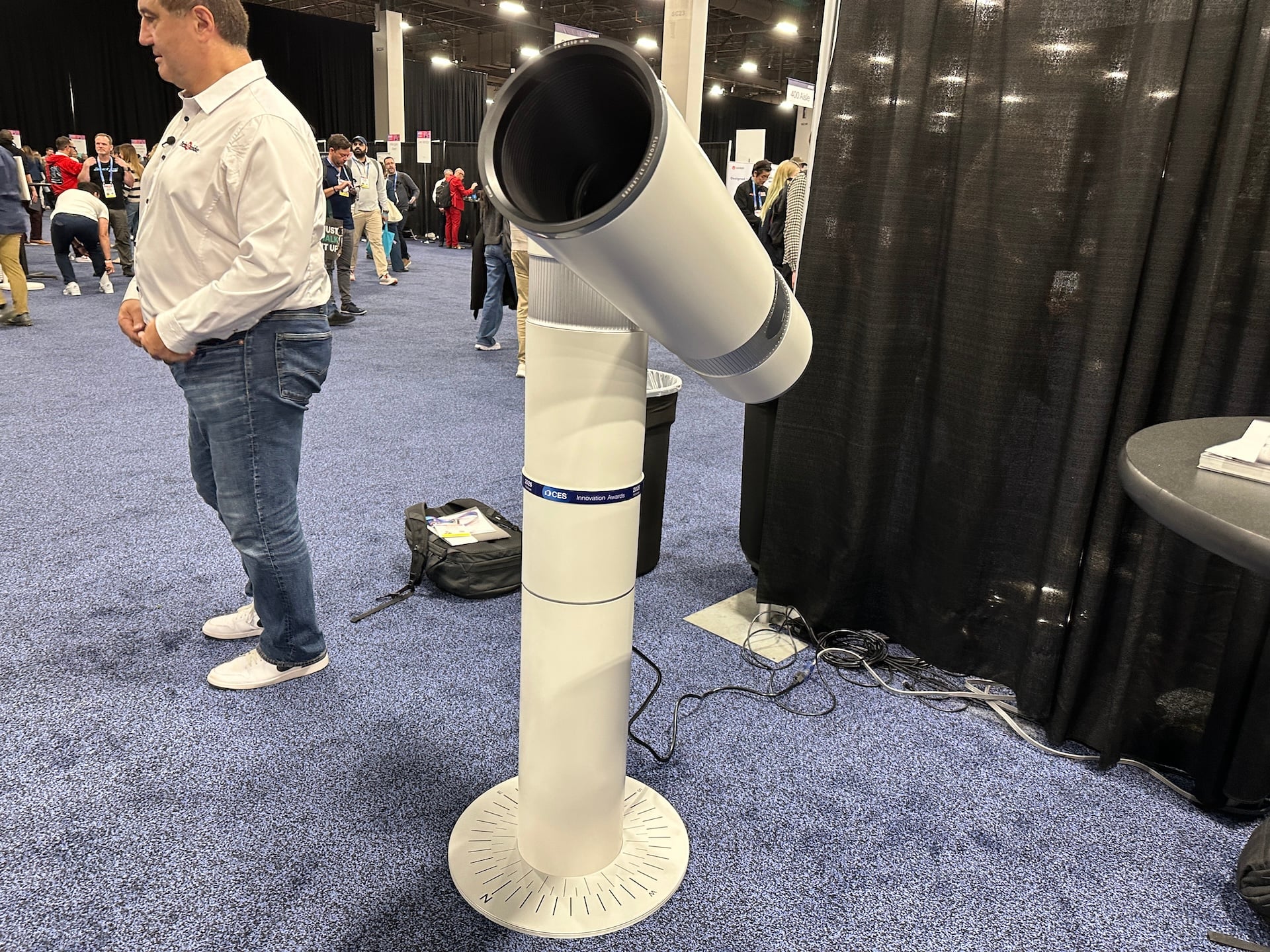
If anybody ever wanted a “personal observatory” that you can embed into your backyard lawn, you now know how much it would cost. Vaonis, a smart telescope company, is promoting an utterly massive telescope called Hyperia. The company told me the device is made for institutions, but there’s no reason individual buyers who want a 17-lens system made by Canon with a 45-megapixel sensor can’t buy it. For that, it will cost you $99,000. At that price, you could expect far more detailed images of distant galaxies and nebulae than your typical, far more portable smart telescope. Of course, I didn’t get to see it in action, but I would be lying if I said I wasn’t enticed by the idea of such a massive telescope crowding my backyard. —Kyle Barr
Look, There’s the Pebble (Now Far More Round)
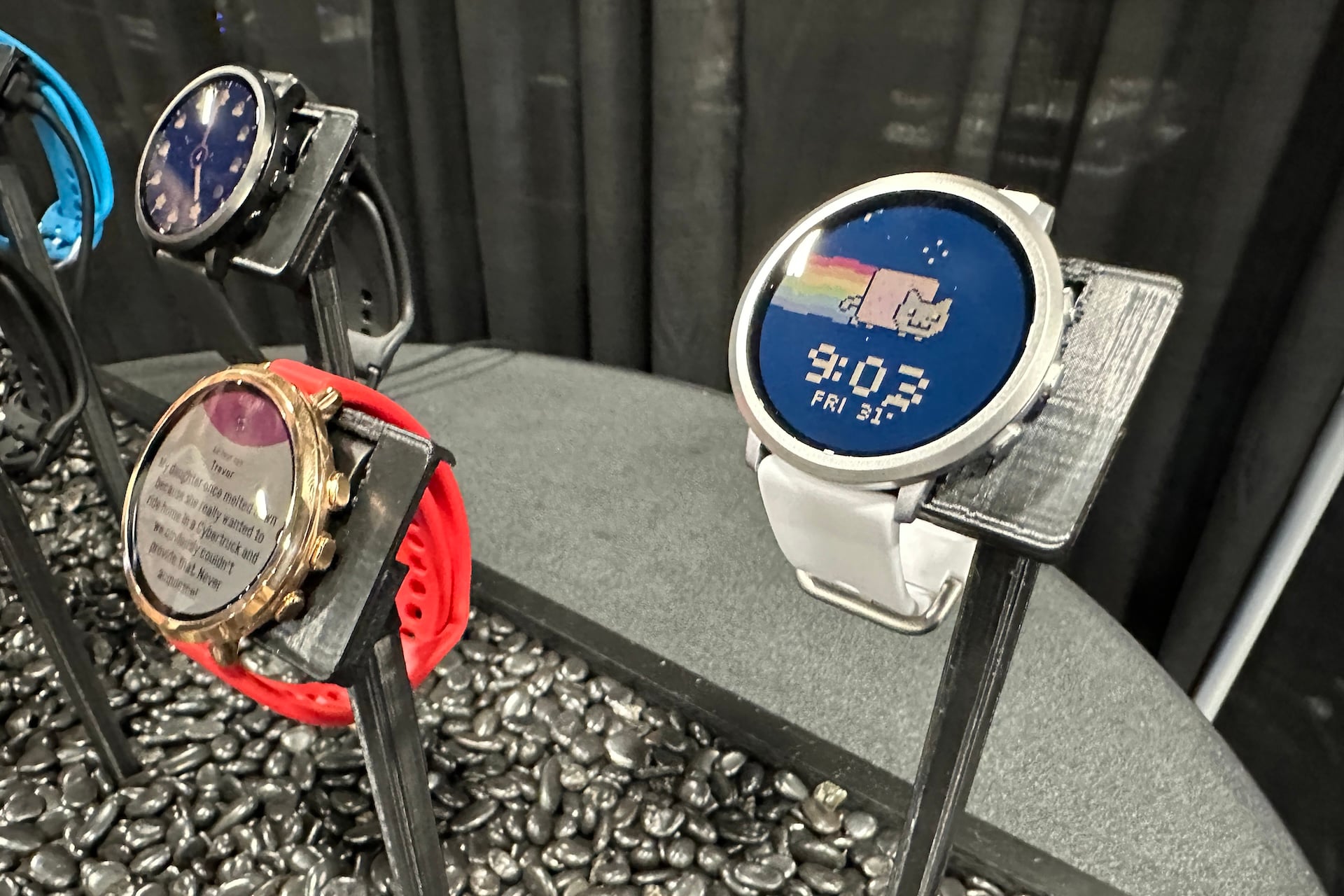
The Pebble Round 2 may be the one smartwatch to check out if you’re tired of every wearable designed to turn you into a cyborg. The revised wearable has a much smaller bezel than the 2015 Pebble Time Round and enjoys a few added features on top of the larger screen size. The same company also had its Index 01 smart ring on display. It’s a device that Core Devices CEO Eric Migicovsky referred to as a personal memory bank for your wayward thoughts. The only issue is it doesn’t have a rechargeable battery. Once it dies, ostensibly after several years, you have to have it recycled. —Kyle Barr
It’ssssss Sasha!

Reunited with Sasha Lekach, who is covering transportation for Gizmodo at CES 2026. She and I used to work together at Mashable many moons ago. If anybody sees any cool mobility announcements, let her know in the comments. —Raymond Wong
A Toast to Hotel Wi-Fi
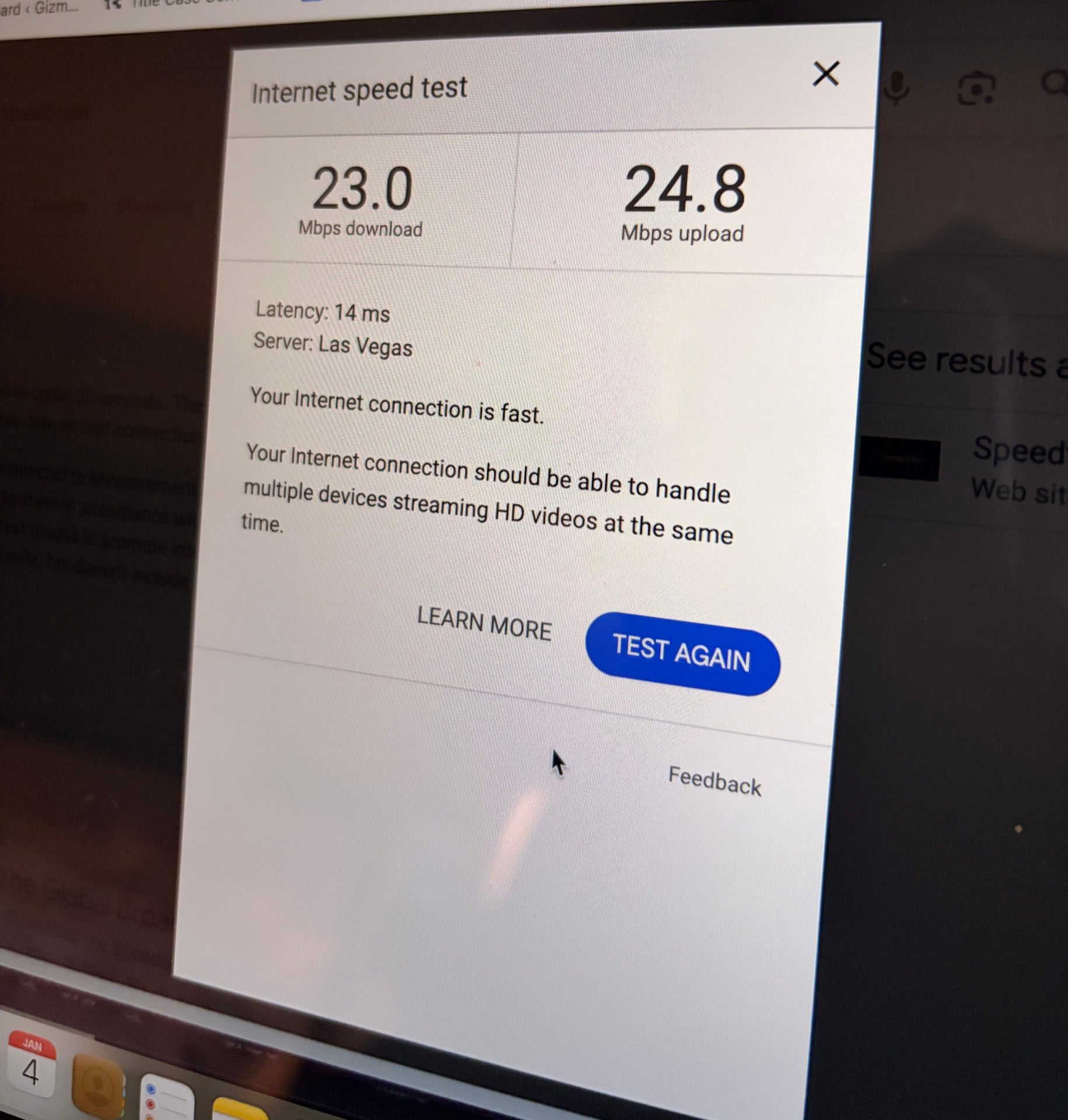
Let’s give a shout-out to hotel Wi-Fi real quick. Is it good? No. Does it get the job done? Hell yeah, brother. A tepid 23 megabits per second is what I’m working with right now, in case you were wondering. —James Pero
Mmm, Cheaper AR Glasses
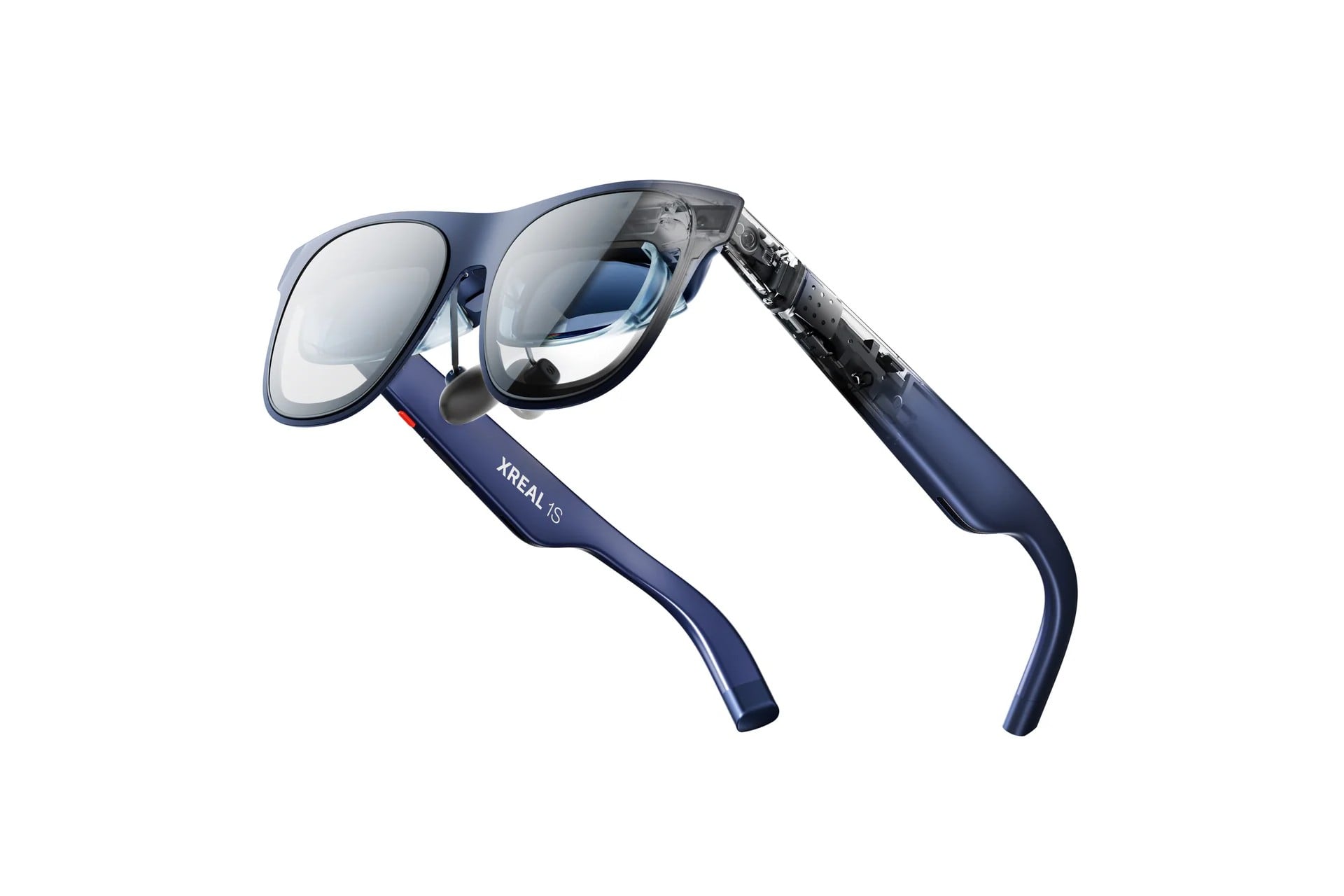
There’s a lot of wild stuff at CES, but sometimes a deal is just as tasty. In a world where everything seems to be getting more expensive, Xreal managed to make its new AR glasses better and cost less, which is huge. The upgrades aren’t massive, but I don’t think anyone will argue with better resolution and a brighter screen. —James Pero
I Have Touched Samsung’s Galaxy Z Trifold!

Readers, I finally had some time with Samsung’s Galaxy Z Trifold. Yes, the one that costs about $2,400 (after Korean won conversion). It’s a thiccc foldable “phone” but man, is the 10-inch display a beauty that sucks you right in for watching videos and running multiple apps.
Now, I just need Samsung to share U.S. pricing and release date information. Check out my hands-on with more photos below. —Raymond Wong
Samsung Galaxy Z Trifold Hands-On: Way Better Than I Expected
Who Actually Wants a Home Robot?
![[3] Lg Cloid (1)](https://gizmodo.com/app/uploads/2026/01/3-LG-CLOiD-1.jpg)
LG’s smart home concept routine gets more outlandish every time a tech convention rolls around. This time, LG will be presenting a giant home robot on the show floor. Its name is CLOiD, and you can bet it’s promoting LLM-based AI for a “zero labor home.” Sure, there are other startups promising similar devices requiring people to pay for the privilege of training these bots.
The more interesting tech on display will likely be its robotic motion. LG promises its new bot will have fine arm and finger mobility, enabling it to interact with everyday objects. “An actuator serves as a robot’s joint, integrating a motor that generates rotational force, a drive that controls electrical signals, and a reducer that regulates speed and torque,” the company explained. Expect CLOiD to pretend to retrieve milk from a fridge and toast a croissant. We’ll wait to see if it has enough physical and mental dexterity to enact the robot uprising. —Kyle Barr
Finally, 8BitDo Has a Game Boy Clamp
I’m sure the last thing you thought when you heard “8BitDo mobile controller” was clamp-on Game Boy controls. Sure, that description sounds pejorative, but it’s probably the best way to describe the company’s new FlipPad. It slots into your phone’s USB-C port, then hinges up to put the controls directly on the screen. This could be a useful little accessory for doing any Game Boy retro emulation on iPhone, especially since 8BitDo promised its new device was “officially supported by Apple.” It’s also compatible with Android. The company is known for making very high-quality gaming controls, so I’m personally more excited to check this out than similar mobile controllers like the GameBaby phone case. —Kyle Barr
Where mobile play unfolds.
Introducing 8BitDo FlipPad — a flip-style gamepad designed for mobile gaming.
Compatible with iOS and Android devices. Officially supported by Apple.Coming Summer 2026.
Experience it first at @CES 2026.
LVCC Central Hall · Booth #15641#FlipPad… pic.twitter.com/snddY5OaMx— 8BitDo (@8BitDo) January 4, 2026
Briefing Numero Uno

So it begins… 12 hours after dropping into Vegas, I’m already attending the first of many briefings at CES 2026 this week. This will be the most alive that I look all week. Pray for me. —Raymond Wong
Lil Team Brekkie Before the Storm

I got about four hours of sleep 😴, but I’m alive. Grabbed some breakfast and—importantly—coffee with the squad. They’re so serious for some reason lol —Raymond Wong
Some Trend Predictions

There’s always some kind of theme or trend that pervades through CES. This year, I’m expecting AI to be at the center of a lot of product pitches. I also think that there will be tons of smart glasses, new TV technologies like WOLED and micro RGB will flood booths, EVs and personal mobility transportation will have a larger presence than before, and we should see some humanoid robots.
That’s on top of the regular slate of updates to laptops, gaming gear, smart home devices, and more. Read on for all my CES 2026 predictions. —Raymond Wong
Got My Badge!

Here we gooooooooo! Just landed in Las Vegas after a 6-hour flight (the Wi-Fi didn’t work and the infotainment was indeed busted) across country. First stop after grabbing my luggage: picking up my CES badge. Apparently if you lose it, it’ll cost $350 for a replacement. —Raymond Wong