Two years ago, a meteorite plummeted through Earth’s atmosphere and crashed into a New Jersey home. Now, analysis of the small fragment reveals it may have come from a rare, primitive asteroid that dates back to the early solar system.
In a new study published in Science Advances, a team of scientists traced the origin of the Hillsborough meteorite to a class of primitive rocks that preserve some of the oldest materials in the solar system. The researchers found evidence that the meteorite may have broken off from a parent asteroid rich in ancient salty water, providing clues as to how some of the ingredients for life found their way to planets like Earth.
Crash landing
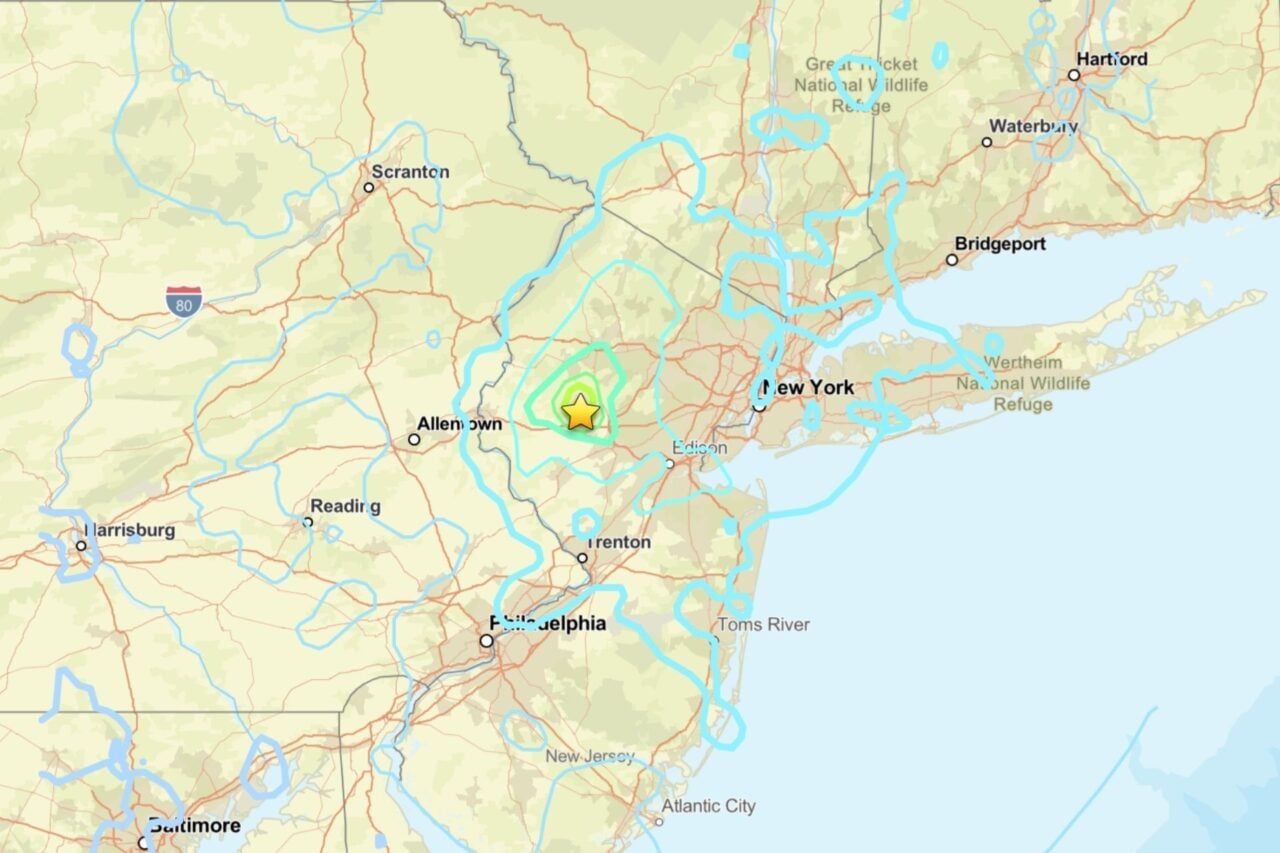
On July 16, 2024, a fireball was seen streaking across the skies above New Jersey. The fallen meteorite just happened to crash into the home of an amateur astronomer, who quickly recognized the object and used protective gloves to collect the fragment and place it in aluminum foil and glass containers.
This rapid recovery helped preserve the delicate minerals and organic compounds found on the meteorite that would have otherwise been altered by moisture, weather, and contamination. Upon its recovery, scientists were also able to trace its fiery trajectory through the atmosphere to determine where it came from.
“When we have both a documented fireball and a quick recovery of its meteorite, we can learn not only what the rock is made of, but where it came from in the asteroid belt,” Peter Jenniskens, meteor astronomer at both NASA’s Ames Research Center in California’s Silicon Valley and the SETI Institute and lead author of the study, said in a statement.
Scientists collected the meteorite and analyzed it in the lab, where they detected a complex suite of amino acids and other organic compounds. “It’s just more proof that the chemical building blocks of life could have been delivered—and are still being delivered—to Earth today by these carbonaceous asteroid fragments,” Danny Glavin, senior scientist in the Astrobiology Analytical Laboratory at NASA’s Goddard Space Flight Center in Greenbelt, Maryland, and co-author of the study, said in a statement.
The team also found unusually high concentrations of sodium, which may have been left behind by ancient brines (a high-concentration solution of salt in water). Unlike pure water, brines alter the rocks they move through and leave behind chemical evidence that remains preserved for years.
Ancient origin
Aside from its chemical composition, scientists also found that the meteorite may have originated from the Erigone asteroid family in the inner asteroid belt. The family also includes asteroid Donaldjohanson, which NASA’s Lucy mission swooped past in 2025.
The findings allow scientists to better understand how water altered different asteroids in the solar system. In doing so, they’re also learning how water and the chemical ingredients for life may have traveled throughout our stellar neighborhood.
“If you follow the water through the solar system, you’re actually following life,” Mike Zolensky, a meteorite researcher at NASA Johnson and co-author of the study, said in a statement. “Following the history of water through the solar system is an essential part of understanding the origin of life.”