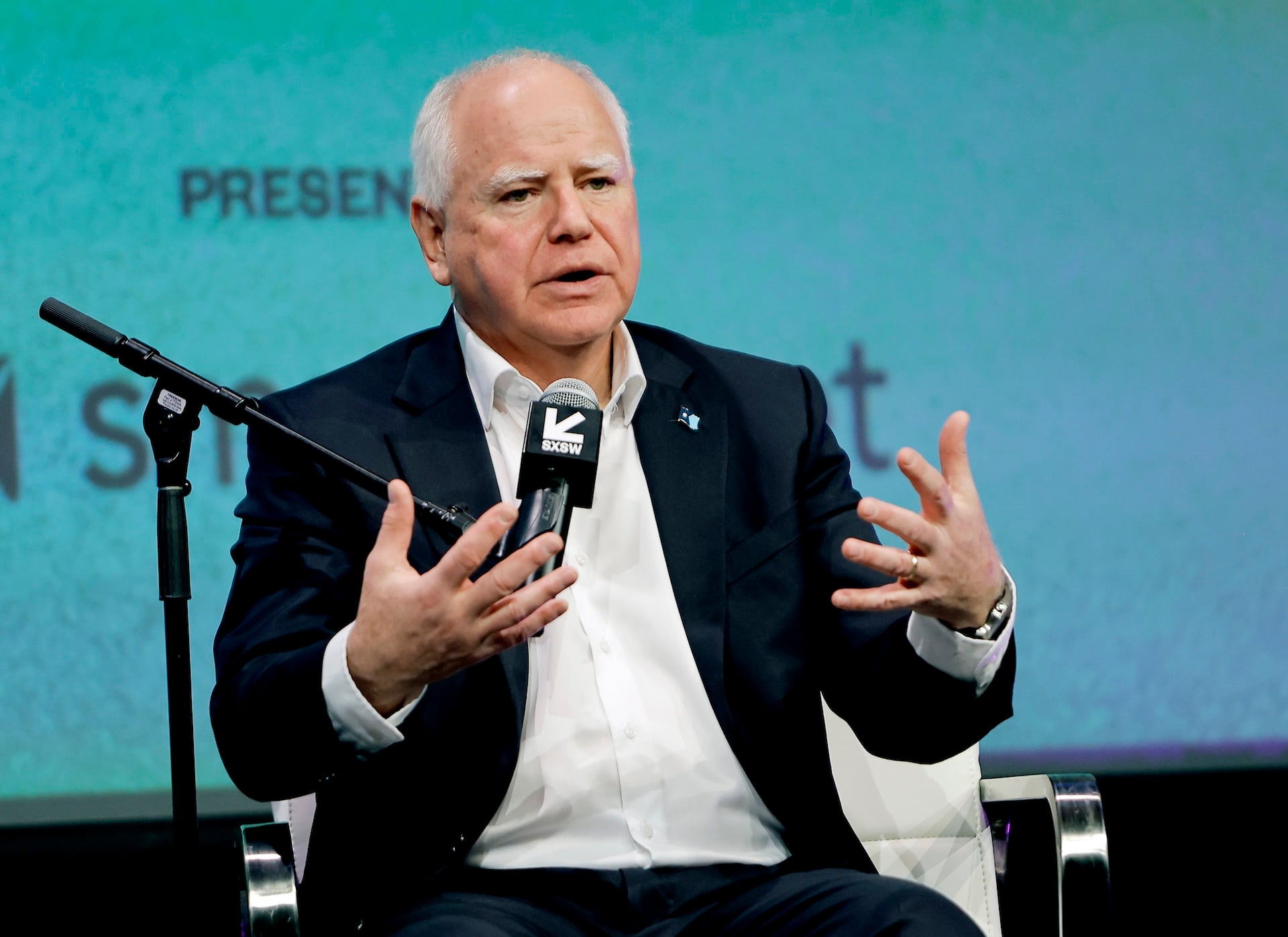
Minnesota became the first state in the country to ban prediction markets like Kalshi and Polymarket on Monday in a bill signed by Gov. Tim Walz. The law is supposed to take effect Aug. 1, but it’s unclear whether that will happen on time, if at all. The Commodity Futures Trading Commission filed a lawsuit on Tuesday in federal court to stop Minnesota from implementing the ban.
The new law, passed with bipartisan support in Minnesota, would make it a crime to advertise or host a betting platform not sanctioned by the state. As NPR notes, Minnesota has tribal gaming in the state, but online gambling and sports betting are already banned.
Minnesota state legislator Emma Greenman, a Democrat, introduced the bill and told NPR that, “We as a state should decide how best and what regulations we think should attach to gambling, to protect public safety, to protect our kids.”
Five other states that have tried to regulate prediction markets have also been sued by the CFTC, an agency that argues it’s the federal government’s job to oversee this form of gambling. The platforms don’t like to call it gambling, but that’s what most people call it when they place wagers on future events, whether it’s who might win a war or the outcome of a football game.
The CFTC argues that Minnesota’s new law has a “broader reach than any other state the CFTC has sued to date,” and tries to position the ban as something that would hurt the state’s farmers.
“This Minnesota law turns lawful operators and participants in prediction markets into felons overnight,” CFTC Chairman Michael S. Selig said in a statement posted online. “Minnesota farmers have relied on critical hedging products on weather and crop-related events for decades to mitigate their risks. Governor Walz chose to put special interests first and American farmers and innovators last.”
As the CFTC mentions in its statement, the agency has sued Arizona, where a court recently issued a preliminary injunction blocking the state from pursuing criminal charges against Kalshi for running an illegal gambling operation in the state, specifically around sports and election outcomes. The CFTC has also sued Connecticut, Illinois, and New York over their attempts at state-level regulation.
Insider trading has often been at the center of the debate around prediction markets, especially since it’s been revealed that people with non-public information have made a lot of money betting on things like the start of the Iran War. Just last month, the U.S. Justice Department arrested an American special ops soldier who allegedly made over $400,000 betting on Polymarket when Nicholas Maduro would be out of office. The soldier was apparently involved in the planning and execution of the mission to kidnap the Venezuelan leader.
This issue of state bans on prediction markets will likely wind up in front of the U.S. Supreme Court one day, given the opposing interests involved. States want to be able to say what kind of gambling is allowed within their borders, but the Trump regime has come out in favor of prediction markets.
It’s no coincidence, of course, that Donald Trump Jr., the president’s eldest son, happens to be a paid advisor to both Kalshi and Polymarket. The Trump family has profited handsomely from the president’s second term, with some estimates north of $4 billion since early last year.
The Commodity Futures Trading Commission didn’t immediately respond to questions about its lawsuit on Tuesday. Kalshi and Polymarket also did not respond. Gizmodo will update this article if we hear back.