A new watchdog report has found that Kennedy Space Center, the premier spaceport for NASA and its commercial partners, isn’t ready to support increased super-heavy launch cadence. If the agency hopes to land humans on the Moon by 2028, it will need to fix that problem fast.
NASA has tapped both SpaceX and Blue Origin to provide prospective crew landers for the Artemis 4 mission, which will attempt to deliver two astronauts to the lunar surface. SpaceX’s lander, the Starship Human Landing System (HLS), will be a modified version of the Starship V3 upper stage. Building it has proved challenging enough (the lander is significantly behind schedule), but actually getting it to the Moon will be another feat entirely—one that outdated Kennedy infrastructure may not be able to handle.
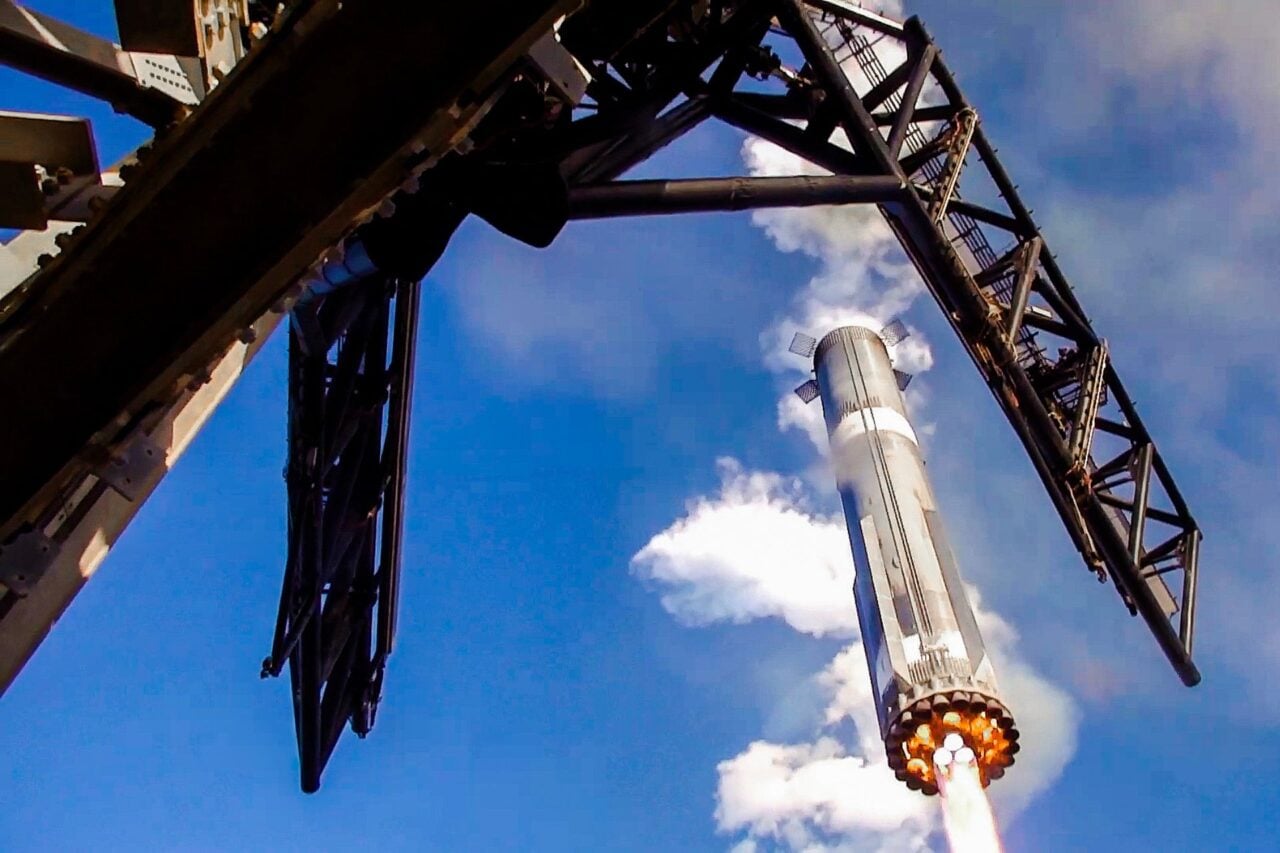
The report, published by the NASA Office of the Inspector General on Monday, states that SpaceX plans to launch Starship up to 44 times per year from Launch Complex 39A at Kennedy. This would allow for an eight-day launch cadence, which will be necessary as SpaceX must launch at least 15 Starships before the HLS can take astronauts to the Moon. Those 15 missions will deliver propellant to low Earth orbit, where it will be stored in a fuel depot before being transferred to the HLS.
The report warns that Kennedy isn’t ready to support a high launch cadence for super heavy-lift rockets like Starship. “NASA’s launch infrastructure is dated and lacks the capacity to meet the growing demands of the agency and government and commercial partners,” it states.
A challenging new era at Kennedy
In February, the Federal Aviation Administration approved Starship launches from LC-39A, the historic pad built to support NASA’s Apollo program and later upgraded for the Space Shuttle program. LC-39A has launched SpaceX’s Falcon 9 and Falcon Heavy rockets since 2014, but the company is now shifting most of those missions over to Space Launch Complex 40 at Cape Canaveral Space Force Station.
SpaceX is in the process of expanding LC-39A to support Starship. The company proposed about 800,000 square feet (70,000 square meters) of infrastructure changes “to include launch and landing pads and towers, propellant generation, and stormwater/deluge ponds,” according to SpaceFlightNow.
This massive upgrade is necessary because LC-39A (as well as the other two pads at Launch Complex 39) were built in the 1960s and designed to support mobile launch operations on a “clean pad.” That means no structure, towers, or other support equipment are located on top of the pad, according to the OIG report.
In addition to SpaceX, Blue Origin also hopes to increase its launch activity at Kennedy and Cape Canaveral. The company expects to launch its super heavy-lift New Glenn rocket more than 50 times per year by 2030 and more than 120 times per year by 2035, the OIG report states. Other commercial partners are ramping up launches from Kennedy and Cape Canaveral too, including United Launch Alliance, Relativity Space, and Astra Space.
“At Kennedy, demand for super heavy-lift launch vehicles for NASA and Department of Defense missions is driving the need for additional launch pads that can accommodate these vehicles, but locations for new launch pads are limited and will require extensive time and resources to develop,” the report states.
If NASA hopes to put astronauts back on the Moon before the decade is out, upgrading Kennedy’s aging infrastructure may prove just as critical as developing the spacecraft themselves. Otherwise, the agency’s lunar ambitions could end up bottlenecked not by vehicle readiness, but by the spaceport meant to launch them.