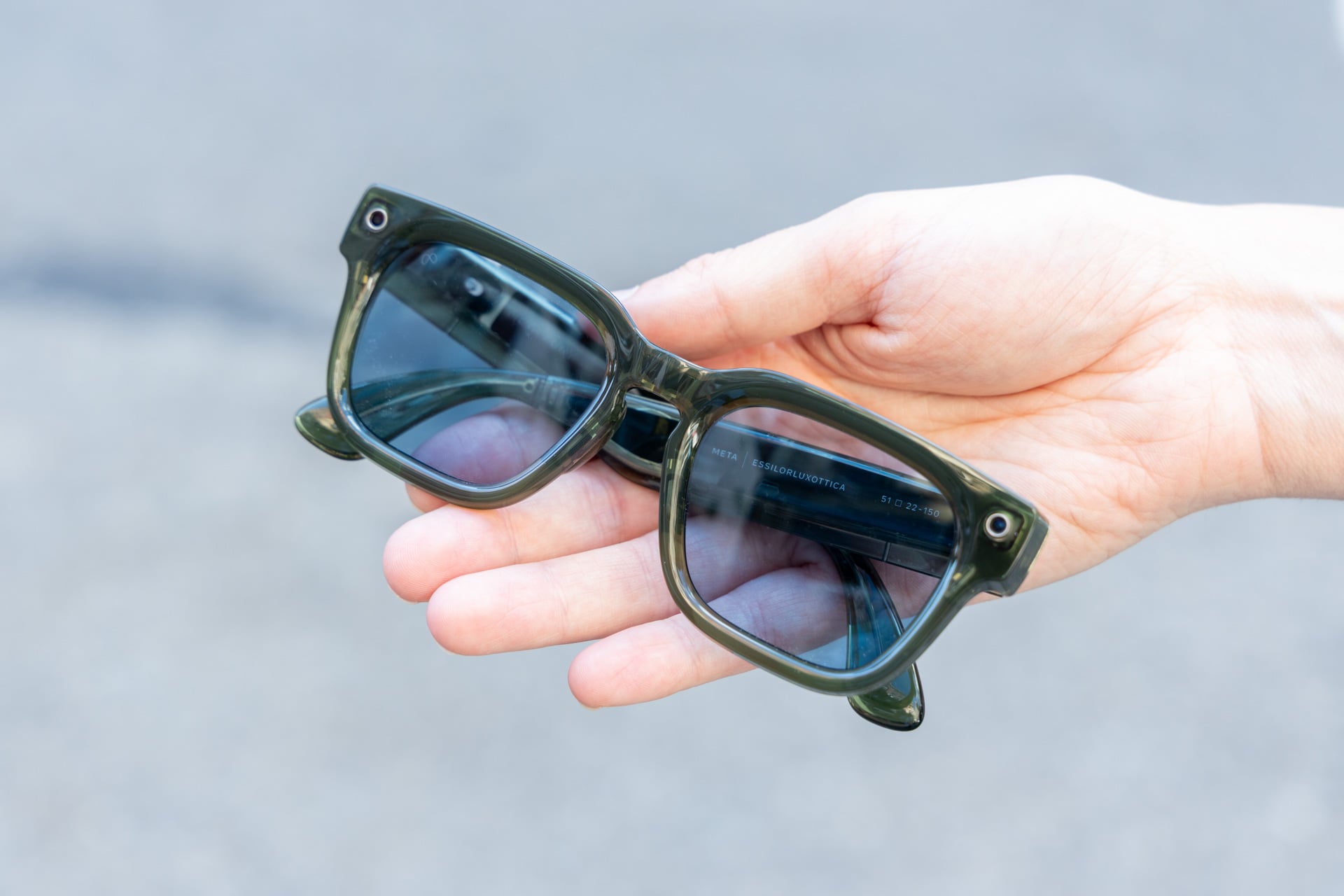
As popular as face computers seem to be, there are still a lot of things holding them back. There are privacy concerns, social stigma, and, on a more fundamental level, a whole lot of technical constraints. One of the biggest such technical constraints is heat. If you’re going to make AR/XR glasses smaller and less goofy-looking, but also make them standalone computers, you’re going to have to disperse a lot of heat in a small space, which is easier said than done. It’s a difficult and universal problem in consumer tech, but the benefits of solving it could be vast.
To that end, xMEMS, a semiconductor company best known for its audio technology, is ready to introduce a new cooling tech that it says could bring quite a few benefits to smart glasses as well as bigger, more compute-heavy AR/XR glasses. According to xMEMS, its new fan, called the XMC-1200, is the “world’s smallest active micro fan” and measures just 46mm. Despite its size, xMEMS says it can deliver 10 degrees Celsius (or about 50 degrees Fahrenheit) of cooling at a 1W thermal load. On top of that, xMEMs says the XMC-1200 consumes just 70mW of power. In short, xMEMS thinks its fan can keep smart glasses cool while using less power than current cooling systems.

That efficiency in cooling could, according to xMEMS, pave the way for quite a few benefits in face-worn computers. For AR and XR glasses, xMEMS says its fan could help keep up performance over longer periods of use. Lack of heat dissipation affects not just the performance of the chip but also the display. As xMEMS notes, heat can lead to color bleed and other image quality issues that degrade the performance of the display, making those high-resolution micro OLED displays just a little less impressive.
For smart glasses, the benefits could be even more interesting. By managing heat, xMEMS says it could improve on one of the biggest drawbacks of camera-centric glasses: recording times.
“By actively managing heat at the source, the XMC-1200 can help extend recording sessions and enable users to capture longer events, conversations, and POV experiences,” says xMEMS in a statement.
I’ve asked xMEMS how long, in theory, the company thinks its new fan could push recording times and will update this post with any further info.
Currently, even the most popular and arguably most sophisticated smart glasses, Meta’s Ray-Ban and first-party AI glasses, can only record for a maximum of three minutes at a time, which is longer than the 90 seconds in the first-gen Ray-Bans, but still not very long in the scheme of things. That might be fine for most people just looking to record brief snippets, but it’s certainly nowhere near the efficiency required of proposed future gadgets like Meta’s “super-sensing” smart glasses that record all the time, which, given Meta’s record on privacy, might be a good thing.
Either way, there’s clearly a concerted effort to push the boundaries of what face computers can do, and progress is happening faster than you’d think. xMEMS says its XMC-1200 chip is targeting production readiness toward the end of 2027, which sounds like a long way away but could be perfect timing for potentially big-name entrants like Apple or Google.