Scientists are laying the groundwork for treating one of the most common genetic conditions in humans. Research out today highlights a promising new approach to Down syndrome, also known as trisomy 21.
Neurologists at Beth Israel Deaconess Medical Center and Harvard Medical School have developed a new way to possibly repair the genetic error responsible for causing Down syndrome, a third copy of the 21st chromosome. Using a modified version of the gene-editing technique CRISPR/Cas9, they were able to silence this extra copy in a substantial number of cells in the lab. Though only a proof of concept for now, the researchers are hopeful their work can eventually lead to the first genuine treatment for the genetic disorder.
“This approach overcomes a major hurdle,” senior study author Volney Sheen told Gizmodo.
A new approach
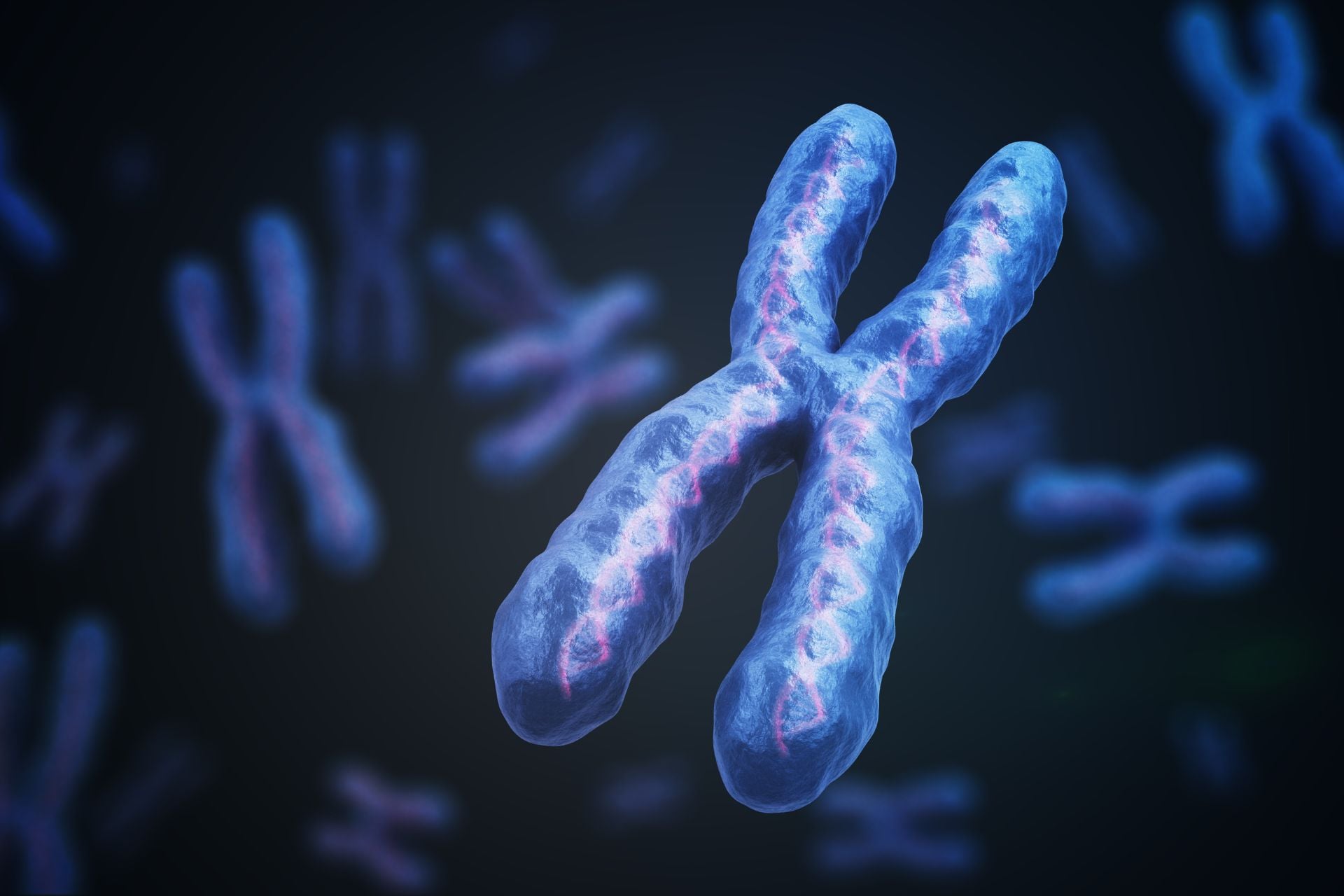
Down syndrome is estimated to occur in one of every 700 births in the U.S. The condition typically happens by random chance, though factors like older maternal age can increase its risk (the extra copy usually originates from the mother’s side). The most common form, accounting for 95% of cases, causes the third copy of the 21st chromosome to appear in all cells; this form is called trisomy 21.
There is no cure for Down syndrome currently. It can be detected early on in pregnancy through prenatal screening, and many families choose to terminate these pregnancies. Children born with Down syndrome will experience various developmental delays, mild to moderate intellectual disability, and a higher risk of other health problems, including Alzheimer’s disease. Even with management of these issues, the average lifespan of someone with Down syndrome today is still only around 60.
The most effective treatment for Down syndrome would likely involve turning off this extra copy entirely, according to Sheen. As it turns out, there are already ways our bodies can naturally do just that.
“In normal development, one of the female X chromosomes undergoes silencing in a process called X-inactivation. This process is controlled by the X-inactive specific transcript (XIST), a long non-coding RNA,” Sheen explained. And some research has shown you can insert XIST into the cells of people with Down syndrome to silence the third copy of chromosome 21.
For various reasons, though, past gene-editing technologies have only been able to integrate XIST into a small percentage of cells. And while CRISPR has now become a widely used method for cutting DNA, it normally isn’t very good at inserting new genetic material. But these researchers say they’ve now developed a modified version of CRISPR/Cas9 that can work around some of those challenges, in turn greatly increasing the success rate of XIST integration.
Across several experiments, the team found they could integrate XIST in around 20% of 40% of cell lines with trisomy 21. They also found that their method reliably affected only one copy of the 21st chromosome (important for limiting side effects) and that this improved integration could partially silence the cells’ expression of the extra chromosome.
“Our findings […] offer a scalable, targeted platform for chromosomal therapy in [Down syndrome],” they wrote in their paper, published Monday in the journal Proceedings of the National Academy of Sciences.
A cure for Down syndrome?
This study, important as it is, is really only the beginning.
It will take more research to make a XIST-based treatment for Down syndrome a practical reality, the paper’s authors admit. Future studies will also have to confirm that these changes won’t cause dangerous off-target effects, though the team is hopeful their approach won’t be any riskier than other CRISPR therapies used in people.
Even a partial silencing of a person’s extra 21st chromosome might be enough to mitigate the worst effects of Down syndrome. And there have already been some promising recent developments in the field, according to the researchers. Other studies have suggested that a much smaller section of XIST can be used to turn off chromosomes, for instance, which should make it easier to deliver any potential therapy to a person’s brain cells.
The team is already moving ahead with mice studies that will try to figure out the optimal delivery method and timing for the therapy. They’ll also assess how effective the treatment might actually be at preventing the symptoms of Down syndrome.
“What we learn from these studies will likely dictate the next steps taken in progression toward human clinical trials,” Sheen said.
With any luck, the team’s work will pay off and perhaps one day make Down syndrome and other chromosomal conditions a thing of the past.