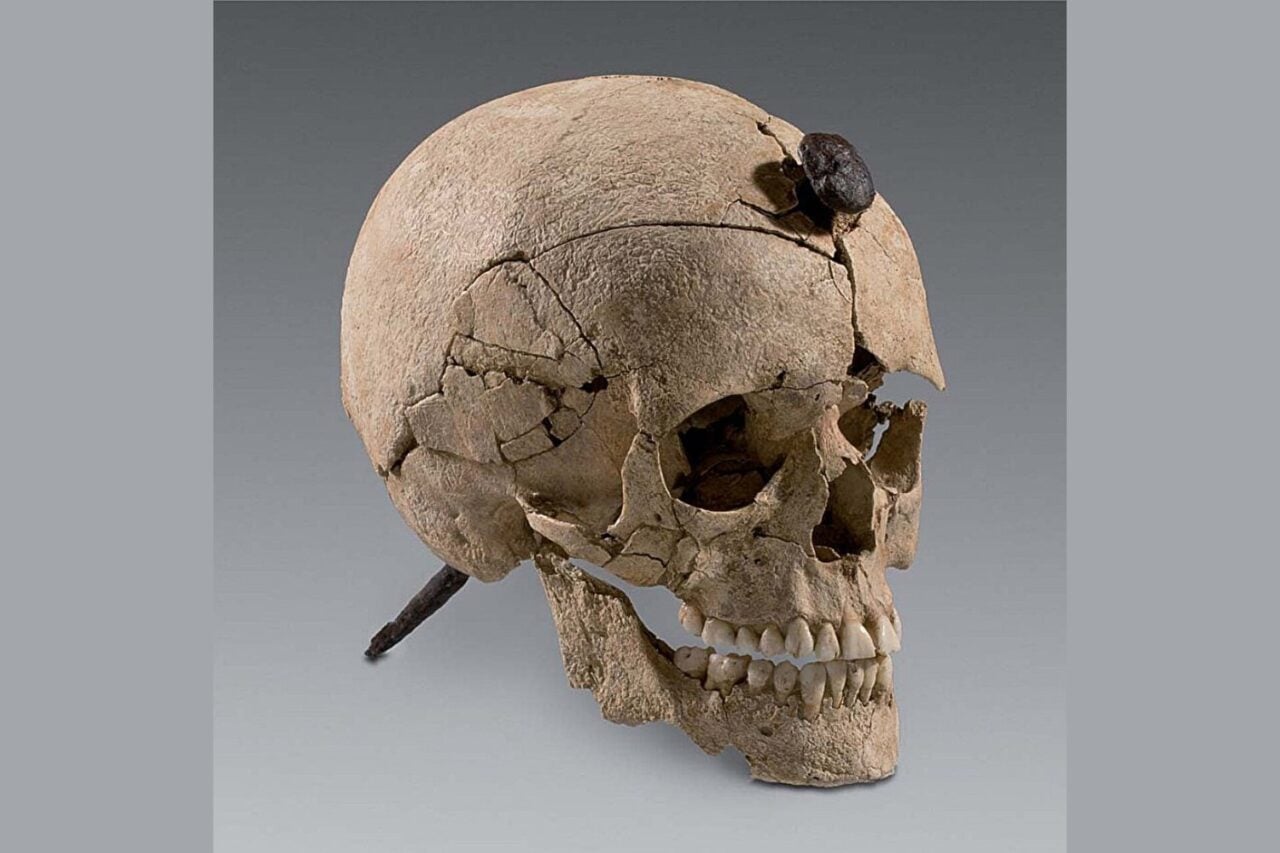
Human remains found inside a Belgian cave tell a grisly story of selective cannibalism among our hominid cousins.
Researchers used drone imagery to construct a 3D model of Rapa Nui's main moai quarry and reveal its secrets.
The "walking moai hypothesis" could end a long-time debate over how ancient engineers moved these iconic statues around Easter Island.
Researchers found significant similarities between prehistoric remains found in Southeast Asia and modern smoke-dried mummies in New Guinea.
A new study challenges widespread notions about khipus, intricate cord and knot information-recording systems, based on Spanish colonial-era sources.
New research suggests the first Americans weren't who we thought they were.
A new study suggests our prehistoric cousins likely traveled through the Ural Mountains and southern Siberia.
The discovery could deepen our understanding of the Neanderthal mind, but some experts aren’t convinced by the interpretation of the evidence.
By comparing modern human, Neanderthal, and chimpanzee skulls, researchers have uncovered a unique trait having to do with our faces.
The fragmentary facial bones belong to Homo affinis erectus, an esoteric offshoot of our family tree that inhabited Spain more than one million years ago.
The first-ever published research out of Tinshemet Cave indicates the two human species regularly interacted and shared technologies and customs.
The new approach to radiocarbon dating could soon be applied to other Paleolithic human sites, improving our understanding of the timing of ancient populations' movements and interactions.
Did the decapitated heads belong to venerated community members or defeated enemies?
Researchers in Poland have found more evidence of violent cannibalism in the wake of the coldest period of the last Ice Age.
Strange wear marks on the teeth of Paleolithic people in Central Europe have long puzzled scientists, but new research may finally reveal the cause.
The ancient designs, found on pre-Columbian mummies from Peru, give modern tattoos a run for their money.
From shipwrecks to space stations, many investigations into the past bore fruit this year.
Scientists have determined that the diet of a Clovis woman who lived in North America 13,000 years ago included a substantial portion of mammoth and other large game.
Over 100 perforated pebbles from a site near the Sea of Galilee showcase an early instance of the tech that reshaped humanity.
The famous conqueror’s burial location remains a mystery, but new research claims that material found in one of the iconic Royal Tombs in Greece may have belonged to him.