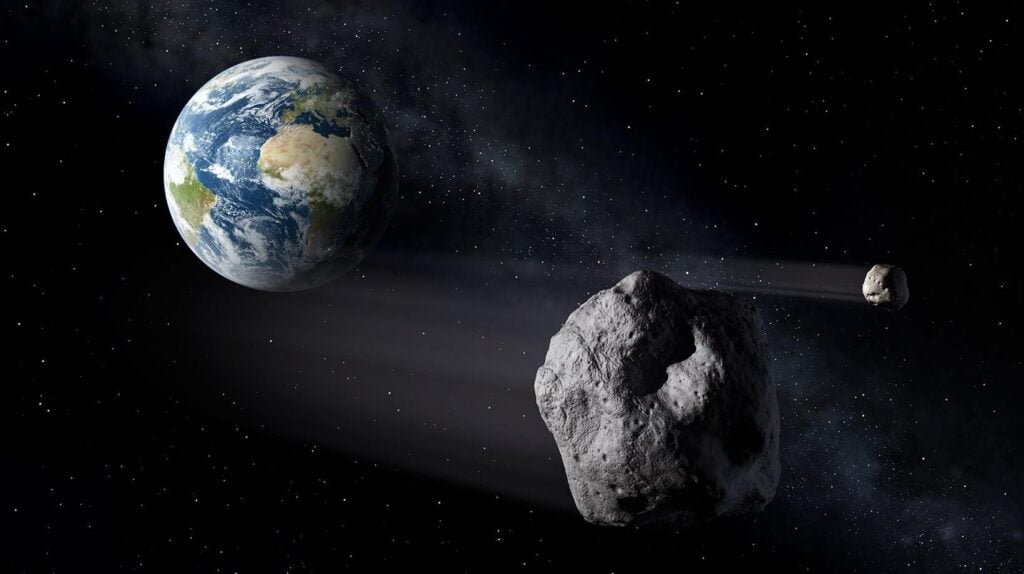
The 1,600-foot-long space rock will come within three million miles of Earth.
New observations of the rock show its comet-like tail is not made of dust, possibly altering the origin story of the Geminid meteor shower.
Apophis will come to within 20,000 miles of Earth’s surface in 2029, presenting an extraordinary opportunity to study the asteroid from up close.
The Chinese space agency has selected asteroid 2019 VL5 as the target of a mission launching in 2025.
Behold the oblong space rock that sailed past Earth on February 3.
The roughly Colosseum-sized rock marks a new kind of target for Webb Space Telescope.
The incoming asteroid, called 2023 BU, does not pose a threat to Earth, NASA says.
The experiment will pave the way for probing a larger asteroid that will approach Earth in 2029.
A web app from Neal.Fun is a choose-your-own-adventure for planetary annihilation
The NEO Surveyor project has cleared a NASA review, but the space telescope will cost upwards of $1.2 billion to build and not launch until 2028.
At nearly 1.5 kilometers wide, it's the largest such asteroid discovered in eight years.
OSIRIS-REx is scheduled to drop off samples of asteroid Bennu's surface in less than a year.
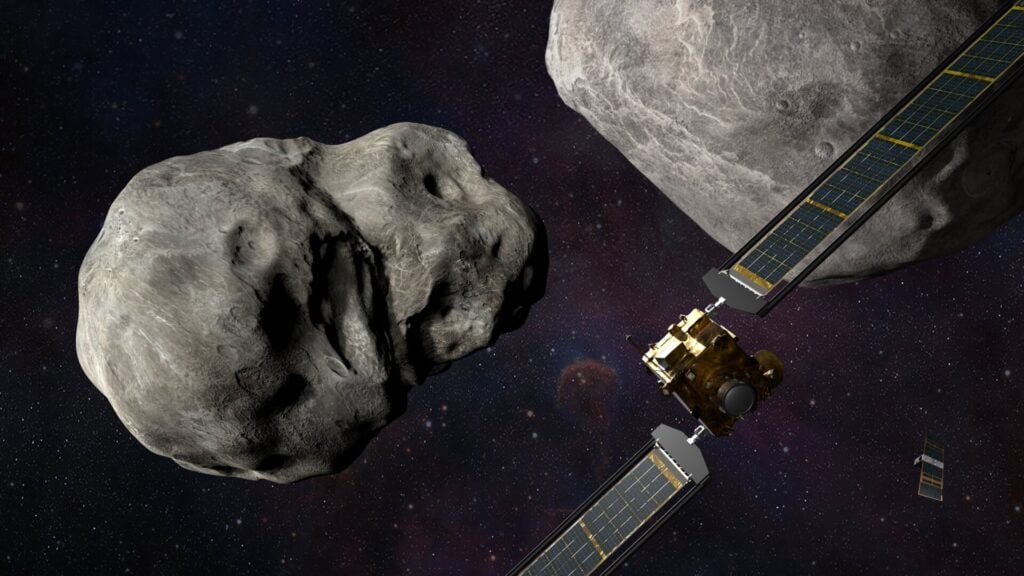
For the first time ever, humanity has changed the trajectory of a planetary object, reducing the asteroid Dimorphos’s orbital period.
A new image shows a roughly 6,000-mile trail of debris in the aftermath of the historic DART test.
NASA’s recent asteroid deflection test has produced a wealth of jaw-dropping imagery, whether the views were taken at the scene or from afar.
There’s no guarantee that DART will smash into Dimorphos later today. NASA is prepared for this unfortunate possibility.
Humanity’s accomplishments in space are worth celebrating, but today’s DART test to deflect a non-threatening asteroid carries existential implications.
Called LICIACube, the Italian-built probe will take images of DART’s impact with asteroid Dimorphos on September 26.
AstroForge is claiming that demonstrations of its technology could begin as early as January 2023.
China’s space agency is also seeking to develop a ground-based asteroid monitoring and warning system, in what is a welcome development.