Hold the jokes—this is serious news.
The discovery challenges findings made by Voyager 2, which collected data suggesting Uranus, unlike other giant planets in the solar system, didn’t have an internal heat source.
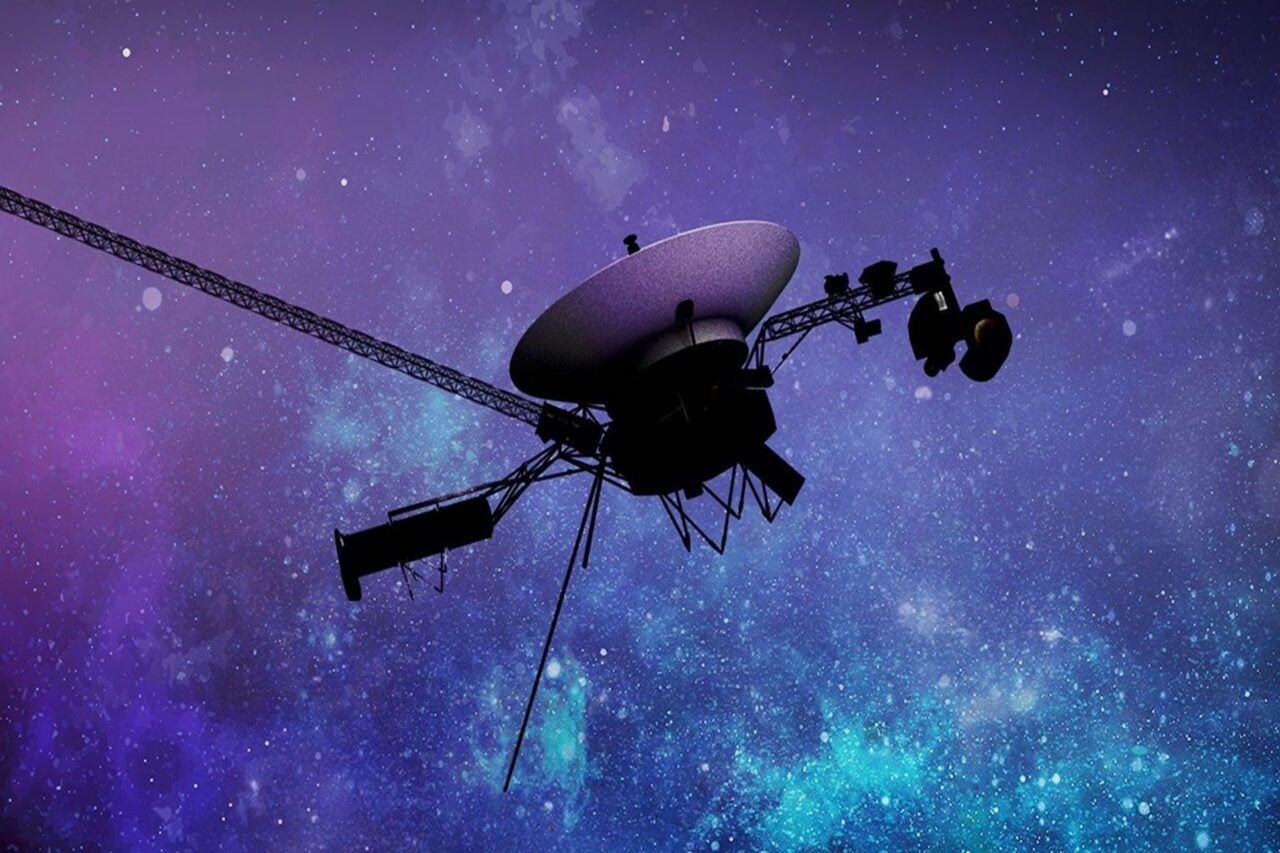
NASA just brought Voyager 1’s dead thrusters back to life—right before the spacecraft goes quiet for nearly two years.
"It's kind of like losing a best friend."
The twin probes should operate for about a year before the team is forced to shut off yet more instruments.
The Dwingeloo telescope, designed to observe signals at low frequencies, detected the farthest human spacecraft when it went dark earlier this year.
The spacecraft was forced to rely on a radio transmitter that hadn't been used in 43 years.
When Voyager 2 flew past the ice giant 38 years ago, it revealed a magnetosphere warped by solar winds, a finding uncovered through recent analysis of archival data.
The spacecraft has inexplicably turned off one of its radio transmitters, likely because of an unidentified onboard issue.
The iconic mission has resumed regular science operations for the first time since November 2023.
JPL engineers pinpointed the cause behind the anomaly and came up with a clever plan to rescue the iconic mission.
Corrupted memory hardware is causing the mission to transmit gibberish, but there may be a way to fix it.
The 46-year-old spacecraft has been transmitting gibberish for months, but the team may be close to identifying the source of the glitch.
The probe has been glitching for months, and the prospects look very grim, but NASA is not yet ready to give up.
NASA's spacecraft has been suffering from a computer anomaly for months, in what the project manager describes as the "most serious" incident in recent memory.
The famous spacecraft started transmitting a repeated pattern of ones and zeroes, and engineers are scrambling to find a solution.
A pair of tweaks aim to prolong the 1970s-era probes’ journey through interstellar space.
The legendary probe went silent two weeks ago as the result of NASA transmitting a potentially faulty command.
The spacecraft’s antenna is—alarmingly—no longer pointing towards Earth, in what NASA hopes is a temporary problem.
The interstellar traveler is gradually losing power, but a clever tweak means it can continue running all of its scientific instruments.