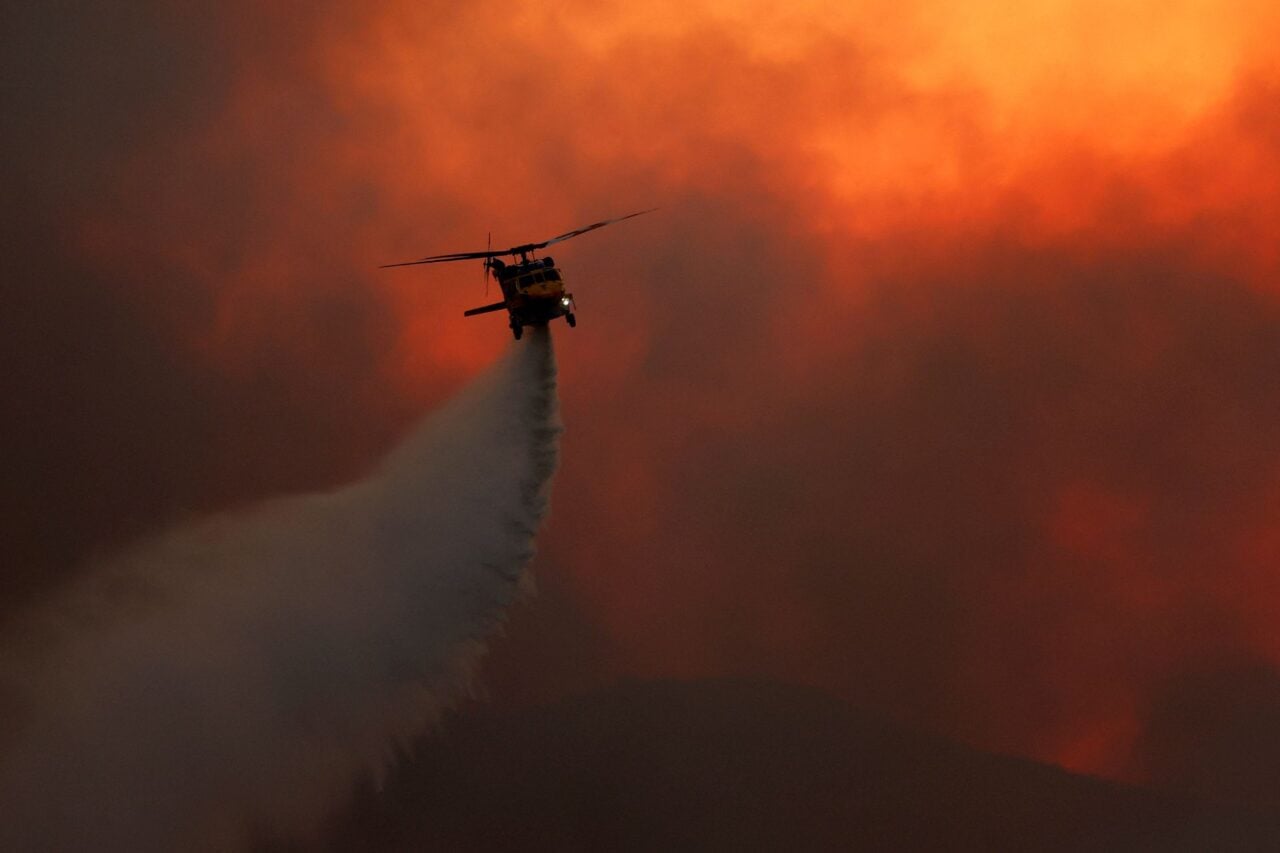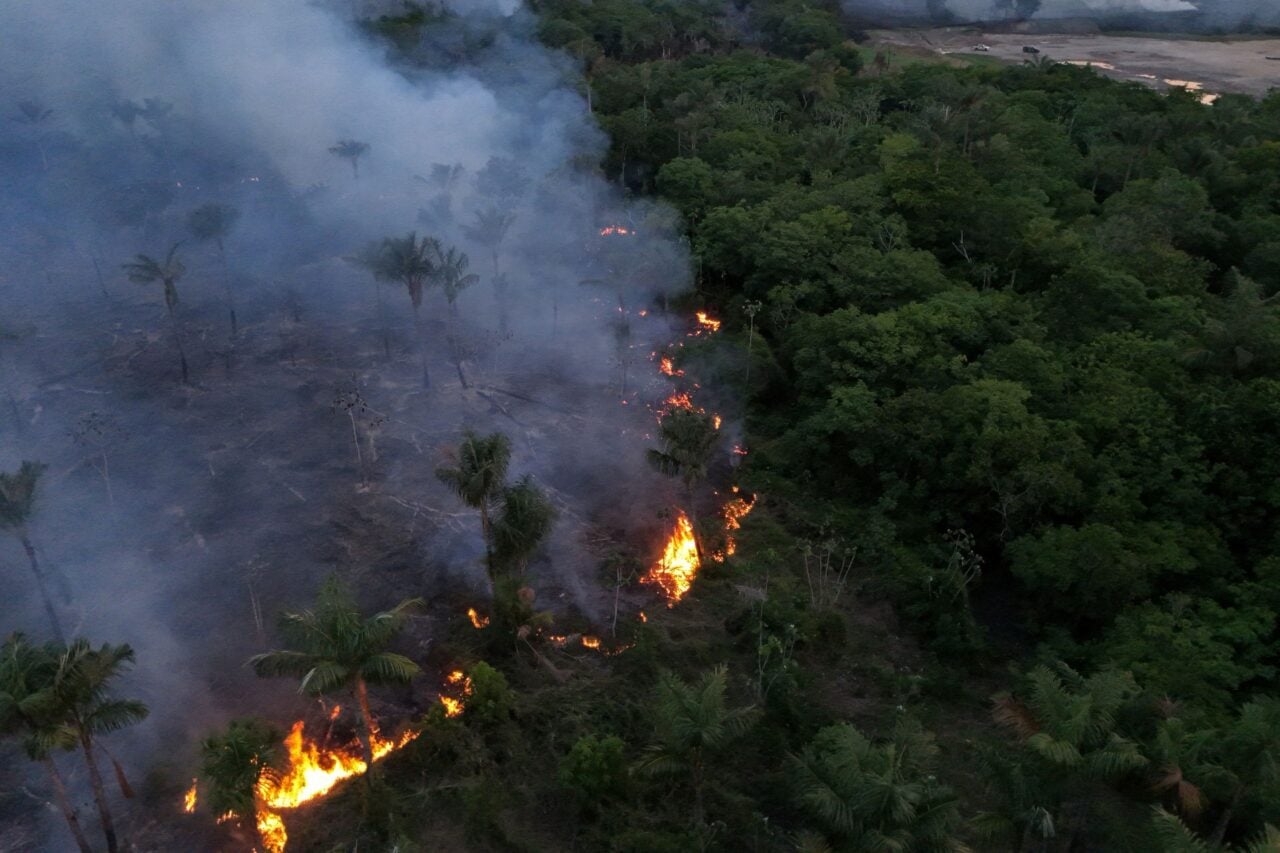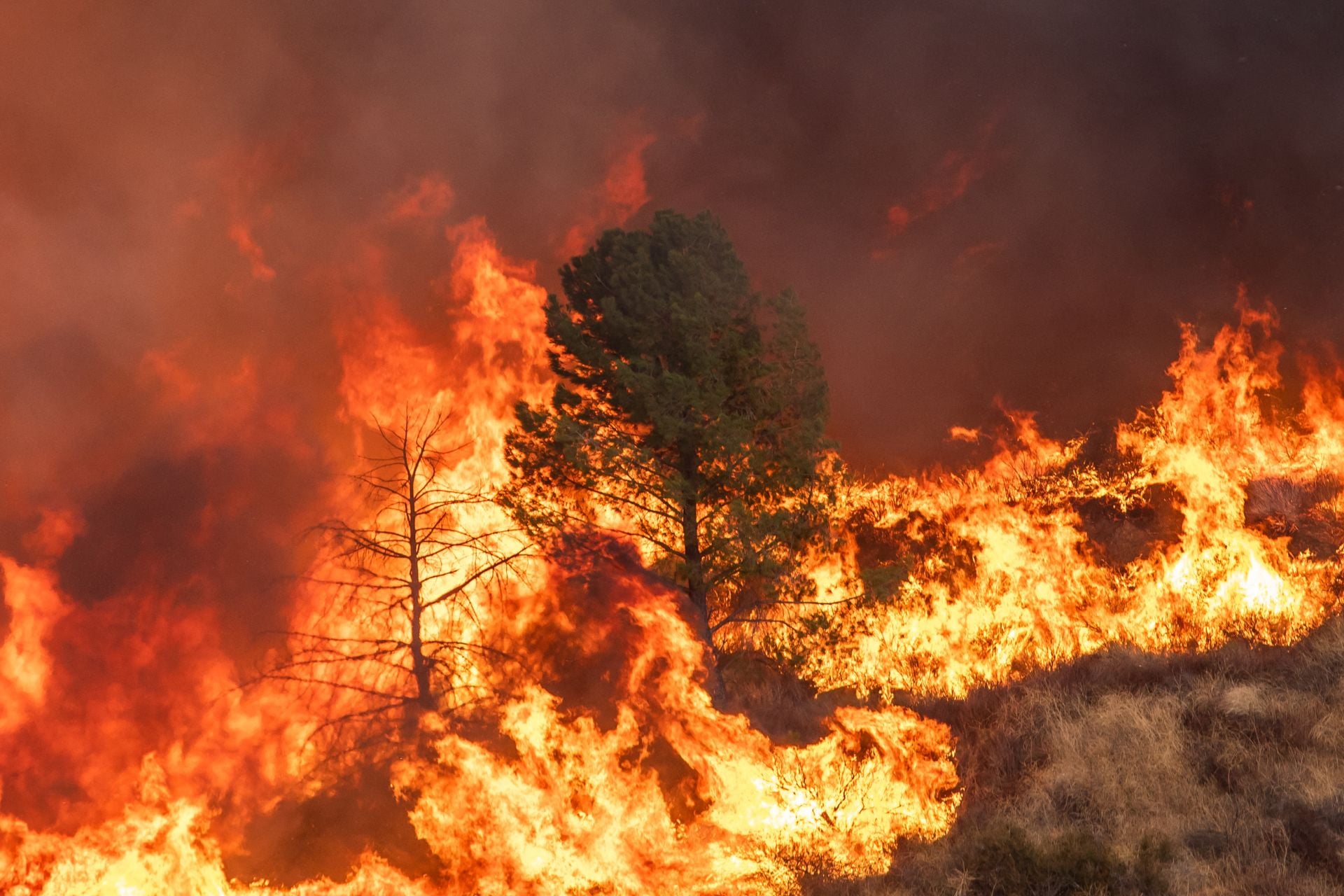
In 2020 and 2021, California suffered three high-severity wildfires that together killed between 10% and 20% of the world’s giant sequoia population. The Castle, Windy, and KNP Complex fires were not the kind these ancient trees had evolved to survive and actually depend on, but these blazes have become the new normal.
A study published today in the journal Proceedings of the National Academy of Sciences found that the amount of forestland burned annually in California has increased roughly 1,000% over the past 40 years. That’s largely due to the rising prevalence of high-severity fire, which was relatively rare until it became the most common class of fire in 2012, according to the researchers. These blazes escape the forest floor and climb up into the overstory, killing trees and hindering regeneration.
To combat this growing threat to the state’s forests, California has implemented an ambitious revitalization plan and more than doubled investments in wildfire prevention and landscape resilience efforts. Ultimately, the state aims to reduce understory fuels across 1 million acres per year primarily through prescribed and cultural burns.
While this would likely provide some relief, the treatments California has proposed may not be feasible everywhere, study co-author Mitchell Hung, a Stanford University PhD candidate who conducted the research as a graduate student at the University of California, Los Angeles, told Gizmodo in an email.
A new era of forest fire
For millennia, fire played an essential role in maintaining the health of California’s forests, and many of the state’s tree species evolved to co-exist with this naturally occurring phenomenon. Giant sequoias, for example, reproduce primarily with the assistance of low-severity fire. Heat rising from the forest floor dries out their cones and causes them to crack, releasing seeds onto the forest floor.
Historically, low-severity fire has also prevented larger, more damaging blazes and facilitated forest regeneration by clearing the understory of dropped needles, downed logs, underbrush, and small or sickly trees.
“There is a delicate equilibrium that low-severity fire often helps to maintain,” Hung said. But he and A. Park Williams, a professor and hydroclimatologist at UCLA, identified an alarming regime shift when they compiled and analyzed a database of 4,391 forest fires that occurred between 1985 and 2024.
Over that time period, historically dominant low-severity fire was increasingly replaced by high-severity fire, which is now the most common severity class in California. This trend was most prominent in the state’s denser forests, underscoring the fact that heavier fuel loads amplify fire severity.
“During much of the 20th century, California instituted a stringent fire suppression program, popularly personified by Smokey Bear: ‘Only you can prevent forest fires,'” Hung explained. “As a result, many forests in California became overgrown, preconditioning them for high-severity fire as we demonstrate in the study.”
He and Williams also found that a warmer and dryer atmosphere fuels more severe fires. Atmospheric conditions over California have indeed trended warmer and dryer over the past few decades, and Williams’ previous research has shown that human-driven climate change is increasing forest fire activity across the West.
A brutal fire season ahead
The rising prevalence of high-severity fire is not only consequential for the long-term health of California’s forest ecosystems but also for society, according to Hung. “The loss of forests has many socioeconomic impacts and can, for example, strain the water resource management system in California on top of the existing pressure in recent years from prolonged drought,” he said.
On a larger scale, this trend could have climate consequences. In California and other regions where old-growth forests store vast amounts of carbon, more frequent high-severity fires could turn these carbon sinks into carbon sources, accelerating global warming.
As summer heats up and a strong El Niño takes shape, experts are anticipating an active wildfire season in California and other parts of the West. If their forecasts are accurate, this season will put the state’s fire mitigation efforts and the Trump administration’s new Wildland Fire Service to the test. For researchers like Hung and Williams, it will provide new data on the toll that high-severity fire takes on the health and resilience of fire-adapted forests.
“Understanding not only where fire happens but also what is the character of that fire is critically important for understanding how ecosystems and society are affected by fire in California,” Hung said.